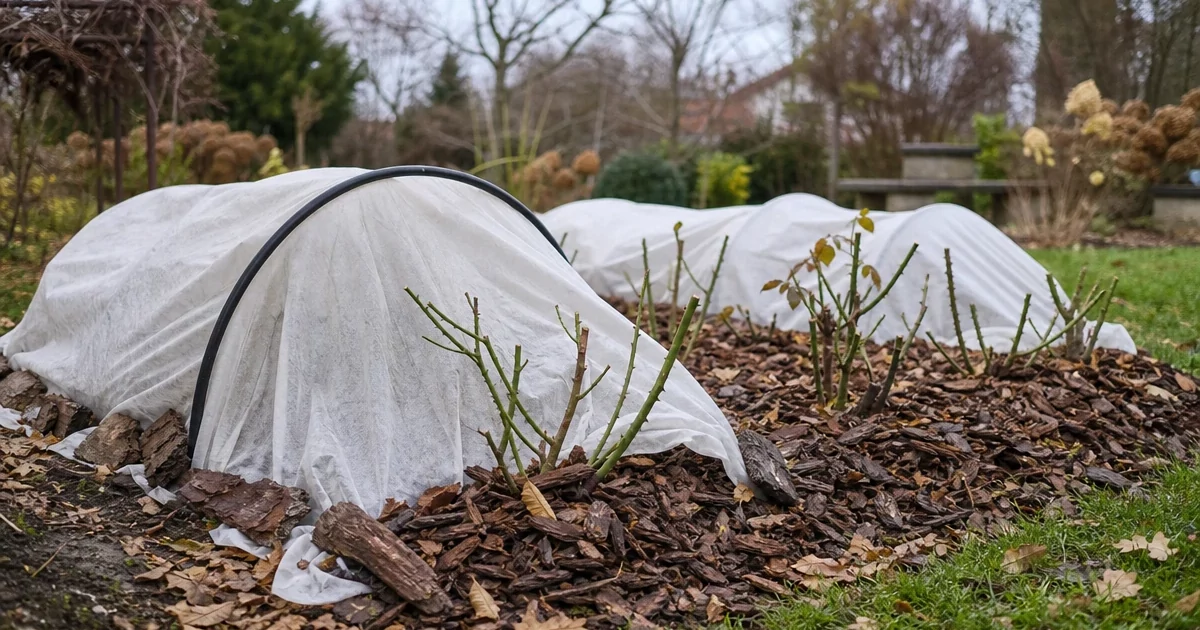
Autumn is when next year's garden takes shape. Good preparation helps plants survive the frosts and start growing faster in spring. Here are the main autumn jobs month by month, from planting bulbs to protecting roses and winter decor. If you plan to move your own plant, read when to transplant peonies.
Plants for your home and garden are in our potted plants section.
The timing is approximate: cold weather arrives differently in different regions of Ukraine and in different years, so go by the weather, not just the calendar.
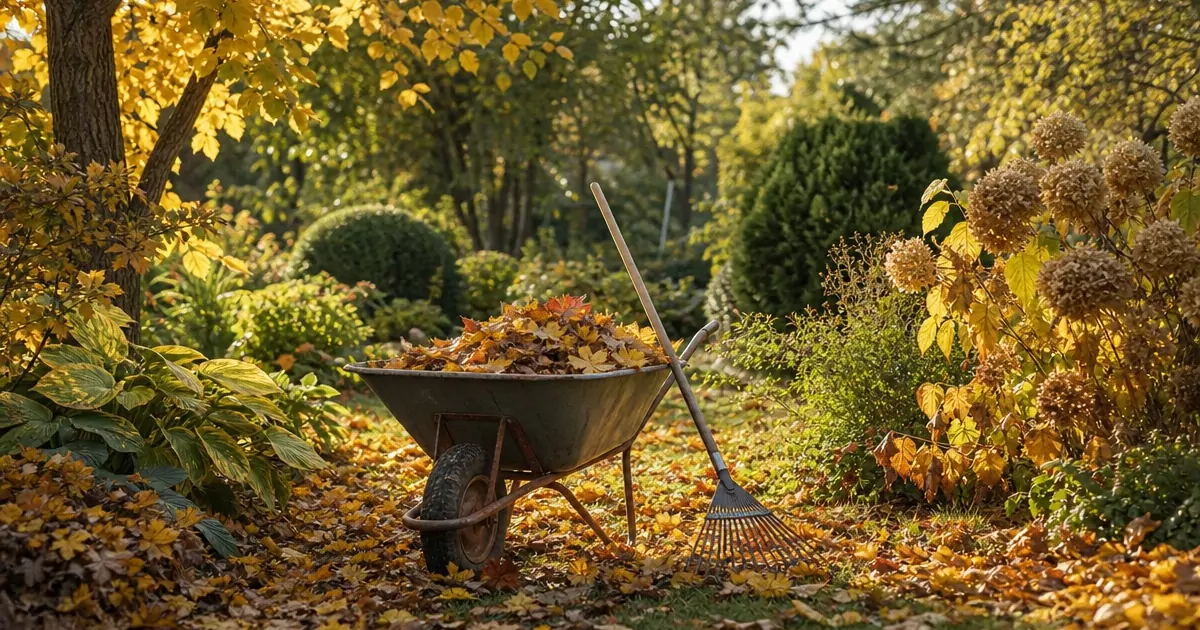
Clearing leaves and plant debris
Leaves showing signs of disease (leaf spot, powdery mildew) are best collected and removed from the garden.
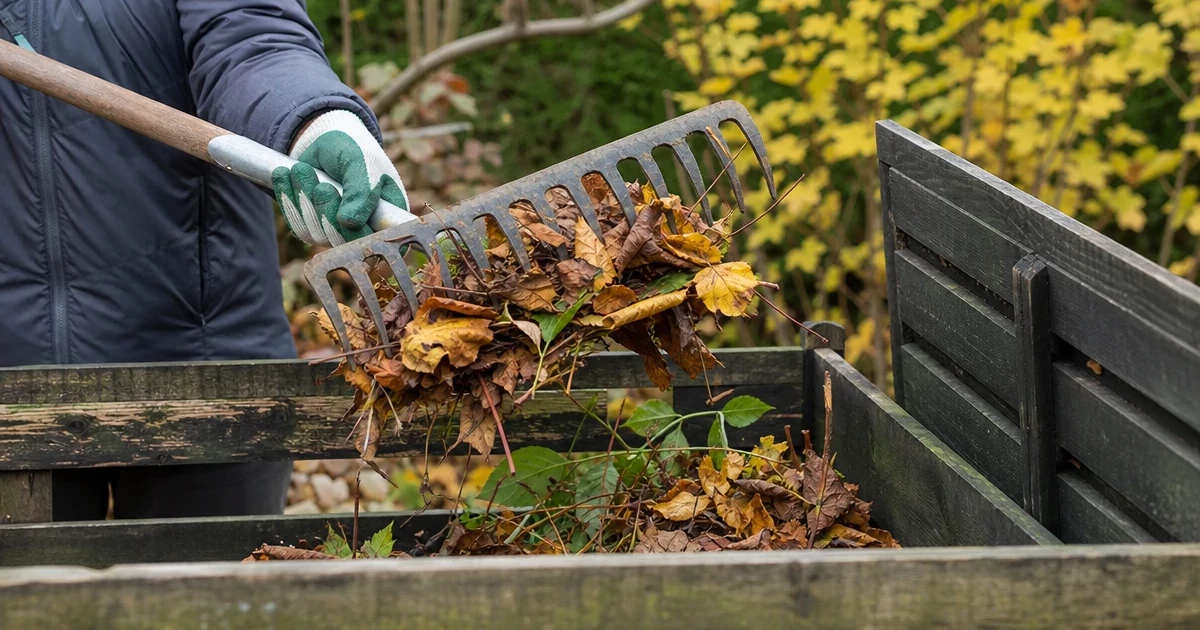
Healthy leaves can go on the compost heap or be used as mulch.
Some leaves can be left under shrubs and in far corners of the garden as shelter for beneficial insects.
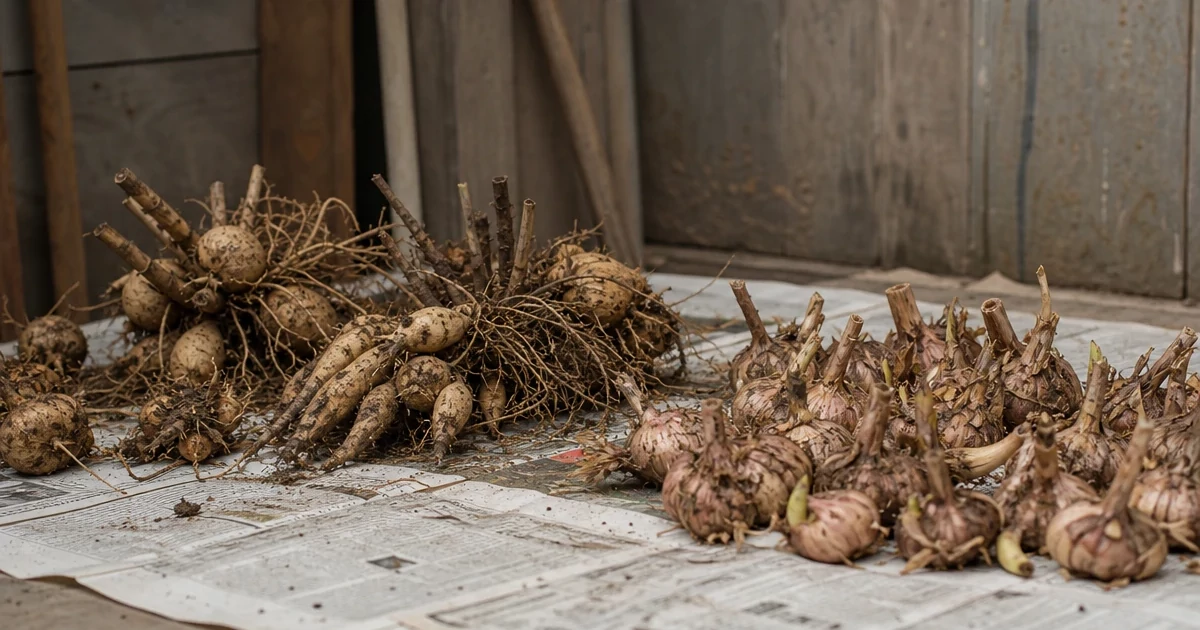
Tender tubers and corms — dahlias, gladioli, cannas, begonias — are lifted after the first frosts damage their leaves. They are dried, cleaned of soil and stored in a cool, dark place.
Conifers and evergreen shrubs keep their shape and colour all year.
Plants with berries — viburnum, rowan, barberry — decorate the garden and feed birds.
Ornamental grasses and dried hydrangea heads can be left until spring: they look lovely under frost.
Bird feeders, lanterns and fairy lights make the garden feel cosy.
FAQ
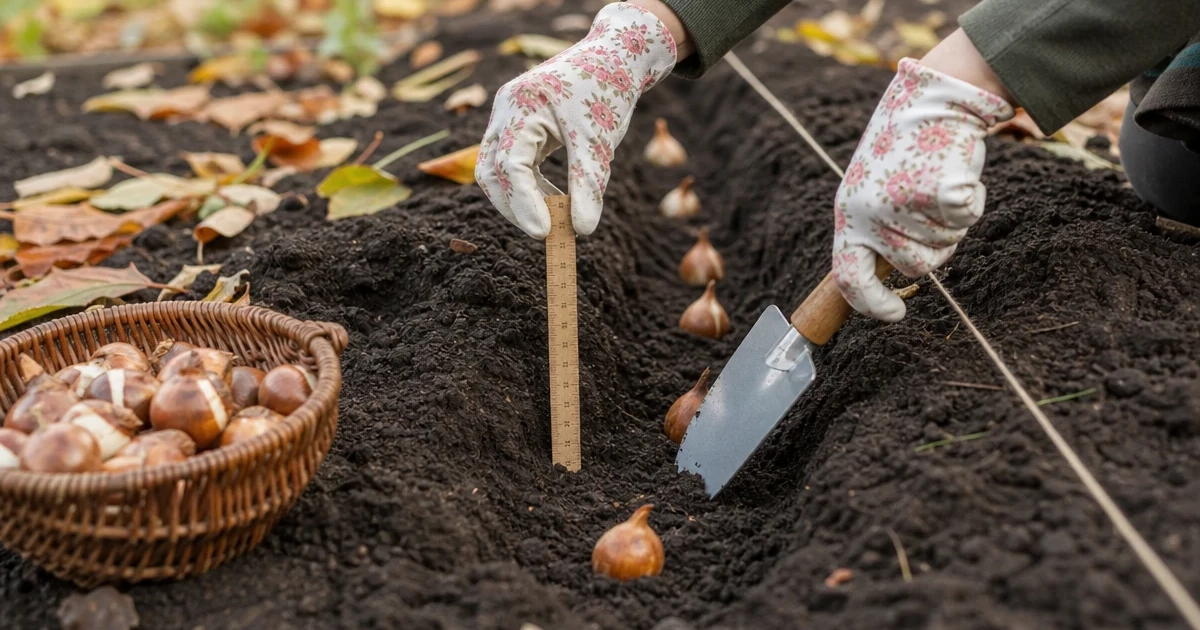
When should I plant tulips in autumn?
When the soil has cooled but a few weeks remain before it freezes — usually September–October, depending on the region and the weather.
Should I remove all the leaves?
Diseased leaves, yes; healthy ones can be composted or used as mulch.
When should roses be covered?
After steady light frosts set in, not at the first cold snap.
Author: Maria Svitlovir
Graduated from Taras Shevchenko National University of Kyiv, Institute of Biology and Medicine (2001). BSc in Biology, MSc in Horticulture. Writes about plants, works at a garden centre selecting and repotting plants, and contributes to plant reference guides.





 Birthday
 Hydrangeas