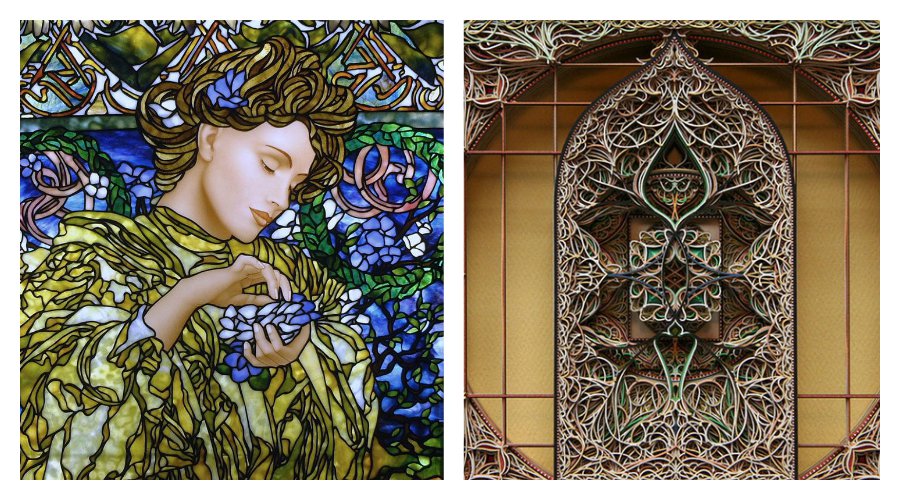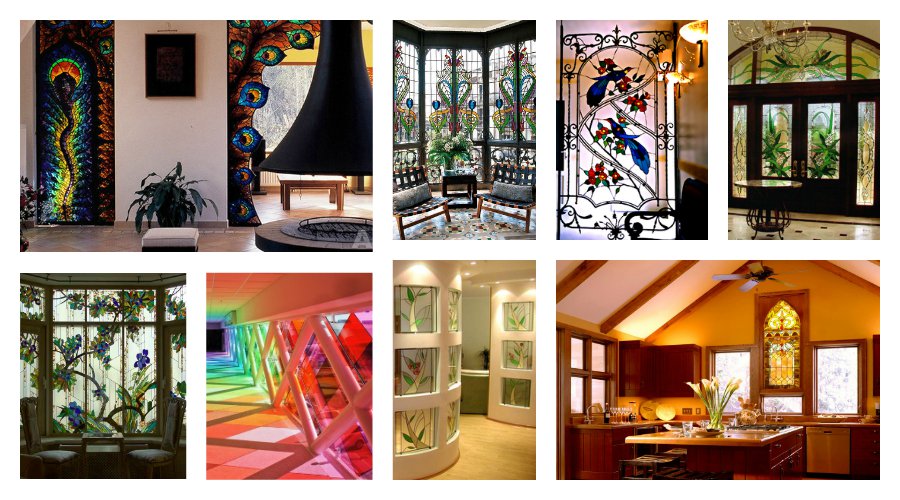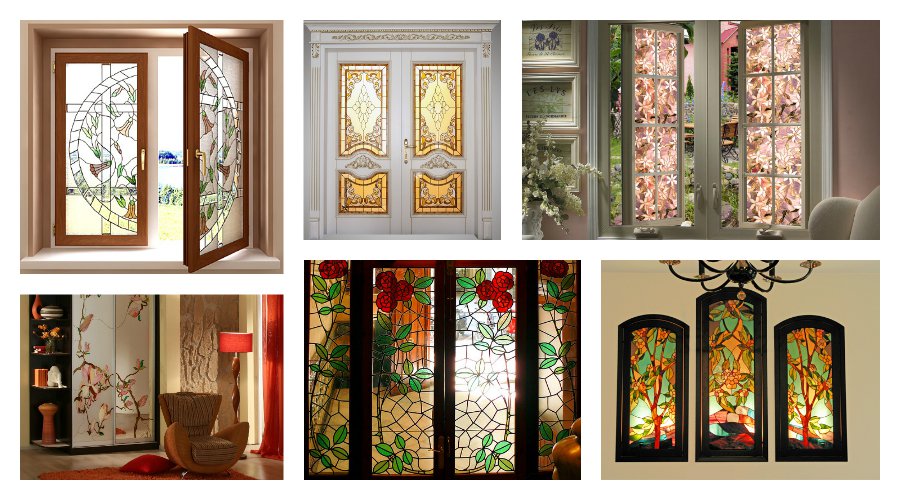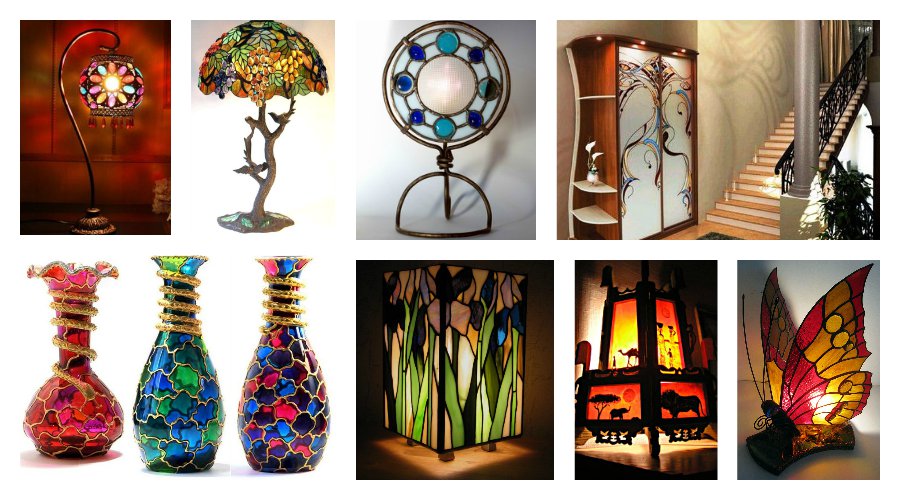
Stained glass is a picture made of light: coloured glass only comes alive when the sun shines through it. No wonder flowers became one of glass artists’ favourite motifs. Here is how floral patterns have appeared in glass over the centuries, and how to make a simple flower decoration for a window at home.
Fresh flowers brighter than any stained glass: peony-style roses and flowers in a box.
The great round windows of Gothic cathedrals are called rose windows because their shape resembles an open flower with petals radiating from the centre. Famous examples adorn Notre-Dame de Paris and Chartres. Although their scenes are mostly biblical, the composition itself is a flower made of light.
Around the turn of the 20th century, Art Nouveau took its inspiration from nature, filling stained glass with curving stems, lilies, irises, poppies and water lilies. In the United States, Louis Comfort Tiffany’s studio became famous for lamps with coloured-glass shades featuring wisteria, peonies, daffodils and dragonflies. Many of the best-known floral designs were created by the studio’s designer Clara Driscoll. Art Nouveau stained glass also survives in buildings in Ukrainian cities such as Lviv, Kyiv and Odesa.
Learn how to press flowers in oshibana: pressed flower art, make a flower lamp in a pressed-flower lampshade, and discover flowers blown from glass in glass flowers.
Because of its shape: a round window with petal-like rays spreading from the centre looks like a flower in bloom.
They were made by Louis Comfort Tiffany’s studio; many of the floral designs were by Clara Driscoll.

Author: Maria Svitlovir
Graduated from Taras Shevchenko National University of Kyiv, Institute of Biology and Medicine (2001). BSc in Biology, MSc in Horticulture. Writes about plants, works at a garden centre selecting and repotting plants, and contributes to plant reference guides.
© Kyiv 2026 UFL Flower Shop

Trademark UFL №191476 is used under license of the rights holder.
All rights reserved. Any use of materials without a link to the site is prohibited.


 Birthday
 Hydrangeas