
 Birthday
 Hydrangeas
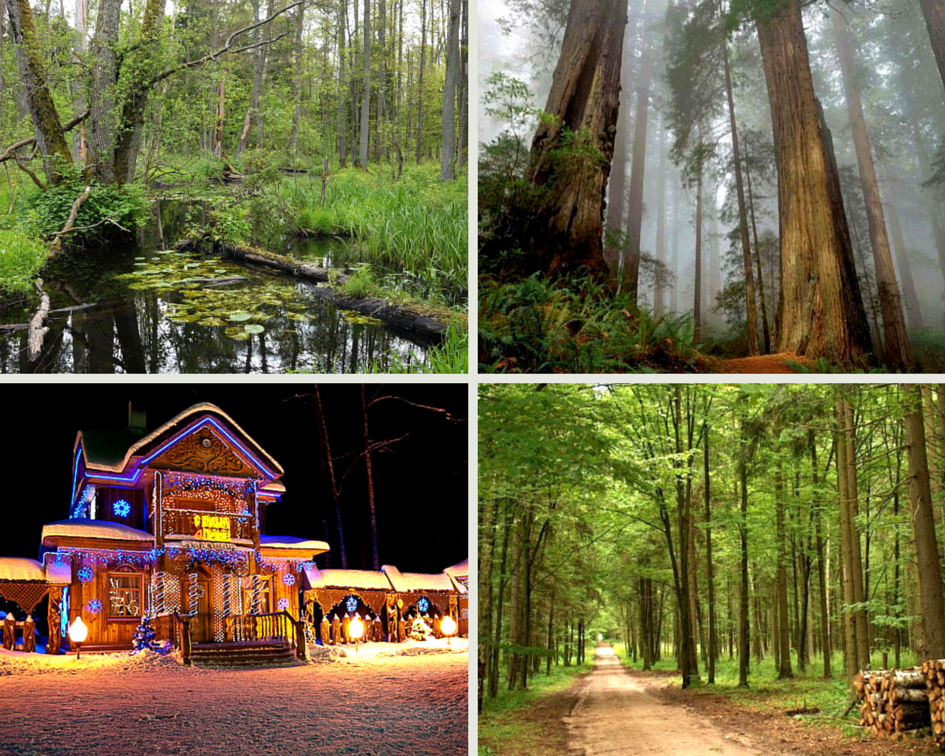
On the border of Poland and Belarus grows a forest that has barely changed in thousands of years. Białowieża is one of the last large remnants of the primeval lowland forest that once covered Europe. Giant oaks stand here, and bison roam that were very nearly lost a century ago.
Living nature at home: potted plants and flower baskets.
History of the forest
The forest survived because for centuries it was a hunting ground of rulers, where felling and hunting without permission were banned. Today it is protected on both sides of the border and listed as a UNESCO World Heritage Site.
How the bison were saved
The European bison is the largest land mammal in Europe. After the First World War the wild bison of the forest disappeared. The species was restored from a few animals kept in zoos: from 1929 they were bred and released back into the forest, and hundreds now live there.
What makes the forest unique
- Dead wood stays in the forest. Fallen trees are left in place, providing homes for fungi, beetles, mosses and lichens, many of them rare.
- Giant trees. Oaks, ash and spruce grow to enormous size, and some oaks are several centuries old.
- Diversity. Thousands of species of fungi, insects and plants live here, and in spring the forest floor is covered with wood anemones and hepaticas.
Primeval forests in Ukraine
Ukraine has forests of similar age too. The primeval beech forests of the Carpathians, such as the Uholka–Shyrokyi Luh massif in the Carpathian Biosphere Reserve, are part of the UNESCO site “Ancient and Primeval Beech Forests of the Carpathians and Other Regions of Europe”.
For protected places in Ukraine, see secluded places in Ukraine, and for nature reclaiming its own, abandoned places reclaimed by nature.
FAQ
How old is Białowieża Forest?
It is a remnant of the forest that grew on Europe’s plains after the last Ice Age, so thousands of years old.
Can you see bison in Ukraine?
Yes, bison live in several forest areas of Ukraine and in enclosures at nature reserves.

View full-size photo
Author: Maria Svitlovir
Graduated from Taras Shevchenko National University of Kyiv, Institute of Biology and Medicine (2001). BSc in Biology, MSc in Horticulture. Writes about plants, works at a garden centre selecting and repotting plants, and contributes to plant reference guides.


