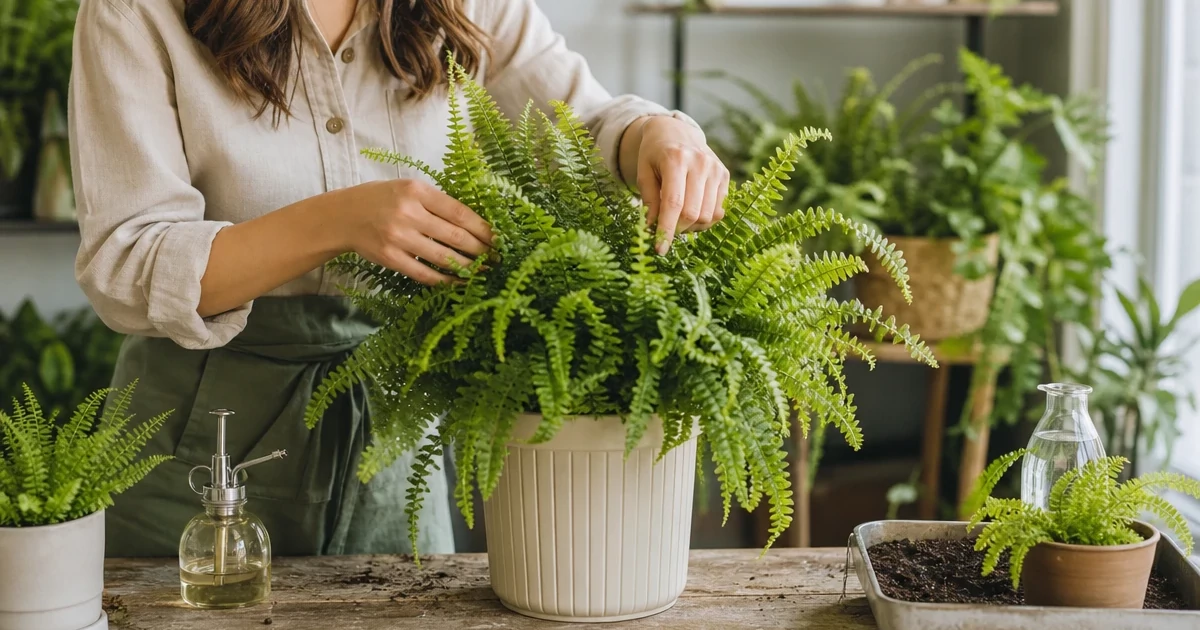
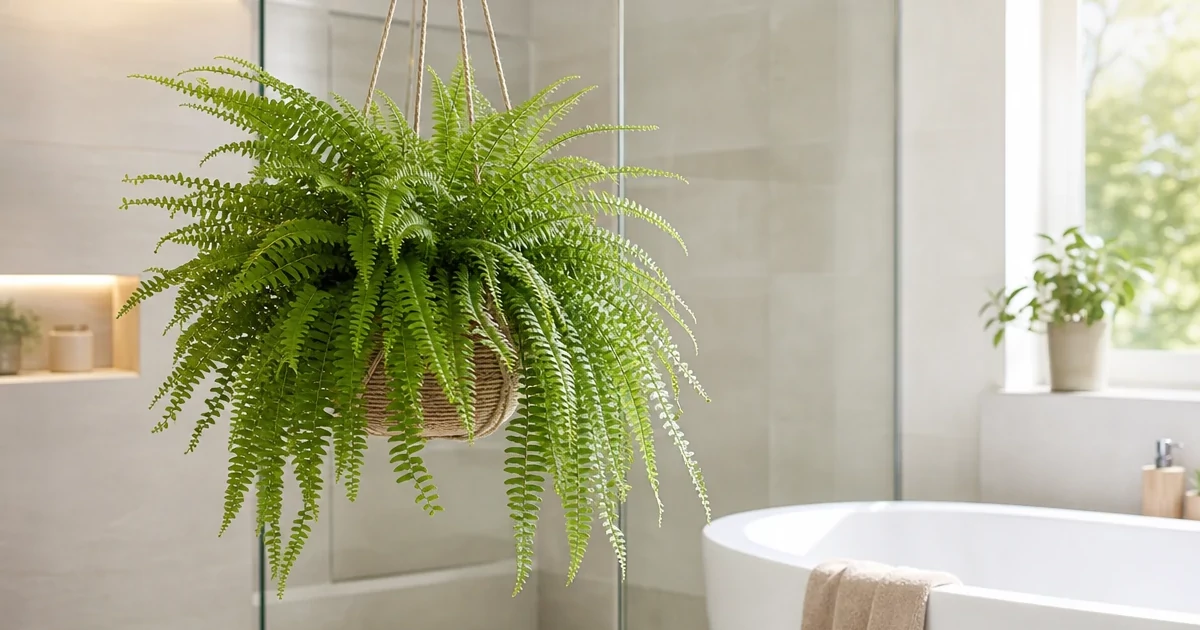
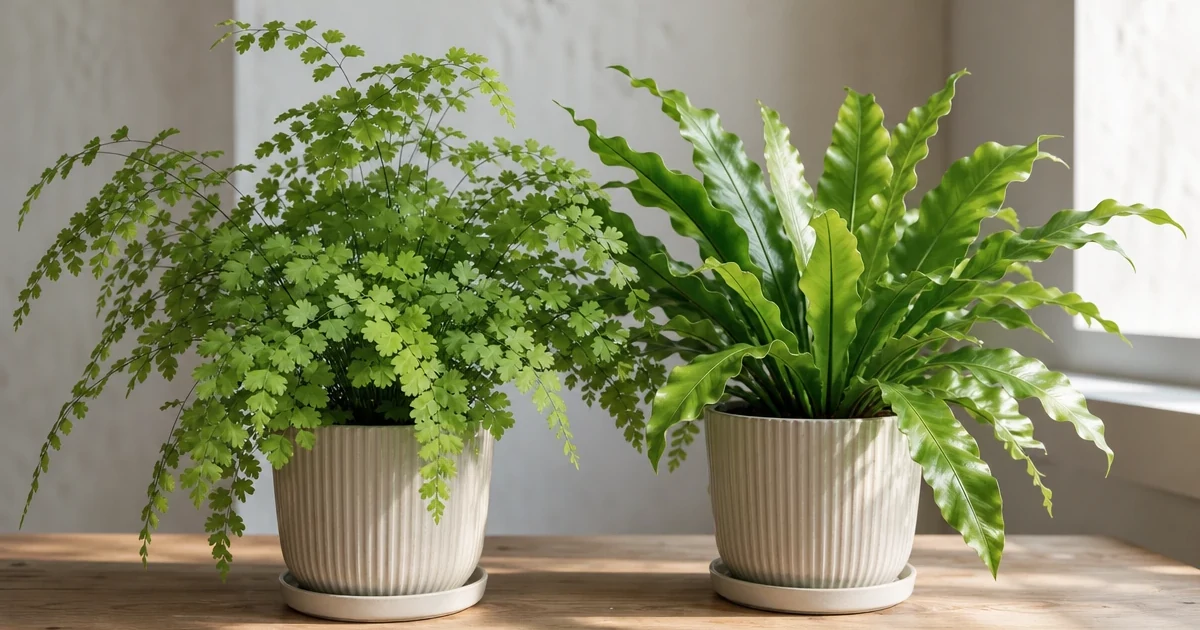
Nephrolepis, the Boston fern, is the most popular indoor fern, with lush arching fronds. It's safe for cats, looks great in a hanging basket and lifts any room. There's one condition: it won't forgive dry air or dry soil. Here are the varieties, home care, propagation and why the fronds turn brown.
More on this topic: houseplants: names and care, trailing houseplants, bedroom plants.
Nephrolepis exaltata is a tropical fern that grows on damp forest edges and even on tree trunks. Its arching fronds can reach 50–80 cm.
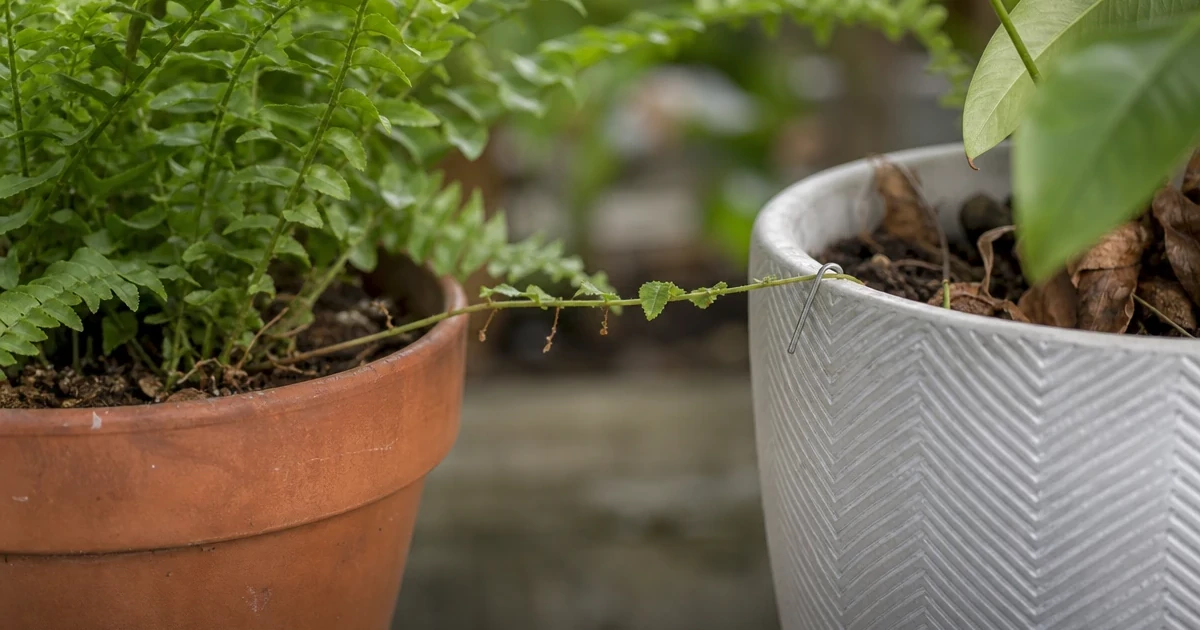
Like all ferns it never flowers; it spreads by spores (the brown dots under the fronds) and runners. The fabled 'fern flower' of Kupala Night is only a legend.
It is non-toxic to cats and dogs, so it's fine in homes with pets.
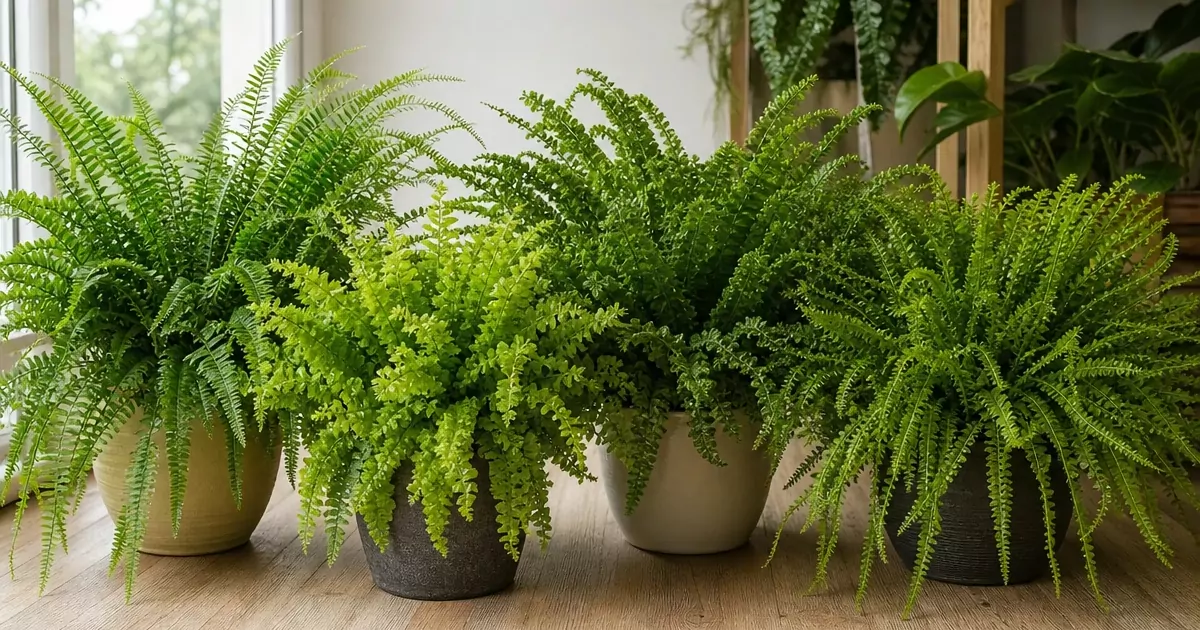
Bostoniensis: the classic, with broad arching fronds.
Green Lady: a lush fountain of light-green fronds.
Fluffy Ruffles and other frilly types: lacy and compact but more sensitive to dry air.
Duffii (Nephrolepis cordifolia): narrow upright fronds with tiny round leaflets.
Light: bright and indirect; direct sun scorches the fronds. East or north windows suit it.
Watering: keep the soil evenly moist. Even one complete dry-out brings a wave of crisp leaflets.
Humidity: 50% or more. Mist daily in the heating season, use a humidifier or a wet pebble tray; a bright bathroom is ideal.
Temperature: 18–24 °C, not below 13 °C; away from radiators.
Feeding: monthly, spring to autumn, with half-strength foliage fertiliser.
Repotting: in spring when roots fill the pot; use a wide, shallow pot and loose, slightly acidic mix. See how to repot a houseplant.
Yes. Boston fern is non-toxic to people, cats and dogs, and superstitions that ferns "drain energy" or "attract illness" have no basis. At night it, like any plant, takes up very little oxygen, far less than a person, so it is safe in a bedroom. The only caveat: people with strong allergies may want to watch for a reaction to spores, though indoor cultivars usually produce few.
Looking for a living gift that lasts for months? A potted orchid is a great choice for home or office.

See houseplants and orchids.

Indirect light, evenly moist soil and humidity of 50% or more.
Usually dry heated air or soil that has dried out.
No, ferns don't flower; they spread by spores and runners.
No, it is considered safe for cats and dogs.
Usually 2–3 times a week in summer and 1–2 times in winter: go by the soil, which should stay slightly moist but never soggy. Near a radiator you will need to water more often.

Author: Maria Svitlovir
Graduated from Taras Shevchenko National University of Kyiv, Institute of Biology and Medicine (2001). BSc in Biology, MSc in Horticulture. Writes about plants, works at a garden centre selecting and repotting plants, and contributes to plant reference guides.
© Kyiv 2026 UFL Flower Shop

Trademark UFL №191476 is used under license of the rights holder.
All rights reserved. Any use of materials without a link to the site is prohibited.


 Birthday
 Hydrangeas