
 Birthday
 Hydrangeas
Anyone who has holidayed in the south knows bougainvillea: it drapes the walls of houses in Greece, Turkey and Spain in clouds of magenta, purple, orange or white. In Ukraine it won't survive winter outdoors, but you can easily grow it in a pot on a sunny windowsill, balcony or terrace. Here's what the plant is, which species exist and how to care for bougainvillea at home so it flowers.

What is bougainvillea
Bougainvillea is an evergreen, thorny climber or shrub in the four o'clock family (Nyctaginaceae). The genus has around fifteen species, native to South America — mainly Brazil, Peru and Argentina. In the tropics and subtropics its stems climb 5–10 metres or more.
The plant was described during Louis Antoine de Bougainville's French round-the-world expedition in the 1760s: botanist Philibert Commerson found it near Rio de Janeiro and named it after the commander. Commerson's assistant was Jeanne Baret, a woman disguised as a man, considered the first woman to circumnavigate the globe. Learn more about the plant's homeland in interesting facts about Brazil.
The colourful "flowers" are bracts
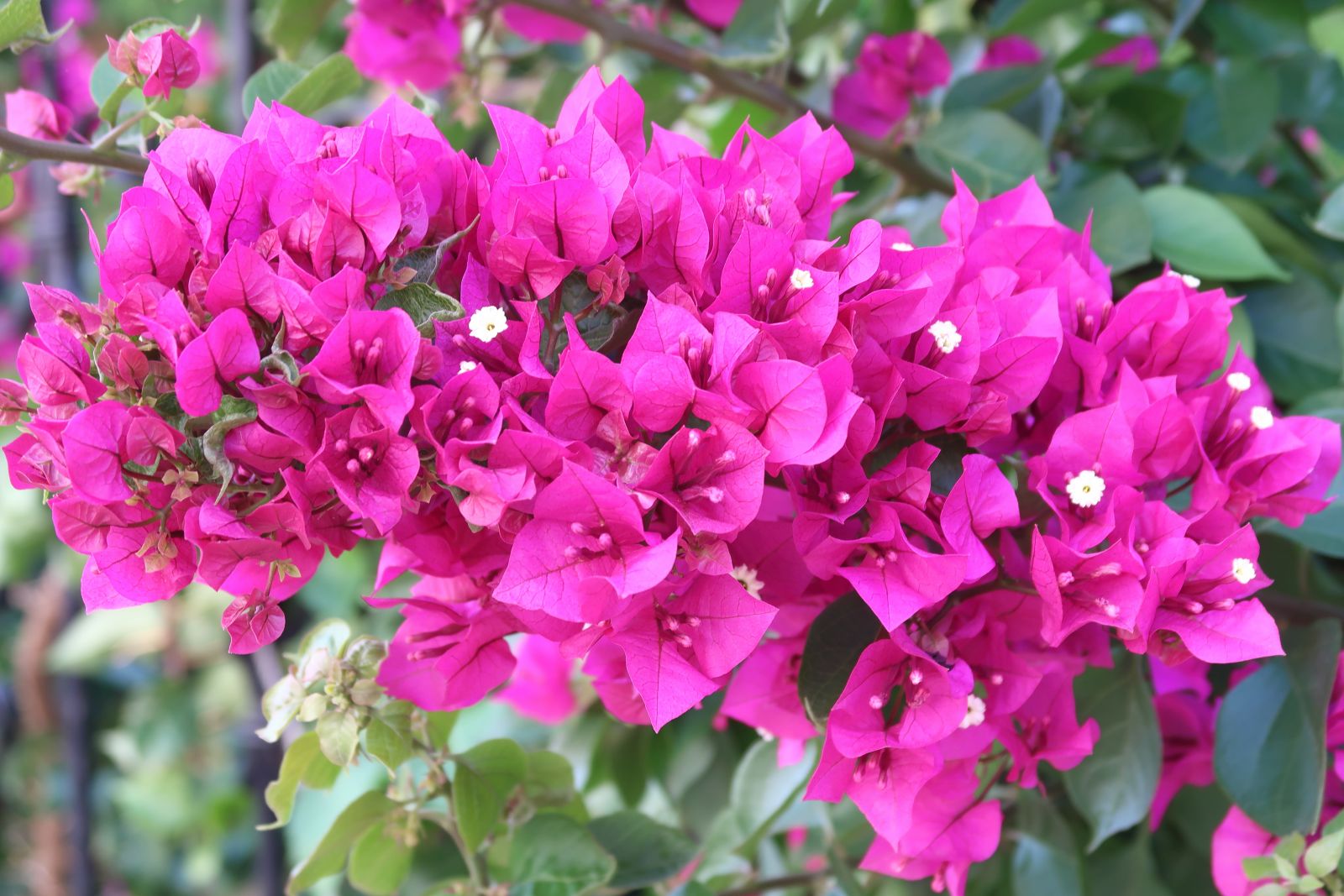
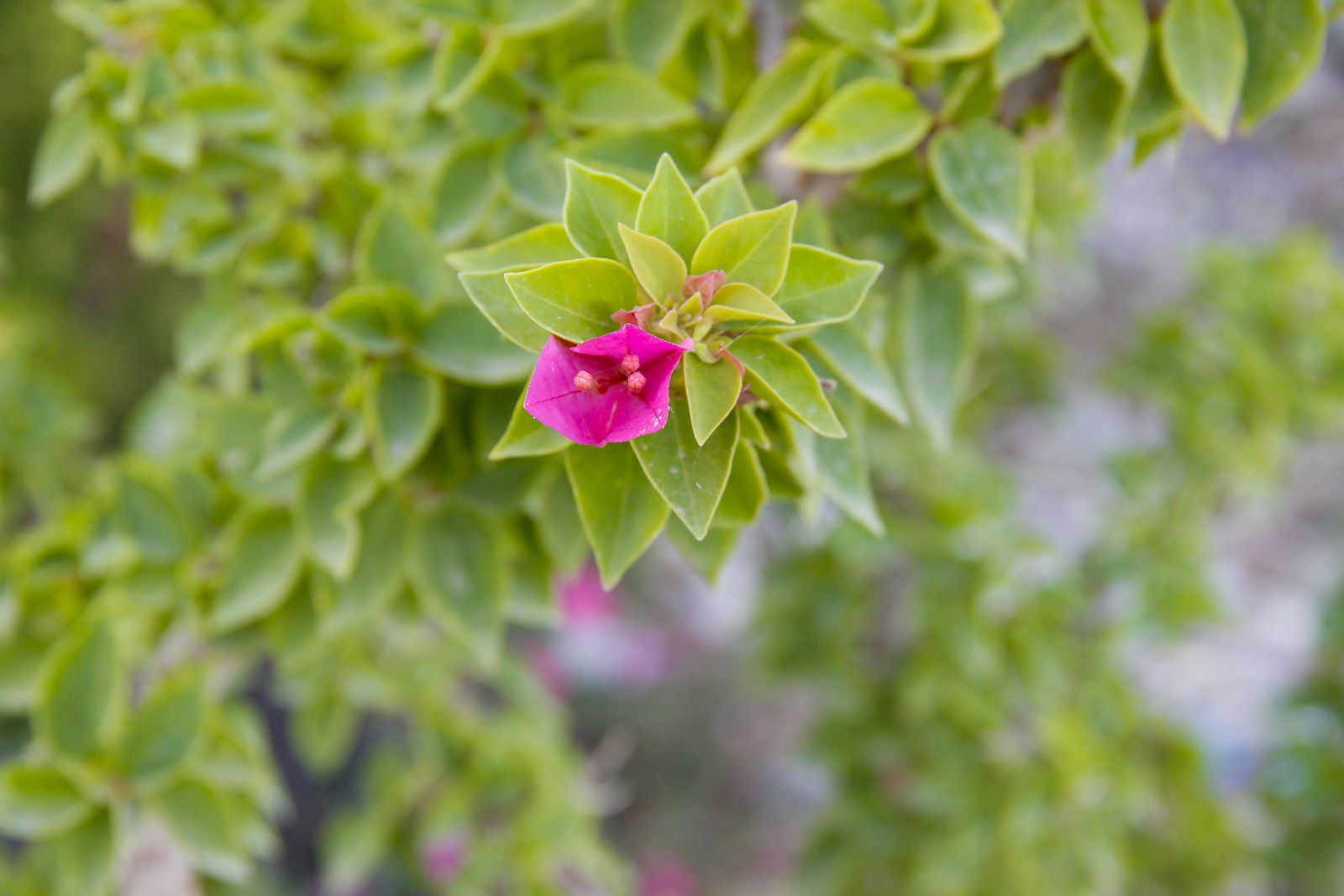
What look like petals are actually bracts — modified leaves as thin as paper, hence the nickname "paper flower". The true flowers are small, tubular and white or cream, usually three in the centre of each cluster of three bracts. That's why bougainvillea stays colourful for so long: the bracts last for weeks.

Species and varieties
- Bougainvillea glabra. The most common indoors: more compact, nearly hairless, and takes pruning and training well.
- Bougainvillea spectabilis. A vigorous climber with hairy leaves and large bracts; grows very big in warm climates.
- Bougainvillea peruviana. Less common, but a parent of many hybrids.
- Hybrids (B. × buttiana and others). Most varieties on sale are hybrids, with white, yellow, orange, pink, magenta or bicoloured bracts and sometimes variegated leaves.
For the home, choose compact varieties and plants already in bloom in the shop, so you can see the colour and check the plant's condition.
Caring for bougainvillea at home
Light is everything
Bougainvillea needs as much direct sun as possible — at least 5–6 hours a day. A south-facing window is best, and a balcony or terrace in summer. In shade it grows but hardly flowers.
Temperature
In summer it's happiest at 20–30 °C. It can't take frost: in autumn, when nights drop below 10 °C, bring the pot indoors. A winter rest at 10–15 °C in a bright spot helps it set flowers for the next season.
Watering
Water generously, but only once the top 2–3 cm of soil has dried. Bougainvillea dislikes waterlogging, while slight drying between waterings actually encourages flowering. Water less in winter.
Feeding
From spring to late summer, feed every two weeks with a fertiliser for flowering plants that is higher in potassium and phosphorus. Too much nitrogen gives lush leaves but few bracts.
Soil and pot
Use general potting mix for flowering plants with added perlite or coarse sand for drainage. The pot should have holes and not be too big: slightly pot-bound bougainvillea flowers more readily. Repot in spring every 2–3 years, carefully and without breaking up the root ball, as the roots are brittle.

Pruning and training
Bougainvillea flowers on new growth, so pruning helps rather than hinders flowering.
- In spring, before active growth, cut stems back by a third to a half and remove weak or crowded shoots.
- After each flush of flowers, pinch back spent shoots to encourage new ones.
- Shape. Bougainvillea can be grown as a bush, a standard, a climber on a support or even a bonsai.
Wear gloves: the stems have sharp thorns.

Propagation
The easiest way is from semi-ripe cuttings 10–15 cm long in spring or summer. Dip the cut end in rooting hormone, plant in a light mix of peat and perlite, cover with plastic and keep warm (22–25 °C), ideally with bottom heat. Rooting takes several weeks and not every cutting takes — that's normal. Air layering is more reliable: bend a stem into a neighbouring pot and peg it into the soil.
Common problems
- Dropping leaves and bracts. A typical reaction to being moved, cold, draughts or overwatering. After coming home from the shop, it's often temporary.
- No flowers. Too little sun, too much nitrogen, a warm winter without rest, or too large a pot.
- Yellowing leaves. Usually overwatering.
- Pests. Aphids, mealybugs, spider mites and whitefly. Check the undersides of leaves regularly and use products approved for houseplants if needed.

Bougainvillea on the balcony and in the garden
In Ukraine bougainvillea is grown as a container plant: from late May to early autumn it lives on a sunny balcony, terrace or in the garden, then moves indoors for winter. It pairs well with other tropical "holidaymakers" such as hibiscus — see our hibiscus care guide. Find other flowering houseplants among our potted plants.
.jpg)

FAQ
Can bougainvillea be grown in a flat?
Yes, if you have a sunny window and a cool, bright spot for winter.
Why is my bougainvillea dropping leaves?
Because it was moved, got cold, sat in a draught or was overwatered. Leaves usually regrow once it settles.
Why won't my bougainvillea flower?
Most often it lacks sun, gets too much nitrogen or had no winter rest.
What are the colourful "petals" on bougainvillea?
Bracts. The true flowers are small, white or cream, in the centre.
Can bougainvillea survive frost?
No. It is damaged at around 0 °C, so bring it indoors for winter.

View full-size photo
Author: Maria Svitlovir
Graduated from Taras Shevchenko National University of Kyiv, Institute of Biology and Medicine (2001). BSc in Biology, MSc in Horticulture. Writes about plants, works at a garden centre selecting and repotting plants, and contributes to plant reference guides.