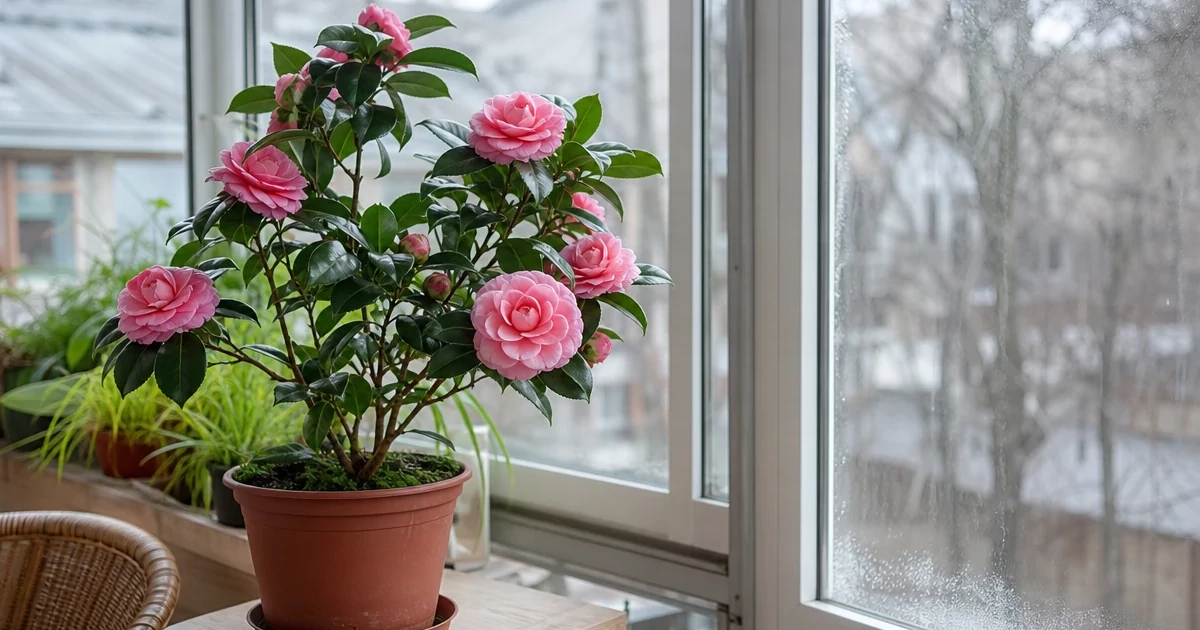
Camellia is an evergreen shrub with glossy leaves and flawless, almost waxy flowers in white, pink or red, single or double. It blooms in winter and early spring, when few other flowers are around. But camellias have a reputation for being fussy: in a warm flat they readily drop their buds. Here is what they need.
Flowering plants and bouquets: potted plants and peony-style roses.
The genus Camellia belongs to the tea family and comes from East and Southeast Asia. Japanese camellia (Camellia japonica) and its cultivars are the most common in homes and gardens. Its close relative Camellia sinensis is the plant whose leaves make tea. In literature the flower is famous from Alexandre Dumas fils’s novel “The Lady of the Camellias” (1848).
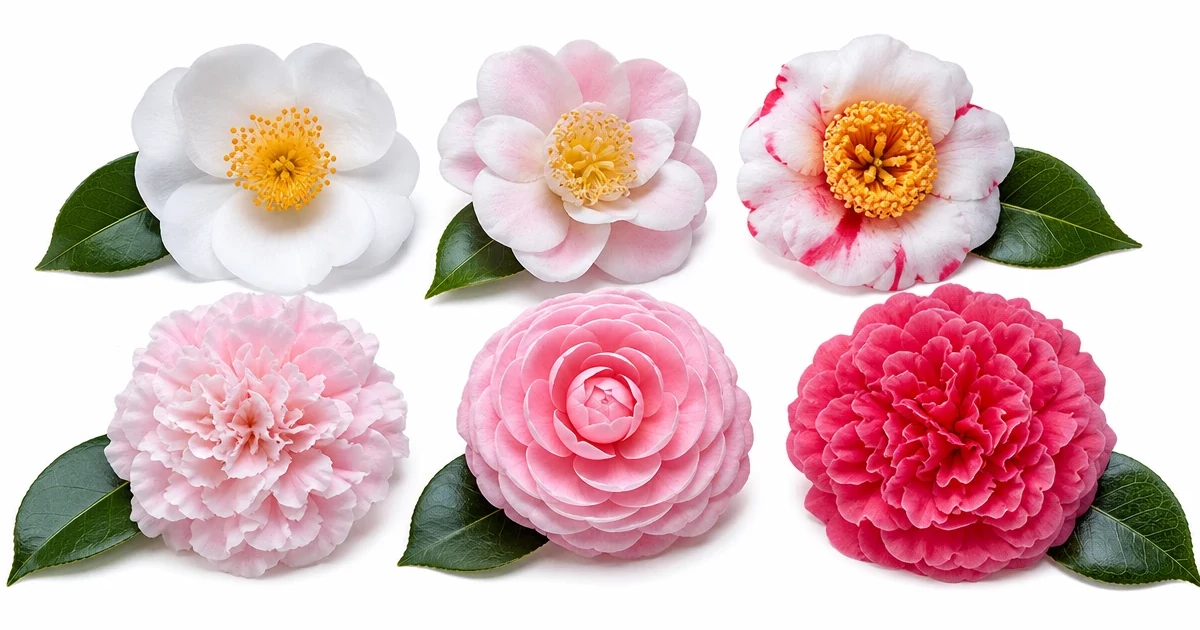
Flower forms include single (one row of petals around yellow stamens), semi-double, anemone, peony and formal double, with perfectly even rows of petals. Colours range from white and blush pink to deep red and streaked.
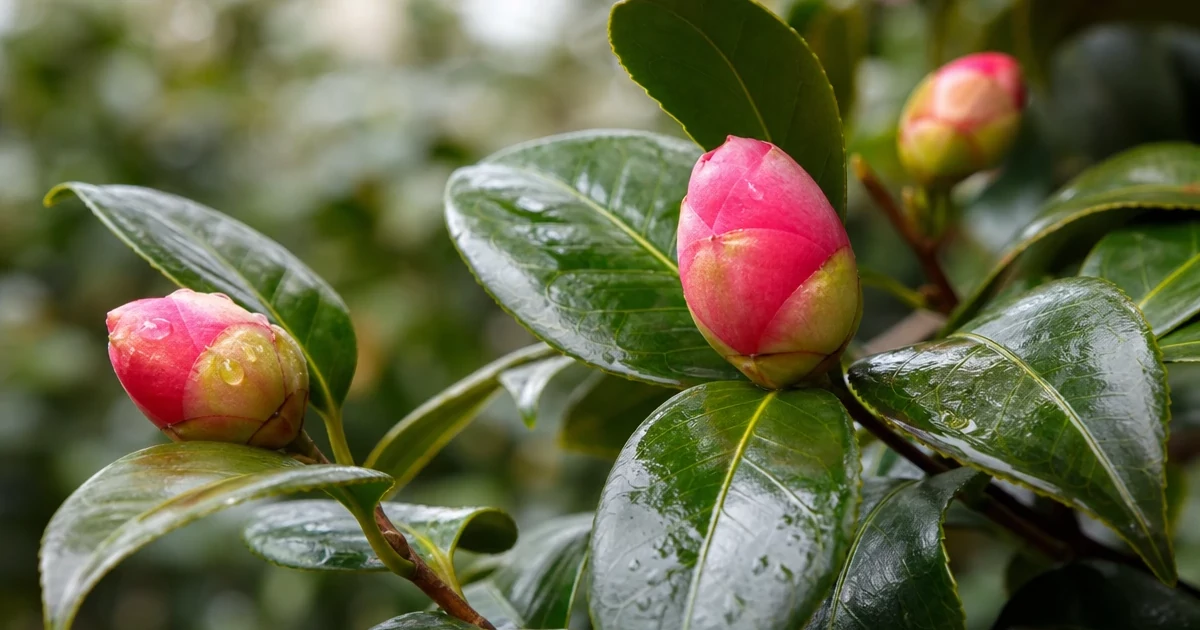
If there are too many buds, you can remove some so the rest open larger.
Other houseplants flower in winter too; see “Winter-flowering houseplants”, and the showiest flowering species in “Beautiful flowering houseplants”.
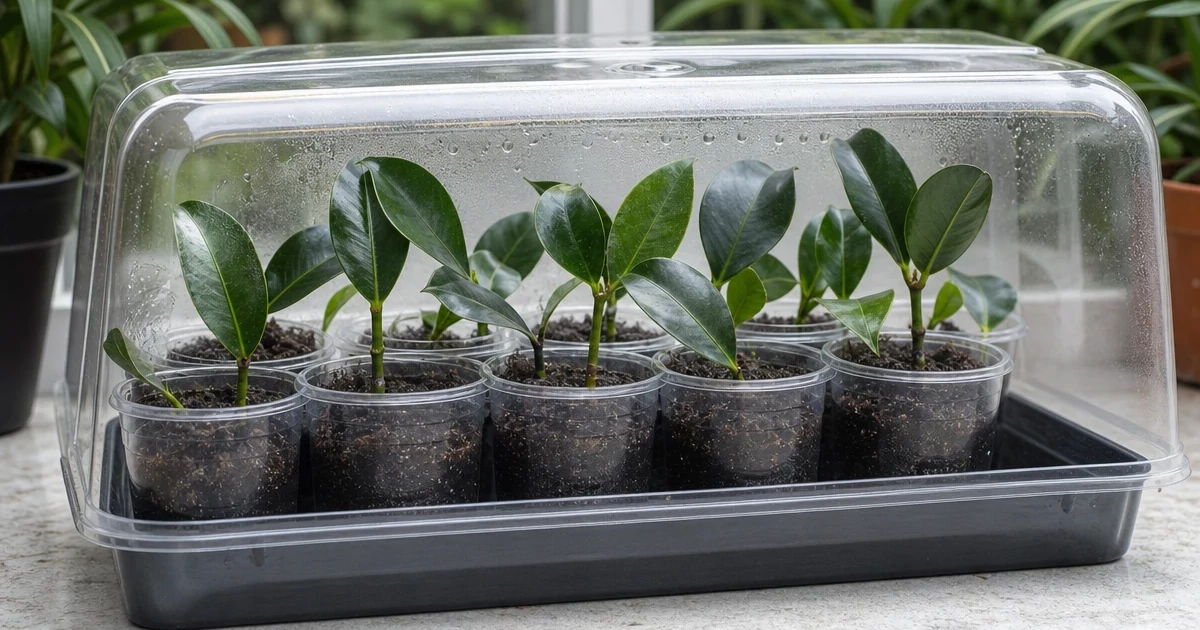
The easiest way is from semi-ripe cuttings in summer. Take shoot tips 6–8 cm long with 2–3 leaves, dip the cut end in rooting hormone and plant into a peat-sand or perlite mix. Keep under film in warmth and bright indirect light. Rooting takes two months or more, and a young plant flowers after 2–3 years.
Where winters are mild, yes, in a sheltered spot. In cold climates it is grown in a tub and kept in a cool, bright room in winter.
Often because the soil is alkaline or the water hard, so the plant cannot take up iron. Repot into acidic compost and water with soft water.
A single flower lasts about 1–3 weeks somewhere cool, and buds open in succession, so the bush flowers for 1–3 months. In warmth the flowers fade faster.
A mature Japanese camellia in the ground survives brief frosts down to roughly −10 °C. Roots in a pot freeze more easily, so container plants are kept at no lower than 0…+5 °C in winter.

Author: Maria Svitlovir
Graduated from Taras Shevchenko National University of Kyiv, Institute of Biology and Medicine (2001). BSc in Biology, MSc in Horticulture. Writes about plants, works at a garden centre selecting and repotting plants, and contributes to plant reference guides.
© Kyiv 2026 UFL Flower Shop

Trademark UFL №191476 is used under license of the rights holder.
All rights reserved. Any use of materials without a link to the site is prohibited.


 Birthday
 Hydrangeas