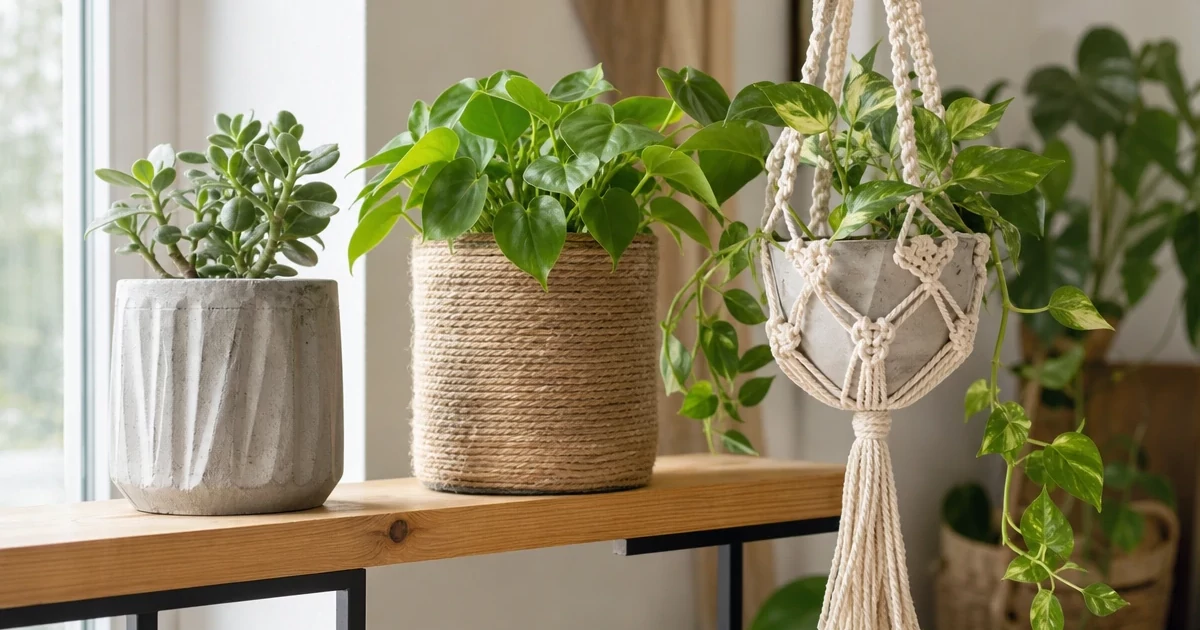
A cachepot is a decorative container that holds an ordinary plant pot. The word comes from French (cache-pot, "hide the pot"), and that is the whole idea: the plastic nursery pot stays inside, while the outside matches your interior. You can make a DIY pot cover from jute, fabric, clothespins, an old vinyl record or concrete. Below are ideas by difficulty and a few simple rules — without them even the prettiest cover can harm the plant.
For hanging planters there is a fourth rule: account for the weight of wet soil. The ceiling hook and cord must hold the pot with a margin, and plasterboard ceilings need special anchors.
Choose a technique based on the material you enjoy working with — yarn and cord, paint and glue, or plaster. Start simple, then move on to macramé and concrete.
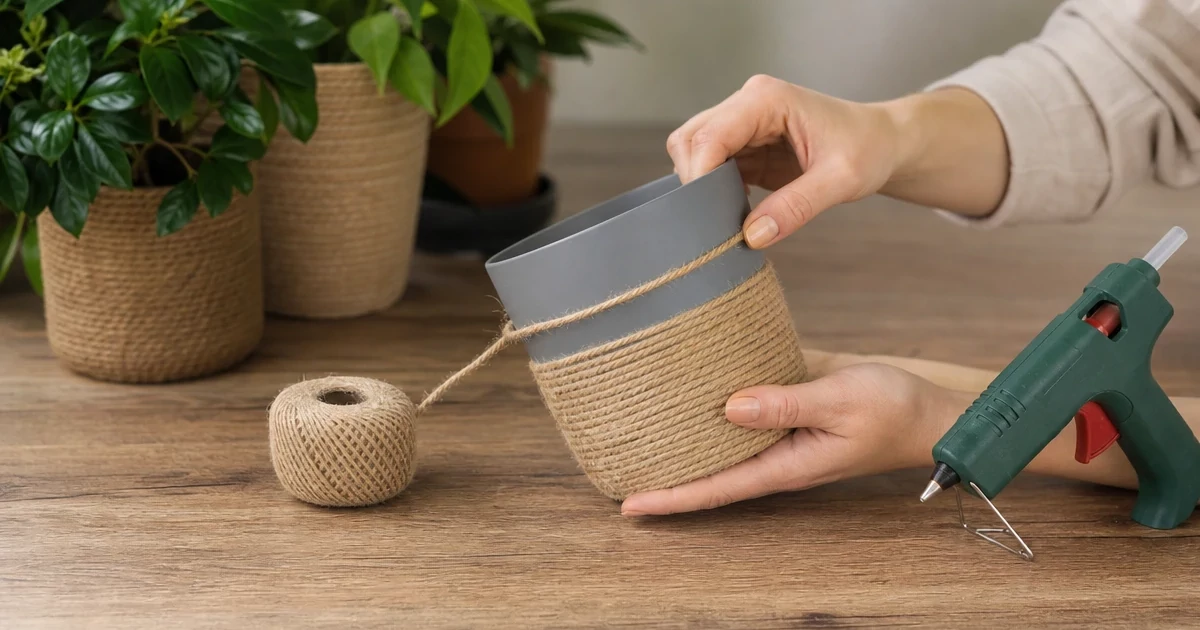
The easiest way to transform a dull plastic pot or tin can. Run a line of hot glue near the base and wind jute twine tightly, coil against coil, up to the rim. This cover suits eco and rustic interiors and can be finished with lace or wooden beads.
Wrap the pot in fabric and tie it at the top with a cord or ribbon, or sew a simple burlap sack with a folded cuff. Burlap looks especially cosy with herbs and succulents. Decorate with buttons, scraps or braid.
Cut furniture film of different colours into small pieces and stick them onto a plain cover for a bright patchwork look in 10–15 minutes. Or paint it with acrylics — geometric shapes, stripes or polka dots. On ceramic or terracotta, prime first and finish with clear varnish so the design does not wash off.
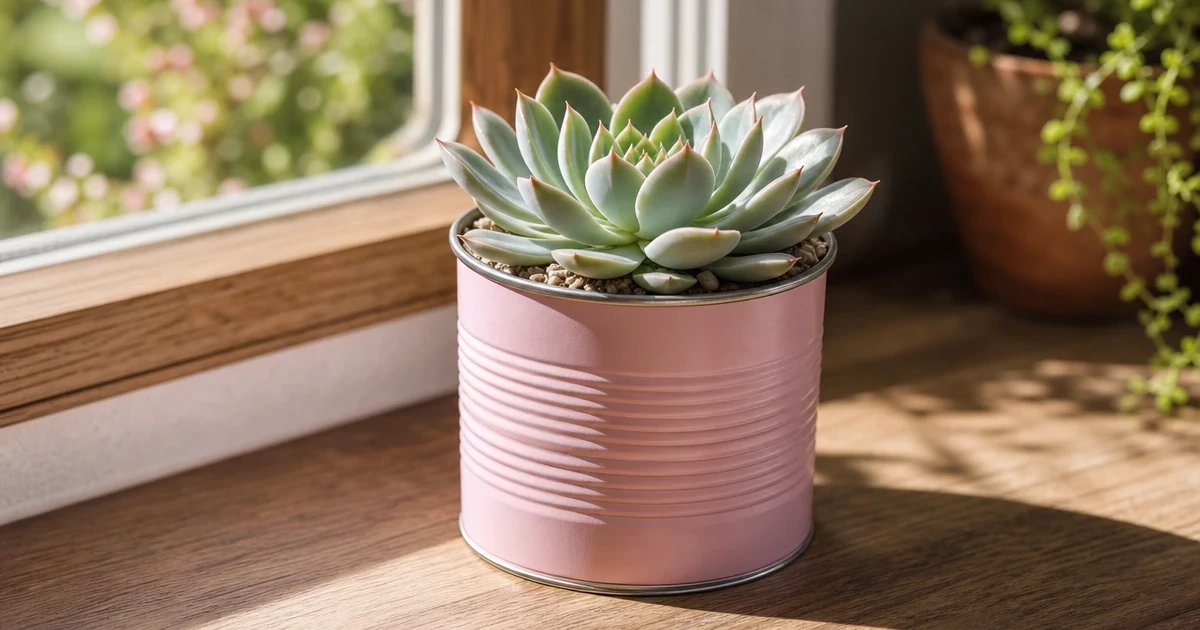
Take an empty tin can or a cut-down plastic bottle and clip wooden clothespins tightly around the rim. Instead of clothespins you can glue on chopsticks or ice-cream sticks. Leave the wood natural or stain it.
Cover a plain glass vase or pot with shells, smooth pebbles, tile pieces or glass gems. Use tile adhesive for mosaic and fill the gaps with grout. It takes an evening, and the result lasts for years.
Newspapers or magazines rolled into tubes can be woven into baskets, much like wicker. Finish with stain or acrylic paint and varnish. Always put a saucer inside — paper does not like water.
An old rubber boot, shoe, bag, wooden crate, kettle or basket can become a planter. Outdoors, petunias and marigolds look great in a boot or crate; indoors, try easy-going spider plants and snake plants. Drill drainage holes in shoes and crates and use them outdoors only or with a saucer.
Macramé plant hangers are knotted from 3–5 mm cotton cord. The base is a metal or wooden ring and several groups of cords tied with square knots into a net that holds the pot. For a first project, two knots are enough: the square knot and the spiral (half) knot.
T-shirt yarn crocheted tightly makes firm baskets that hold their shape and look great in bright interiors. Crochet firmly and check the size against the pot as you go.
An old record is softened in the oven at a low temperature, placed on top of an upturned bowl or pot, so the edge droops into waves. Wear oven gloves and ventilate the room: records are made of PVC, which gives off harmful fumes if overheated. Seal the centre hole before use or stand the pot on a saucer.
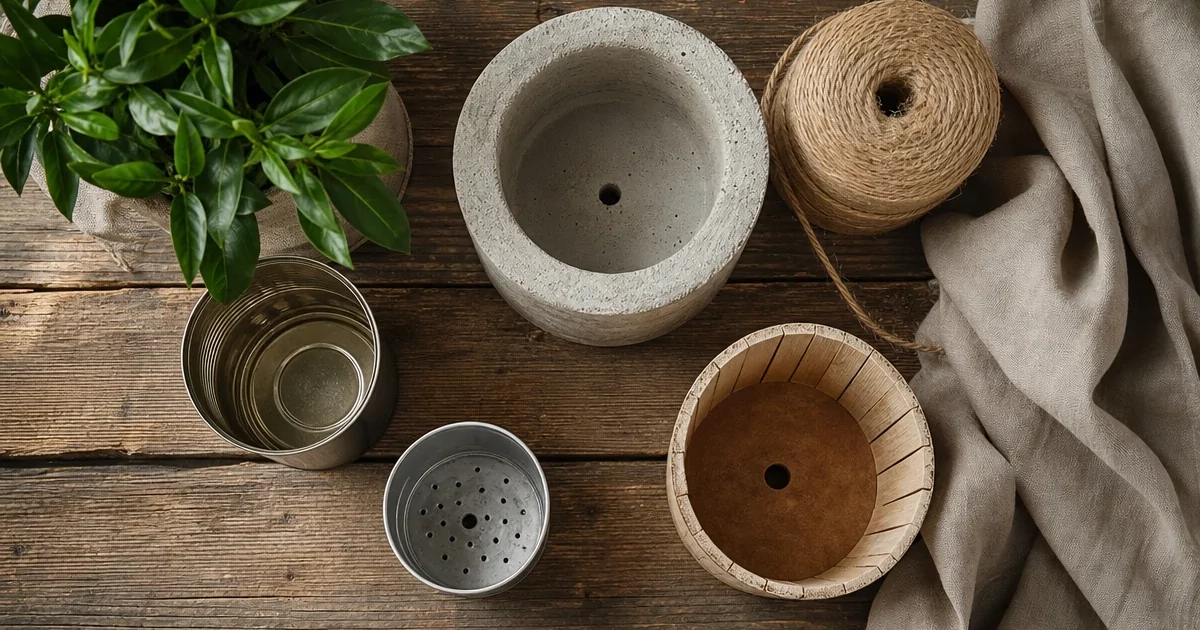
For a concrete planter you need two plastic containers of different sizes: pour the mix into the larger one, then press the smaller one in and weigh it down. Remove the mould after one or two days. Wear gloves — wet cement irritates the skin — and rinse the finished planter several times before using it.
Hang a planter where you can easily reach it for watering, not right under the ceiling. Outdoors, hang it from terrace beams, a balcony railing or a sturdy branch.
To group several plants beautifully, see our guide to houseplant arrangements. If you do not have a plant for your new cover yet, browse our potted plants or orchids. For another DIY project, try dried flower arrangements.
A pot is what the plant grows in, and it has drainage holes. A cachepot is a decorative outer container without holes that the pot sits in.
Better not. Without drainage, water pools around the roots. If you really want to, drill holes in the base or add a thick drainage layer and water very carefully.
Water-resistant materials: concrete, treated wood, burlap with a plastic liner, old rubber boots, metal tins.
Use an anchored hook rated for the weight of the pot with wet soil. For plasterboard, use dedicated fixings.
Cotton or polyester cord 3–5 mm thick. Outdoors, polyester or treated jute is better — cotton deteriorates faster in the damp.

Author: Maria Svitlovir
Graduated from Taras Shevchenko National University of Kyiv, Institute of Biology and Medicine (2001). BSc in Biology, MSc in Horticulture. Writes about plants, works at a garden centre selecting and repotting plants, and contributes to plant reference guides.
© Kyiv 2026 UFL Flower Shop

Trademark UFL №191476 is used under license of the rights holder.
All rights reserved. Any use of materials without a link to the site is prohibited.


 Birthday
 Hydrangeas