Fragrance is one of the main reasons the rose is called the queen of flowers. But not all varieties smell alike: some have the classic rose scent, others are fruity, tea-like or spicy, and some modern cut roses barely smell at all. Here are the types of rose fragrance, the most fragrant varieties for garden and bouquet, why shop roses often lack scent and how to enhance it.
Notes can blend, and the strength depends on weather and time of day.
The most fragrant garden varieties
Among hybrid teas, legendary fragrances belong to coral Fragrant Cloud (Duftwolke), dark red Papa Meilland and Mister Lincoln, two-tone Double Delight and peach Augusta Luise. These varieties often top lists of the most fragrant roses.
David Austin English roses are unrivalled for scent too: pink Gertrude Jekyll with the classic old-rose fragrance, crimson Munstead Wood and fruity Jubilee Celebration. The strongest scent belongs to old damask and centifolia roses, used in Bulgaria and France to produce rose oil.
Why bouquet roses often lack scent
For decades, cut roses were bred for long stems, tight buds and durability in the vase and in transit. Scent was often sidelined, since fragrant varieties tend to have thinner petals, open faster and travel less well. That is why most imported roses smell faint or hardly at all.
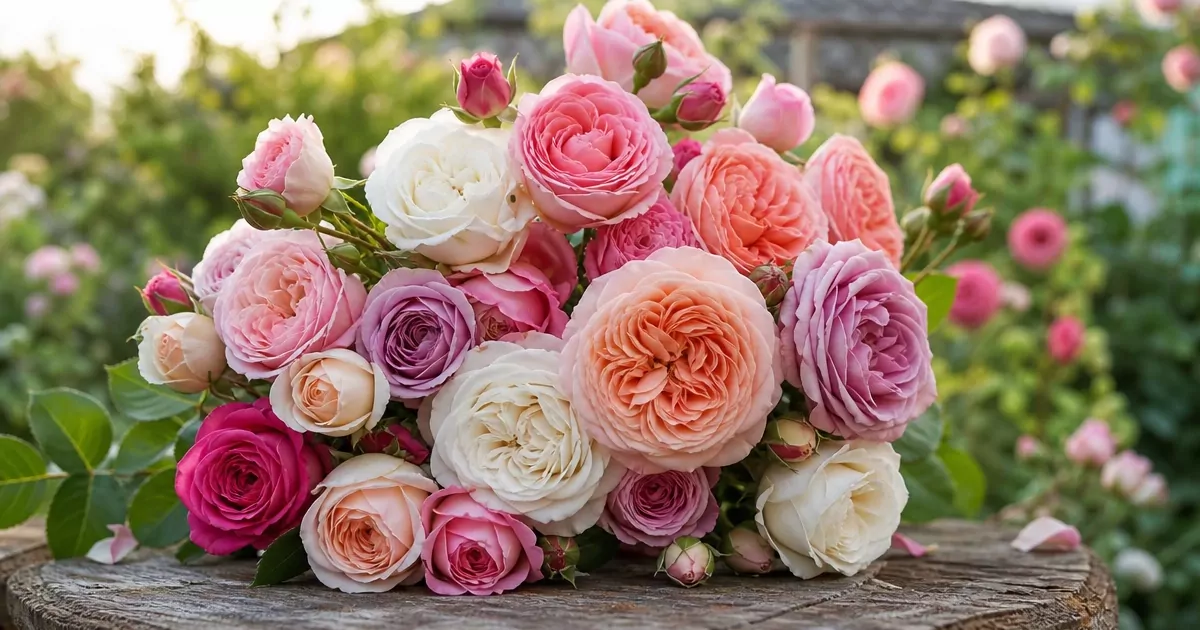
Fragrant bouquet roses include peony roses, garden and spray varieties, and local roses in season. If scent matters, ask the florist about the specific variety before ordering.
How to enhance rose fragrance
In the garden, roses smell strongest in the morning and in warm, humid weather, so plant fragrant varieties near a bench, terrace or window. A sunny spot, fertile soil and potassium feeding help produce a richer scent. In a vase, keep the bouquet in a warm, draught-free room: cold weakens the scent but extends vase life.
Graduated from Taras Shevchenko National University of Kyiv, Institute of Biology and Medicine (2001). BSc in Biology, MSc in Horticulture. Writes about plants, works at a garden centre selecting and repotting plants, and contributes to plant reference guides.






 Birthday
 Hydrangeas