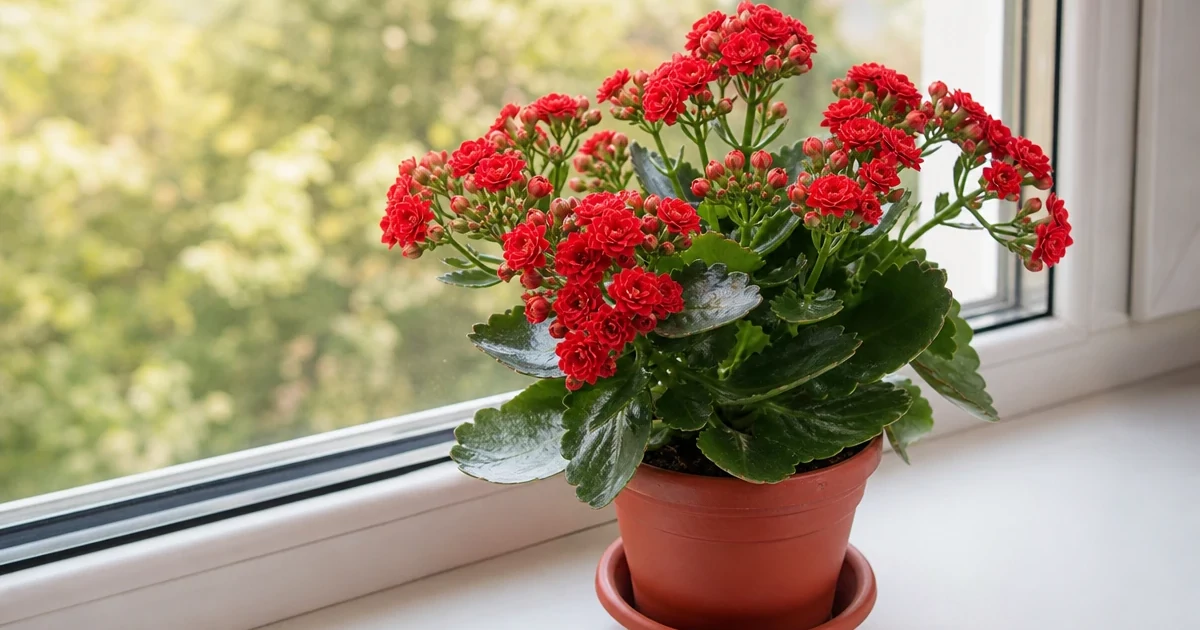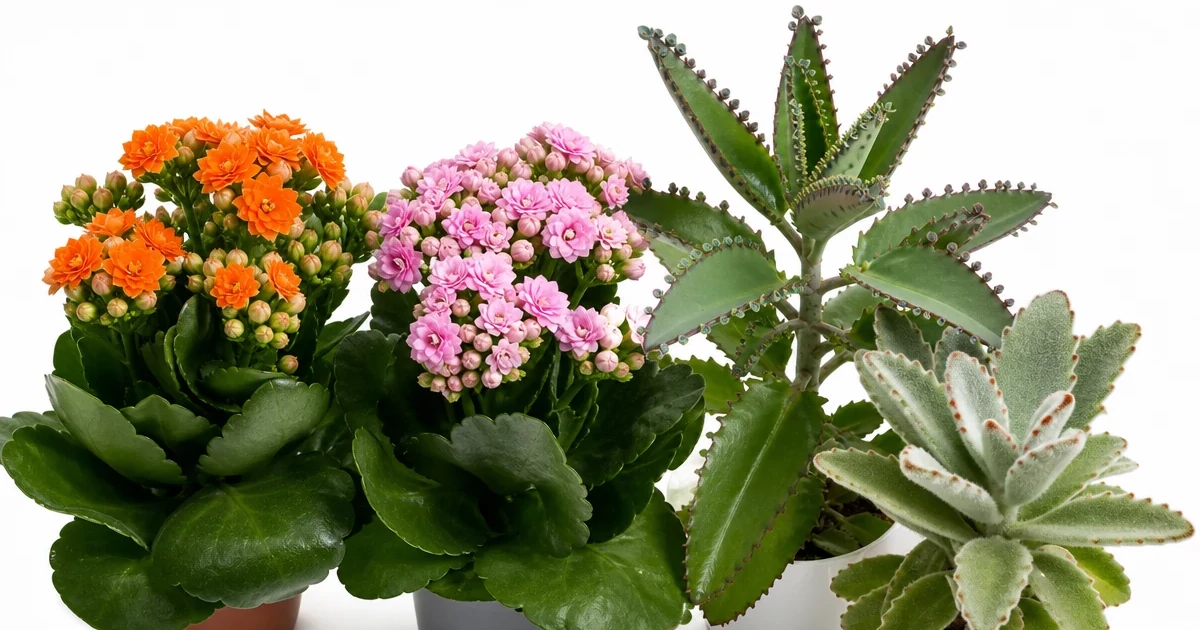
Kalanchoe is one of the most popular flowering succulents: a compact plant with fleshy leaves that covers itself in clusters of red, pink, yellow, orange or white flowers for weeks. It is easy to grow, but after the first bloom many people do not know how to make it flower again. Here are the main types and how to care for them. More flowers with photos, names and meanings are in our types of flowers guide.
Flowering plants as gifts: potted plants and flowers in a box.
Kalanchoe belongs to the stonecrop family; most species come from Madagascar and Africa.
Flaming Katy is a short-day plant: buds form when the nights are longer than the days. Growers produce flowering plants by creating these conditions artificially, so at home a kalanchoe often just grows leaves after its first bloom.
Kalanchoe roots easily from cuttings: cut a 5–8 cm tip, let the cut dry for a day or two and plant it in moist, sandy compost. Mother-of-thousands types are propagated from the plantlets on their leaves.
Kalanchoe is toxic to cats and dogs because its leaves contain compounds that affect the heart. Keep it out of pets’ reach. Do not use kalanchoe sap as a home remedy; talk to a doctor about any treatment. More on plants to be careful with: “Houseplants toxic to pets and children”.
In summer kalanchoe does well on a balcony or terrace in light shade: direct midday sun can leave reddish scorch marks on the leaves. Water when the top 2–3 cm of soil is dry and feed with succulent fertiliser every 2–3 weeks. In winter it needs coolness (12–16 °C), a bright windowsill and sparse watering — roughly every 2–3 weeks. Short days and cool temperatures trigger bud formation, so keep the pot away from radiators.
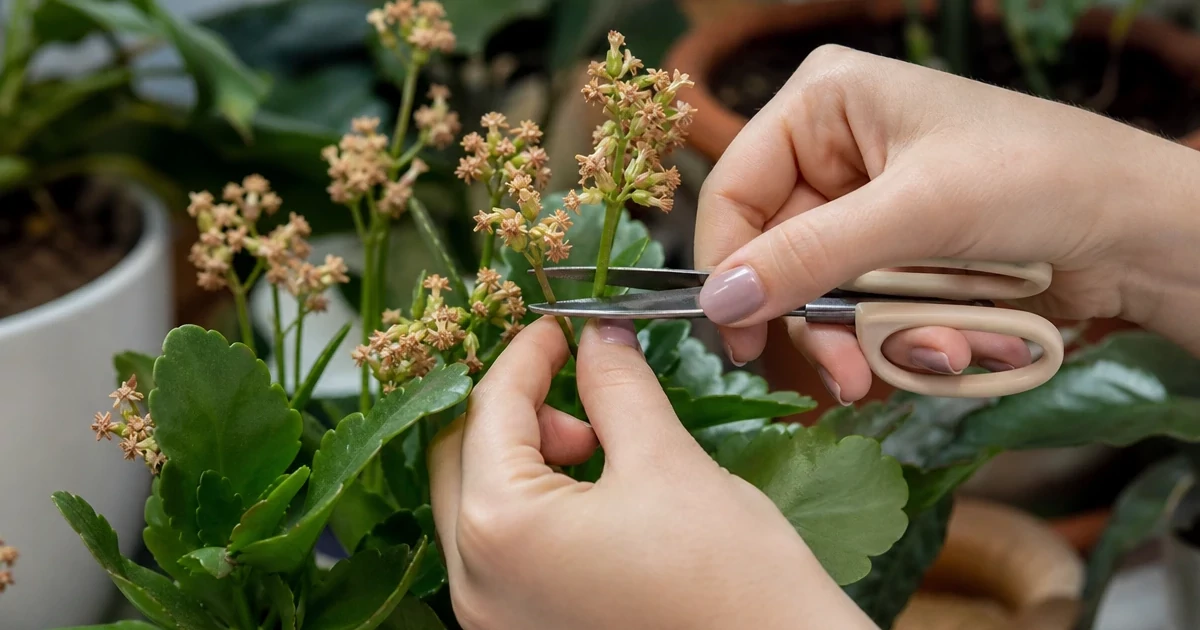
It needs more light. Cut the shoots back and move it to a brighter window.
About once a week in summer and every 2–3 weeks in winter, always checking that the soil is dry. More winter-flowering plants: “Winter-flowering houseplants”.

Author: Maria Svitlovir
Graduated from Taras Shevchenko National University of Kyiv, Institute of Biology and Medicine (2001). BSc in Biology, MSc in Horticulture. Writes about plants, works at a garden centre selecting and repotting plants, and contributes to plant reference guides.
© Kyiv 2026 UFL Flower Shop

Trademark UFL №191476 is used under license of the rights holder.
All rights reserved. Any use of materials without a link to the site is prohibited.


 Birthday
 Hydrangeas