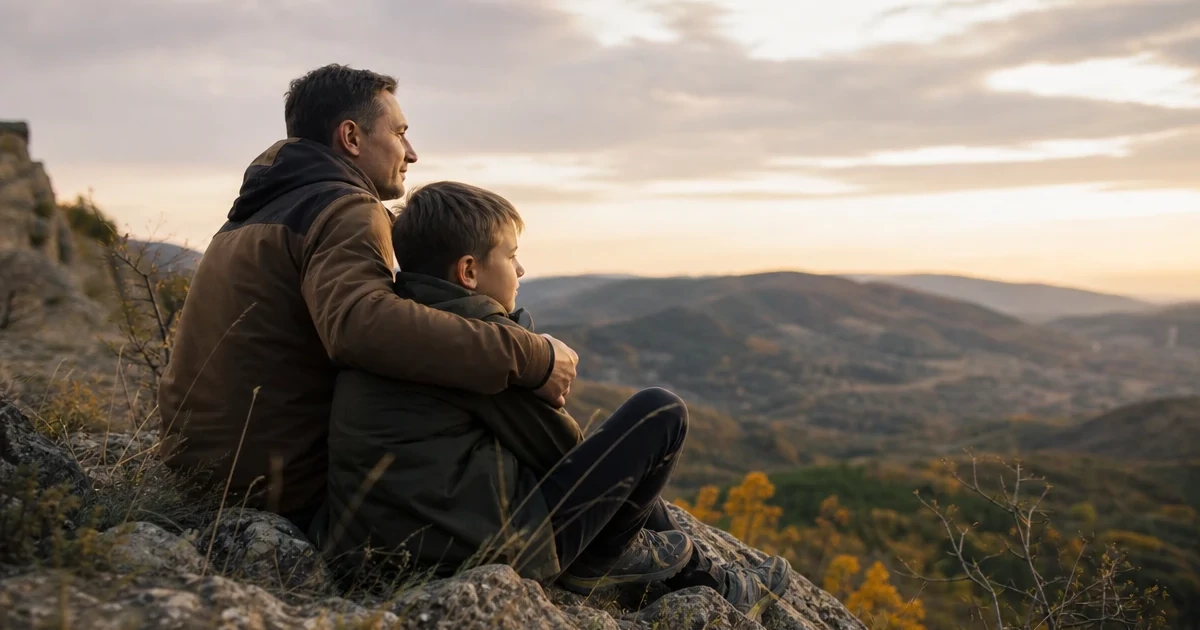
In November many countries mark two "men's days": World Men's Day on the first Saturday of the month and International Men's Day on 19 November. It is a good occasion to talk not about stereotypes but about what science actually knows about men: their health, perception and emotions. Here are 10 research-backed facts and ideas for celebrating a man, including with flowers. Ideas for other people and occasions are in our guide what to give: gift ideas.
International Men's Day (19 November) was first marked in 1999 in Trinidad and Tobago and is now observed in more than 80 countries. Its main themes are men's health, the role of fathers, positive role models for boys and gender equality. World Men's Day began in Austria in 2000 and falls on the first Saturday of November. Neither is an official UN day, but both have become occasions for health campaigns.
International Men’s Day is marked on 19 November. The modern tradition was started in 1999 by historian Jerome Teelucksingh from Trinidad and Tobago, who chose his father’s birthday as the date. The idea is not to set men against women but to focus on men’s health, positive role models for boys, fathers’ roles in families and equality. Today it is marked in dozens of countries, including Ukraine, though it is not a public holiday.
Men's day is a great reason to remind loved ones about their health: give a gym membership, book a check-up or simply spend time together. And yes, you can and should give men flowers. Choose clean shapes and deep colours: calla lilies, strelitzia, anthuriums, proteas, blue hydrangeas, burgundy roses and plenty of greenery. A potted plant is a good alternative, such as an anthurium, nicknamed "men's happiness" in Ukraine, a snake plant or a succulent arrangement.
The day suits a small office gesture: a shared breakfast or lunchtime pizza, identical token gifts — travel mugs, good coffee, chocolate, books. Or show care for men’s health: a massage voucher, a check-up or a gym pass. Most important is a sincere thank-you for their work and support, said in front of the whole team.
19 November; World Men's Day is on the first Saturday of November.
Yes. Choose clean-lined bouquets in deep colours or a potted plant.
Calla lilies, strelitzia, anthuriums, proteas, irises, gladioli and dark roses, but what matters most is that the recipient likes them.
Succulents, a cactus or a basket of treats: browse our gift baskets.
For the autumn holiday, see our Day of Defenders of Ukraine wishes.

Author: Maria Svitlovir
Graduated from Taras Shevchenko National University of Kyiv, Institute of Biology and Medicine (2001). BSc in Biology, MSc in Horticulture. Writes about plants, works at a garden centre selecting and repotting plants, and contributes to plant reference guides.
© Kyiv 2026 UFL Flower Shop

Trademark UFL №191476 is used under license of the rights holder.
All rights reserved. Any use of materials without a link to the site is prohibited.


 Birthday
 Hydrangeas