
 Birthday
 Hydrangeas
Moldova is a small country right next to Ukraine, with hills covered in vineyards and a spring welcomed with red-and-white threads. People come for the wine, but there is plenty here for lovers of nature and tradition too.
Spring flowers delivered: tulips and flowers in a box.
Mărțișor: spring on a thread
On 1 March in Moldova and Romania people give a mărțișor, a small token on a red-and-white string. It is worn on clothing throughout March and then hung on a blossoming tree. UNESCO lists the tradition as intangible cultural heritage. A mărțișor is often given with the first spring flowers, such as snowdrops or hyacinths.
- Mileștii Mici and Cricova. Underground galleries tens of kilometres long, storing millions of bottles of wine, toured by car.
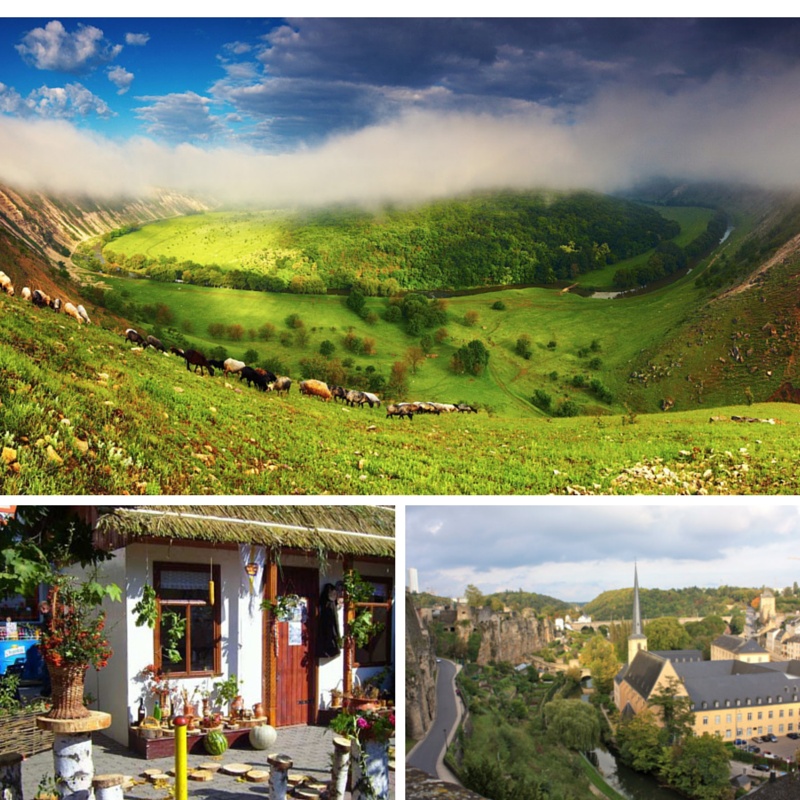
- Old Orhei. A cave monastery in limestone cliffs above a loop of the Răut river, one of the country’s most picturesque spots.
- Soroca Fortress. A round 15th-century fortress on the Dniester.
- Chișinău. One of the greenest cities in the region, with Ștefan cel Mare Park, a botanical garden with a rose garden and avenues of chestnut trees in spring blossom.
- Codrii Reserve. Beech and oak forests in the centre of the country with nature trails.
.png)
When to go
- March–April. Mărțișor and orchards in blossom.
- May–June. Green hills, roses in Chișinău and good walking weather.
- October. National Wine Day and the grape harvest.
For spring traditions, see early spring flowers, and for nearby countries, green Montenegro and Hungary in bloom.
FAQ
What is a mărțișor?
A spring token on a red-and-white string given on 1 March in Moldova and Romania; UNESCO lists the tradition as intangible heritage.
What should I not miss in Moldova?
Old Orhei, the underground wine galleries of Mileștii Mici or Cricova, Soroca Fortress and the parks of Chișinău.

View full-size photo
Author: Maria Svitlovir
Graduated from Taras Shevchenko National University of Kyiv, Institute of Biology and Medicine (2001). BSc in Biology, MSc in Horticulture. Writes about plants, works at a garden centre selecting and repotting plants, and contributes to plant reference guides.


