
 Birthday
 Hydrangeas
In the Basque Country there is a forest that looks like a fairy-tale set: old beeches with countless twisting trunks line a stream, and morning mist makes them almost ghostly. This is the Otzarreta forest in Gorbea Natural Park. Here is why the trees look so unusual.
Nature in a bouquet: flower baskets and potted plants.
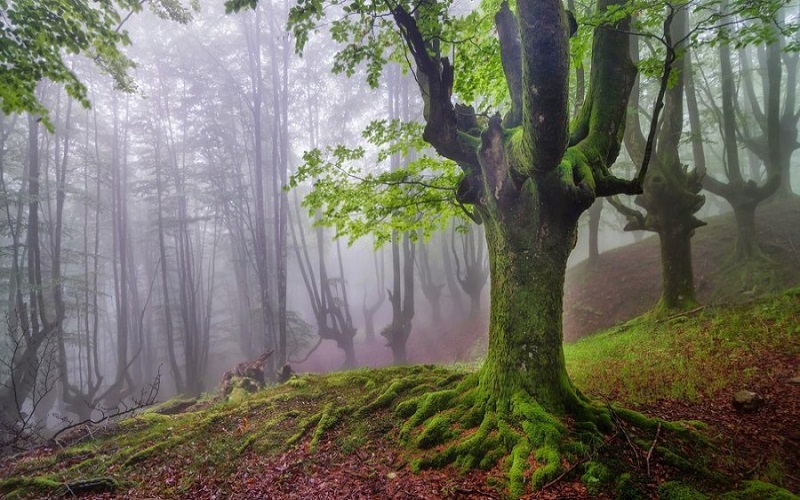
Gorbea Natural Park
The park lies on the border of Bizkaia and Álava in northern Spain and is named after Mount Gorbea, about 1,480 metres high and one of the best-known peaks in the Basque Country, topped by a metal cross. Beech and oak woods alternate with pastures and limestone crags.
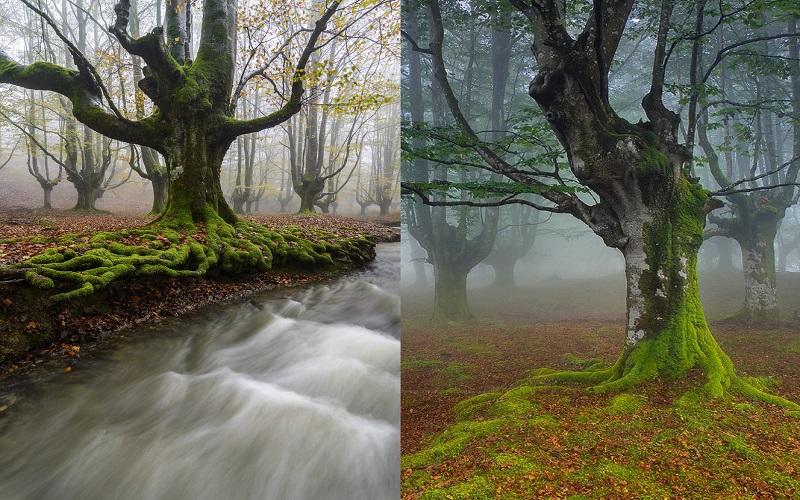
Why the beeches look so strange
The trees’ unusual shape is the result of an old practice called pollarding. Farmers regularly cut the beeches’ branches at a set height to obtain firewood and charcoal without felling the trees. New shoots sprang from the cut, and over time the trunks developed a knobbly “head” with many upright branches. When the tradition stopped, the branches grew into fantastic shapes.
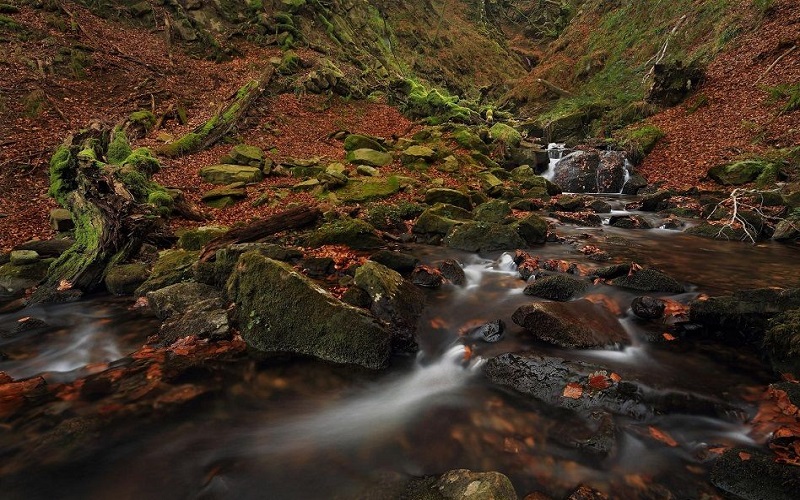
When to go
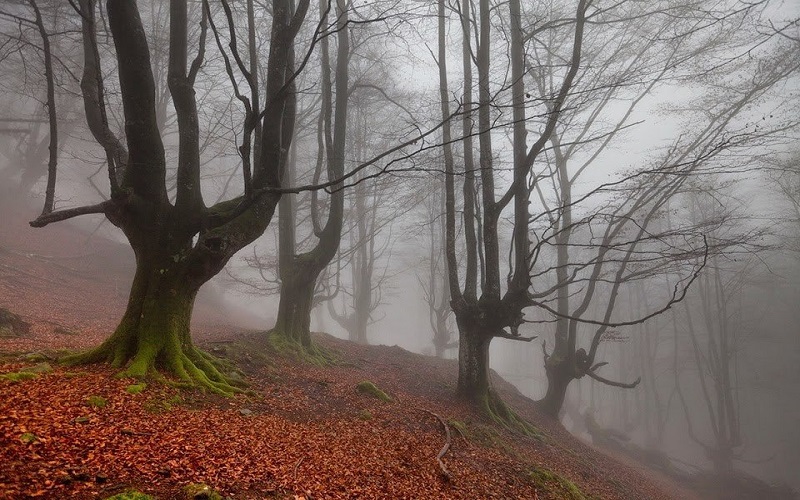
In autumn the forest turns copper, and in spring it is covered in soft green. The most atmospheric photos come on misty mornings. The forest is popular with photographers, so stay on the paths and avoid damaging the roots by the stream.
See more remarkable trees in the most unusual trees in the world, tree facts in 10 facts about trees, and how trees are shaped in grown furniture.
FAQ
Where is the Otzarreta forest?
In Gorbea Natural Park in the Basque Country, northern Spain.
What is pollarding?
Regularly cutting a tree’s branches at the same height so that new shoots regrow — a way to harvest wood without felling the tree.

View full-size photo
Author: Maria Svitlovir
Graduated from Taras Shevchenko National University of Kyiv, Institute of Biology and Medicine (2001). BSc in Biology, MSc in Horticulture. Writes about plants, works at a garden centre selecting and repotting plants, and contributes to plant reference guides.


