Every nation has plants that have become part of its culture. For Ukrainians they are viburnum and willow, sunflower and wheat, periwinkle, poppy and marigolds. They live on in songs, embroidery and rituals, and today they have taken on special meaning once again.
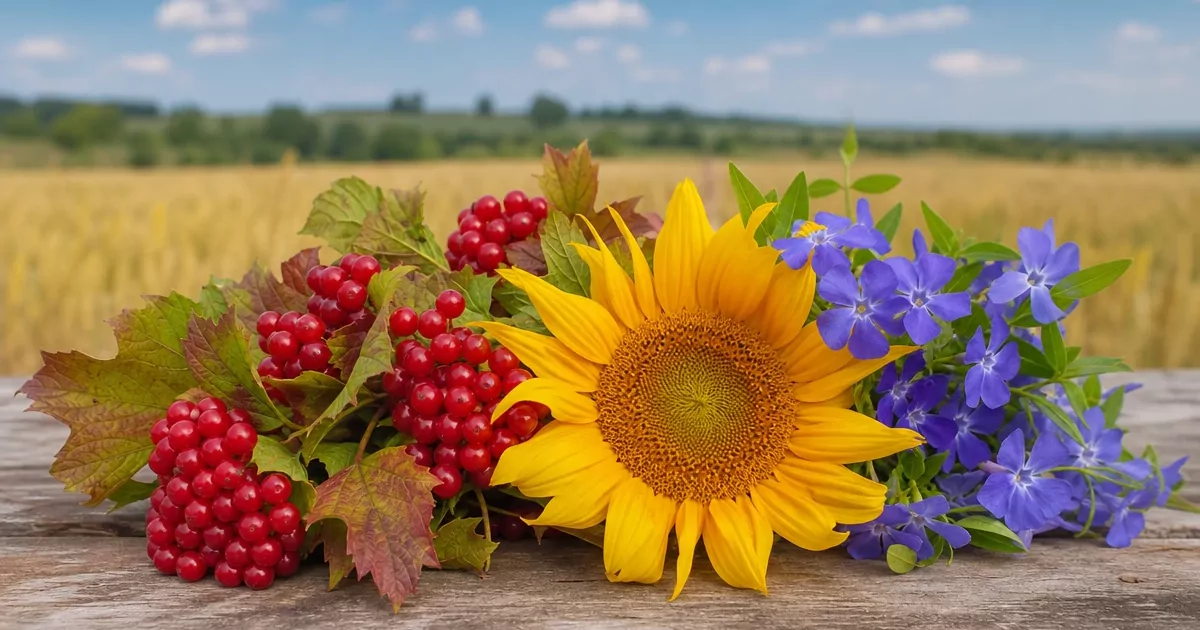
The guelder rose, or viburnum, with white flower heads in spring and red clusters in autumn, is probably Ukraine’s best-known plant symbol. It is associated with maidenly beauty, love and the unbroken line of a family. Viburnum was planted by the house, its clusters were woven into wedding loaves and wreaths, and the red berries on embroidered shirts symbolise the family’s blood and immortality. Hence the well-known saying: “Without willow and viburnum there is no Ukraine.”
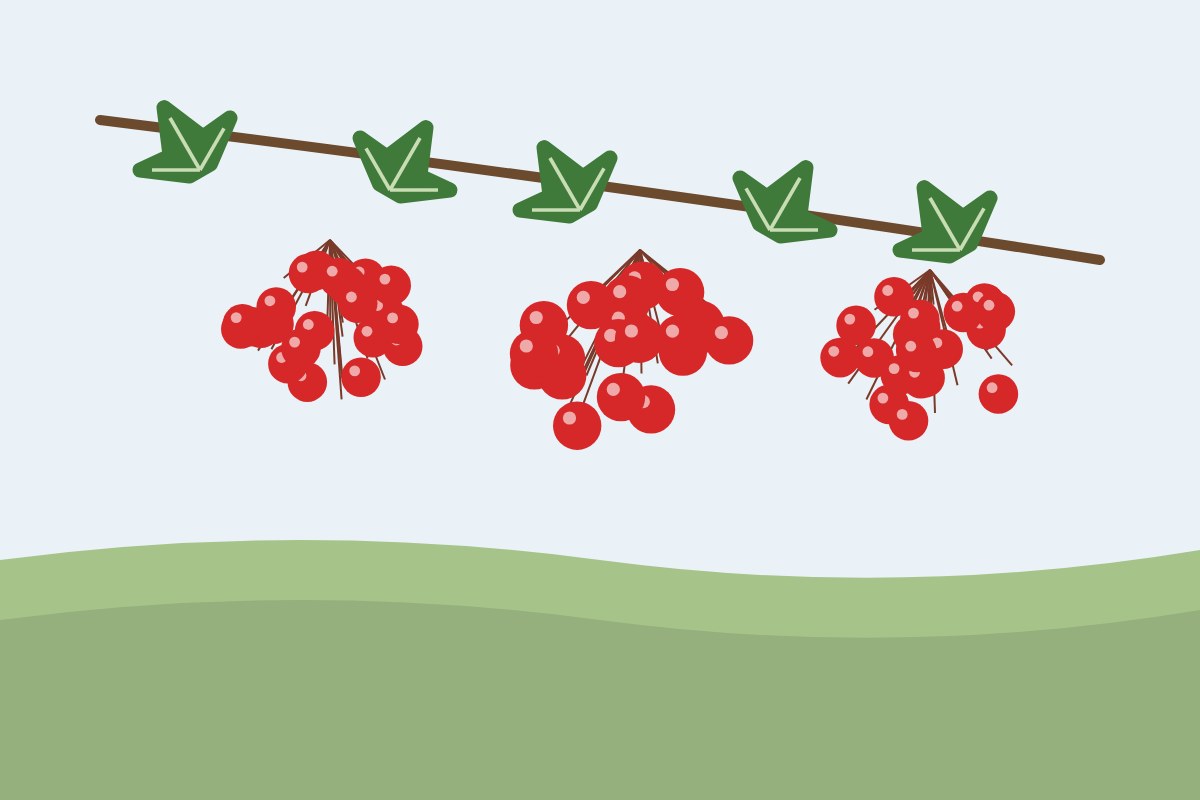
Illustration 1. Red viburnum berries ripen in September and hang on the branches until spring.
A willow grew by every well and river. It symbolises vitality and renewal: a branch stuck in the ground quickly takes root. On Palm (Willow) Sunday, willow twigs are blessed and kept at home as a charm.
The sunflower, brought from the Americas, has become a true symbol of the Ukrainian steppe over a few centuries. Ukraine is one of the world’s leading sunflower growers. A flower that turns its head to follow the sun stands for light, warmth, plenty and resilience. Since 2022 the sunflower has also become a symbol of resistance and hope.
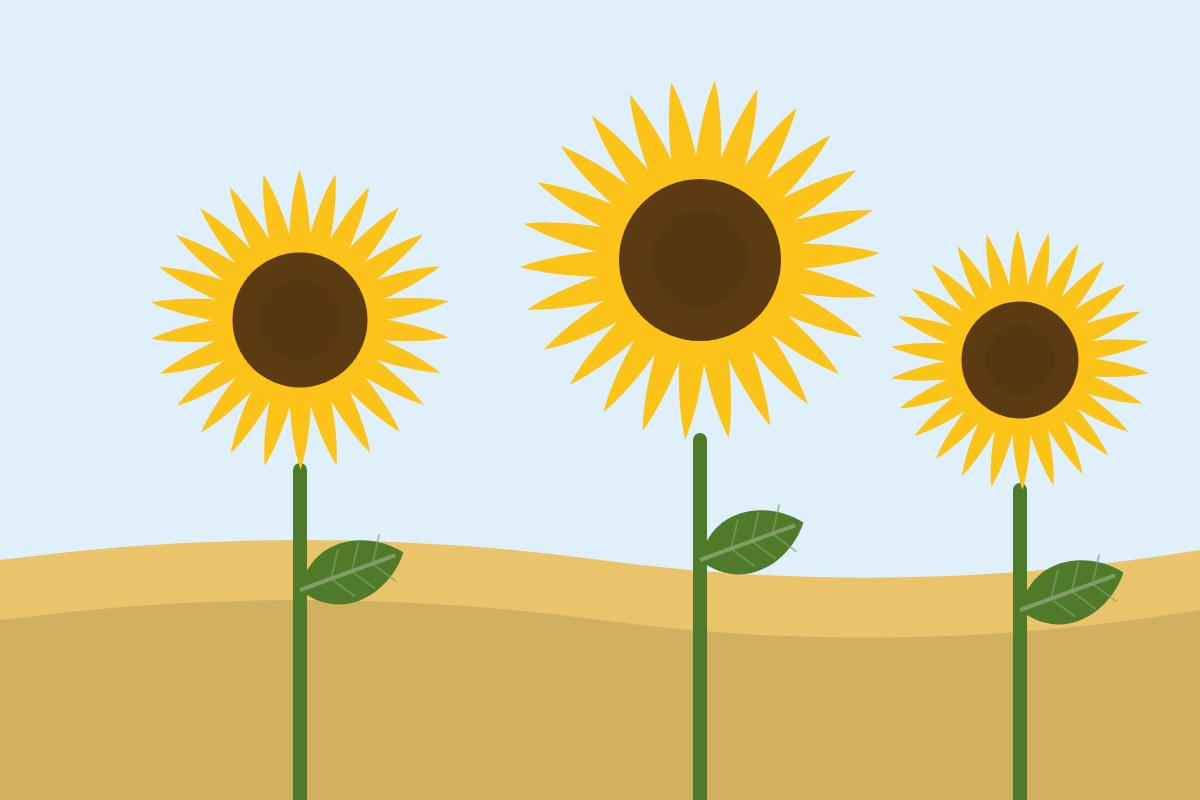
Illustration 2. Sunflower fields are an iconic image of Ukrainian summer.
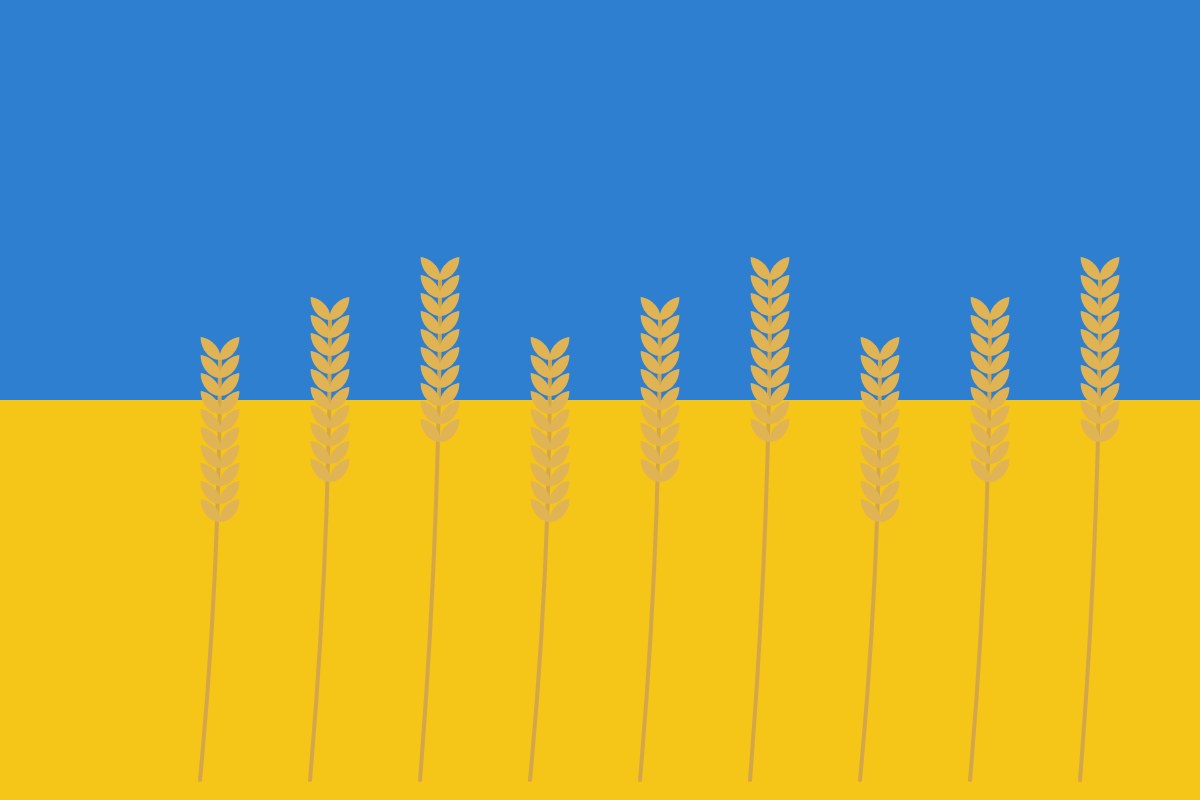
Ears of wheat symbolise work, bread and well-being. The most popular reading of the national flag is a blue sky above a golden wheat field. On Christmas Eve, a sheaf called a didukh was placed in the place of honour as a charm and a symbol of the ancestors.
Illustration 3. A blue sky above a wheat field is the favourite reading of the flag’s colours.
Evergreen periwinkle with delicate blue flowers symbolises faithfulness, eternal love and the endlessness of life. It was woven into wedding wreaths for the couple and used to decorate the wedding loaf and the wedding tree.
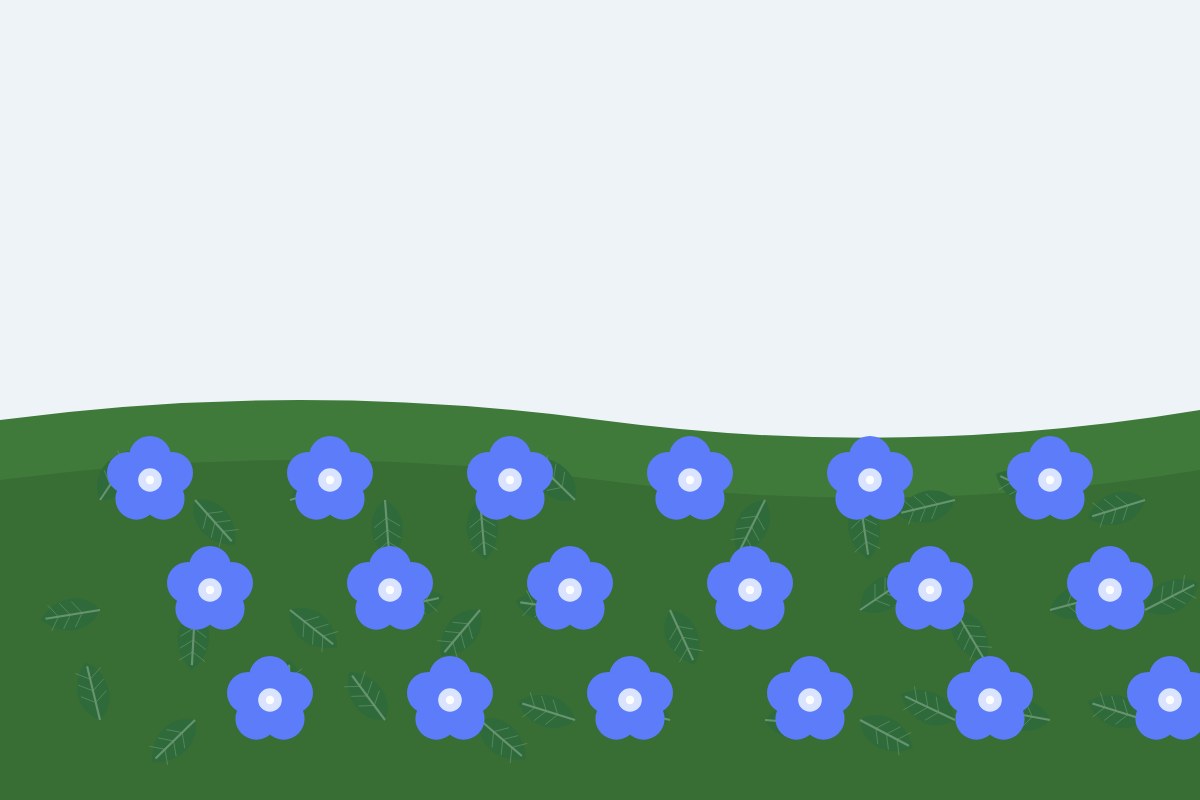
Illustration 4. Periwinkle forms an evergreen carpet and flowers in spring.
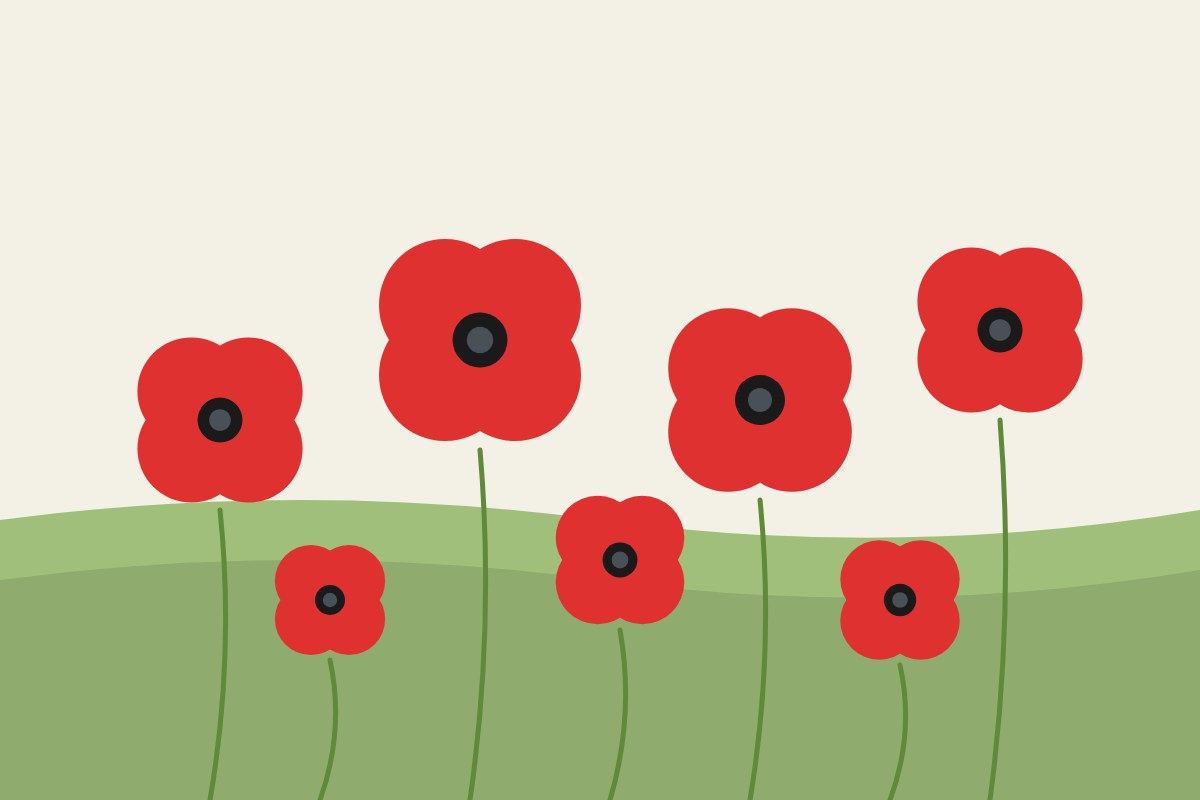
In folk belief the poppy was a charm against evil, and its seeds were scattered around the house. In folklore, the red poppy is an image of a fallen Cossack. Today a stylised poppy is the symbol of the Day of Remembrance and Reconciliation on 8 May and of honouring those killed in wars.
Illustration 5. The red poppy is a flower of remembrance.
Bright orange marigolds grew by almost every village house. For many Ukrainians they are associated with home, mother and childhood. No wonder one of the best-known Ukrainian songs is about them.
A bouquet of sunflowers, ears of wheat and viburnum sprigs is a warm and meaningful greeting for Independence Day, Vyshyvanka Day or simply for a loved one far from home. Such arrangements speak without words: “I remember where we come from.”
In short. Viburnum and willow, sunflower and wheat, periwinkle, poppy and marigolds form a living language of Ukrainian culture that needs no translation.
© Kyiv 2026 UFL Flower Shop

Trademark UFL №191476 is used under license of the rights holder.
All rights reserved. Any use of materials without a link to the site is prohibited.


 Birthday
 Hydrangeas