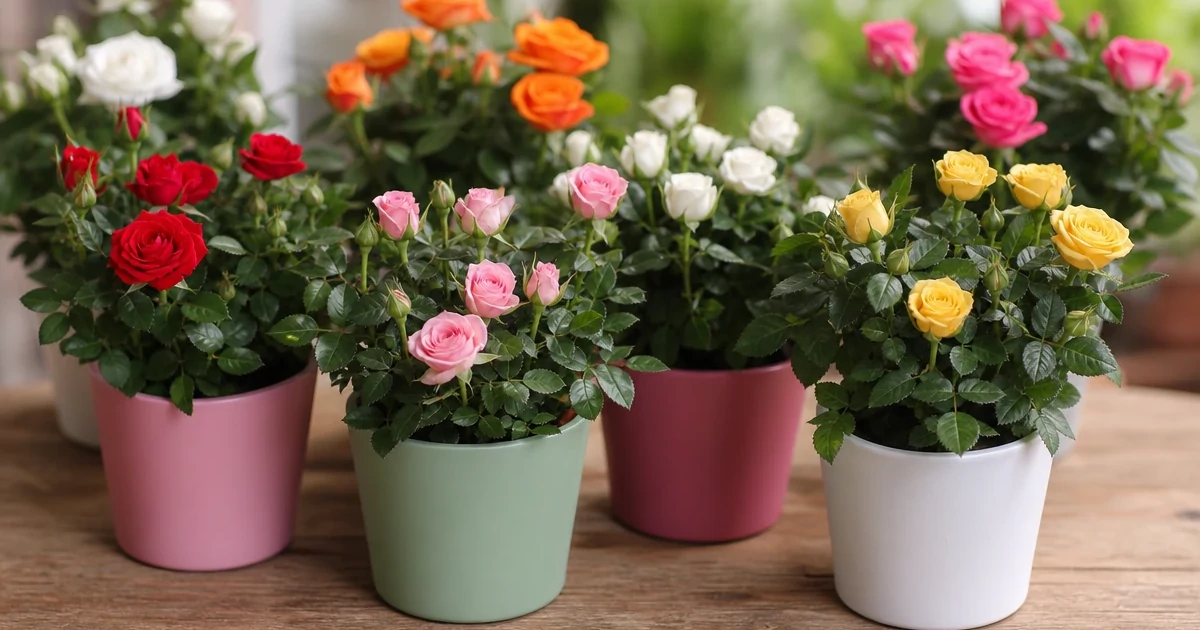
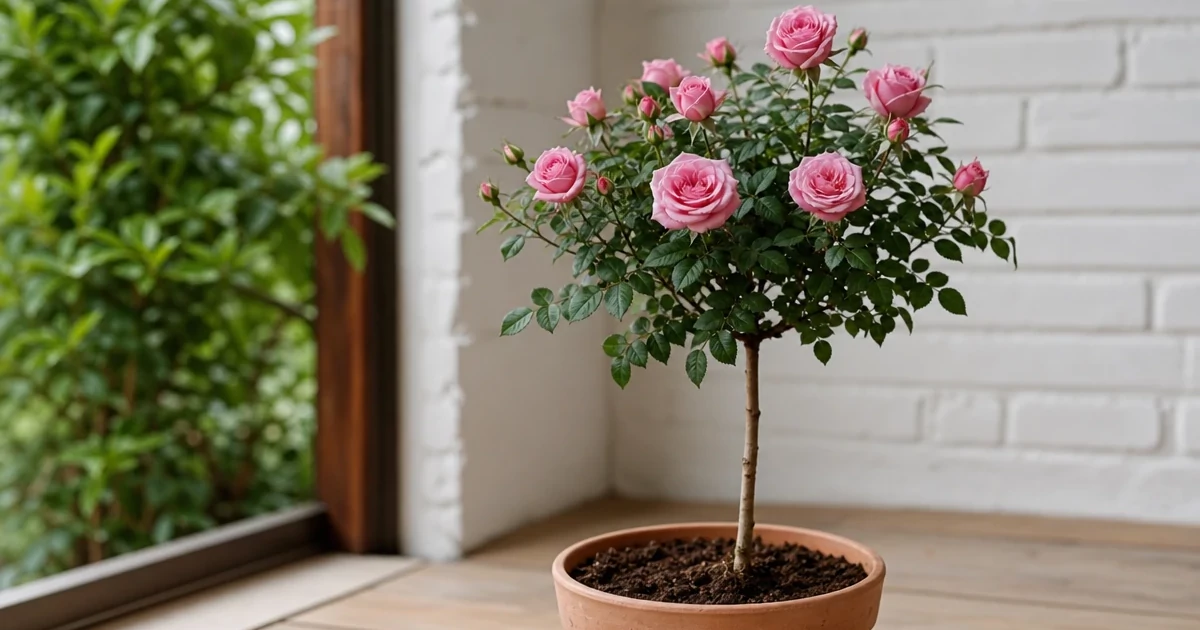
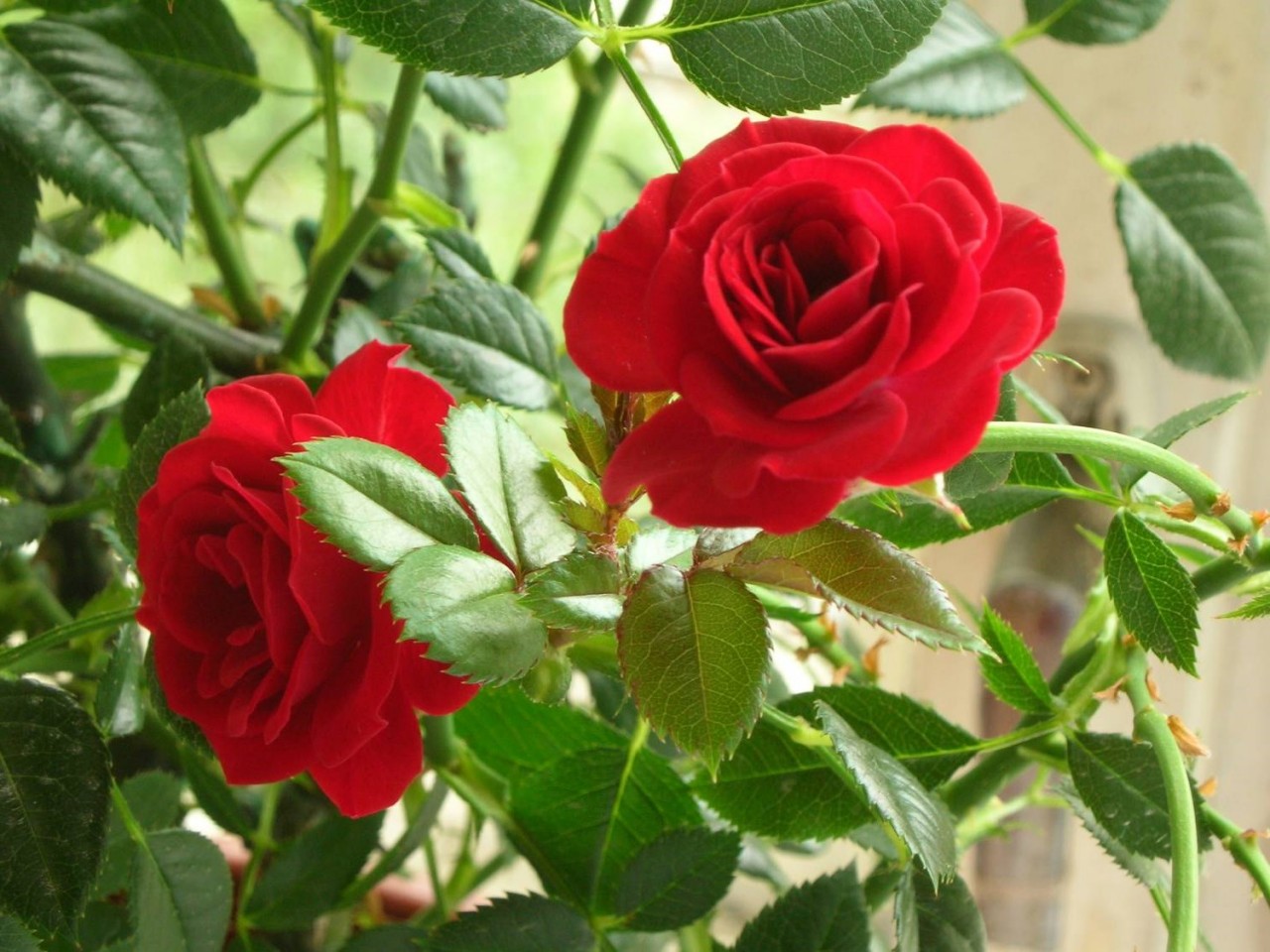
A potted rose is a popular gift: a compact bush covered in buds looks like a living bouquet that won't wilt in a week. Yet many of these roses die within a month of purchase. The reason is not that they are "fussy" but that roses are garden plants and need special conditions indoors. Here is what to do right after buying one, how to repot it, water, prune and overwinter it, and whether you can plant it in the garden later. Everything else about types, colours and care is in our complete guide to roses.
Flowers delivered across Kyiv: garden roses and roses in a box.
There is no separate species of indoor rose. The roses sold in pots are miniature and patio varieties of garden roses, 20–40 cm tall, grown specifically to be sold in flower. They are perennial shrubs that drop leaves or slow down in winter and flower in flushes from spring to autumn. In the warmth, dry air and half-light of a flat such a rose quickly weakens, so the key is to give it light, coolness and a seasonal rhythm.
The "Chinese rose" is actually hibiscus, a completely different plant from the mallow family that is happy indoors year-round. The "stone rose" is a succulent, echeveria or sempervivum.
Use a pot 2–3 cm wider than the root ball, with a drainage hole and a layer of expanded clay at the bottom. For soil, choose a ready-made rose mix or a rich all-purpose compost with added perlite. Remove the root ball, gently separate the plants without breaking up the roots completely, plant at the same depth and water. Keep the rose out of direct midday sun for the first week. After that, repot in spring every 1–2 years, moving it into a slightly larger pot without disturbing the roots.
The main pruning is done in early spring, when the buds begin to swell: shorten the stems, leaving 3–5 buds on each, and remove weak, dead and inward-growing shoots. Cut with sharp secateurs just above an outward-facing bud. In summer, simply remove spent flowers and pinch back overly long shoots.
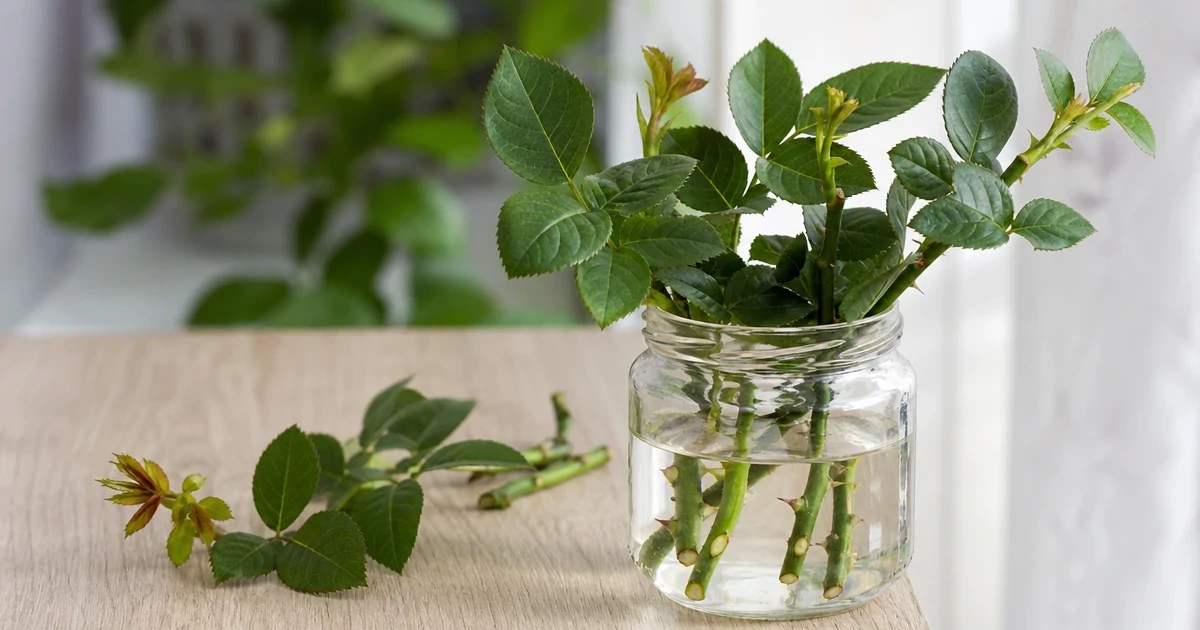
The easiest way is from cuttings in spring or summer. Cut a spent shoot 10–15 cm long with 2–3 buds, strip the lower leaves and stand it in water or plant straight into moist, free-draining compost under a jar or bag. Roots form in 3–4 weeks. Spare plantlets left over after dividing the pot can be rooted the same way.
In winter a rose needs rest. The best place is a bright glazed loggia or a cool windowsill at 5–10 °C. Water rarely and do not feed. If you keep the rose in a warm room all winter, it will weaken and flower less, and spider mites are almost guaranteed.
Yes. Miniature roses are garden plants, and many do better outdoors than in a flat. Plant them in May, after the frosts, in a sunny spot; for the first winter, earth up the base and cover it with evergreen branches. For other plants that cope well with cold, see our article on frost-hardy plants.
Miniature roses love fresh air, so from May, once nights stay above 12–14 °C, they can move to the balcony. Acclimatise gradually: a week in partial shade, then morning sun. Midday heat on a south-facing balcony can scorch leaves, and pots in the sun dry out fast, so water more often in hot weather. In autumn bring the rose back indoors before the first frost and keep it separate for a few days.
Usually because of crowding in the pot, warm dry air and lack of light. Dividing the cuttings, a bright cool spot and regular showers help.
When the top 1–2 cm of soil is dry — more often in summer, rarely in winter.
Yes: in spring to 3–5 buds, and in summer remove spent flowers.
It is better to wait until flowering ends, or move the root ball intact into a larger pot.

Author: Maria Svitlovir
Graduated from Taras Shevchenko National University of Kyiv, Institute of Biology and Medicine (2001). BSc in Biology, MSc in Horticulture. Writes about plants, works at a garden centre selecting and repotting plants, and contributes to plant reference guides.
© Kyiv 2026 UFL Flower Shop

Trademark UFL №191476 is used under license of the rights holder.
All rights reserved. Any use of materials without a link to the site is prohibited.


 Birthday
 Hydrangeas