
 Birthday
 Hydrangeas
This article was prepared with the support of UFL flower delivery. Indoor roses, usually miniature Cordana or patio varieties, can flower almost all year, but indoors they suffer from low light and dry air, which makes them weak and prone to disease. The good news is that proper care prevents most problems, and diseases caught early are easy to treat.

After buying: why the rose wilts
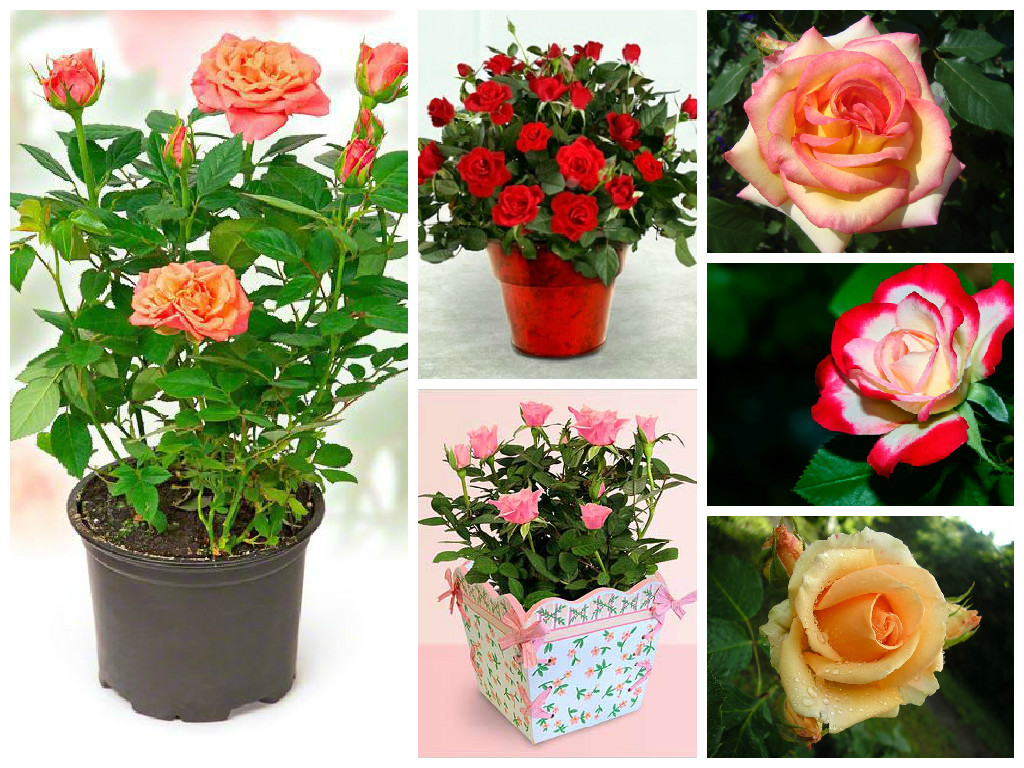
Shop pots usually contain 3–5 greenhouse-grown plants. At home they are crowded and stressed and may drop their leaves. One or two weeks after buying, repot the roses individually into fresh compost and cut off the flowers and buds so they can recover. This, not infection, is the most common cause of a new rose "getting sick".
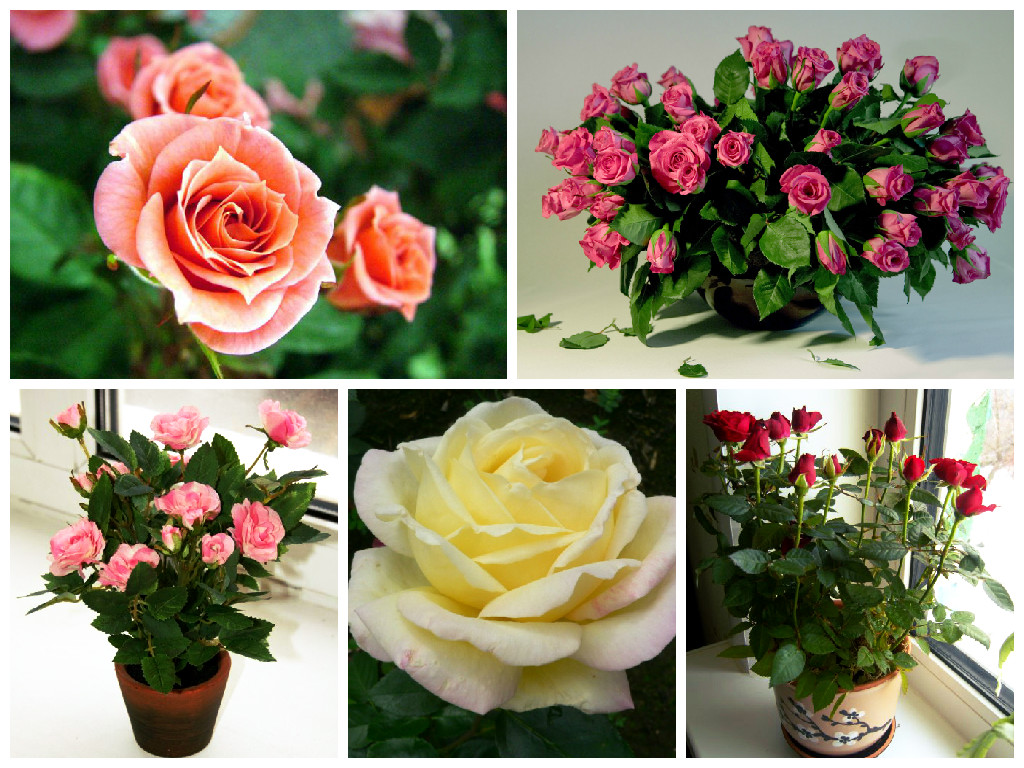
Care that prevents disease
- Light: the brightest window, facing south or south-east, plus a grow light in winter.
- Temperature: 18–25 °C in summer and cool, 10–15 °C, in winter. A spell on the balcony in summer does it good.
- Watering: when the top layer is dry; never let it dry out completely or sit in water.
- Air: ventilate regularly without draughts. Raise humidity with a tray of wet pebbles rather than frequent misting, because fungi spread faster on wet leaves.
- Feeding: every 2 weeks in spring and summer with a rose fertiliser, without excess nitrogen.
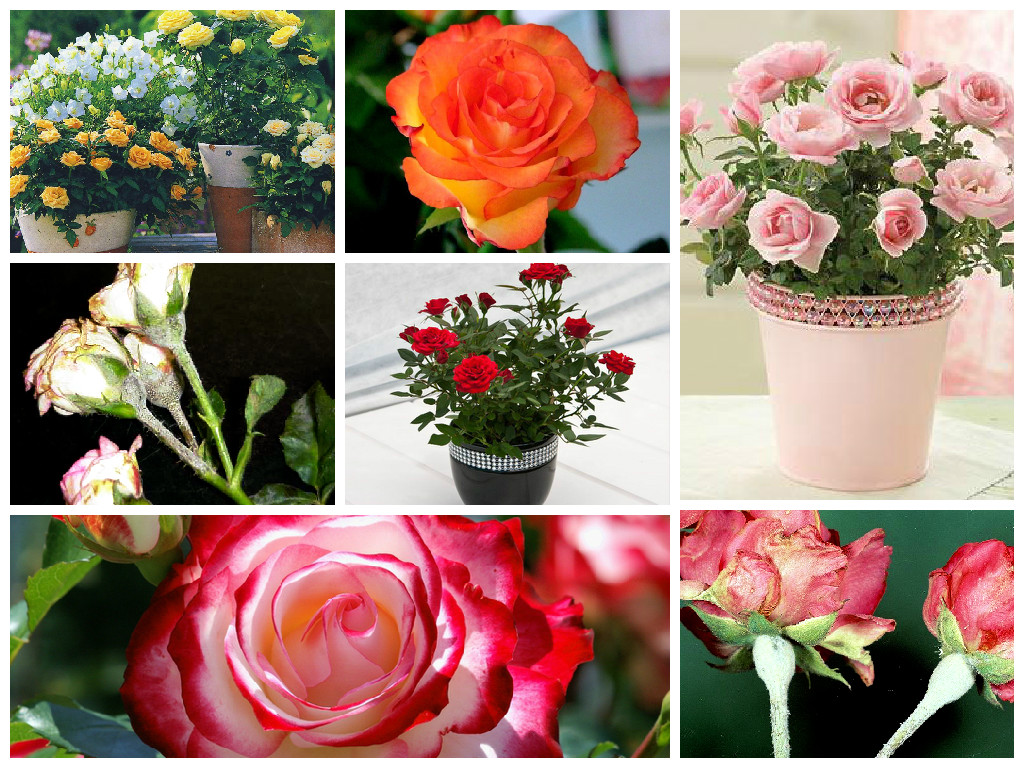
Indoor rose diseases
Powdery mildew
A white powdery coating on young leaves, buds and stems; leaves curl and drop. It is caused by stuffy air, temperature swings and too much nitrogen. Remove affected parts and spray with a sulphur- or tebuconazole-based fungicide 2–3 times at 7–10 day intervals.
Downy mildew
Yellowish or purple-brown patches on top of the leaves and grey-purple fuzz underneath. It is caused by an oomycete rather than a true fungus, so ordinary systemic powdery mildew fungicides do not work. Copper-based products or those containing fosetyl-aluminium help.
.jpg)
Rust
Orange spore pustules under the leaves and yellow spots on top. Remove infected leaves, water only at the base and treat with tebuconazole.
Black spot
Dark spots with feathery edges; leaves yellow and drop. Difenoconazole-based products and clearing fallen leaves help.
Grey mould and root rot
Grey fuzz on buds is botrytis, which appears in damp, cool conditions. Wilting in wet compost with dark roots is root rot from overwatering. In both cases water less and remove affected parts; for root rot, repot into fresh compost.
Pests
- Spider mites are the indoor rose's worst enemy in dry air: tiny pale speckles on leaves and fine webbing. Treat with a miticide (for example abamectin-based) 3–4 times at 5–7 day intervals and raise the humidity.
- Aphids and thrips distort buds and young leaves and leave a sticky film. Systemic insecticides help.
- Whitefly and scale are less common; they are also treated with insecticides, and scale insects should be wiped off by hand first.

How to spray safely
- Always follow the dose and intervals on the product label.
- Spray on a balcony or in the bathroom, wearing gloves, away from children, pets and food.
- Keep the sick plant away from other houseplants during treatment.
FAQ
Why are my indoor rose's leaves turning yellow and falling?
Usually because of post-purchase stress, too little light, overwatering or spider mites. Check the undersides of the leaves.
Can I plant an indoor rose in the garden?
Yes, miniature roses grow well outdoors if planted in spring after the frosts and protected in winter.
To propagate a favourite variety, see our guide to growing roses from cuttings. Choose roses among our roses and potted plants.

View full-size photo
Author: Maria Svitlovir
Graduated from Taras Shevchenko National University of Kyiv, Institute of Biology and Medicine (2001). BSc in Biology, MSc in Horticulture. Writes about plants, works at a garden centre selecting and repotting plants, and contributes to plant reference guides.