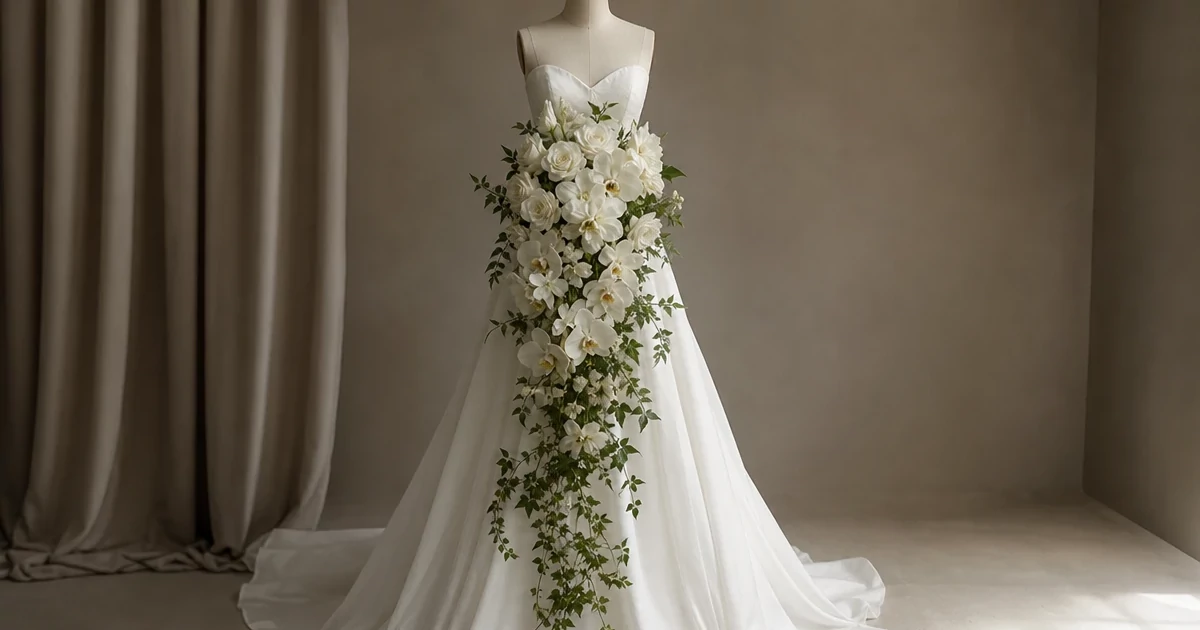
The wedding of Prince Charles and Lady Diana Spencer at St Paul’s Cathedral on 29 July 1981 was one of the most-watched events of the century. Everyone remembers the dress with its long train, but the bouquet was just as striking: a huge cascade of white and cream flowers. Here is what it contained.
Wedding flowers delivered: bridal bouquets and white roses.
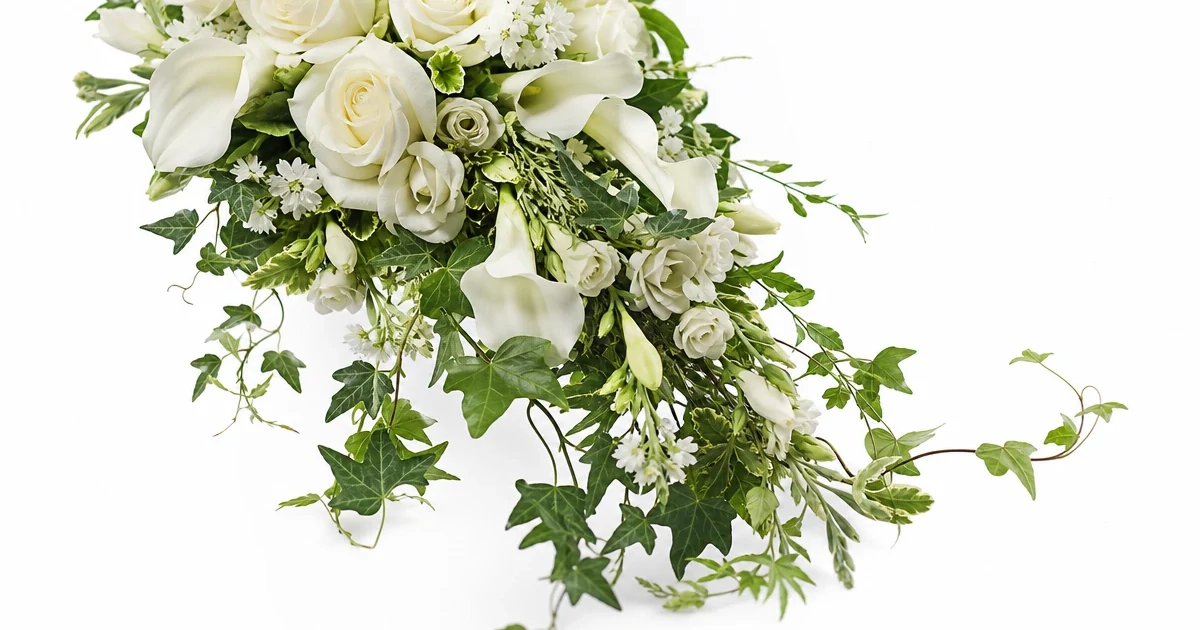
The bouquet was a cascade, trailing downwards, and very long — it reached almost to her knees. According to published descriptions it included gardenias, stephanotis, lily of the valley, freesias, odontoglossum orchids, golden “Mountbatten” roses, veronica, ivy and tradescantia. Following royal tradition, a sprig of myrtle from the garden at Osborne House was added too.
After 1981, long cascading bouquets became fashionable at weddings worldwide and stayed popular into the 1990s. Brides later returned to compact round bouquets, but the cascade is coming back, now lighter and filled with greenery and garden flowers.
See how bridal bouquets changed over the centuries in the history of the bridal bouquet, bridal flower meanings in the language of flowers in a wedding bouquet, and tips in the bridal bouquet guide.
More on seasonal wedding flowers in wedding flowers by season.
A cascade — long and trailing, made of white and cream flowers with greenery.
It is a tradition dating back to Queen Victoria: the sprig comes from a bush grown from the myrtle in her wedding bouquet.

Author: Maria Svitlovir
Graduated from Taras Shevchenko National University of Kyiv, Institute of Biology and Medicine (2001). BSc in Biology, MSc in Horticulture. Writes about plants, works at a garden centre selecting and repotting plants, and contributes to plant reference guides.
© Kyiv 2026 UFL Flower Shop

Trademark UFL №191476 is used under license of the rights holder.
All rights reserved. Any use of materials without a link to the site is prohibited.


 Birthday
 Hydrangeas