
Rhododendron is one of the showiest garden shrubs: in May it is covered in trusses of flowers that almost hide the leaves. It has a fussy reputation, but most failures come down to one thing — the wrong soil. Here is how to prepare the site, plant and care for rhododendrons so they survive Ukrainian winters and flower generously every year.
Rhododendron is a large genus of shrubs in the heather family with hundreds of species. Some are evergreen with leathery leaves; others are deciduous and turn yellow and red in autumn. Botanically, azaleas also belong to the genus Rhododendron — the name usually refers to deciduous garden forms and small-leaved indoor varieties. For the indoor azalea, see azalea care.
Rhododendrons flower mainly in May and early June, early species in April, with trusses of white, pink, lilac, red, yellow or orange blooms.
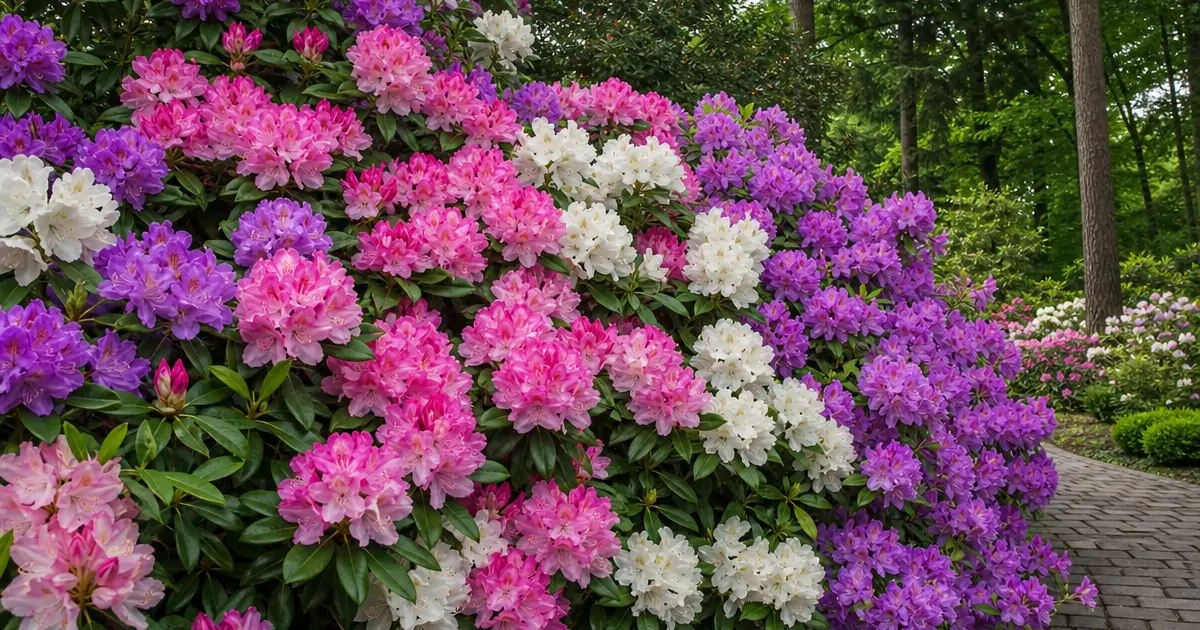
View full-size photoIn May, rhododendrons are covered in trusses of flowers that almost hide the leaves.
Rhododendrons grow only in acidic soil with a pH of 4.5–5.5. In ordinary or chalky garden soil they cannot absorb iron, the leaves yellow and the plant slowly dies. Fill the planting hole with a special mix:
Ready-made ericaceous compost works too. The roots are shallow, so make the hole wide rather than deep — about 60×40 cm — and add drainage on heavy clay.
Avoid planting near trees with aggressive roots — birch, lime, poplar, maple — which steal moisture.
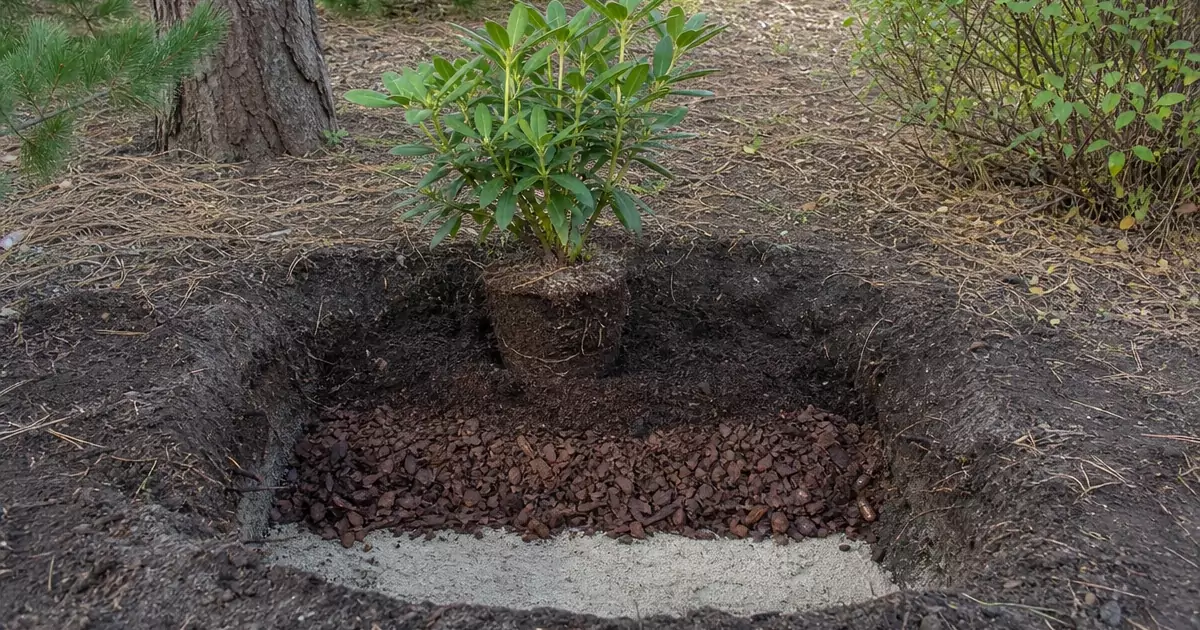
View full-size photoA wide, shallow hole with a special mix is prepared for planting rhododendrons.
Shallow roots dry out quickly, so water regularly, especially in heat and in late summer when buds form. Use soft rainwater or rested water; acidify hard tap water every few weeks. Do not dig or deeply hoe around the shrub, and top up the mulch each year. Feed in spring and early summer with ericaceous fertiliser; stop nitrogen from late July so shoots ripen before winter.
Evergreen rhododendrons suffer in winter less from frost than from drying out: in late winter the sun warms the leaves while roots in frozen soil cannot supply water, causing brown scorch. So:
Leaves curling in winter is a normal response to frost that reduces water loss.
Check the hardiness zone on the label against your region.
Rhododendrons need little pruning. After flowering, carefully snap off spent trusses without damaging the buds below, so the plant puts energy into next year’s flowers. Remove dead or damaged branches in spring. Propagate by layering (pin a low branch to the ground and separate it a year later), by semi-ripe cuttings in summer or from seed, which takes several years to flower.
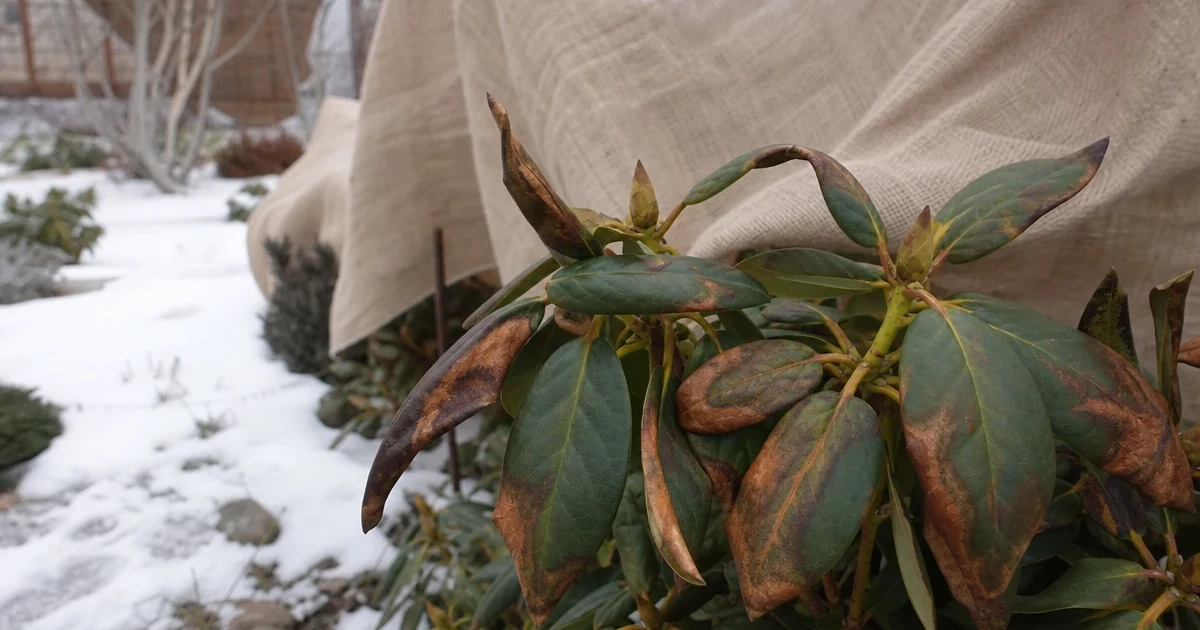
View full-size photoEvergreen rhododendrons need protection from sun and frost in winter.
Yes. All parts, including leaves and nectar, contain grayanotoxins, which are dangerous if eaten by people, dogs, cats and grazing animals. Plant rhododendrons away from where pets play and teach children not to put leaves or flowers in their mouths.
More garden ideas: a bed that blooms all season and shade-loving flowers; every flower A–Z is in our types of flowers catalogue.
In spring (April–May) or early autumn. Container plants can go in through the season, avoiding heatwaves.
It is a defence against frost — curled leaves lose less moisture — and they unfurl as it warms up.
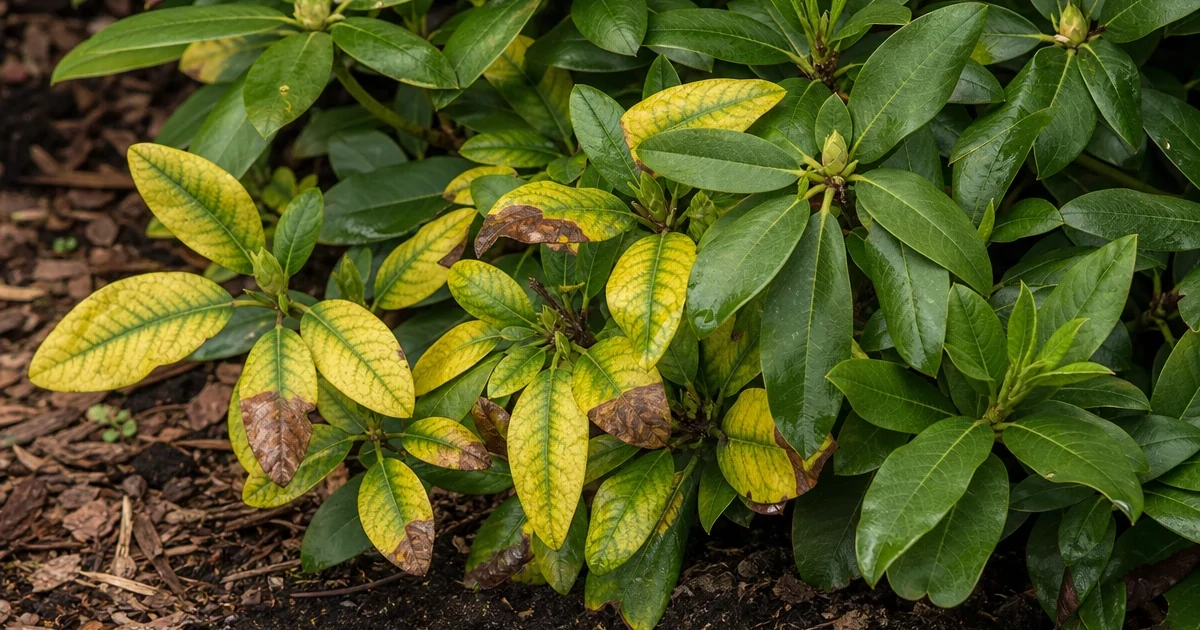
View full-size photoYellow leaves with green veins and brown patches — signs of chlorosis and sun scorch in rhododendron.
Light shade is better. Deciduous azaleas tolerate sun; evergreen varieties often scorch in full sun.

Author: Maria Svitlovir
Graduated from Taras Shevchenko National University of Kyiv, Institute of Biology and Medicine (2001). BSc in Biology, MSc in Horticulture. Writes about plants, works at a garden centre selecting and repotting plants, and contributes to plant reference guides.
© Kyiv 2026 UFL Flower Shop

Trademark UFL №191476 is used under license of the rights holder.
All rights reserved. Any use of materials without a link to the site is prohibited.

 Birthday
 Hydrangeas