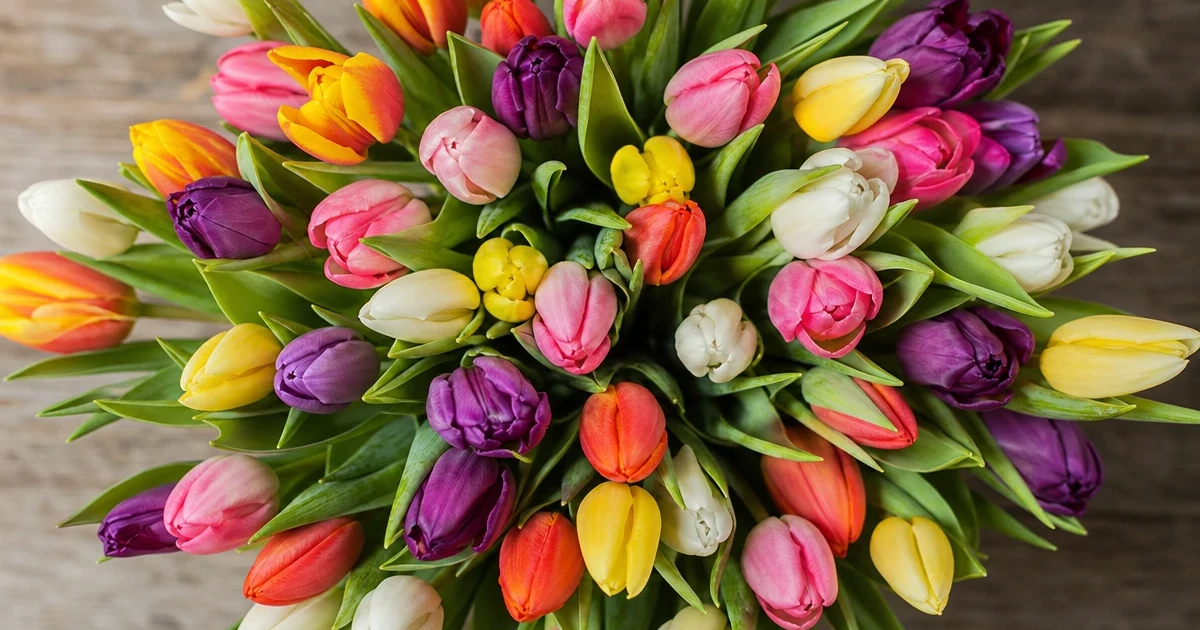
Want to see what a tulip bouquet looks like in real life, not in an advert? Here are real photos of tulip bouquets: red, white, pink, yellow, mixed and double tulips, tulips in a box, big bouquets of 51 and 101 tulips, and arrangements with other spring flowers, with what each colour means and how the bouquet looks in hand and at home.
More on this topic: tulips: varieties and colour meanings, caring for tulips in a vase, rose bouquets: real photos.
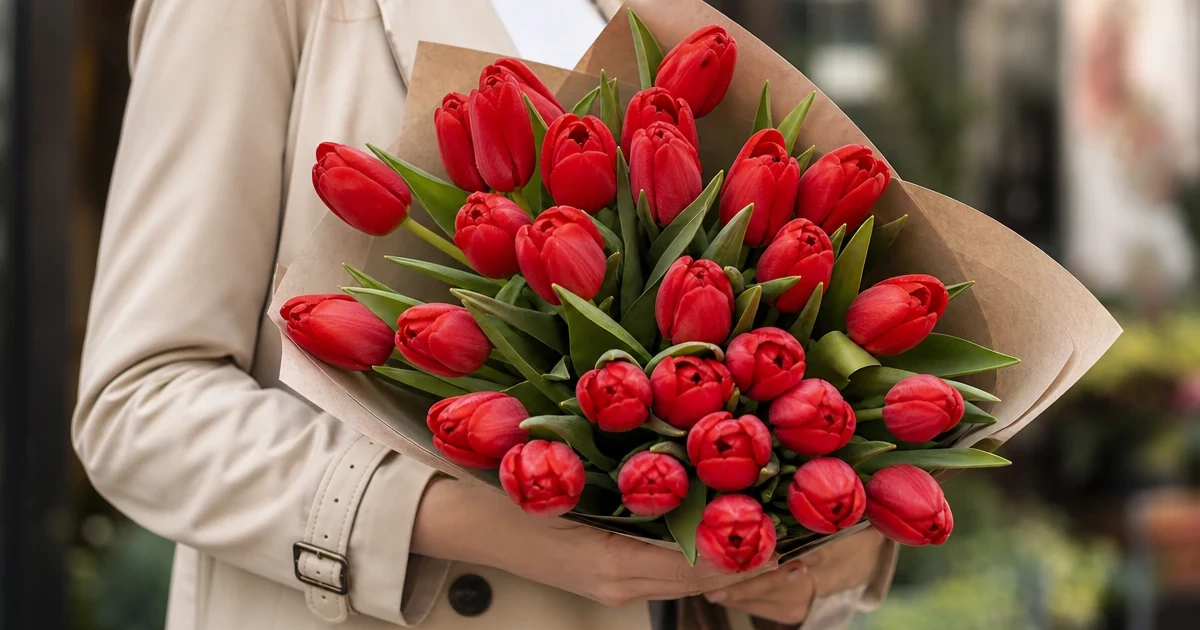
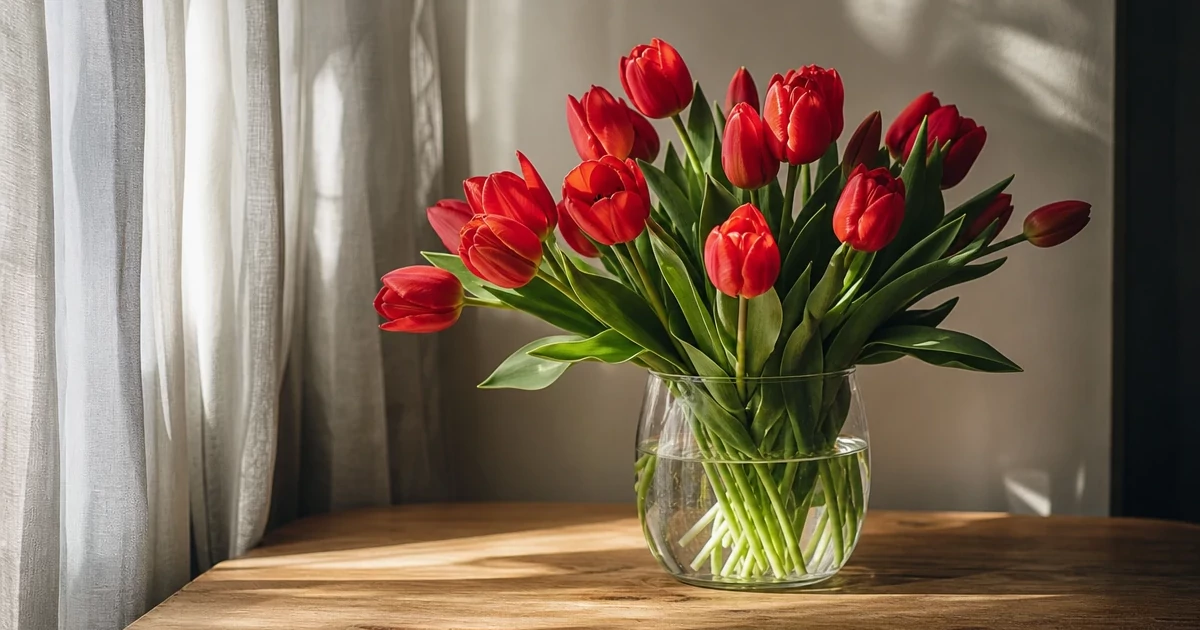
Red tulips symbolise sincere love and passion; in a bouquet of 25–51 they look especially vivid, and photos show off the glossy petals and rich colour.

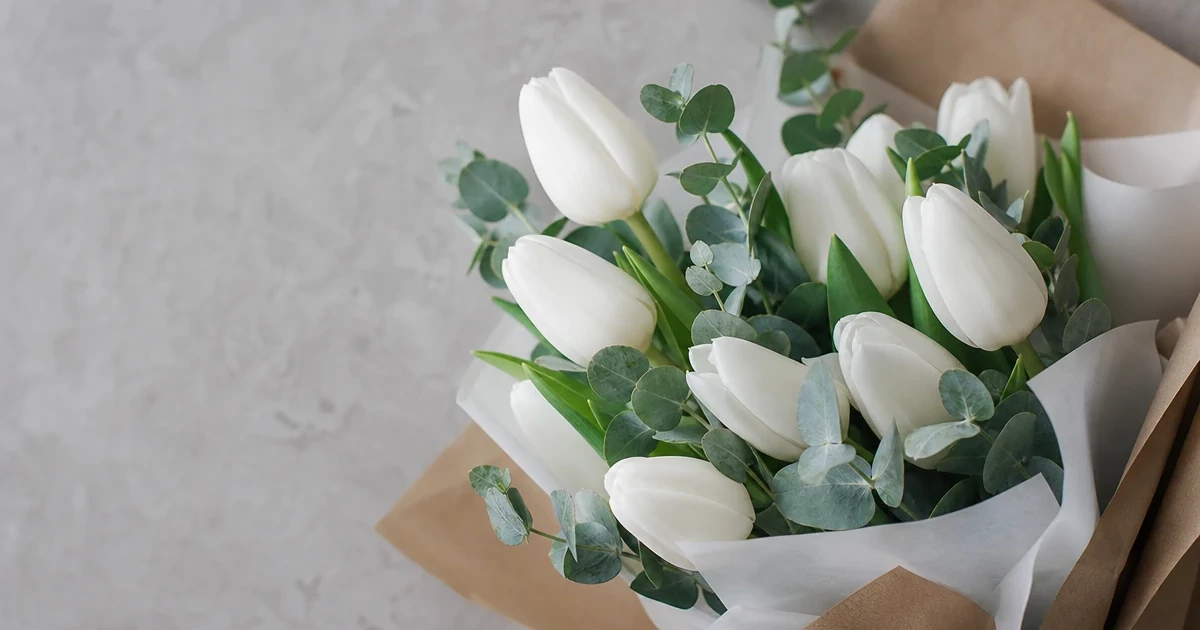
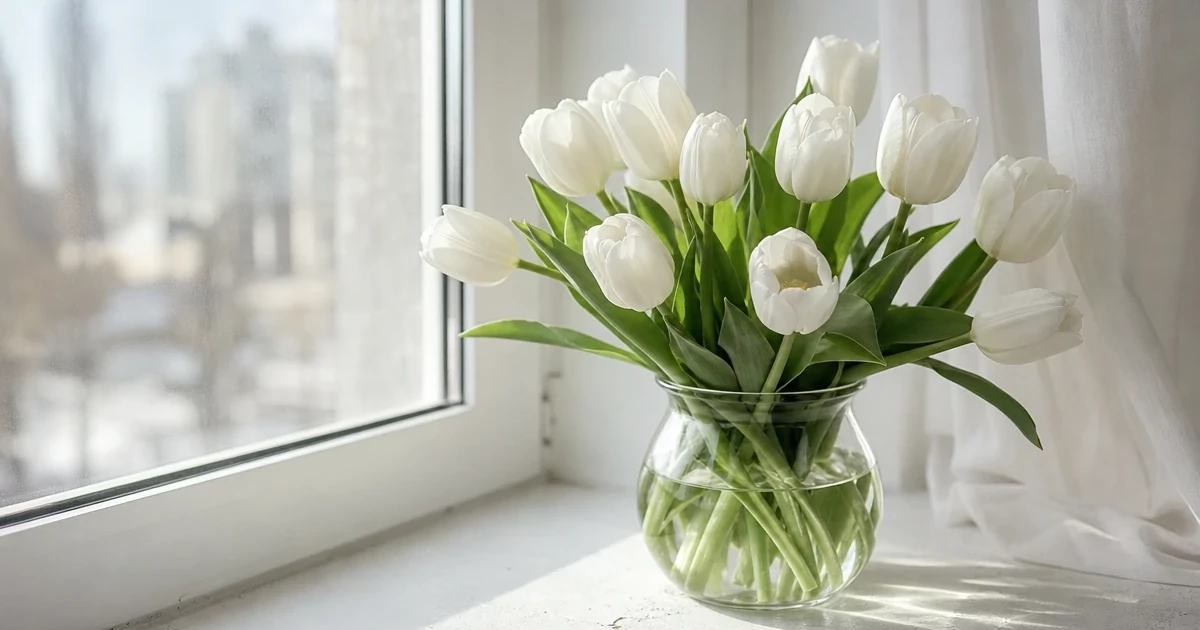
White tulips mean tenderness, purity and asking forgiveness; they photograph best on a light background with greenery or eucalyptus.
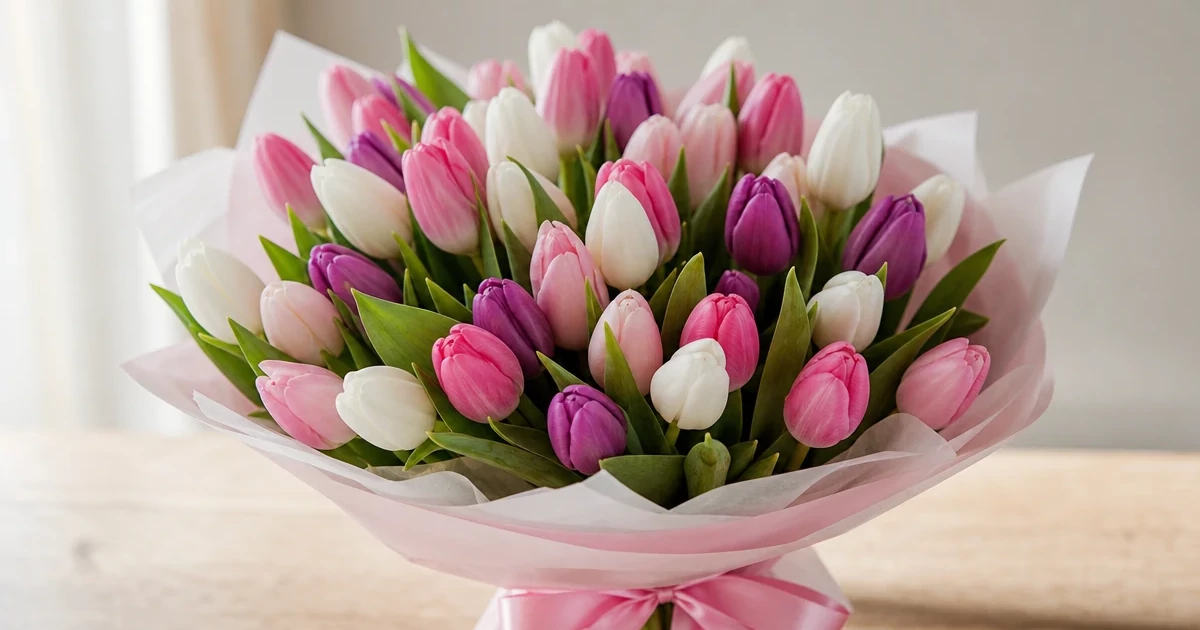
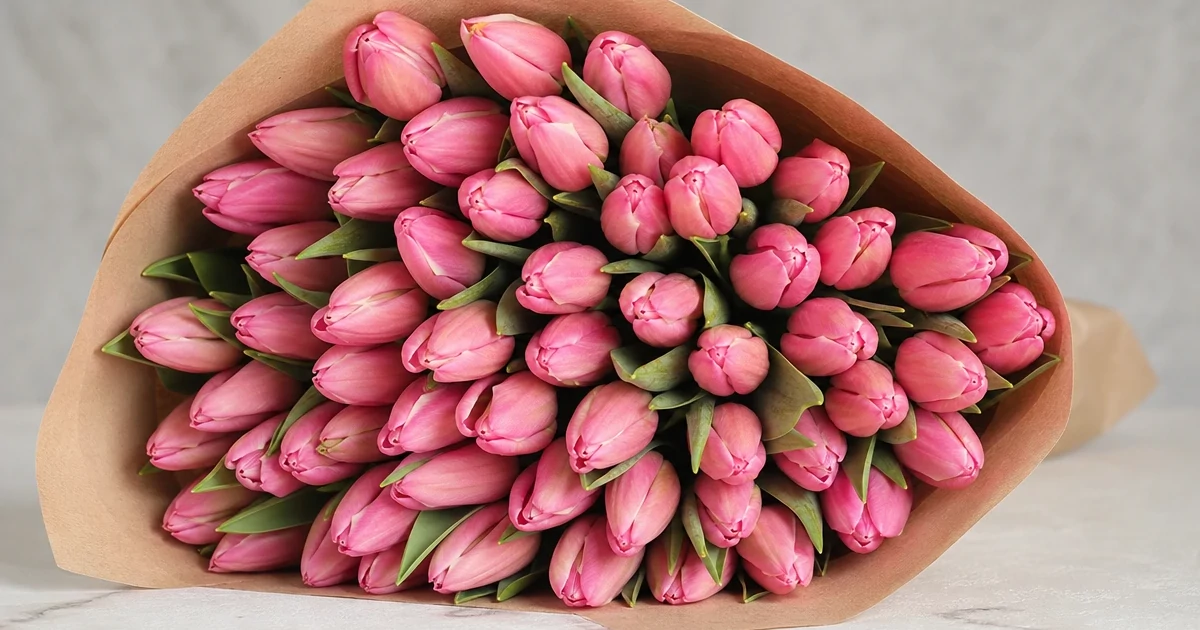
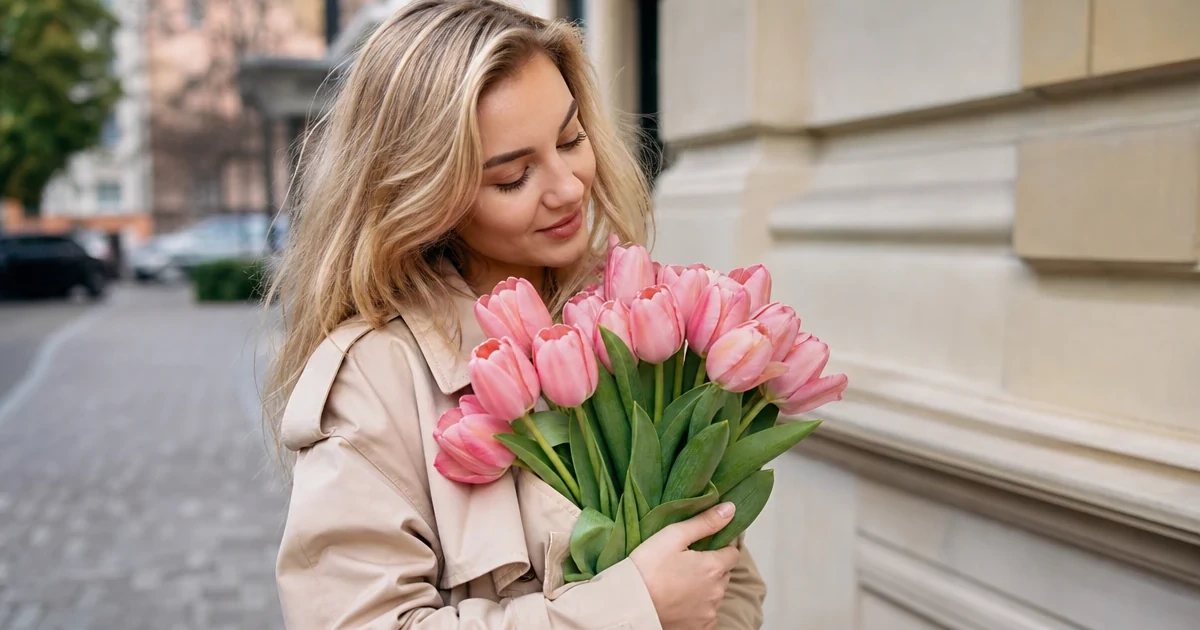
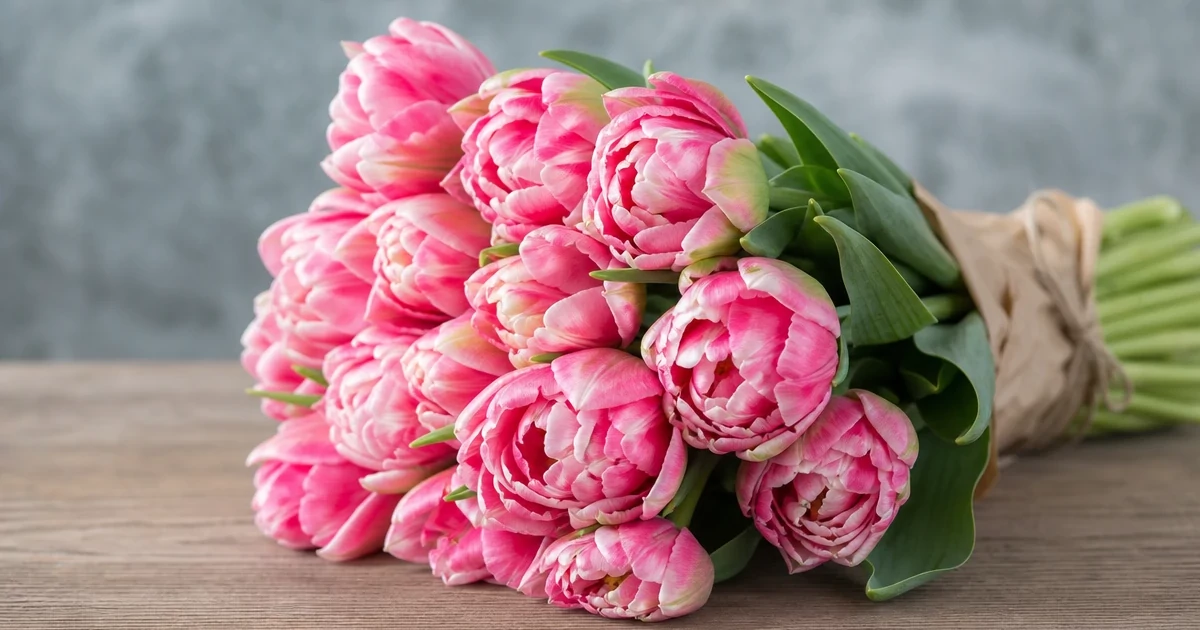
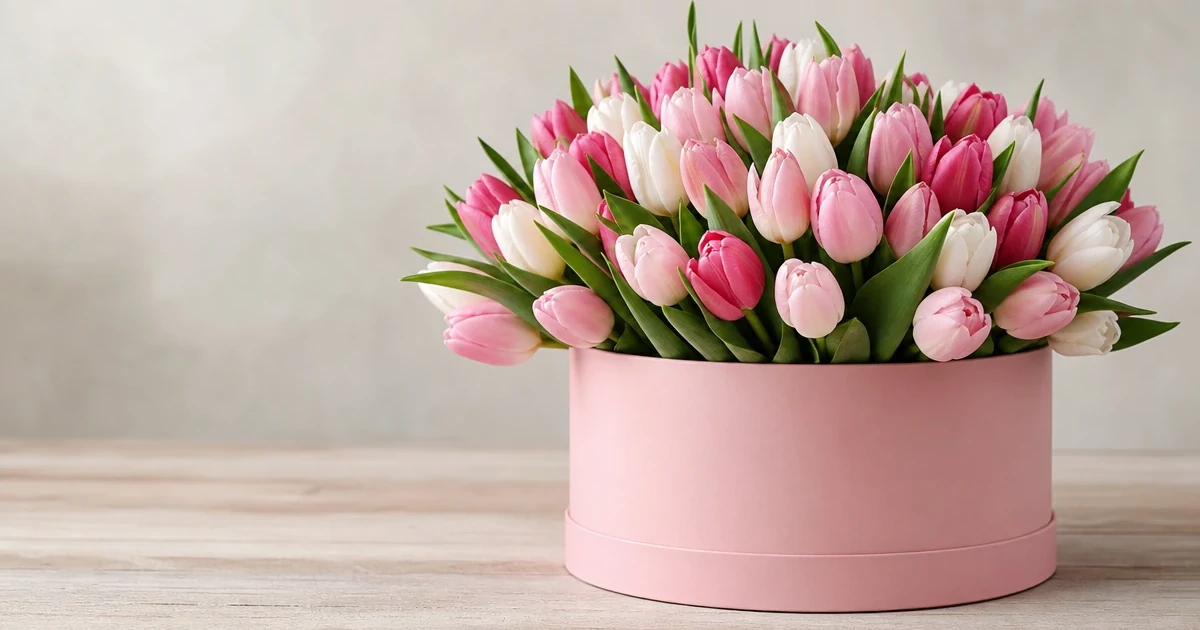
Pink tulips are the 8 March favourite, meaning tenderness, care and joy, in shades from blush to fuchsia.
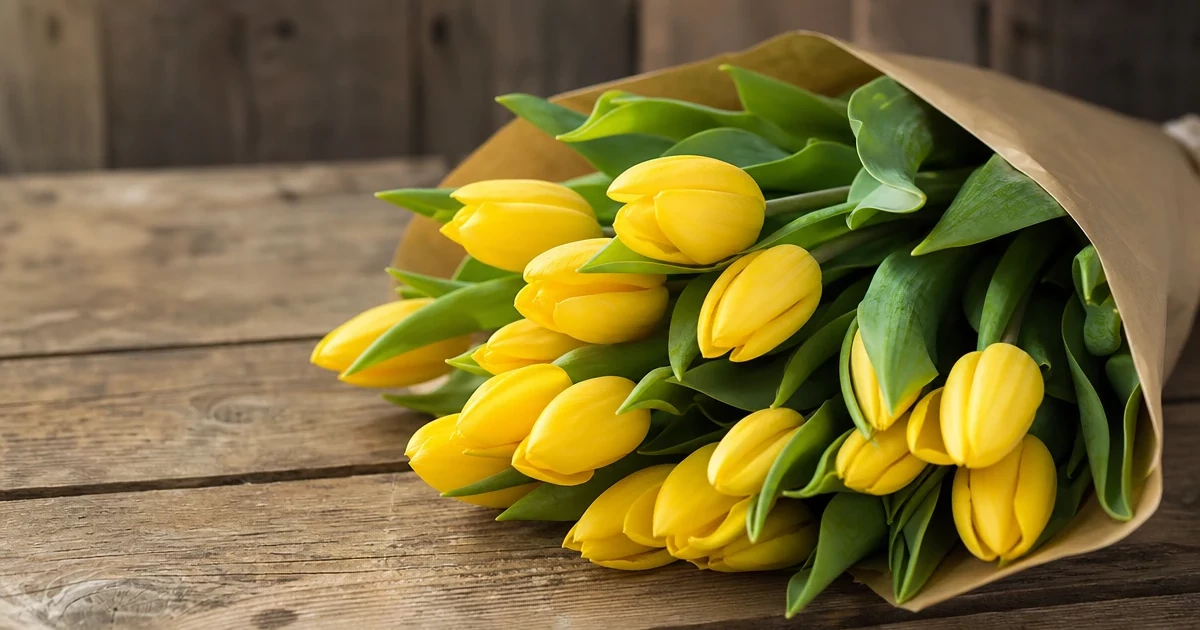
Yellow now means joy, sunshine and friendship; the old “yellow means parting” superstition is outdated. Yellow tulips brighten photos on a grey day.
A mix of colours makes a cheerful spring gift; rainbow tulips, with a different shade on every petal, are especially striking.

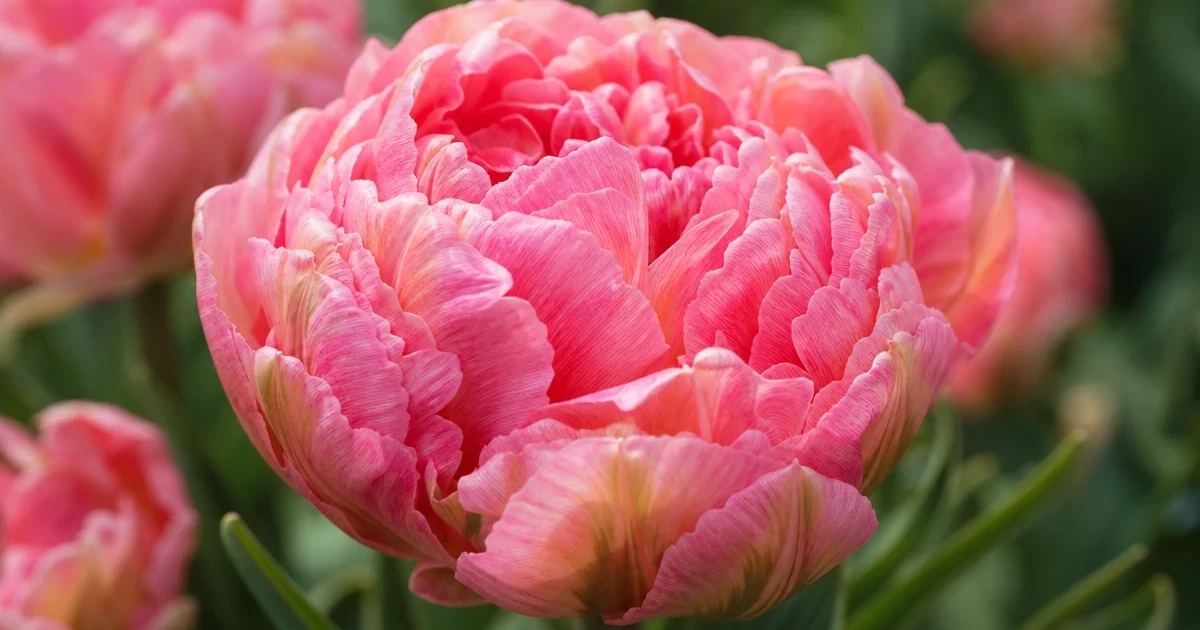
Double tulips have many petals and resemble peonies, looking luxurious even in a small bouquet.
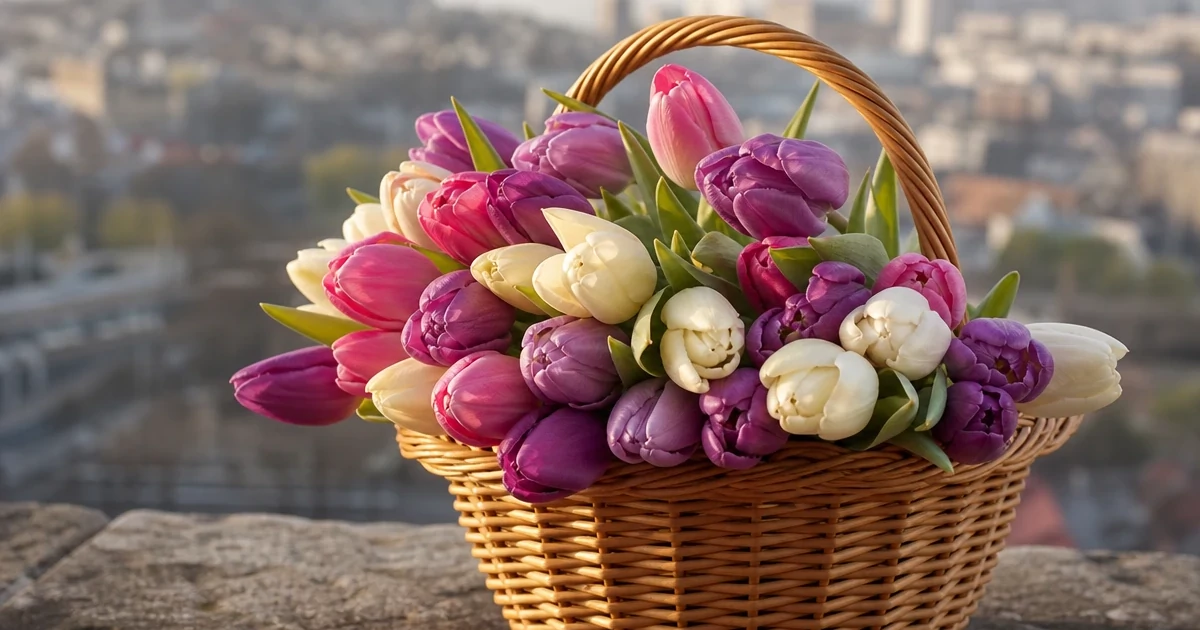
Tulips in a box or basket need no vase, ready for photos and gifting straight away.
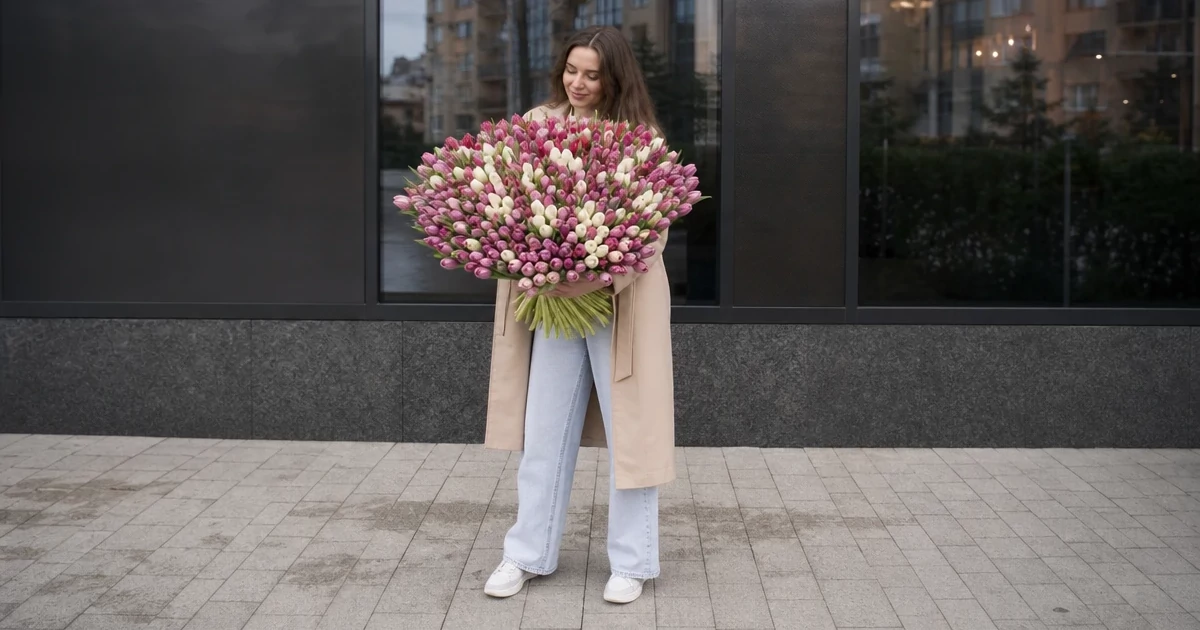
A big tulip bouquet is heavier than it looks; 101 tulips need both arms, so photograph them full-length.
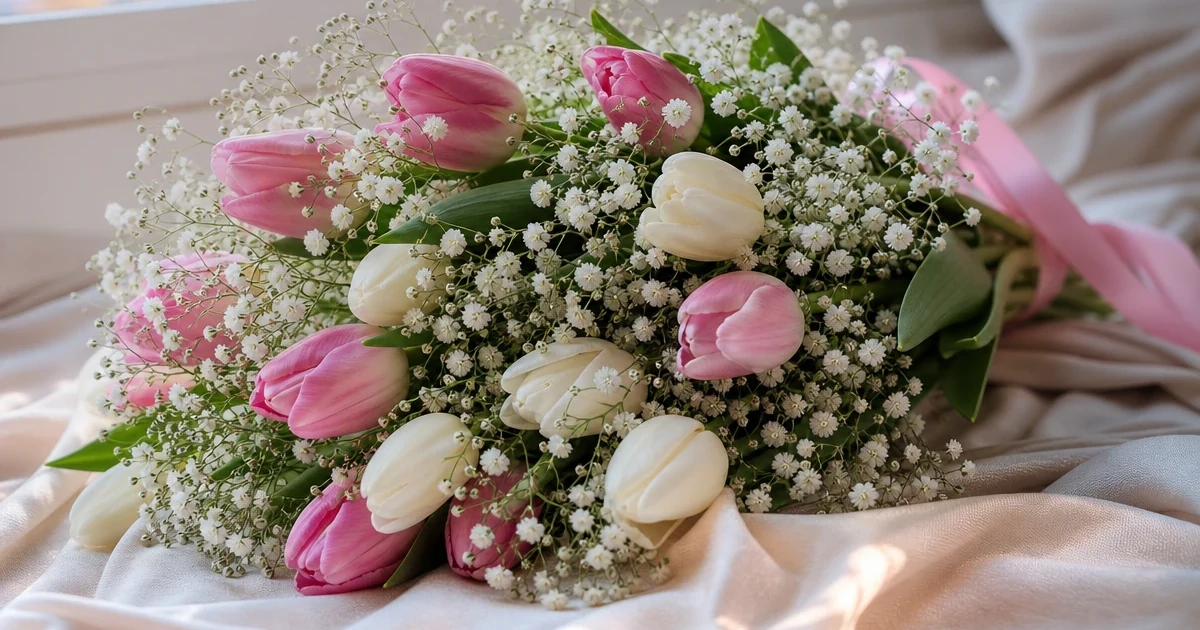
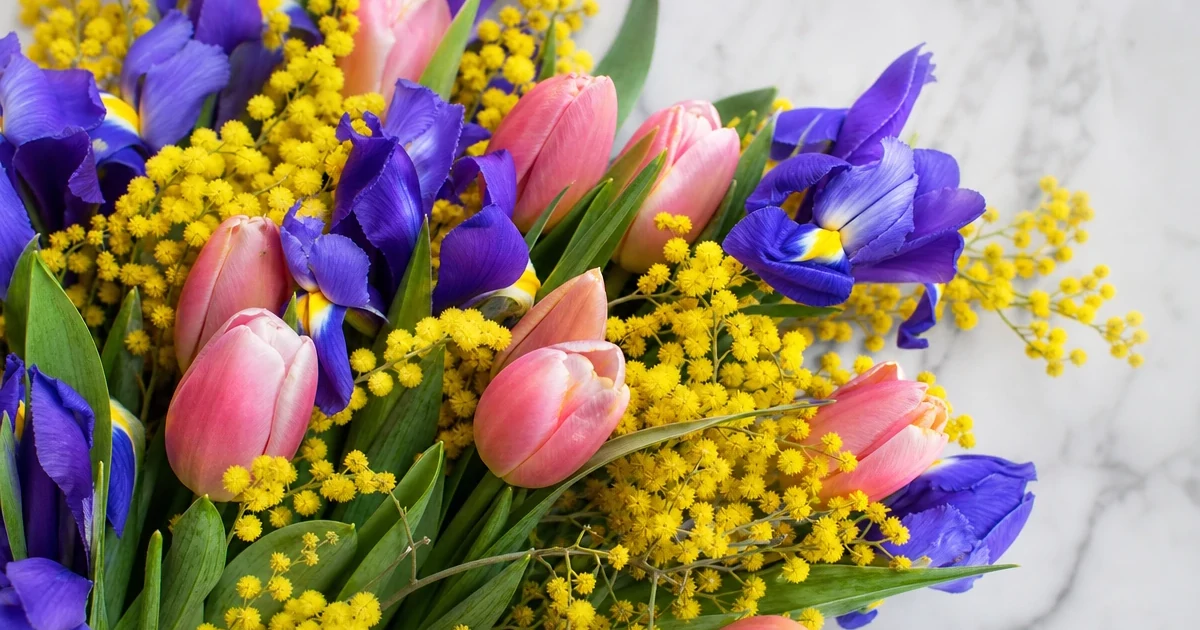
Tulips pair beautifully with gypsophila, irises, mimosa, eucalyptus and hyacinths for a fuller, fragrant bouquet.
Tulips are mostly given in spring; for the same tenderness in other seasons, try garden or spray roses.

See garden roses and spray roses.

Usually 5–7 days, up to 10 in a cool room.
Joy, sunshine and friendship; the parting superstition is outdated.
9–15 as a gesture, 25–35 for a celebration, 51–101 for a big occasion.
They keep growing towards the light; trim stems and wrap the bouquet in paper.

Author: Maria Svitlovir
Graduated from Taras Shevchenko National University of Kyiv, Institute of Biology and Medicine (2001). BSc in Biology, MSc in Horticulture. Writes about plants, works at a garden centre selecting and repotting plants, and contributes to plant reference guides.
© Kyiv 2026 UFL Flower Shop

Trademark UFL №191476 is used under license of the rights holder.
All rights reserved. Any use of materials without a link to the site is prohibited.


 Birthday
 Hydrangeas