
 Birthday
 Hydrangeas
Tulips are the flower of spring and among the most popular in the world, ranging from classic red to almost black, fringed, parrot and peony-flowered. Every shade carries its own meaning, and the flower itself has a history spanning centuries, from the gardens of the Ottoman Empire to Dutch "tulip mania". Here is everything essential about tulips: where they come from, which groups and varieties exist, what tulip colours mean, the legends behind them and how to make a bouquet last longer.
Where tulips come from
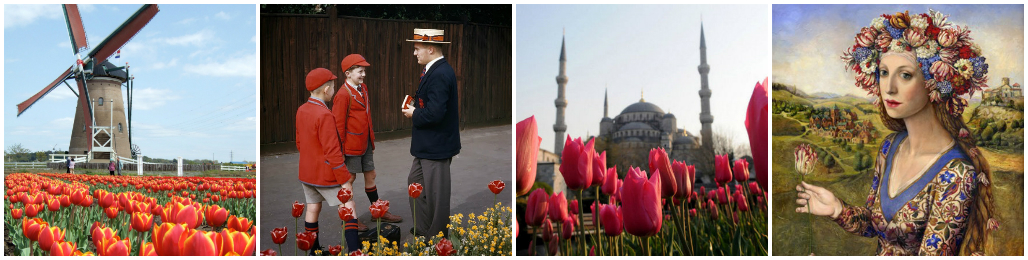
The genus Tulipa has about a hundred species, most of them native to the mountains and steppes of Central Asia, the Pamir-Alay and Tien Shan. Wild tulips also grow in Ukraine, including Schrenk's tulip, listed in the Red Data Book, so it must not be picked in the wild. The name is linked to the Turkish word for turban, which the open flower resembled.
In the Ottoman Empire the tulip became a symbol of power and beauty, and the years 1718–1730 are known as the Tulip Era. Bulbs reached Europe in the 16th century; in 1593 botanist Carolus Clusius planted them in Leiden, and within a few decades the Netherlands was gripped by "tulip mania", which crashed in 1637. See Dutch flower traditions. Today the Netherlands is the world's largest producer of tulip bulbs.
Types of tulips
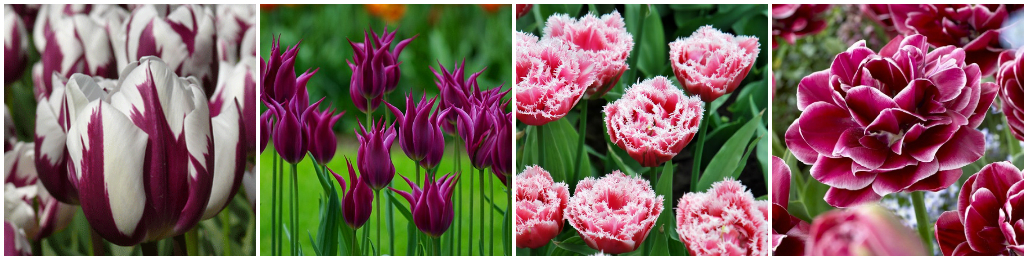
The international classification divides tulips into 15 groups by flower shape and flowering time. Varieties from the Triumph and Darwin hybrid groups are the most common for cutting, with strong stems and classic cup-shaped flowers. The most striking in a vase are peony (double late), parrot with ruffled petals, fringed and lily-flowered with pointed petals. A special group is "Rembrandt": streaked, flame-patterned tulips that were the most prized in the 17th century. Their pattern was later found to be caused by a virus, so modern streaked varieties are bred and virus-free.
What tulip colours mean
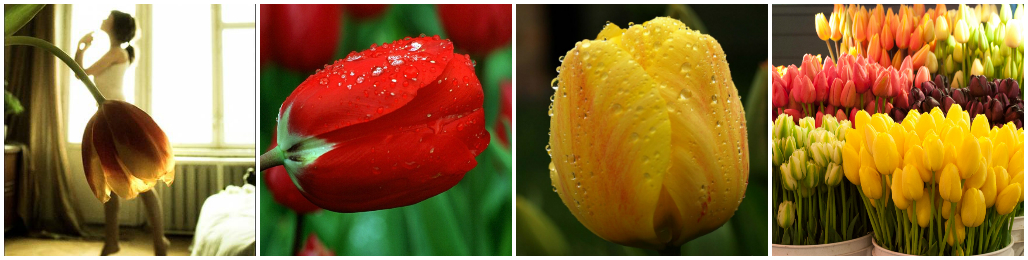
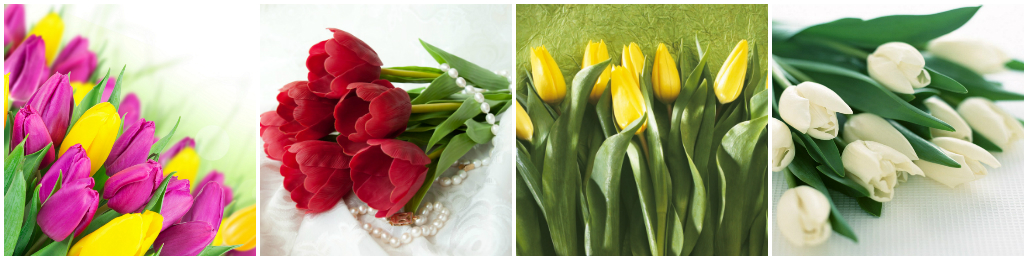
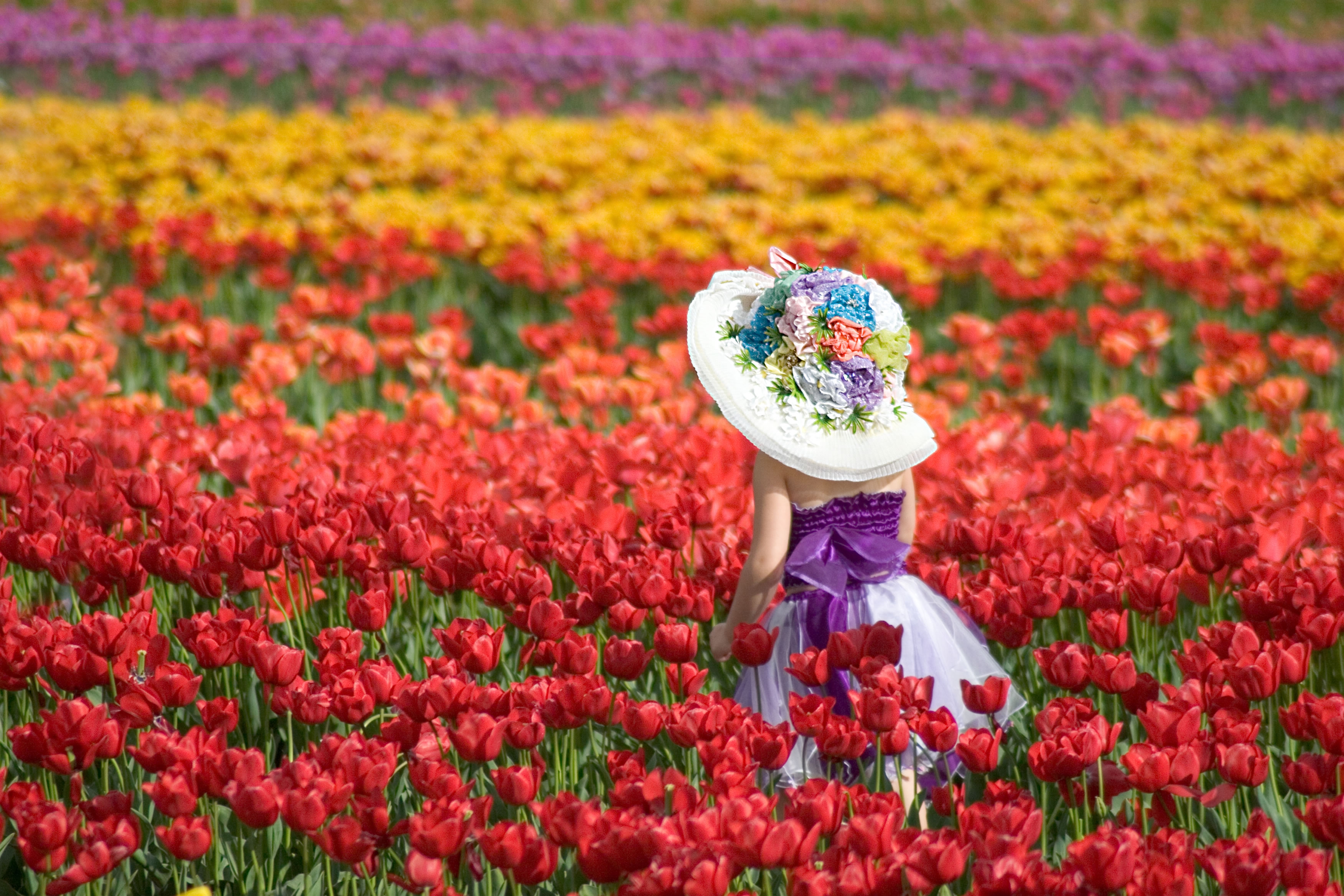
- Red: love and a declaration of feelings.
- Pink: tenderness, care and affection.
- Yellow: jealousy in old flower dictionaries, but today joy and cheerfulness.
- White: purity, forgiveness and new beginnings.
- Purple: nobility and admiration.
- Dark, almost black (such as 'Queen of Night'): elegance and mystery.
- Variegated: admiration, "you have beautiful eyes" in Victorian symbolism.
More on flower symbolism in the language of flowers.
Tulip legends

- The Persian legend of Farhad and Shirin. Hearing a false report of his beloved's death, Farhad threw himself from a cliff, and red tulips grew where drops of his blood fell. Ever since, the red tulip has symbolised passionate love in the East.
- The Dutch legend of three knights. A girl had three suitors, offering a crown, a sword and gold. Unable to choose, she asked to be turned into a flower, and so the tulip appeared: its bud resembles a crown, its leaves swords and its bulb a nugget of gold.
- Thumbelina. Andersen's heroine is born from a tulip-like flower; read more in flowers in literature.

Interesting tulip facts
- Cut tulips keep growing in the vase, sometimes by several centimetres, and bend towards the light, which is why a bouquet "falls apart" unless trimmed and turned.
- The petals of many varieties open by day and close at night.
- During the "Hunger Winter" of 1944–1945, people in the occupied Netherlands ate tulip bulbs to survive. Raw bulbs are mildly toxic, so do not experiment.
- Every April Istanbul holds a tulip festival, and the Netherlands celebrates the Keukenhof season.

How to choose and keep a tulip bouquet
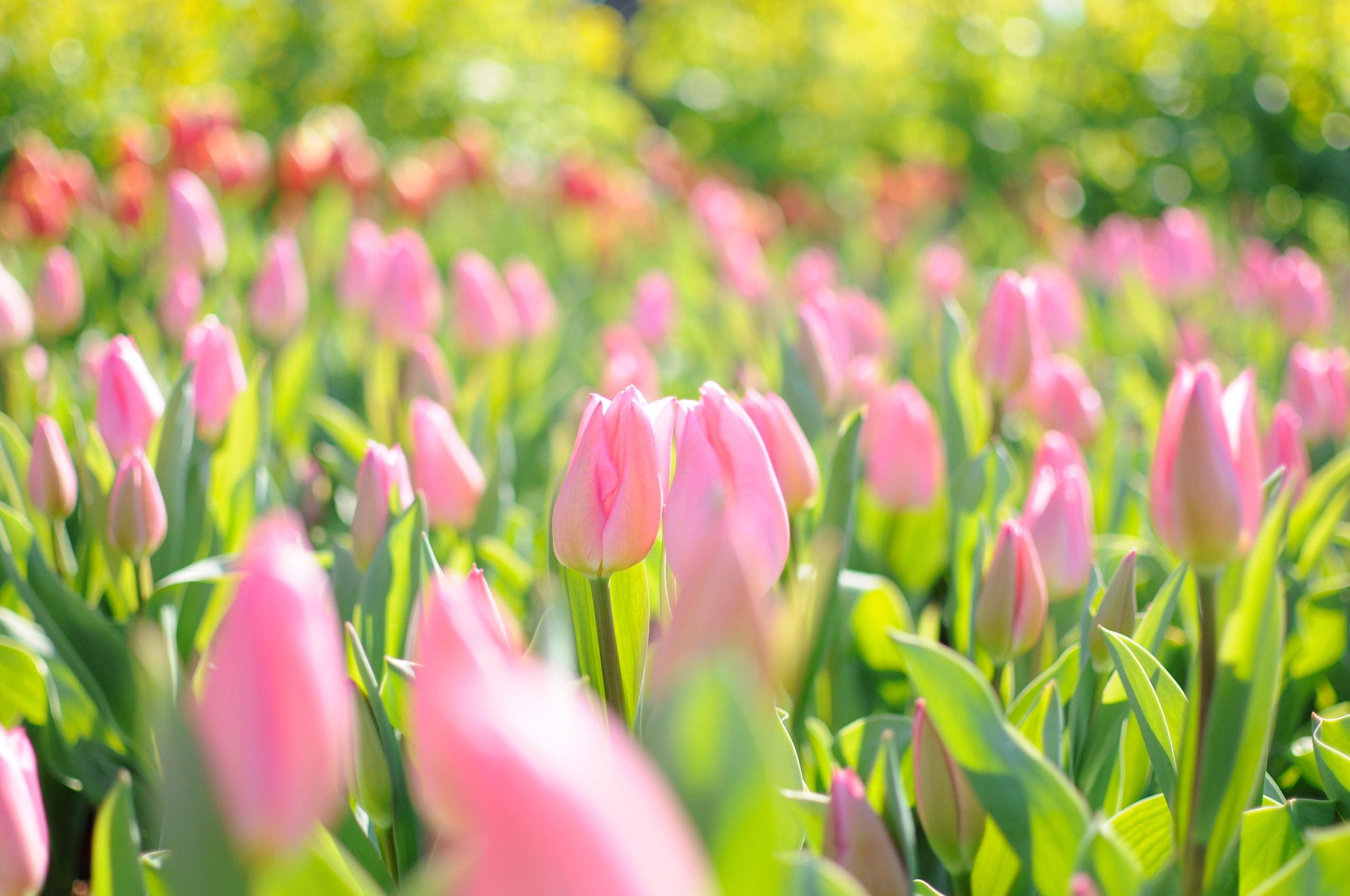
- Choose flowers with tight buds that already show colour and firm leaves.
- Cut the stems with a sharp knife and place them in cool water; tulips like a shallow 5–10 cm of water.
- Do not mix tulips with freshly cut daffodils, whose sap shortens vase life.
- Change the water daily and keep the vase away from radiators and fruit.
With this care tulips last 5–7 days, longer in a cool room. Order fresh tulips from our tulip catalogue.
Frequently asked questions
How many kinds of tulips are there?
About a hundred wild species and thousands of varieties, divided into 15 groups.
What do yellow tulips mean?
Today, joy and friendship; the meaning "jealousy" survives only in old flower dictionaries.
Why do tulips bend in the vase?
They keep growing and reaching for the light. Turn the vase and trim the stems.
Which tulips are the most unusual?
Parrot, fringed, peony-flowered and almost black varieties.

View full-size photo
Author: Maria Svitlovir
Graduated from Taras Shevchenko National University of Kyiv, Institute of Biology and Medicine (2001). BSc in Biology, MSc in Horticulture. Writes about plants, works at a garden centre selecting and repotting plants, and contributes to plant reference guides.


