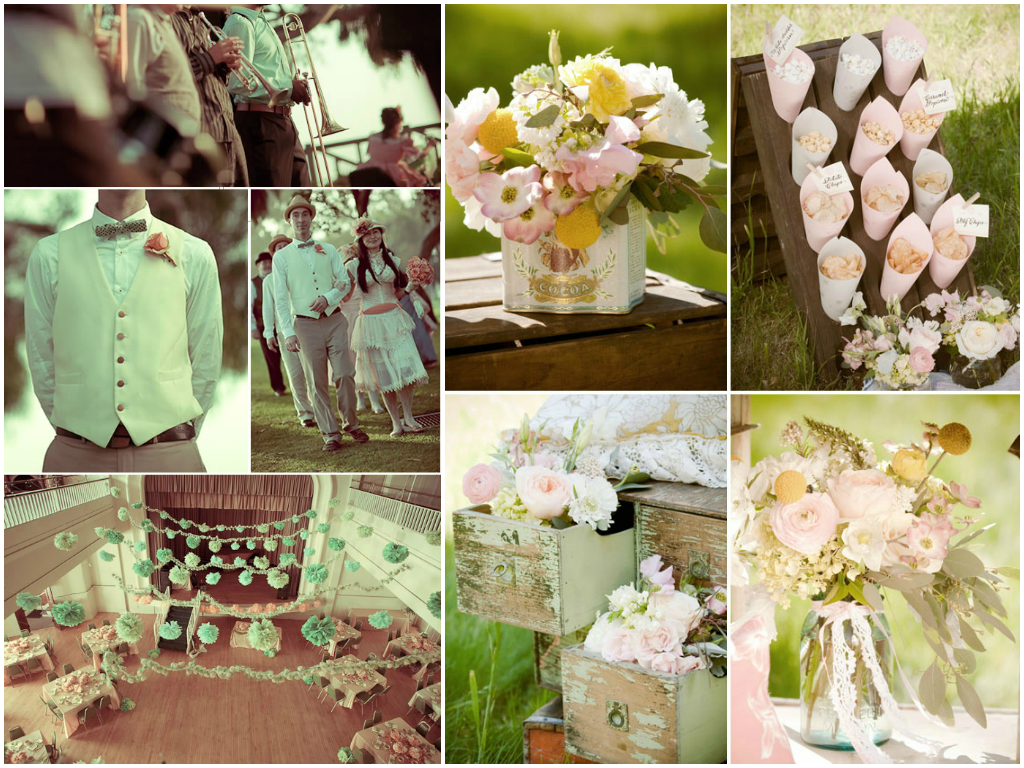
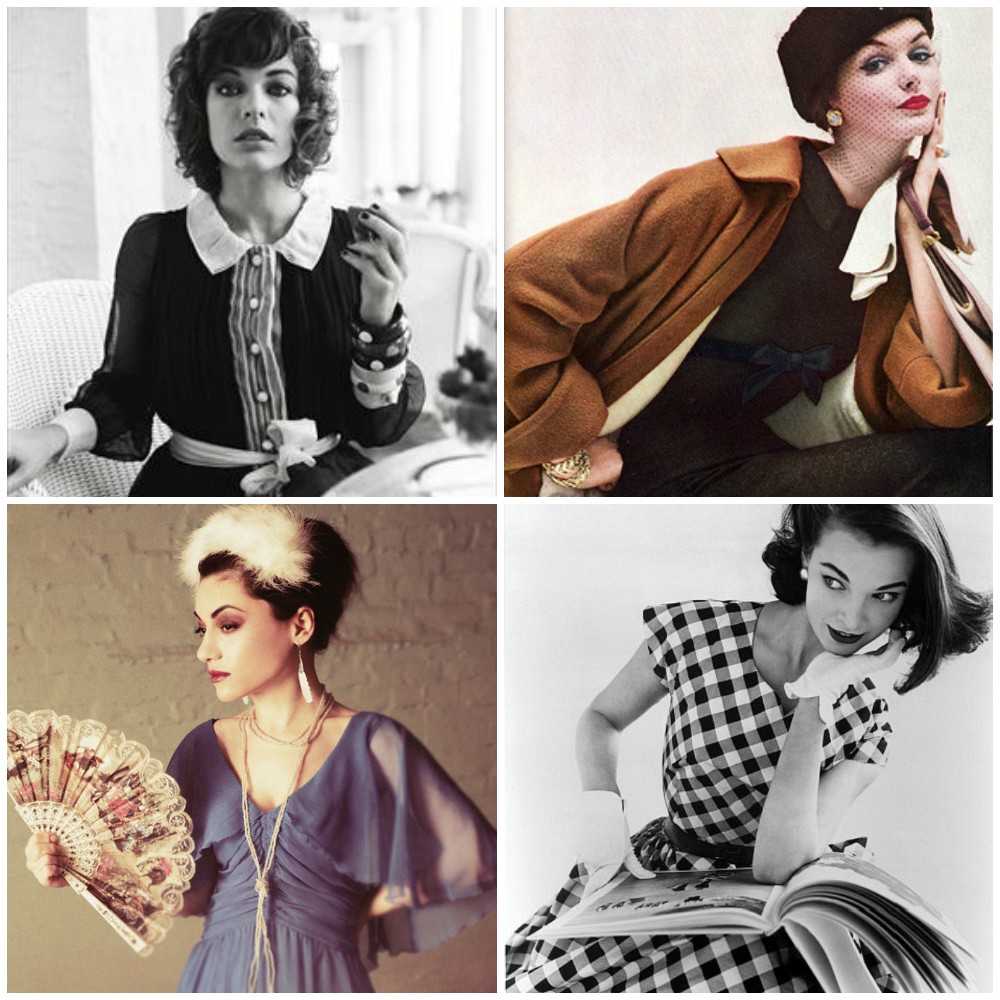
A vintage wedding is not a costume party but a celebration that evokes a particular era: lace and pearls, muted colours, lush old-fashioned flowers and objects with a story. Here is how to choose an era, which flowers suit a vintage bridal bouquet, why cotton belongs in it and how to decorate the venue without overloading it with details.
Ready-made arrangements in pastel shades can be found among our bridal bouquets and garden roses.
"Vintage" usually describes items and styles at least 20–30 years old; at weddings it means references to eras from the 1920s to the 1970s. Retro is a modern imitation of an older look, while shabby chic is a separate trend built on deliberately worn objects and soft flowers. They are often mixed, but a wedding looks more coherent if you choose one era and keep to it in the dress, bouquet, decor and invitations.
A vintage palette is built on muted, "faded" shades: ivory, cream, champagne, powder pink, dusty rose, peach, sage and lavender. Warm terracotta and mustard tones suit the 1970s. Bright pure colours and neon do not fit. For more on building a wedding palette, see our guide to wedding colours.
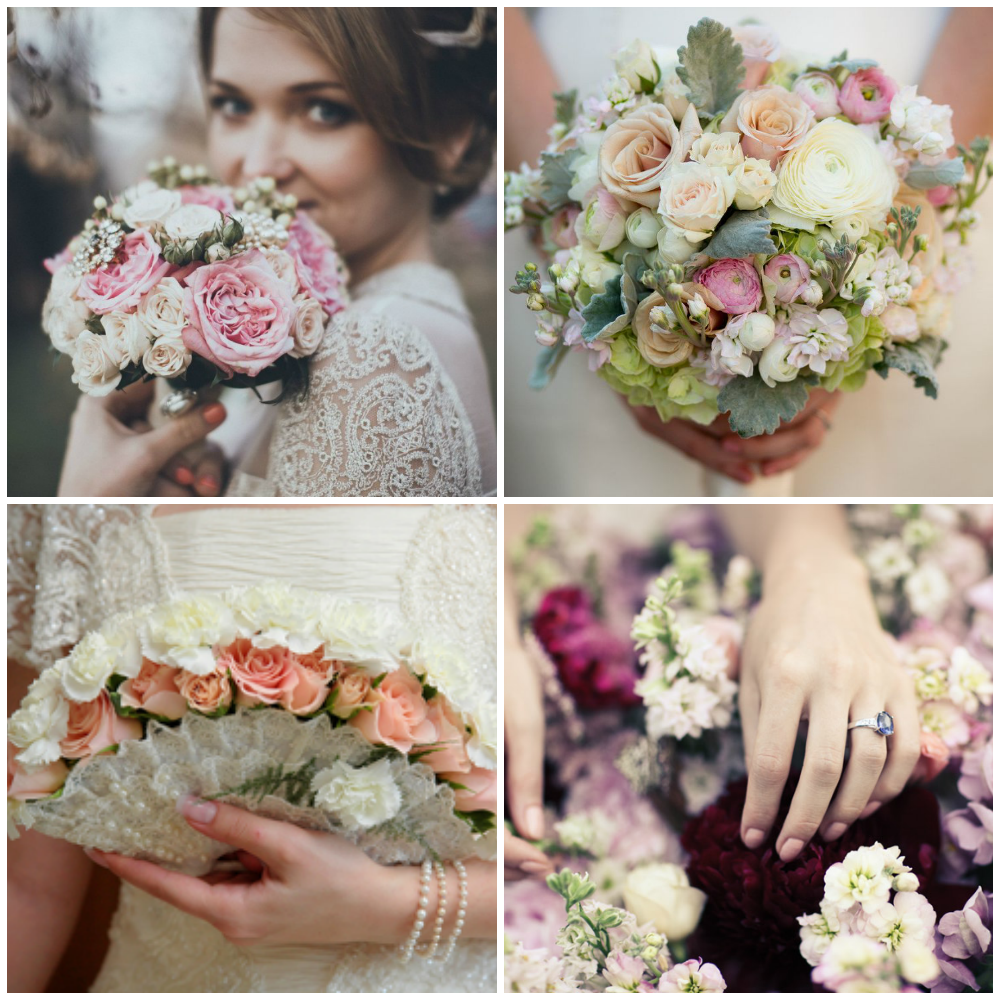
Choose a bouquet shape typical of the era: elongated and cascading for the 1920s, dense and round for the 1950s, loose and natural for boho. Wrap the handle in lace, satin ribbon or linen cord; a grandmother's brooch or locket pinned to it looks beautiful and ties the bouquet to the family's history.
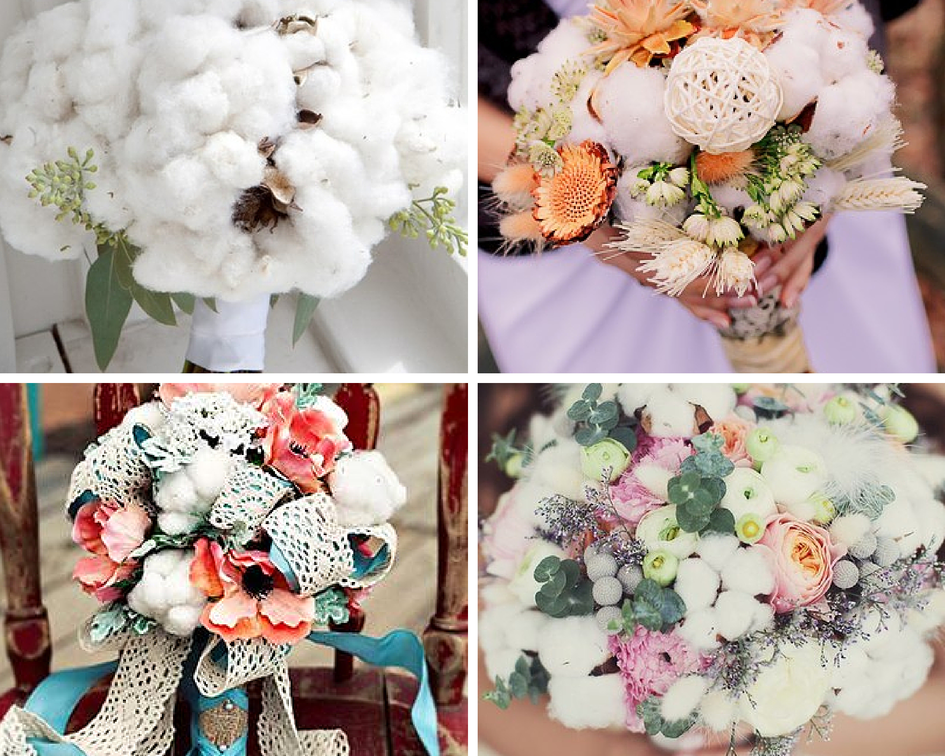
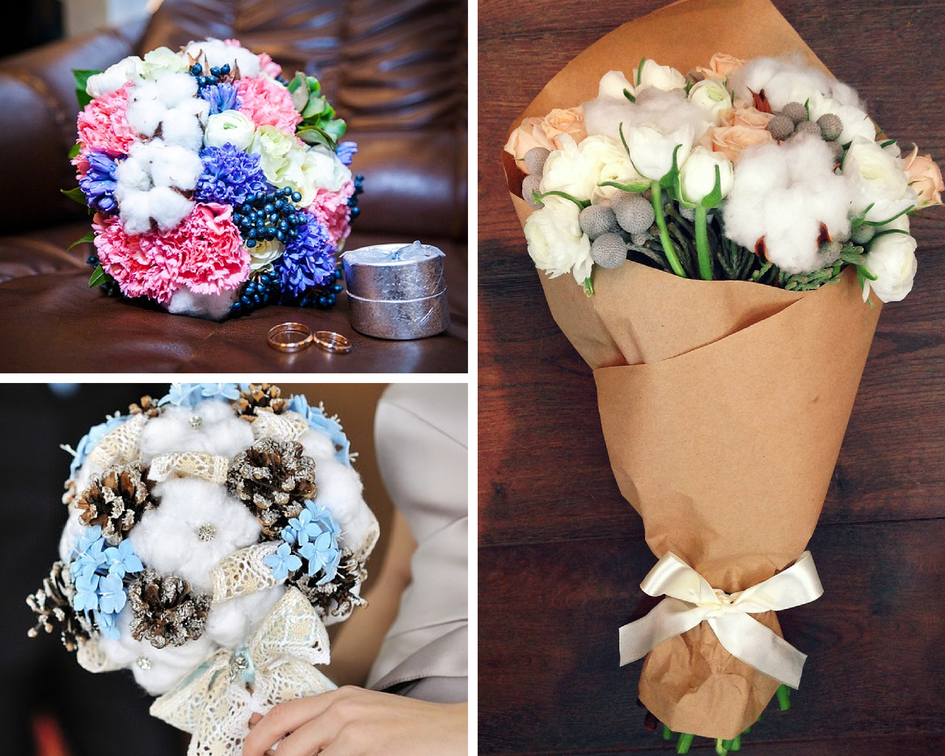
Open cotton bolls with white fibre are a popular element of vintage and rustic bouquets. Cotton is sold dried, so it does not wilt, copes with heat and pairs well with roses, eucalyptus, bunny tails and lavender. It is used in bridal bouquets, the groom's boutonniere, wreaths and table decor.
Cotton also has anniversary symbolism: in English-speaking countries the second wedding anniversary is the cotton anniversary, while in Slavic tradition the first anniversary is called the "calico" (cotton) wedding. A cotton bouquet or a sprig of cotton is therefore a fitting gift for these dates.
The main rule is restraint. Three or four recurring motifs (for example lace, pearls and powder-pink roses) work better than dozens of different objects. You do not need to buy the props: much can be borrowed from relatives or hired from decorators.
Vintage means genuine old items or a faithful recreation of a past era's style; retro is a modern stylisation of it. Weddings often combine the two.
Garden roses, peonies, ranunculus, hydrangeas, carnations and lisianthus in muted shades, plus dried flowers and cotton.
Yes. Garden roses, lisianthus, carnations, cotton, dried flowers and eucalyptus work well in winter, and warm string lights and candles add cosiness.

Author: Maria Svitlovir
Graduated from Taras Shevchenko National University of Kyiv, Institute of Biology and Medicine (2001). BSc in Biology, MSc in Horticulture. Writes about plants, works at a garden centre selecting and repotting plants, and contributes to plant reference guides.
© Kyiv 2026 UFL Flower Shop

Trademark UFL №191476 is used under license of the rights holder.
All rights reserved. Any use of materials without a link to the site is prohibited.


 Birthday
 Hydrangeas