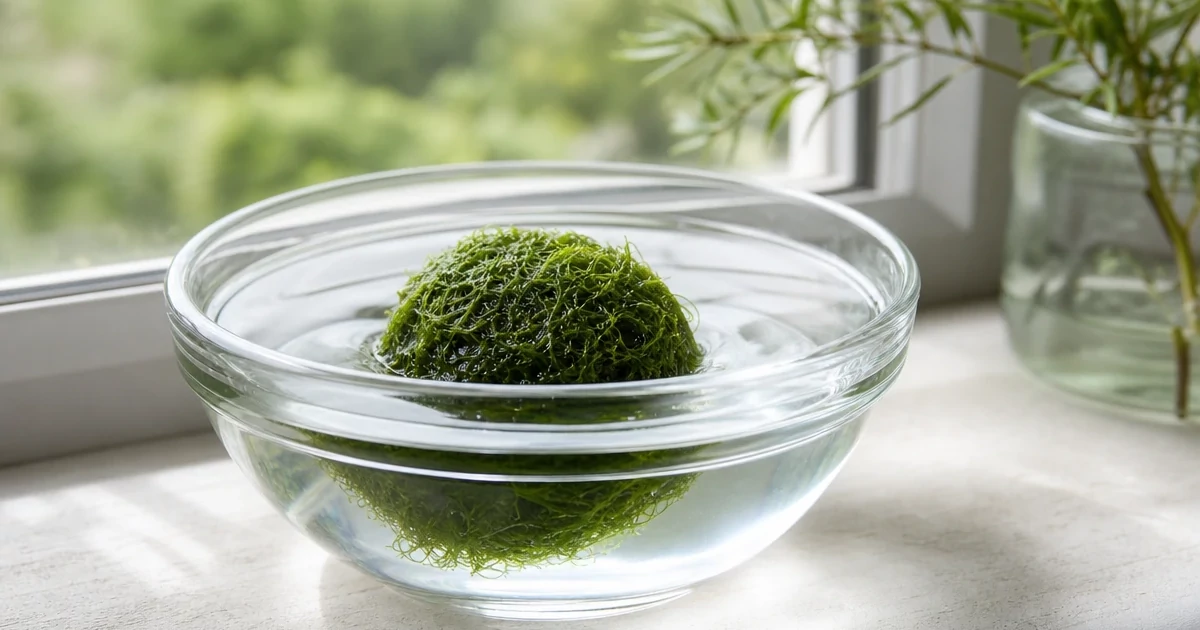
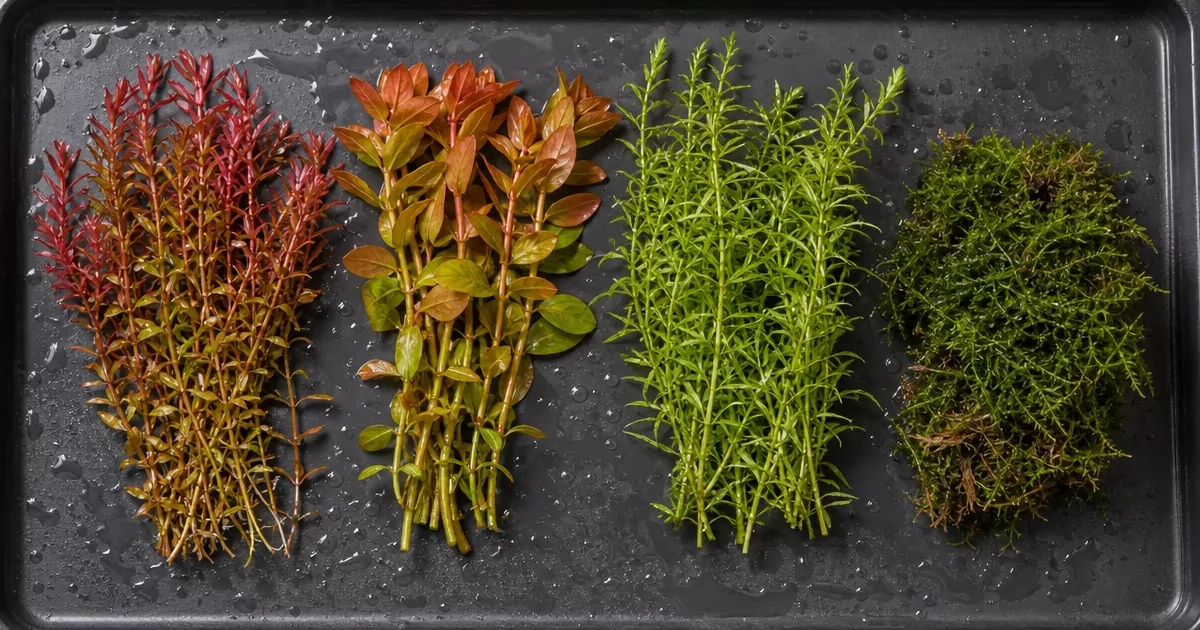
Wabi-kusa is a tiny green world in a glass bowl: a ball of nutrient-rich substrate densely planted with marsh plants sits in shallow water and gradually turns into a lush little mound. It comes from Japanese aquascaping and is now popular as an unusual decoration for a desk or windowsill.
Greenery for your home: potted plants.
The name combines the Japanese idea of wabi, the beauty of simplicity and naturalness, with kusa, meaning grass. The idea is to grow a piece of riverbank meadow: plants that live underwater in an aquarium grow here in their emersed form, drawing moisture from the ball and the air. Later the ball can be placed in an aquarium and the plants will switch to their submerged form.
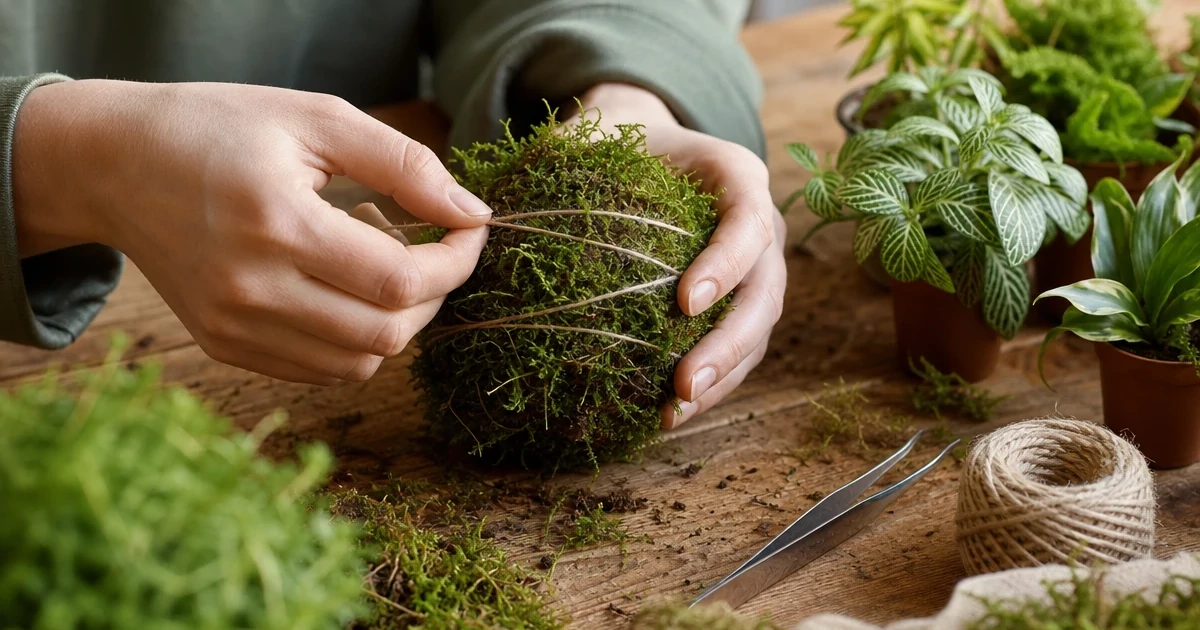
All three come from a love of miniature gardens and suit minimalist interiors. Kokedama is the easiest for beginners; wabi-kusa is the most demanding about humidity.
If you enjoy Japanese ways with plants, try a kokedama or bonsai too.
Usually there is too little light or the air is too dry. Add a grow light and mist more often.
Yes. The plants will gradually swap their emersed leaves for submerged ones; this is normal adaptation.

Author: Maria Svitlovir
Graduated from Taras Shevchenko National University of Kyiv, Institute of Biology and Medicine (2001). BSc in Biology, MSc in Horticulture. Writes about plants, works at a garden centre selecting and repotting plants, and contributes to plant reference guides.
© Kyiv 2026 UFL Flower Shop

Trademark UFL №191476 is used under license of the rights holder.
All rights reserved. Any use of materials without a link to the site is prohibited.

 Birthday
 Hydrangeas