
 Birthday
 Hydrangeas
Delicate, vivid and a little mysterious, the anemone is a favourite of florists and brides. Its large flowers with a dark centre make any bouquet striking and unusual. Here are the types of anemone, the legends behind them, how to use them in wedding floristry and how to make a bouquet last.
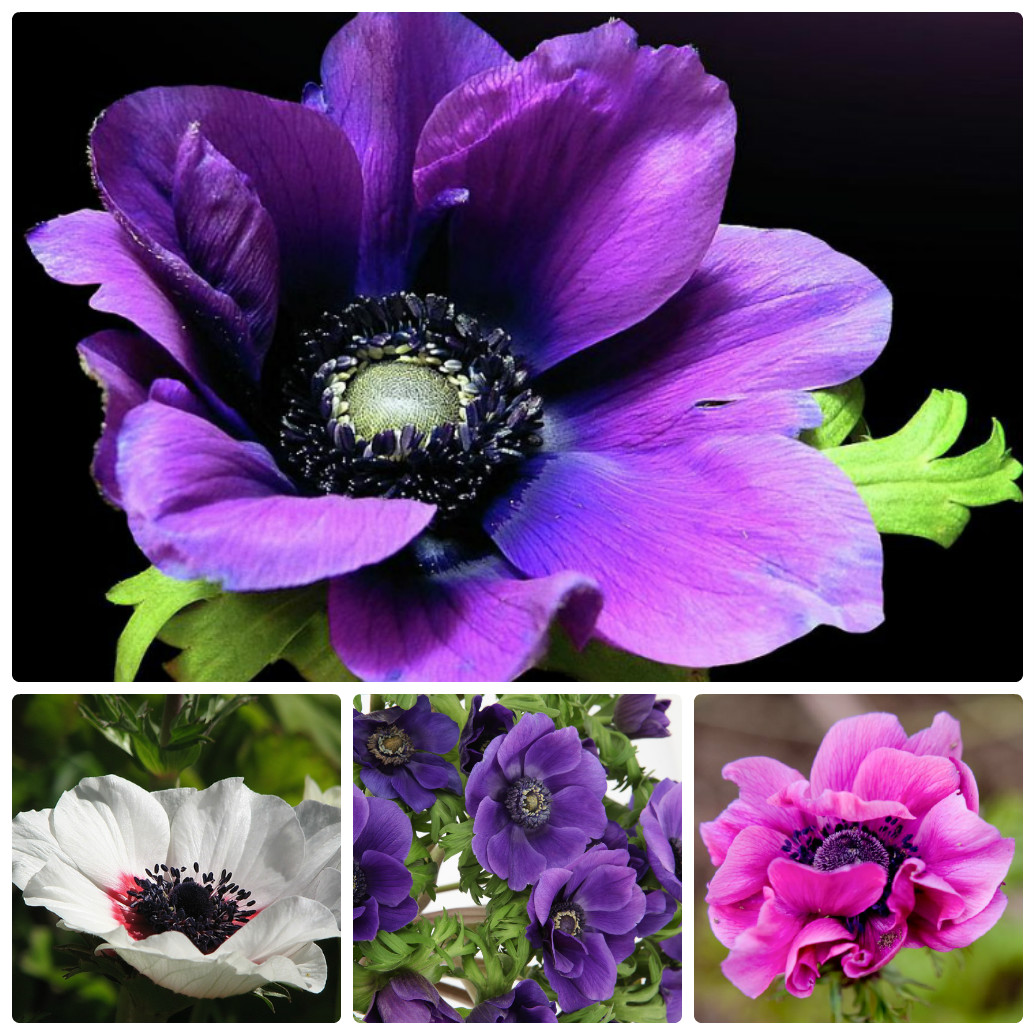
Anemone, the windflower
The anemone is a herbaceous plant of the buttercup family (Ranunculaceae). Its name comes from the Greek anemos, "wind" — hence the common name windflower, as its light petals tremble in the slightest breeze. The genus has about 200 species across Europe, Asia and North America, and botanists often include close relatives such as pasque flowers and hepaticas.
Florists mainly use the poppy anemone (Anemone coronaria). Its flowers come in white, pink, red, purple, blue and bicolours, single or double, often with a contrasting dark centre.
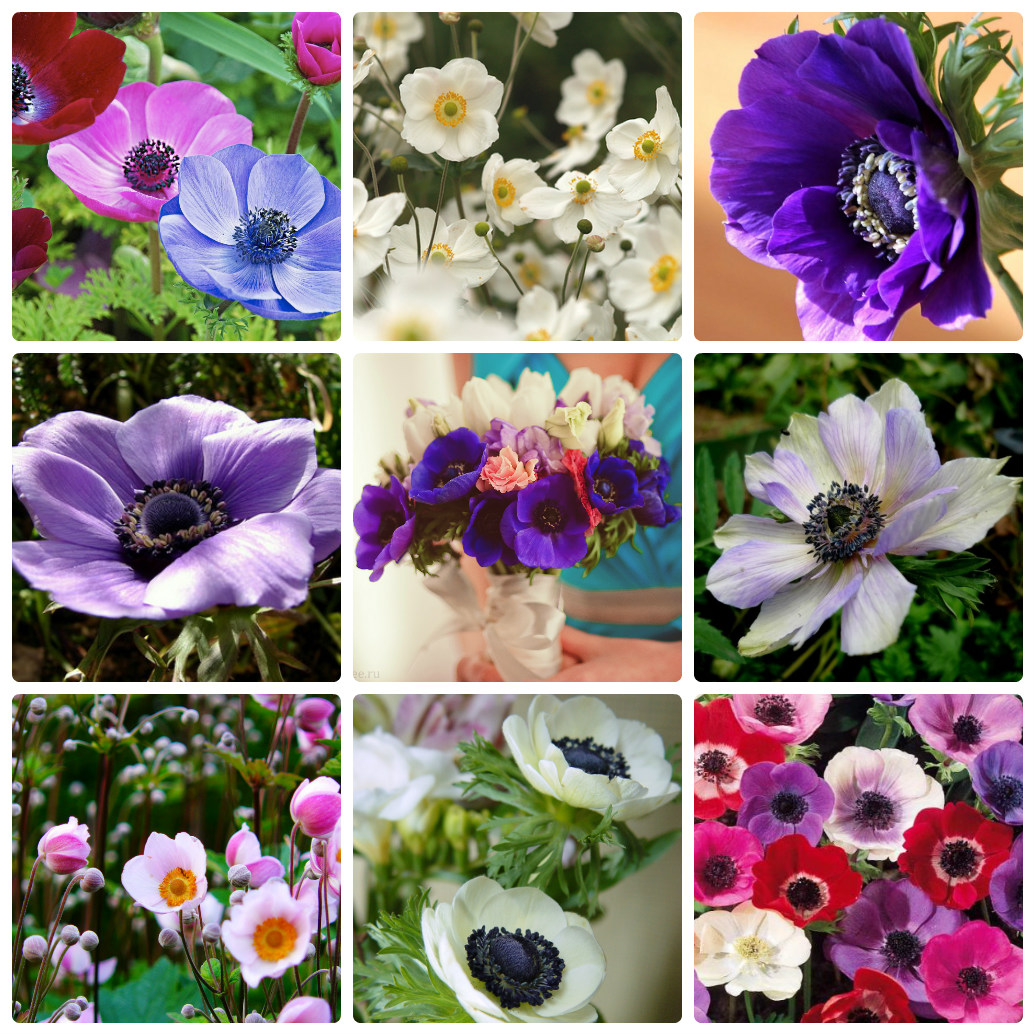
Garden and wild anemones
- Japanese anemone — a tall, hardy perennial that flowers in late summer and autumn, when the garden has few blooms.
- Wood anemone — a wild species of Ukrainian woodlands that carpets forest edges with white flowers in spring.
- Grecian windflower (Anemone blanda) — a low, tuberous early-spring anemone with blue, pink or white daisy-like flowers.
- Poppy anemone is tender in the garden: soak the tubers before planting and lift them for winter in Ukraine.
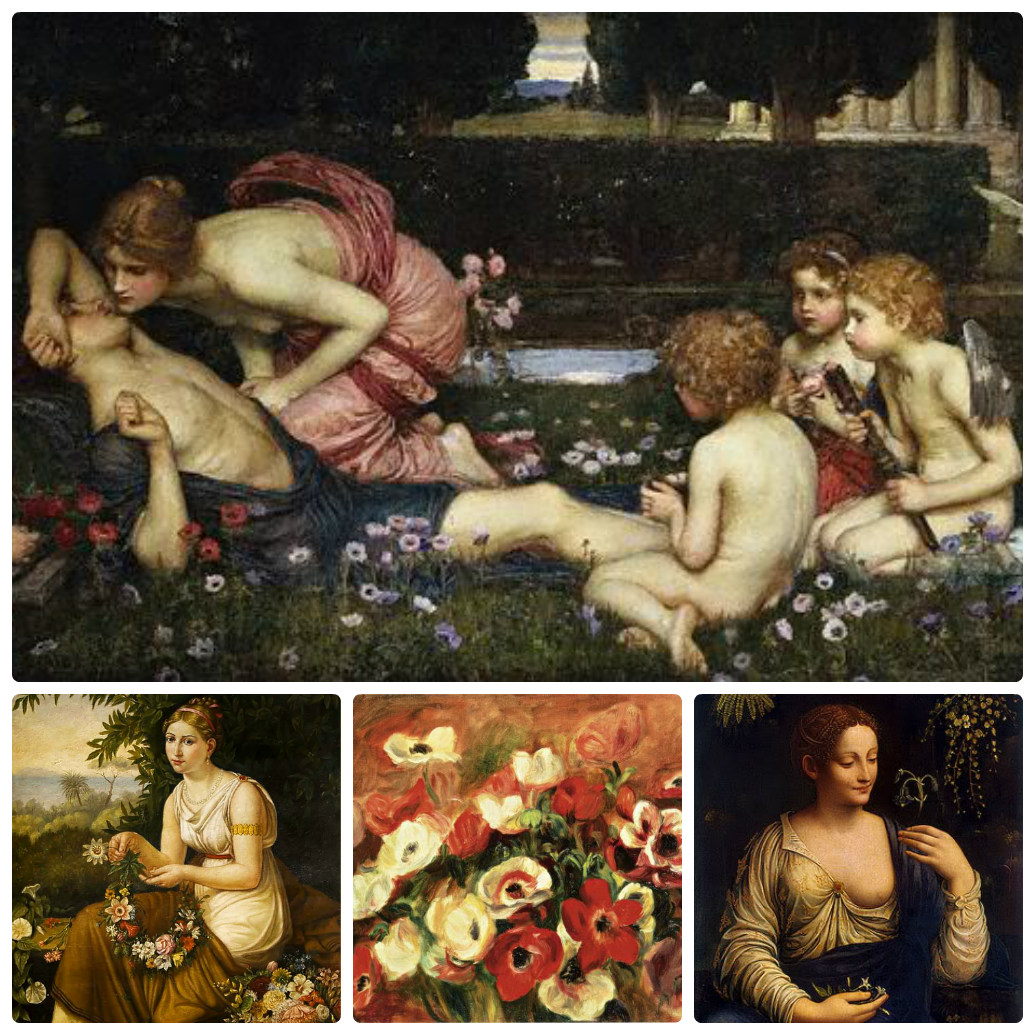
The anemone in myths and legends
According to one Greek myth, the anemone sprang from the blood of Adonis, Aphrodite's beloved, who was killed while hunting. Another version says the nymph Anemone, loved by Zephyrus, god of the west wind, was turned into a flower out of the flower goddess's jealousy. A Christian legend tells that anemones grew at the foot of Golgotha, and in Slavic folk belief the windflower was a protective, lucky flower.
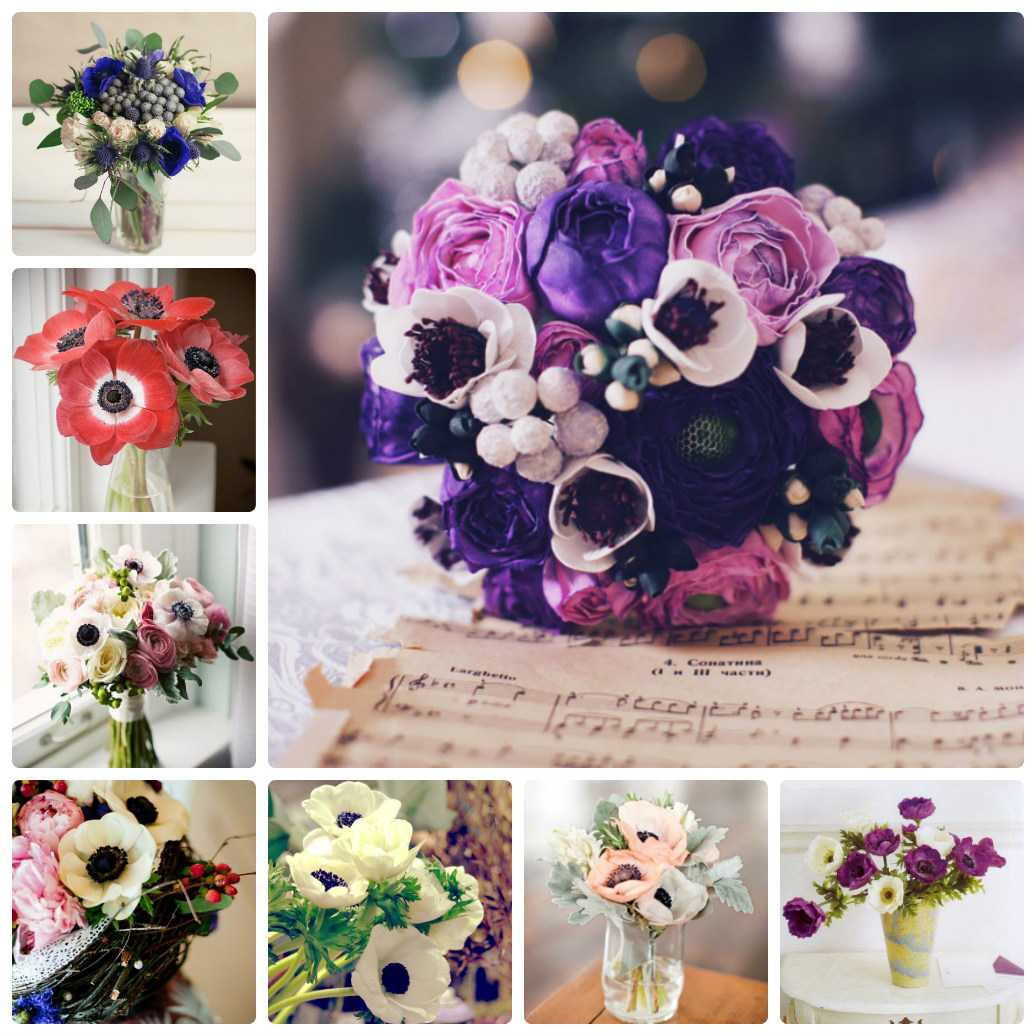
Anemones in wedding floristry
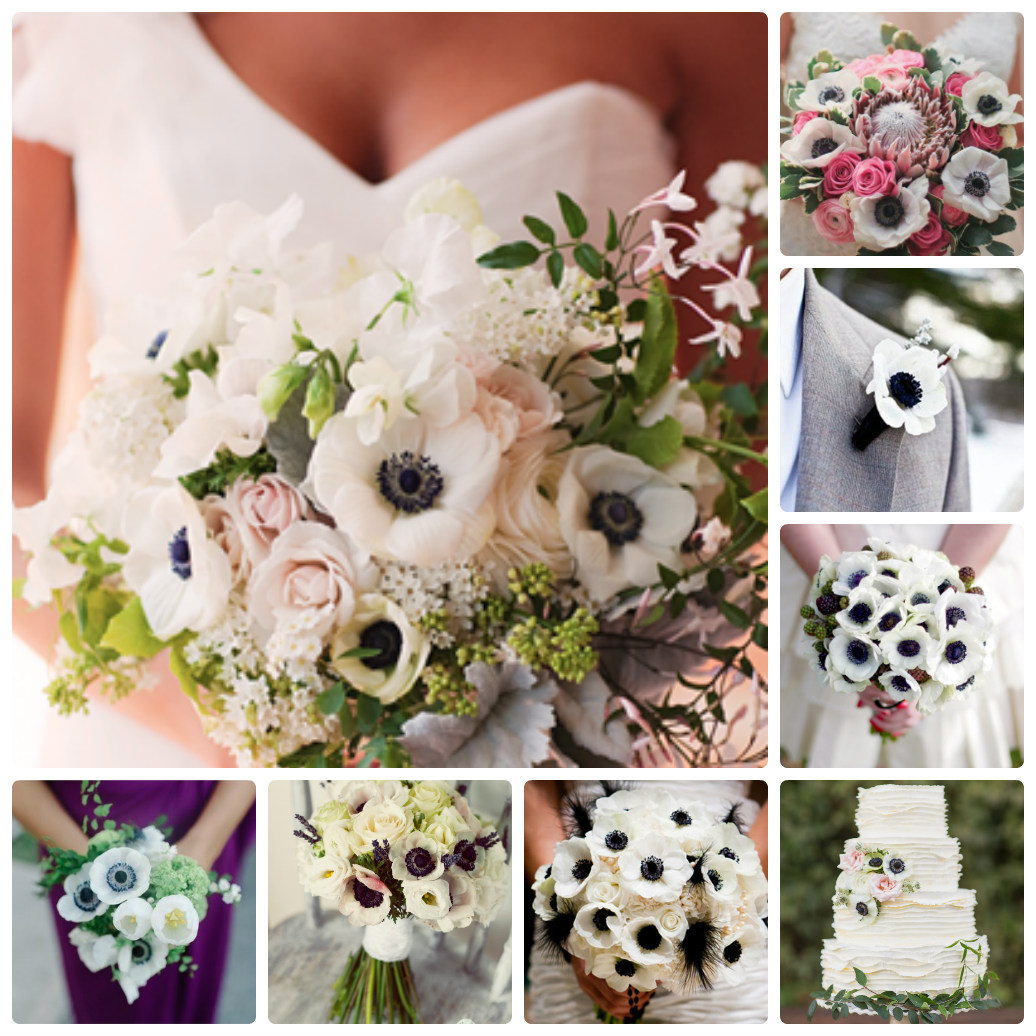
Cut anemones are in season from late autumn to spring, which makes them especially popular for winter and spring weddings. White anemones with black centres look graphic and modern, soft pink and blue ones suit a romantic look, and deep red and purple ones are perfect for a bold bride. Anemones pair beautifully with ranunculus, roses, eucalyptus and tulips. See our bridal bouquet ideas.
How to make an anemone bouquet last
- Trim the stems and place the flowers in shallow, cool water.
- Keep the bouquet cool — anemones dislike heat and open quickly in warmth.
- Change the water daily: anemone stems keep growing in the vase and bend towards the light, so turn the bouquet now and then.
- The sap can irritate skin, and the flowers are unsafe for cats and dogs.
On average, anemones last 5–7 days.
FAQ
What does the anemone symbolise?
Sincerity, tenderness and anticipation — and in wedding floristry, joy and faithfulness.
When are anemones in season?
Cut anemones are available from November to May, while garden species flower in spring or, like the Japanese anemone, in late summer and autumn.
Order a bouquet with anemones or other seasonal flowers with UFL delivery in Kyiv.

View full-size photo
Author: Maria Svitlovir
Graduated from Taras Shevchenko National University of Kyiv, Institute of Biology and Medicine (2001). BSc in Biology, MSc in Horticulture. Writes about plants, works at a garden centre selecting and repotting plants, and contributes to plant reference guides.