
 Birthday
 Hydrangeas
What comes to mind first when you hear "Brazil"? Carnival, football, coffee, soap operas, the Amazon… All true, but the country is far more varied: it has a modernist capital built from scratch, a "Brazilian Venice", the world's largest tropical wetland and a tree that gave the country its name. Here are interesting facts about Brazil, from the famous to the unexpected.

Brazil by the numbers
Brazil is the largest country in South America and the fifth largest in the world. It is home to about 203 million people. The official language is Portuguese — Brazil is the only Portuguese-speaking country in the Americas, a legacy of its colonial history. Even its name comes from a plant: the Portuguese exported pau-brasil, a tree whose red wood yielded a valuable dye.
Football
For Brazilians, football is more than a sport. Brazil is the only team to have won the World Cup five times (1958, 1962, 1970, 1994 and 2002) and the only one to have played in every World Cup. Pelé is the only player to have won the World Cup three times.
The most painful moment in the country's football history was the semi-final of the 2014 World Cup on home soil, lost 1–7 to Germany. The match is still remembered as a national trauma.
Carnival
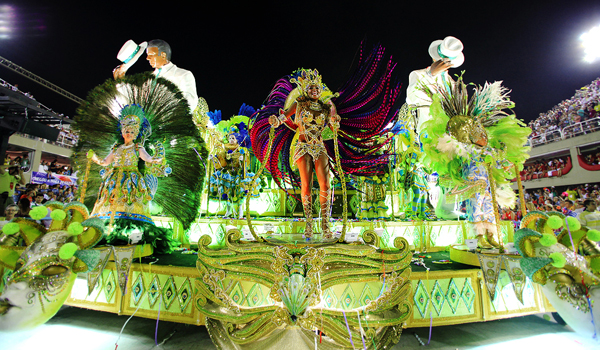
Carnival takes place every year in the final days before Ash Wednesday, the start of Lent. The most famous is in Rio de Janeiro: samba schools prepare all year for the parade and compete in the Sambadrome designed by Oscar Niemeyer. Judges score music, costumes, floats and choreography, and a win is a matter of pride for whole neighbourhoods.

Salvador's carnival is different — it is a street party. Its symbol is the trio elétrico, a huge truck with a stage and musicians, followed by hundreds of thousands of dancers. Salvador's carnival lasts about a week and is considered one of the biggest street celebrations in the world.
And in late June the town of Parintins on the Amazon hosts the Boi-Bumbá folk festival, where two teams re-enact the legend of an ox, blending Portuguese, African and Indigenous traditions.

Coffee and cafezinho
Brazil has been the world's largest coffee producer for more than 150 years, accounting for about a third of the global harvest, mostly arabica. Brazilians drink coffee often and in small amounts: a little cup of strong, sweet cafezinho is a must of hospitality, offered to guests, to clients in offices and even in shops.
Cities worth knowing
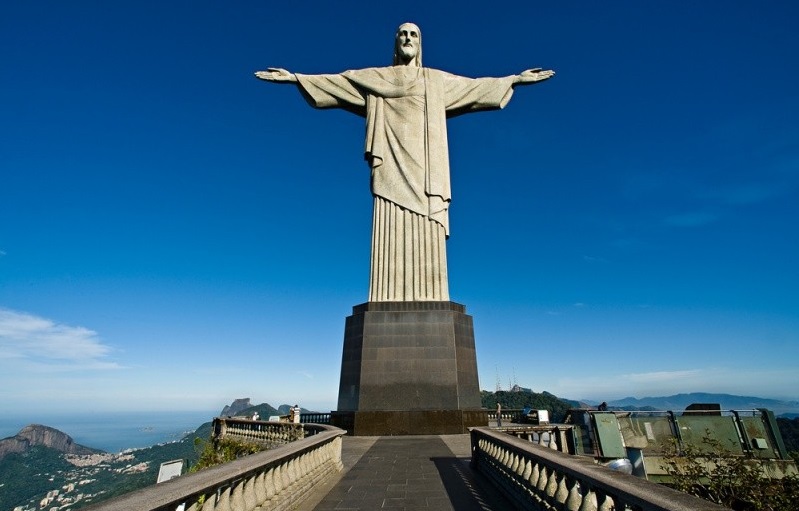
- Rio de Janeiro. The statue of Christ the Redeemer on Corcovado (1931), about 30 metres tall without its pedestal, was named one of the New Seven Wonders of the World in 2007.
- Brasília. A capital built from scratch by 1960 to Lúcio Costa's plan and Oscar Niemeyer's designs. Its cathedral, with 16 curved columns, resembles hands raised to the sky.
- Salvador. The first capital of colonial Brazil and a centre of Afro-Brazilian culture, the home of capoeira. Its historic Pelourinho district is a UNESCO World Heritage Site.
- Manaus. A city in the middle of the Amazon rainforest, where the lavish Amazon Theatre opera house opened in 1896 during the rubber boom.
- Recife. Its many rivers, canals and bridges have earned it the nickname "the Brazilian Venice".
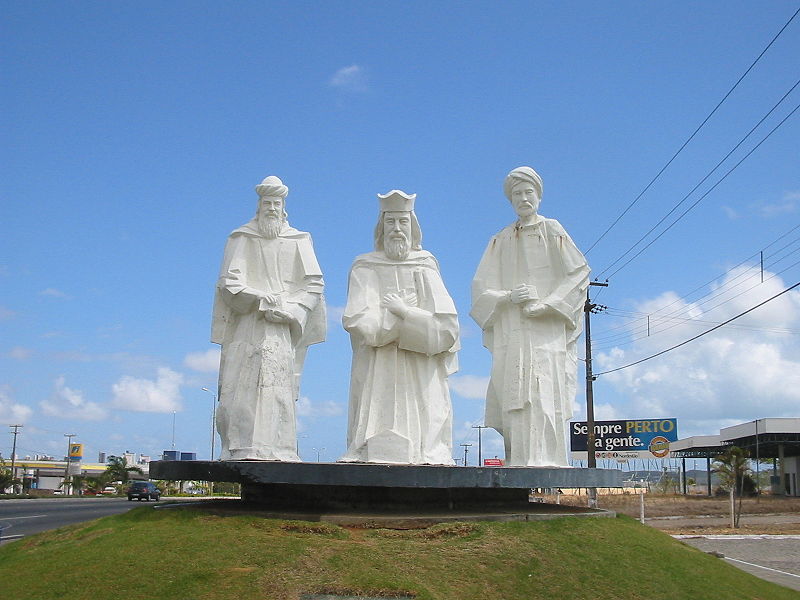
- Natal. Home to the star-shaped Forte dos Reis Magos, which the Portuguese began building in the late 16th century.
- Curitiba. The name is linked to a Tupi word meaning "many pines". The city is known as one of Brazil's greenest.
- Porto Alegre. Rua Gonçalo de Carvalho has become a green tunnel of more than a hundred tipuana trees and is protected as a heritage site.
Nature

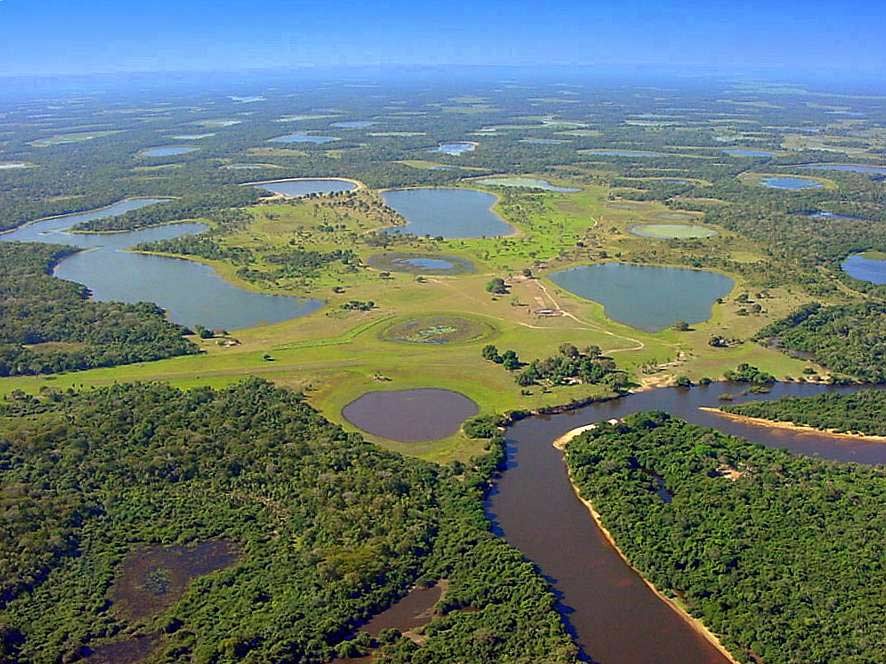
About 60% of the Amazon rainforest — the largest tropical forest on Earth — lies within Brazil. In the southwest stretches the Pantanal, the world's largest tropical wetland, where you can see caimans, capybaras, jaguars and hundreds of bird species. On the border with Argentina roar the Iguaçu Falls, about 275 separate cascades.
Brazil is also a land of flowers. Many orchids come from here, including cattleyas, as do bromeliads, bougainvillea and the popular houseplant gloxinia. The yellow ipê, which in spring is covered in a solid cloud of golden blossom, is often called a symbol of the country. You can create a tropical-style bouquet in Kyiv too — for example, with orchids.
Soap operas and music

For several generations of viewers in Eastern Europe, Brazil meant telenovelas. Escrava Isaura (The Slave Isaura), shown in the late 1980s, kept millions glued to their screens. Brazilian music is just as famous: samba, bossa nova (its global emblem is Antônio Carlos Jobim's "The Girl from Ipanema") and modern MPB.
FAQ
What language is spoken in Brazil?
Portuguese — Brazil is the only Portuguese-speaking country in the Americas.
How many times has Brazil won the World Cup?
Five: 1958, 1962, 1970, 1994 and 2002 — a record.
When is carnival in Brazil?
In the days before Ash Wednesday, usually in February or early March.
Why is the country called Brazil?
After the pau-brasil tree, whose red wood was used to make dye.
What is the capital of Brazil?
Brasília, since 1960. Before that the capital was Rio de Janeiro, and earlier still Salvador.

View full-size photo
Author: Maria Svitlovir
Graduated from Taras Shevchenko National University of Kyiv, Institute of Biology and Medicine (2001). BSc in Biology, MSc in Horticulture. Writes about plants, works at a garden centre selecting and repotting plants, and contributes to plant reference guides.