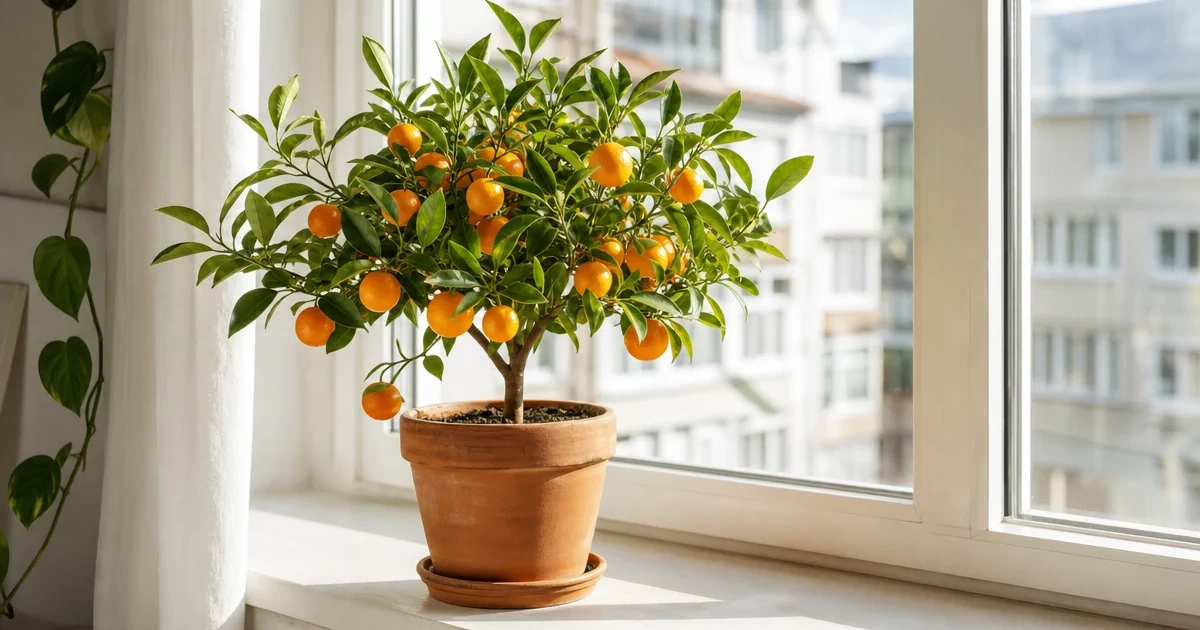
Calamondin is one of the easiest citrus trees to grow indoors: this compact tree with glossy leaves bears fragrant white flowers and small orange fruit at the same time. The keys to success are plenty of light, a cool winter and careful watering. More flowers with photos, names and meanings are in our types of flowers guide.
Plants as gifts: potted plants and flower baskets.
Calamondin (Citrus × microcarpa) is a natural hybrid of mandarin and kumquat from Southeast Asia. In the Philippines it is called calamansi and is widely used in cooking: the juice goes into sauces, drinks and marinades. The fruit, 2–4 cm across, is edible but very sour, with a thin, fragrant peel.
Moving from a greenhouse to a flat is a big change, so in the first 2–4 weeks a calamondin often drops some leaves, flowers and young fruit. This is a normal stress reaction.
Winter light is weak, so the best place for calamondin is somewhere cool, at 12–15 °C on a bright glazed balcony, with less watering. In a warm room without extra light it often drops its leaves. If you have no cool spot, keep it right next to a window and add a grow light.
Calamondin flowers several times a year. Indoors, without insects, fruit sets better if you hand-pollinate with a soft brush, moving pollen from flower to flower. The fruit takes several months to ripen and stays on the branches for a long time, so one tree often carries flowers, green fruit and orange fruit together.
Avoid moving or turning the plant unless necessary, especially while it is flowering. If you enjoy fruiting plants in pots, read how to grow an olive tree in a pot.
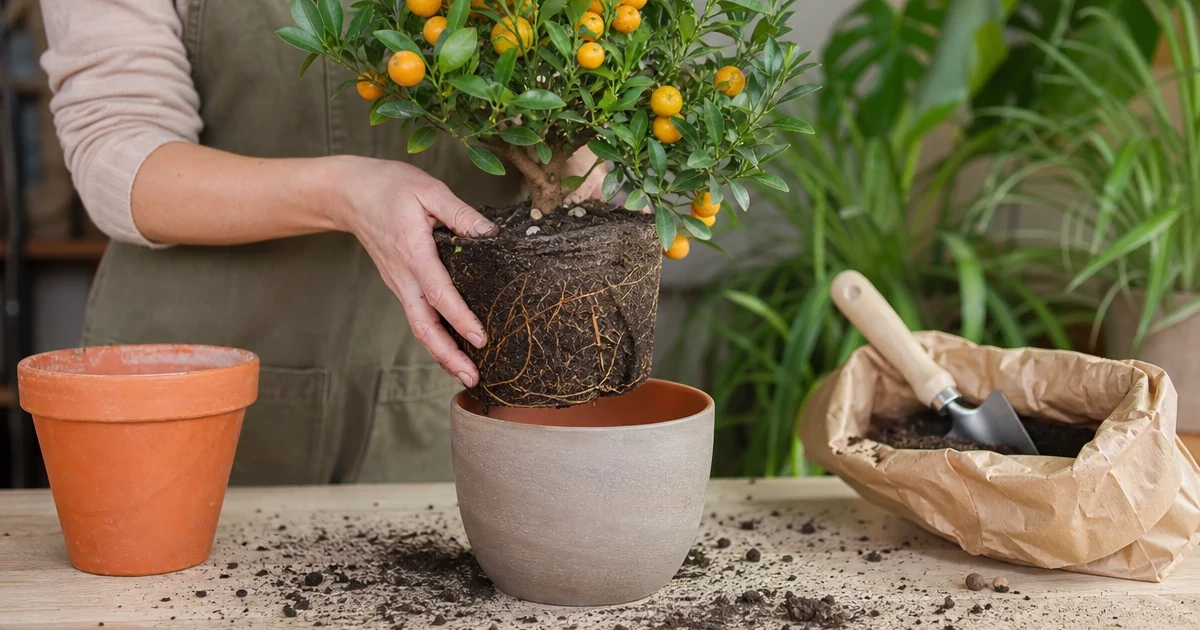
Repot a young calamondin every spring and a mature one every 2–3 years, potting on without burying the base of the trunk. Choose a pot 2–3 cm wider with drainage and use citrus compost. Do not repot while it is flowering or ripening fruit.
It is propagated from semi-ripe cuttings 8–10 cm long, rooted in warmth under film, though they root reluctantly and not all take. Seed-grown plants take several years to flower, so buying a ready-grown tree is the faster route.
In warm, dry air calamondins are most often hit by spider mites (fine webbing, tiny pale specks on leaves), scale (raised brown bumps and sticky leaves), whitefly, and aphids on new shoots. Check the undersides of leaves weekly, and at the first signs rinse the crown under a lukewarm shower and treat with a suitable product as directed.
Citrus leaves and peel contain essential oils that can upset the stomach of cats and dogs. Do not let pets chew the leaves or fruit.
Cuttings are the most reliable method. In spring or early summer take a semi-ripe cutting 8–10 cm long with 2–3 leaves, dip the cut in rooting hormone and root it in a peat-sand mix under plastic at 22–25 °C. Roots appear in about four to six weeks. Calamondin will also grow from seed, but such a plant takes many years to flower and fruit and may differ from its parent.
Yes, but it is very sour. Use it like lemon in tea, drinks, sauces and jam.
Young plants every spring, mature ones every 2–3 years, into a pot just a little larger than the last.
In good light it flowers several times a year, so flowers and fruit at different stages are often on the tree at the same time.

Author: Maria Svitlovir
Graduated from Taras Shevchenko National University of Kyiv, Institute of Biology and Medicine (2001). BSc in Biology, MSc in Horticulture. Writes about plants, works at a garden centre selecting and repotting plants, and contributes to plant reference guides.
© Kyiv 2026 UFL Flower Shop

Trademark UFL №191476 is used under license of the rights holder.
All rights reserved. Any use of materials without a link to the site is prohibited.

 Birthday
 Hydrangeas