
 Birthday
 Hydrangeas
Prepared with UFL flower delivery. The calla lily (Zantedeschia) has a reputation for being fussy, but most problems have one cause: it is treated like an ordinary houseplant. In fact a calla lives in cycles — growth, flowering, dormancy — and each stage needs its own routine. Here are six rules that bring flowers every year.
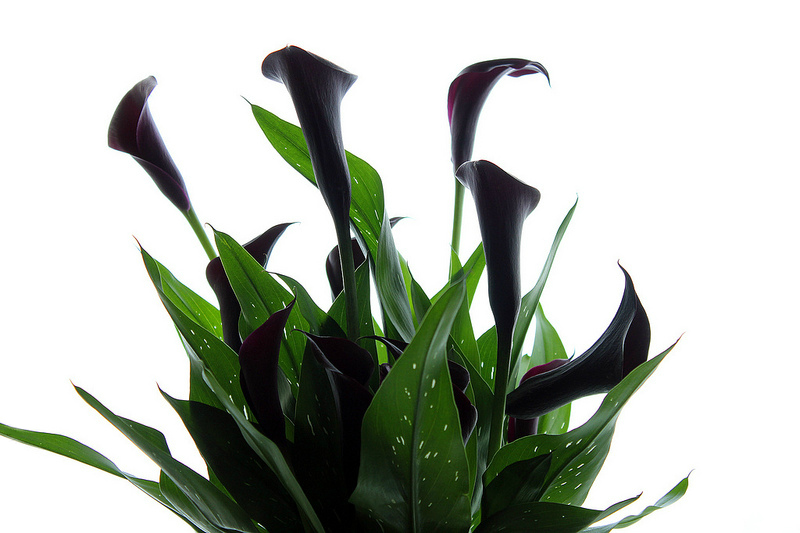
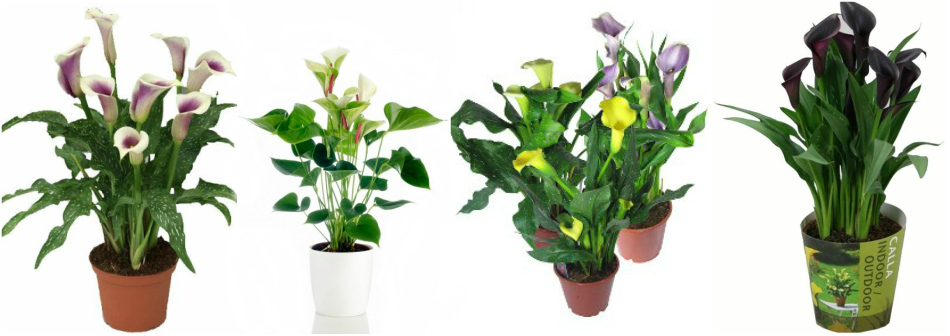
White or coloured: what is the difference
Two groups are sold, and they need different care.
| White calla (Z. aethiopica) | Coloured callas | |
|---|---|---|
| Underground part | Rhizome | Tuber |
| Height | 60–100 cm | 30–60 cm |
| Flowering indoors | Winter – spring | Summer |
| Dormancy | June – July, some leaves stay | November – February, leaves die back completely |
| Watering | Generous, likes moisture | Moderate, the tuber rots in soggy soil |
Rule 1. Light: bright, but no midday sun
A calla needs 10–12 hours of bright, diffused light. An east or west window is best; on a south window give shade at midday, or direct sun will scorch the leaves. Morning and evening sun is fine. In winter, when the white calla flowers, add a grow light: in poor light the flower stalks stretch and flop.
Rule 2. Temperature: 18–23 °C and no draughts
During growth and flowering keep it at 18–23 °C. Below 12–14 °C the plant stalls, and a cold draught from an open window can ruin the buds. In summer the pot can go out on a balcony or into the garden, but bring it in once nights drop below 10 °C. Dormant coloured callas need a cool 5–10 °C.
Rule 3. Watering and humidity
In the wild the white calla grows on the banks of ponds and streams, so while it is growing the soil should stay moist and a little water can stand in the saucer. Coloured callas only need water when the top 2–3 cm of soil is dry: their tubers rot in a swamp.
- Use settled, room-temperature water and pour it around the edge of the pot, not onto the tuber.
- Keep humidity at 60–70% with a tray of wet pebbles or a humidifier.
- Wipe the leaves with a soft damp cloth once a week — dust blocks their pores.
- Water a little more when flower stalks appear, then gradually less after flowering.
Rule 4. Feed only while it grows
From the first new leaves to the end of flowering, feed every 10–14 days with a liquid fertiliser for flowering plants. It should be rich in phosphorus and potassium and low in nitrogen: too much nitrogen gives lush leaves and no flowers. Do not feed at all during dormancy.
Rule 5. Dormancy is a must
Without a rest the calla will not set flower buds. After flowering, cut back on watering gradually.
- White calla: in June–July water only a little and move it to light shade. Remove yellow leaves. Resume watering in August and new growth will start.
- Coloured callas: leaves turn yellow in September–October. Stop watering, let the top growth die back, then leave the tuber in dry soil or lift it, dry it and store at 5–10 °C until late February.
Rule 6. Repotting and propagation
Repot every year after dormancy: the white calla in August, coloured ones in March. Choose a pot 20–25 cm across; one that is too big makes the plant grow roots instead of flowers. Put 3–4 cm of drainage at the bottom. The soil should be slightly acidic (about pH 6): leaf mould, peat and sand roughly 2:1:1, or a ready mix for flowering plants.
Plant a coloured calla tuber only 3–5 cm deep, growing point up. Callas are propagated by dividing the rhizome or separating offset tubers when repotting. Dust the cuts with crushed charcoal and let them dry for a day.
Why a calla will not flower
- No dormancy — the most common reason.
- Too little light, especially in winter.
- A pot that is too big, or many offsets draining the plant.
- Too much nitrogen: lush leaves, no flowers.
- The tuber is planted too deep or is still young (offsets flower in their 2nd–3rd year).
Problems and care mistakes
- Yellow leaves in the growing season mean overwatering or cold; in autumn this is normal for coloured callas.
- Brown leaf tips mean dry air.
- Stalks blackening at the base mean bacterial soft rot: cut out affected parts and repot into fresh soil.
- Pests: spider mites and aphids thrive in dry air. A warm shower and an insecticide help.
Calla lilies in a bouquet
A cut calla lasts up to two weeks in a vase. The stem is hollow, so change the water daily and re-cut the stem with a sharp knife. White callas are a wedding classic, while coloured ones add graphic lines to modern arrangements. Read more about their meaning in types of flowers, or browse potted plants with delivery in Kyiv.
FAQ
How often should I water a potted calla?
White callas: often enough that the soil never dries out, usually 2–3 times a week in season. Coloured callas: when the top 2–3 cm is dry. During dormancy: very little or not at all.
Can a calla lily grow outdoors?
Yes, from May to September. It does not survive a Ukrainian winter in the ground, so tubers and rhizomes are lifted in autumn.
How many times a year does a calla flower?
Usually once, for 1–2 months. In ideal conditions a white calla can produce a second flush.

View full-size photo
Author: Maria Svitlovir
Graduated from Taras Shevchenko National University of Kyiv, Institute of Biology and Medicine (2001). BSc in Biology, MSc in Horticulture. Writes about plants, works at a garden centre selecting and repotting plants, and contributes to plant reference guides.


