
 Birthday
 Hydrangeas
Climbing plants solve several problems at once: they hide an ugly wall or fence, shade a terrace and turn an arch or pergola into a flowering tunnel. The key is to match the climber to the spot and understand how it holds on to its support. Below are eight reliable climbers for Ukraine's climate, annual alternatives and planting tips.
How climbers hold on
- Adhesive pads and aerial roots — ivy, Boston ivy, campsis. They climb walls on their own but can damage render and timber cladding.
- Tendrils — Virginia creeper, sweet pea. They need a mesh or trellis.
- Twining stems — wisteria, hops, Dutchman's pipe, honeysuckle. They wind around a post, wire or pergola.
- Leaf stalks — clematis, which grips thin supports up to 1 cm thick.
- No mechanism — climbing roses, whose canes must be tied in.

Eight reliable garden climbers
Virginia creeper and Boston ivy
The least demanding climbers: they grow in sun or shade, add 1–3 m a season and turn red in autumn. Ideal for quickly greening walls and fences.

Campsis (trumpet vine)
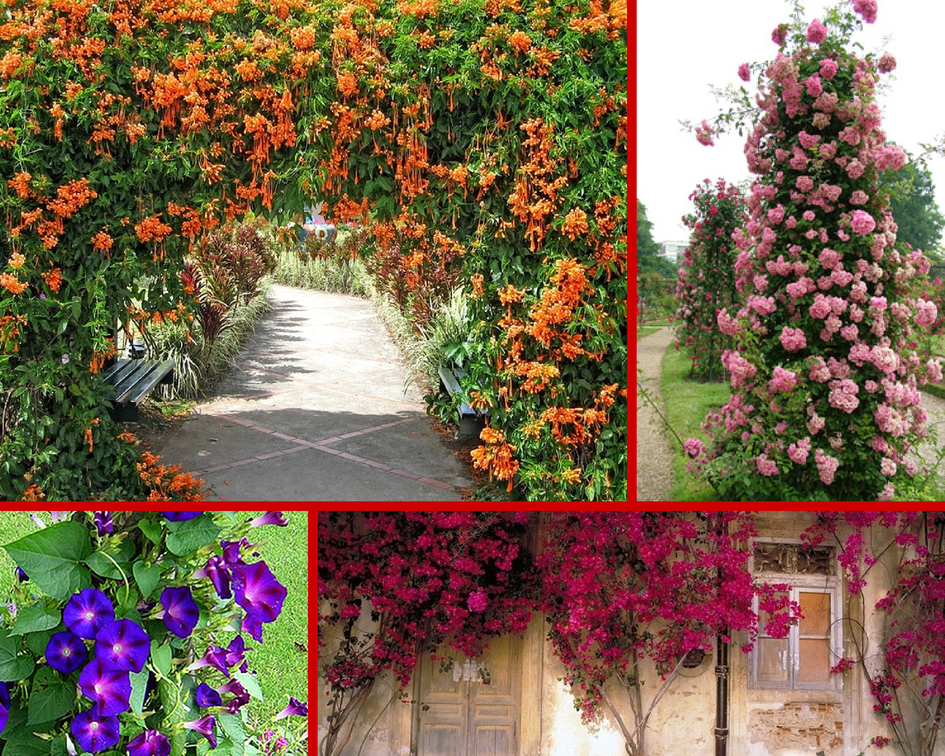
Orange or red trumpet flowers from July to September; loves sun and warmth. It produces many root suckers, so plant it away from paths and foundations.
.jpg)
Ivy
Evergreen and shade-tolerant. In cold winters in central and northern Ukraine it can suffer frost damage. The berries are poisonous — keep this in mind if small children use the garden.

Wisteria
Long lilac racemes in May make it one of the most spectacular climbers. It does best in the south of the country and needs a very strong support, as a mature plant is heavy. Seedlings take many years to flower, so choose grafted or cutting-grown plants.

Clematis
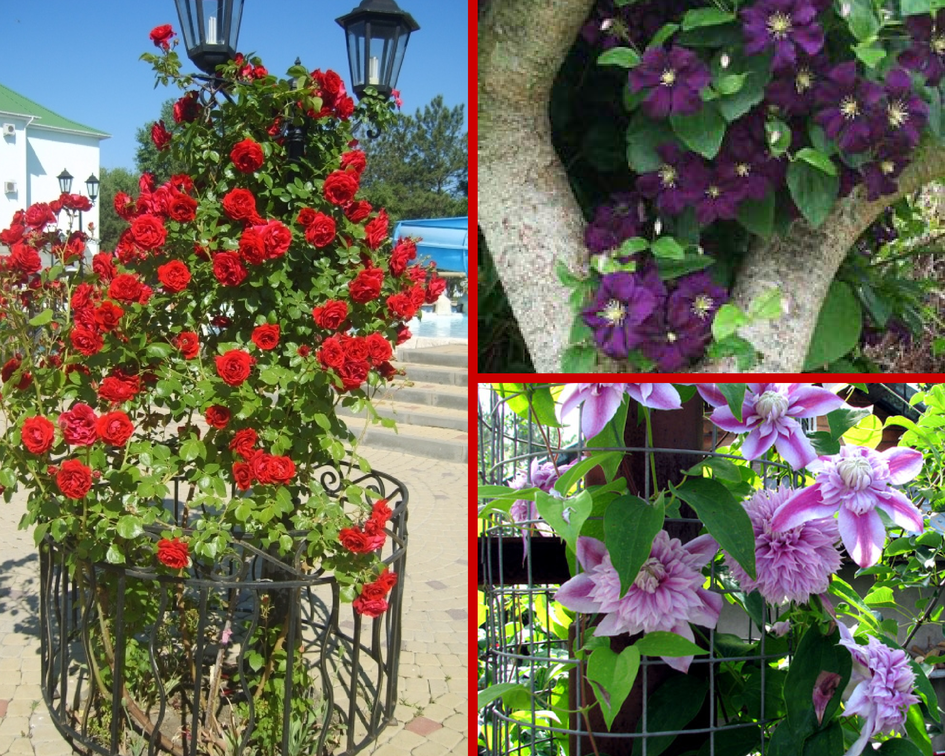
Hundreds of varieties with flowers from 3 to 20 cm. "Head in the sun, feet in the shade": shade the root zone with low plants. Pruning depends on the group: group 1 needs little pruning, group 3 is cut back hard in spring.

Dutchman's pipe
Large heart-shaped leaves cast dense shade over a gazebo, and the flowers look like a tobacco pipe. All parts of the plant are poisonous.

Climbing hydrangea
One of the few flowering climbers for shade, with white flower heads in June. It grows slowly for the first 2–3 years, then picks up speed.
.jpg)
Climbing rose
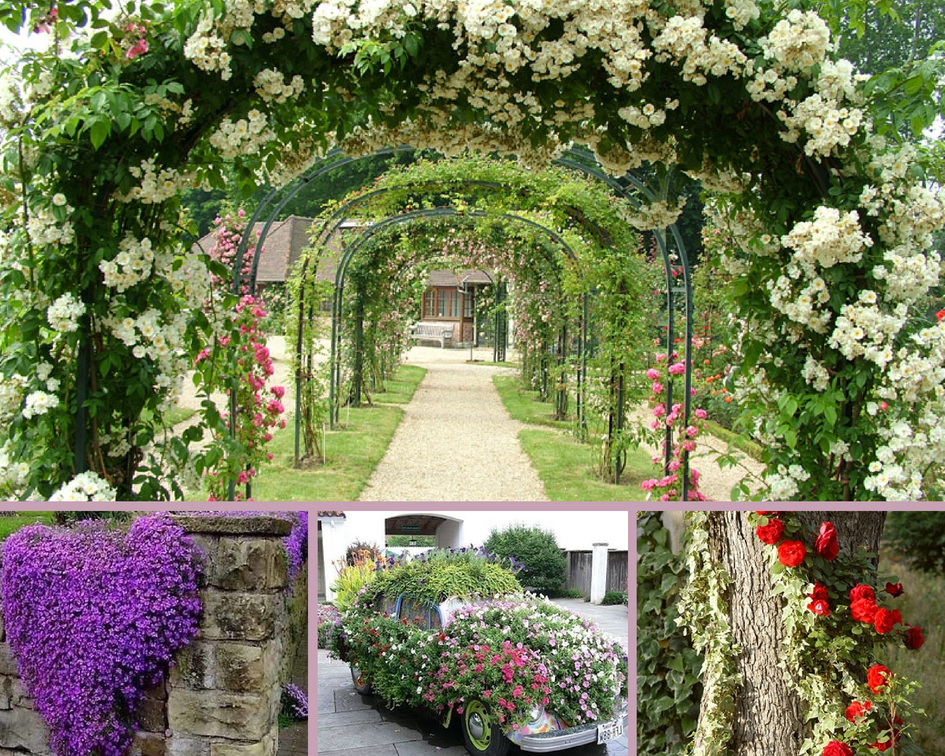
It does not cling on its own — tie the canes to a trellis or arch, training them closer to horizontal to get more flowers. Ramblers flower profusely, usually once; climbers have larger blooms and often repeat.
.jpg)
Annual climbers: quick results for one season
To cover a mesh this summer, or if you rent your home, choose annuals: morning glory, sweet pea, nasturtium, scarlet runner bean. Sown in May, they reach 2–3 m by midsummer. For long-flowering bedding plants, see flowers that bloom all summer.
How to plant a climber
- Install the support before planting and set it 20–30 cm away from the wall so the roots are not in a dry "rain shadow".
- For perennials, dig a hole about 50 × 50 cm and add compost.
- Guide the first shoots to the support and tie them in with soft twine.
- Water regularly in the first season — soil next to a wall dries out faster.
- Heat-loving species suit the south; for colder areas choose frost-hardy plants.
FAQ
Will a climber damage my house wall?
Ivy and campsis can damage old render and timber cladding and get under roof tiles. On such façades, climbers on a trellis set away from the wall are safer.
Which climber grows fastest?
Among perennials, Virginia creeper and hops; among annuals, morning glory.
What can I plant on a shady fence?
Ivy, Virginia creeper, climbing hydrangea or Dutchman's pipe.

View full-size photo
Author: Maria Svitlovir
Graduated from Taras Shevchenko National University of Kyiv, Institute of Biology and Medicine (2001). BSc in Biology, MSc in Horticulture. Writes about plants, works at a garden centre selecting and repotting plants, and contributes to plant reference guides.