
The cornflower is one of the most recognisable flowers of the Ukrainian summer: bright blue heads among golden wheat, wreaths of cornflowers and poppies. Wild cornflowers are rarer than they once were, but garden varieties and perennial relatives brighten flower beds, and cornflower bouquets are back in fashion. Here are the types, how to grow them and what the flower means.
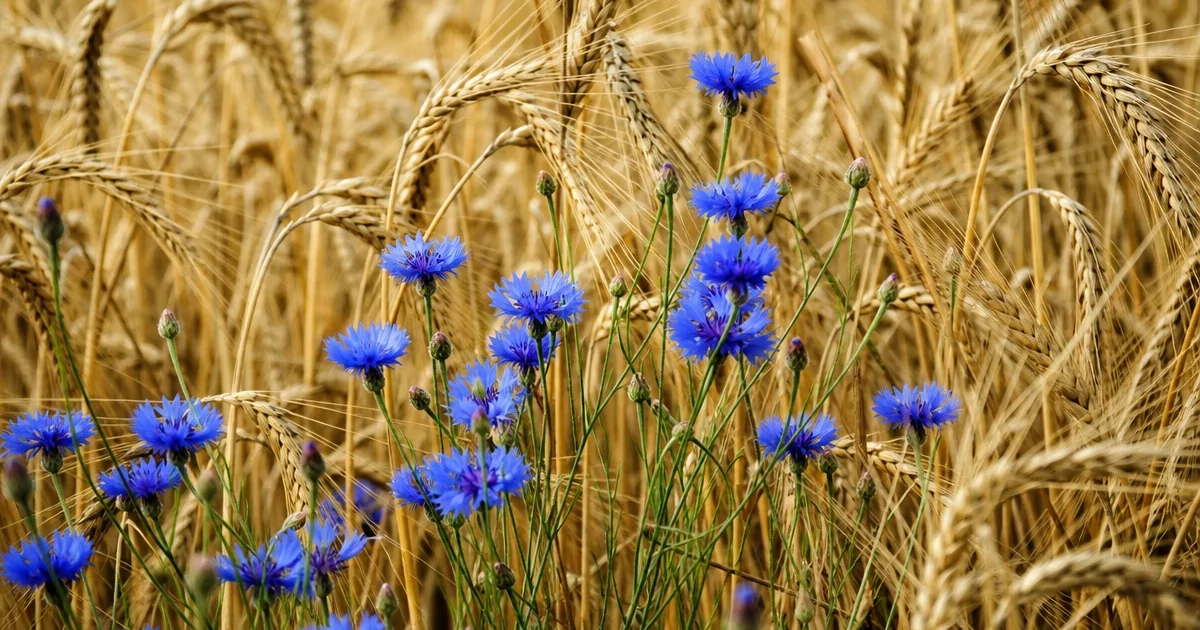
View full-size photoBlue cornflowers often grow among wheat fields, creating a vivid contrast.
Centaurea is a large genus of the daisy family. The most common in gardens are:
The cornflower (волошка) is a symbol of Ukrainian fields and maidenly beauty. It was woven into wreaths with poppies, daisies and ears of wheat, and in folk legends stands for loyalty and tenderness. The blue of cornflowers among yellow wheat is often seen as a natural echo of the colours of the Ukrainian flag. Read more in plant symbols of Ukraine.
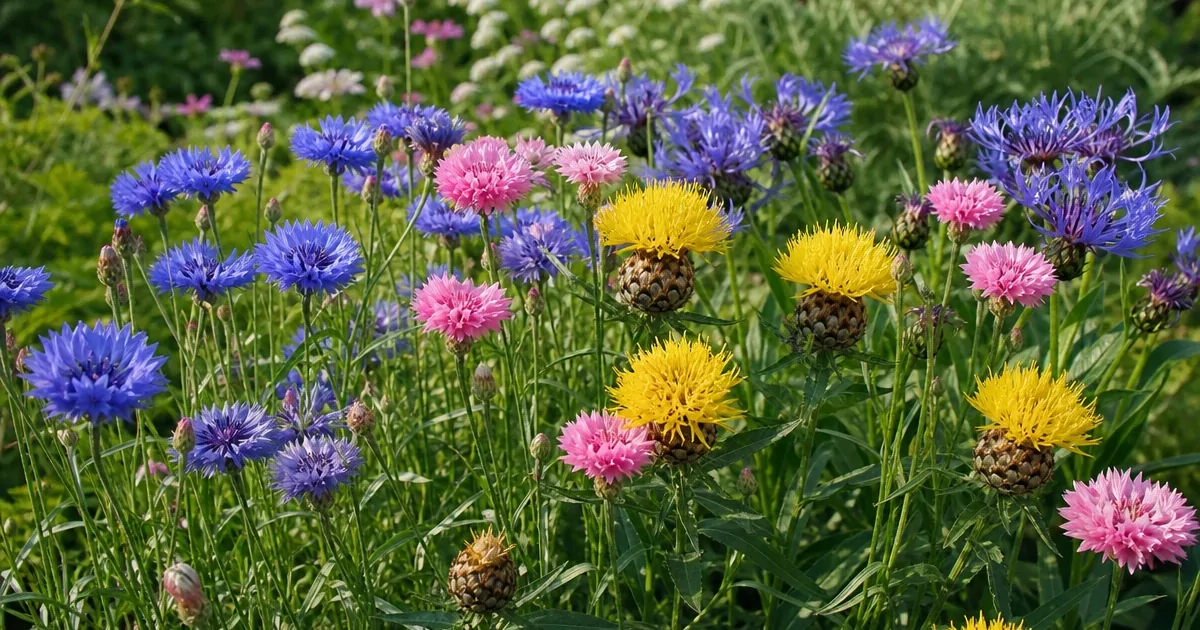
View full-size photoDifferent cornflower species brighten a garden bed.
Cornflowers bring rare natural blue and a meadow feel to bouquets, pairing well with daisies, wheat, lavender and white roses. Cut stems last about a week, and dried petals keep their colour for a long time — they decorate dried arrangements and tea blends. More meadow flowers in wild flowers; the full A–Z is in types of flowers.
In spring (April–May) or in autumn (October–November), directly outdoors.
Centaurea cyanus is an annual that self-seeds; mountain and Persian cornflowers are perennials.
About a week if cut as they start to open and the water is changed regularly.

Author: Maria Svitlovir
Graduated from Taras Shevchenko National University of Kyiv, Institute of Biology and Medicine (2001). BSc in Biology, MSc in Horticulture. Writes about plants, works at a garden centre selecting and repotting plants, and contributes to plant reference guides.
© Kyiv 2026 UFL Flower Shop

Trademark UFL №191476 is used under license of the rights holder.
All rights reserved. Any use of materials without a link to the site is prohibited.

 Birthday
 Hydrangeas