UFL logo

Perennial Delphinium: When to Sow, Planting and Care

ID:
9662
Total views:
1
Category:
Published:
Updated:


Perennial Delphinium: When to Sow, Planting and Care
View full-size photo

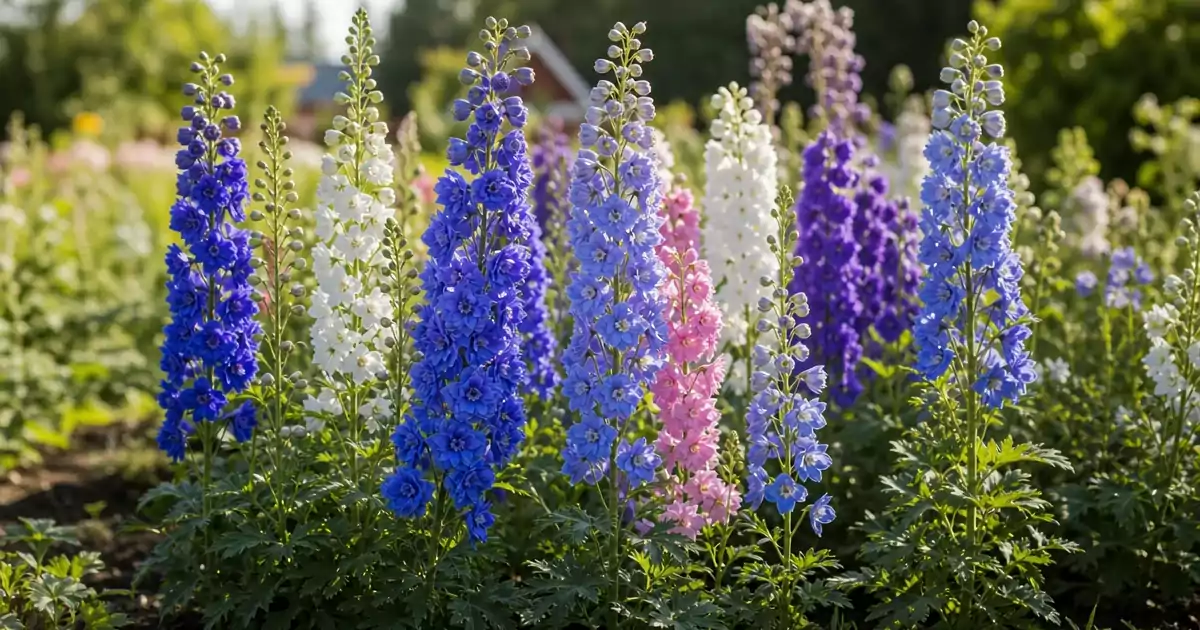
Delphinium produces tall blue, sky-blue, lilac and white spires that define a cottage-style summer garden. It is also called larkspur, and the annual kind is Consolida. Here’s how perennial and annual delphiniums differ, when to sow outdoors and for seedlings, how to get a second flush of flowers and what the flower means.

More on this topic: July flowers, types of flowers, language of flowers.

Height of delphinium groupsElatum hybridsup to 2 mPacific Giantsup to 1.8 mBelladonnaup to 1.2 mAnnual (Consolida)up to 0.9 mCompact varieties60–80 cm
Plan by height: tall varieties go at the back of the border

What delphinium is

What delphinium is
View full-size photo

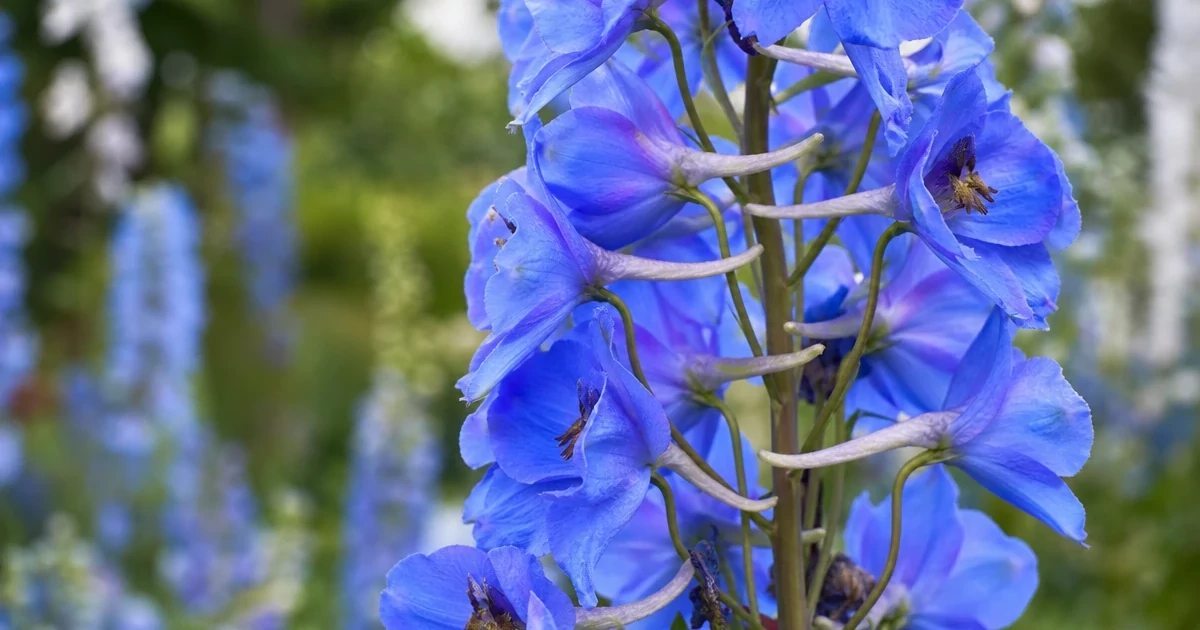
  • Delphinium belongs to the buttercup family. The name comes from the Greek delphis, dolphin, because the unopened bud resembles a dolphin’s head.
  • The flowers form a dense spike up to 50–80 cm long, each with a distinctive spur, hence the name larkspur.
  • Colours range from white and sky blue to deep blue, purple and pink, often with a contrasting eye.
  • All parts are poisonous, so wear gloves and plant away from where children or pets play.

Perennial vs annual delphinium

Perennial vs annual delphinium
View full-size photo

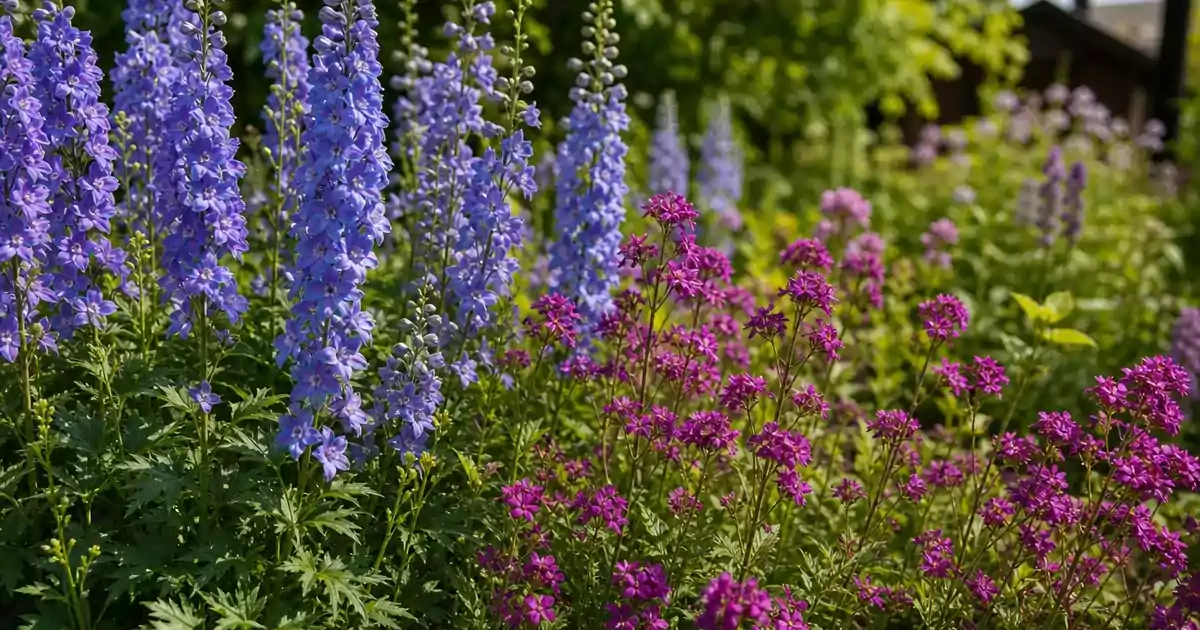
  • Perennial delphinium is a robust plant 1–2 m tall that lives 5–8 years in one spot; Pacific Giants and Elatum hybrids are the most popular.
  • Annual delphinium (Consolida) is shorter and finer, blooms the year it’s sown and self-seeds readily.
  • For cutting, perennial varieties with long, dense spikes are usually grown.

When to sow delphinium

  • Seeds need cold stratification: 2–3 weeks in a damp paper towel in the fridge at +3…+5 °C greatly improves germination.
  • For seedlings, sow in February–March; they emerge in 1–2 weeks at +15…+18 °C.
  • Outdoors, sow in April–May or before winter in October–November for natural stratification.
  • Plant out seedlings in May after frost, 50–70 cm apart.

Delphinium care

Delphinium care
View full-size photo

  • Site: sunny and sheltered, with fertile, moist but well-drained soil.
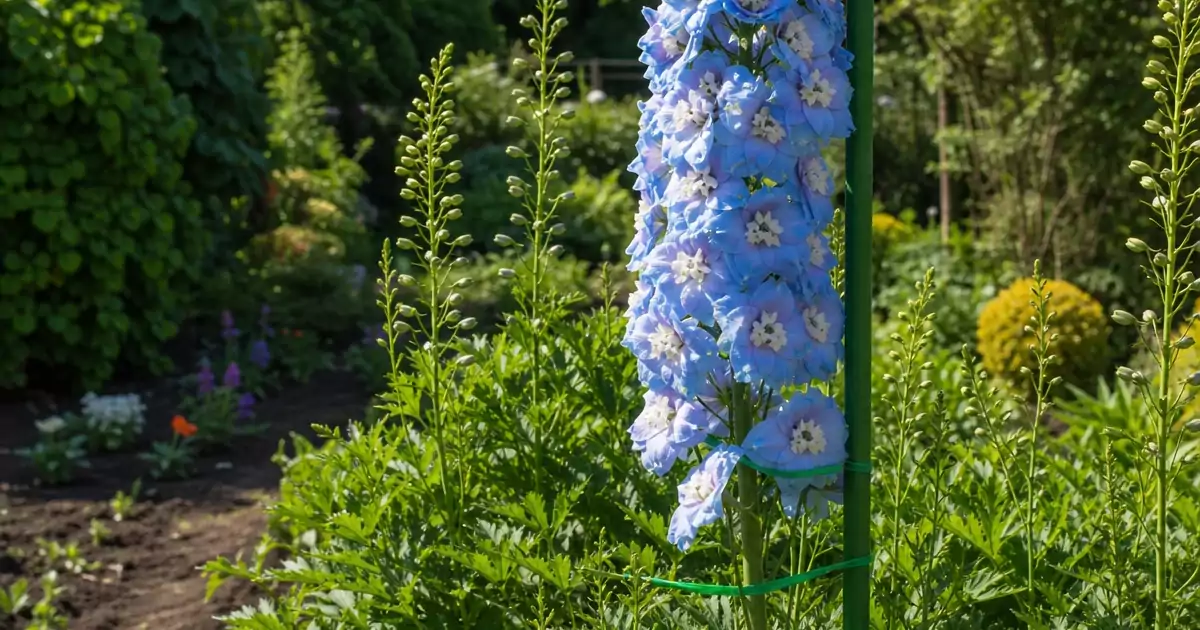
  • Supports are essential, as tall spikes snap in wind and rain; tie them in at 40–50 cm.
  • Water deeply at the base, keeping leaves dry, to reduce powdery mildew.
  • Second flush: after the first bloom in June–July, cut spent spikes and it will flower again in August–September.
  • Divide the clump every 3–4 years in spring to rejuvenate it.

What delphinium means

  • Lightness, openness and joy; it’s given to lift someone’s spirits.
  • Blue stands for dignity and loyalty, white for sincerity, pink for fickleness.
  • In Western tradition, larkspur is a July birth flower.

Delphinium in a vase

  • Cut early in the morning when a third of the flowers are open.
  • Hollow stems drink better if you fill them with water after cutting and plug them with cotton wool.
  • Delphinium lasts 5–7 days; flower food (we include a sachet with every bouquet) extends freshness.

Blue bouquets

Love blue flowers like delphinium? Blue hydrangeas, blue roses and blue-and-yellow bouquets suit lovers of cool shades.

Blue and yellow bouquet
View full-size photo
Blue and yellow: summer and sky in one bouquet

See hydrangeas and hydrangea bouquets.

Blue hydrangea and roses
View full-size photo
Blue hydrangea with roses

FAQ

When should I sow delphinium?

For seedlings in February–March; outdoors in April–May or before winter in October–November.

When does delphinium bloom?

June–July, and again in August–September after cutting back.

Is delphinium poisonous?

Yes, all parts are toxic.

How is annual delphinium different?

It’s shorter, flowers the year it’s sown and belongs to the genus Consolida.

Author: Maria Svitlovir

Graduated from Taras Shevchenko National University of Kyiv, Institute of Biology and Medicine (2001). BSc in Biology, MSc in Horticulture. Writes about plants, works at a garden centre selecting and repotting plants, and contributes to plant reference guides.