
 Birthday
 Hydrangeas
A fresh flower garland is one of the most striking ways to decorate a wedding, birthday party, photo backdrop or festive table. Unlike balloons and artificial flowers, it smells lovely, looks natural and sets the mood instantly. Here are the main types of flower garlands, which flowers won't wilt within a couple of hours and how to make a garland yourself in two simple ways.
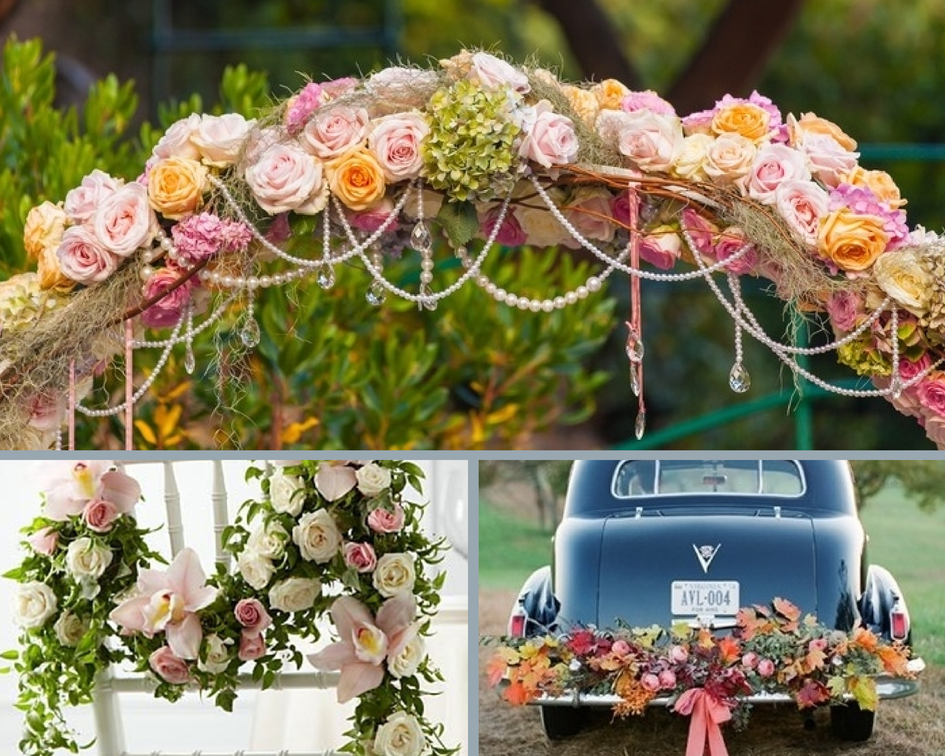
Types of flower garlands
String garland. Flower heads are threaded onto a strong string like beads. This is how traditional Indian garlands, or malas, of marigolds and jasmine are made to welcome guests and decorate temples — and Hawaiian leis too. It's the easiest option for beginners: all you need are flowers, a needle and thread.
Rope or base garland. Small bunches of greenery and flowers are wired one after another onto a rope, jute cord or wire. The result is a lush "braid" for wedding arches, banisters, doors and mantelpieces.
Table runner garland. Greenery (eucalyptus, ruscus, ivy) is laid along the centre of the table, and flowers are placed in small water tubes or floral foam. This type stays fresh the longest.
Dried flower garland. Lavender, statice, gypsophila, grasses and dried eucalyptus don't wilt at all, so this decoration can be made in advance and kept for months.
Which flowers to choose
A garland's main enemy is the lack of water: a cut flower without a vase loses moisture fast. So choose plants that stay firm for a long time:
- Chrysanthemums and carnations are the toughest and easily cope with several hours out of water.
- Marigolds are the classic choice for Indian garlands — bright, dense and with a distinctive spicy scent.
- Dendrobium orchids are light and long-lasting; they are used for Hawaiian leis.
- Alstroemeria, statice and gypsophila hold up well and add volume.
- Greenery: eucalyptus, ruscus, aralia, salal and ivy form the base of almost any garland.
Hydrangeas, peonies, tulips and garden roses are beautiful but wilt quickly without water. If you can't do without them, use them in a table garland with water tubes or add them at the very last moment.
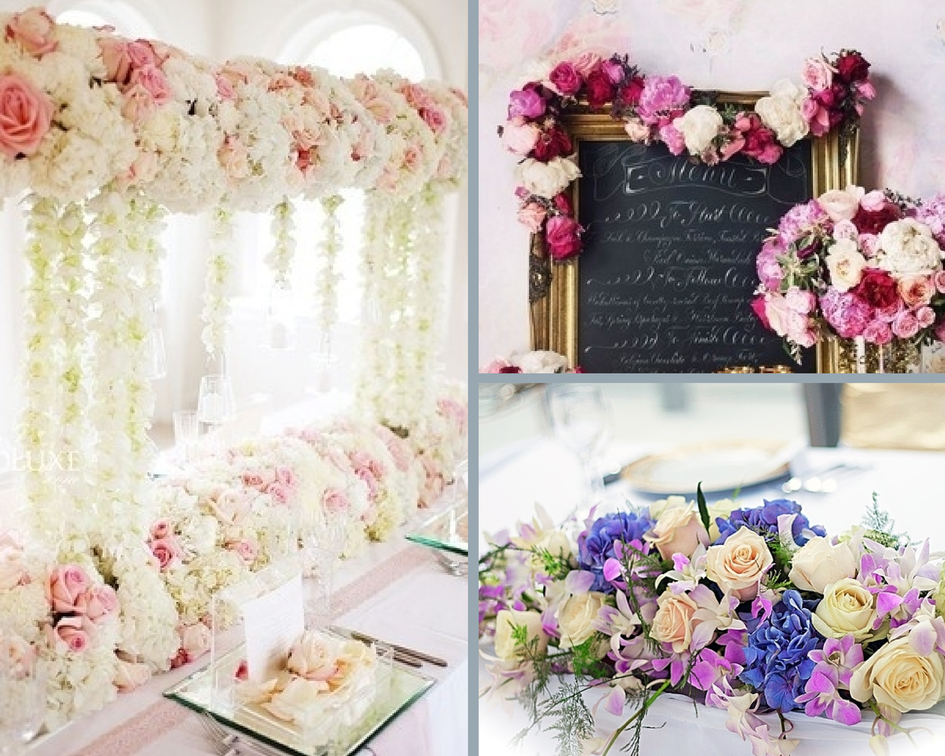
Method 1: string garland
You'll need: 80–100 heads of marigolds, carnations or spray chrysanthemums per metre, a long thick needle, strong thread (waxed thread or fishing line) and scissors.
- Cut off the flower heads, leaving 0.5–1 cm of stem.
- Tie a large knot or a bead at the end of the thread so the flowers don't slide off.
- Pierce each flower through the centre, from the petals to the stem, and push them tightly together.
- Alternate colours — for example, yellow and orange marigolds or white and pink carnations.
- Leave 20–30 cm of free thread at each end to hang the garland.
These garlands look great on chair backs and doorways or as "necklaces" for guests at a themed party.
Method 2: lush rope garland
You'll need: jute rope or cord of the required length, thin floral wire or tape, secateurs, greenery (aralia leaves, eucalyptus, ruscus) and flowers.
- Cut the greenery and flowers into short sprigs of 15–20 cm.
- Make a small bunch: 2–3 sprigs of greenery and 1–2 flowers.
- Place the bunch against the rope and wire the stems tightly.
- Lay the next bunch so that it covers the stems of the previous one, like roof tiles, and wire it on.
- Keep going in one direction until you reach the right length. This way the garland looks seamless and the fixings are hidden.
A classic combination is dark green aralia leaves with pink hydrangeas, but hydrangeas should be well hydrated beforehand and added last. A tougher option is eucalyptus with white chrysanthemums and gypsophila.
How to keep a flower garland fresh
- Condition the flowers. 6–12 hours before you start, put them in cool water so the stems and petals fill with moisture.
- Make the garland the day before, not earlier. Mist the finished garland, wrap it in damp paper and keep it somewhere cool — in the fridge or on a balcony at 5–8 °C.
- Hang it at the last moment, away from direct sun, air conditioning and heaters.
- Mist it with a spray bottle every few hours if the celebration is long.
- For arches and large surfaces, use floral foam in plastic holders so the flowers stay in water all day.
Even with good care, a fresh flower garland lasts a day or two. If you need it longer, choose dried flowers or mix fresh greenery with dried grasses.
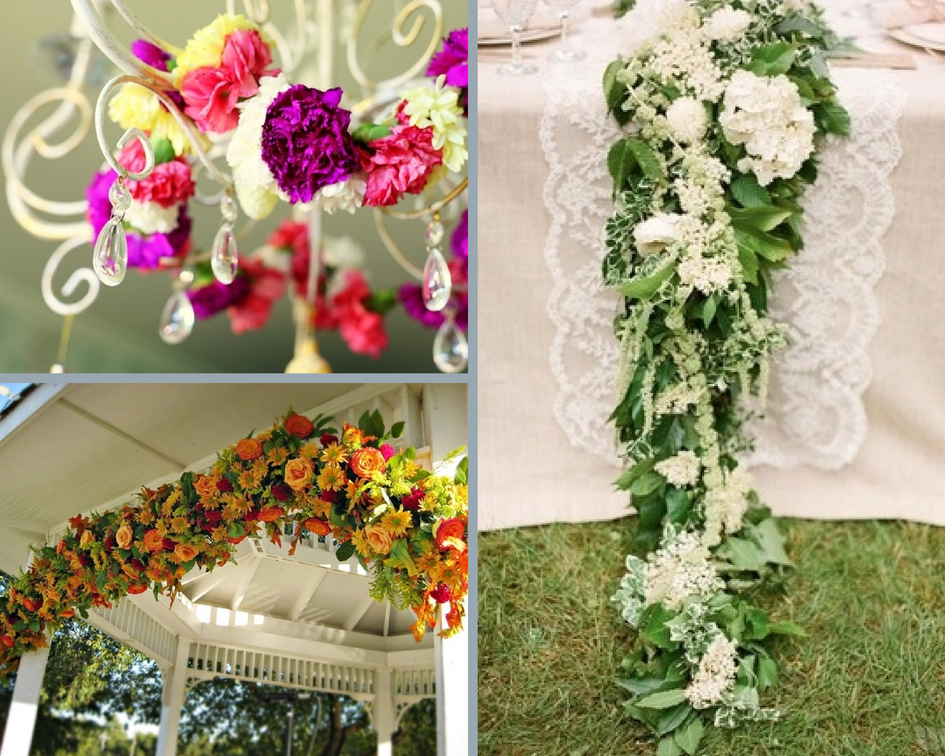
Where to use a flower garland
At a wedding — on the ceremony arch, head table, the couple's chair backs and banisters. At a birthday — as a photo backdrop or a frame for a mirror. At home — on the front door, mantelpiece, staircase or above the dining table. A small string garland can even be an unusual gift instead of a classic bouquet. For the wedding party you may also like our wedding dance ideas, and if you want a decoration that never wilts, try origami flowers.
No time to make it yourself? Florists can choose long-lasting flowers and put together an arrangement for your celebration — for example, with chrysanthemums, which stay fresh without water longer than most.
FAQ
How many flowers do I need per metre of garland?
For a string garland, 80–100 small heads. For a lush rope garland, 8–12 bunches of greenery and 10–15 flowers.
How long does a fresh flower garland last?
Usually one day; kept cool and misted, up to two. A dried flower garland lasts for months.
Which flowers are best for a garland?
Chrysanthemums, carnations, marigolds, dendrobium orchids and alstroemeria, with eucalyptus, ruscus and aralia for greenery.

View full-size photo
Author: Maria Svitlovir
Graduated from Taras Shevchenko National University of Kyiv, Institute of Biology and Medicine (2001). BSc in Biology, MSc in Horticulture. Writes about plants, works at a garden centre selecting and repotting plants, and contributes to plant reference guides.


