
A handmade card rarely ends up in a drawer — people keep it for years because it shows time and care. You need no special skills: just thick paper, glue and one good idea. Here are 8 simple options, from pressed-flower cards to a 3D pop-up you can make in an evening, plus tips on what to write.
Tip: score the fold line with the back of a knife against a ruler before folding so the card does not crack.
The most delicate option uses petals and sprigs pressed flat. Place flowers between sheets of paper inside a heavy book for 1–2 weeks. Arrange them on the front of the card, fix with dots of clear glue and cover with tracing paper or clear film. Violets, pansies, hydrangea, gypsophila, fern and eucalyptus leaves press well — and flowers from a bouquet you received are a lovely keepsake of the occasion.
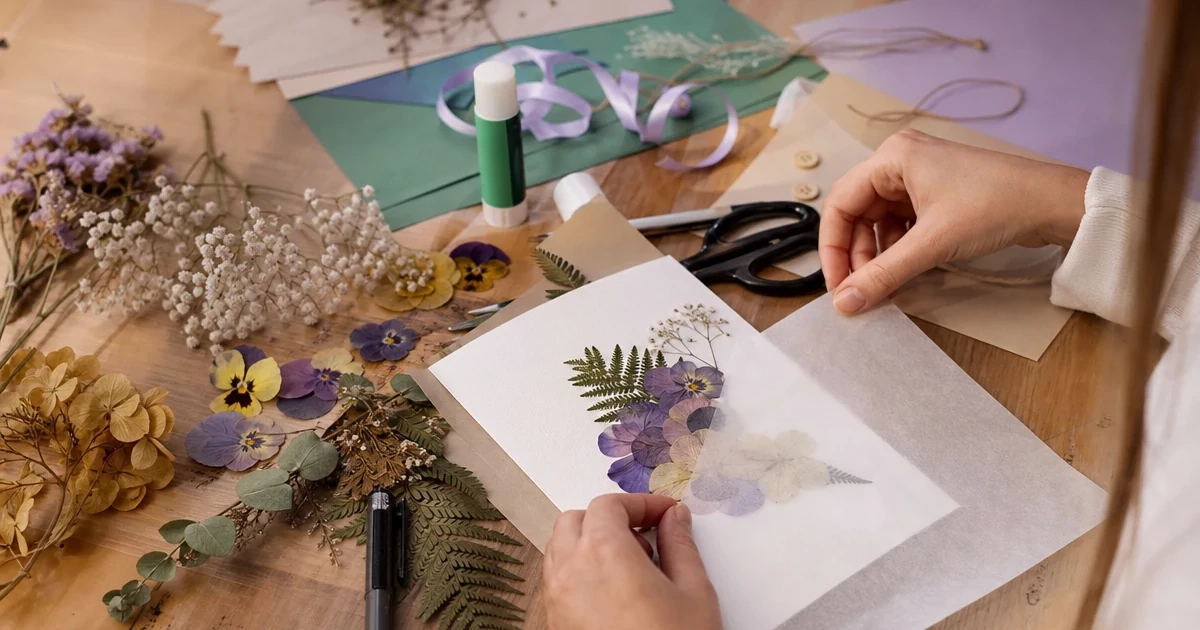
View full-size photoPressed flowers and decorations for making a DIY greeting card.
When the card opens, the shape pops out towards the reader.
Cut simple shapes from coloured or patterned paper — circle balloons, petals, hearts — and layer them up, mounting some on foam pads for depth. A bouquet of paper-circle flowers with thin strip stems works for birthdays, Women’s Day or Mother’s Day.
No drawing skills needed for a striking background: wet watercolour paper and drop in a few blots of paint — the colours will blend softly. Once dry, write a short wish over it in fineliner or add a cut-out silhouette. Use proper watercolour paper or it will buckle.
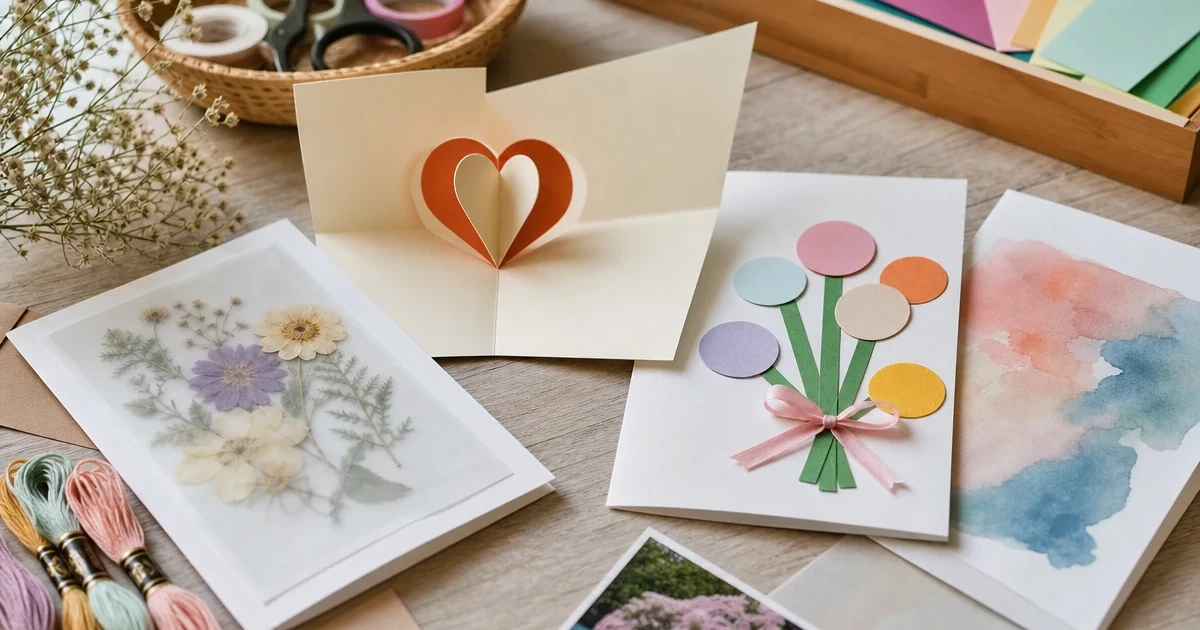
View full-size photoVarious DIY card ideas for any occasion.
More handmade ideas: handmade gift ideas and handmade Valentine’s gifts.
Short personal words work best: a greeting, one sentence about the person and a wish. For example: “Olena, thank you for always being there. May this year be as bright as you are.” Draft it on scrap paper first. For ready-made messages see what to write on a flower card, and for the tradition behind greeting cards, the history of the Christmas card.
A handmade card is the perfect companion to flowers: tuck it into the bouquet, attach it to a box or set it alongside. Slip it into a kraft envelope for a finished look — see gift wrapping ideas. Pair it with flowers in a box or birthday bouquets.
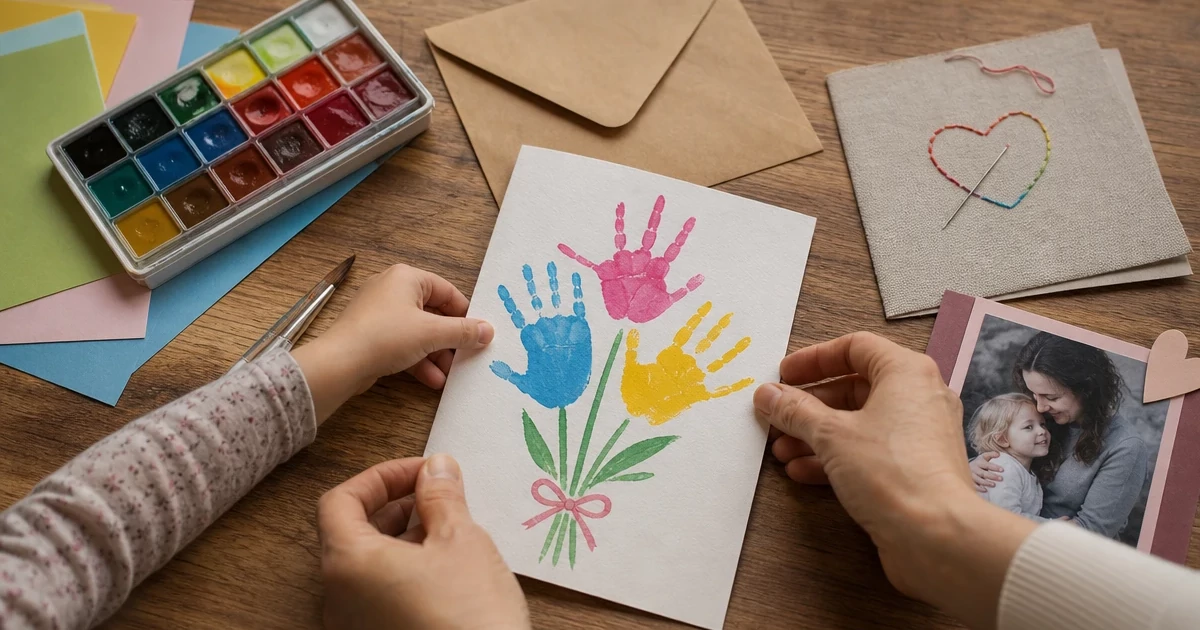
View full-size photoHandprint and other card ideas to make with a child.
Thick card, 200–300 gsm: watercolour, kraft or patterned card. Office paper is too thin.
Choose simple techniques: paper appliqué, handprints or stickers. The child handles scissors and glue; an adult does any knife cuts.
A simple appliqué or watercolour background takes 20–40 minutes, a 3D pop-up about an hour, and pressed flowers need 1–2 weeks to dry.

Author: Maria Svitlovir
Graduated from Taras Shevchenko National University of Kyiv, Institute of Biology and Medicine (2001). BSc in Biology, MSc in Horticulture. Writes about plants, works at a garden centre selecting and repotting plants, and contributes to plant reference guides.
© Kyiv 2026 UFL Flower Shop

Trademark UFL №191476 is used under license of the rights holder.
All rights reserved. Any use of materials without a link to the site is prohibited.

 Birthday
 Hydrangeas