
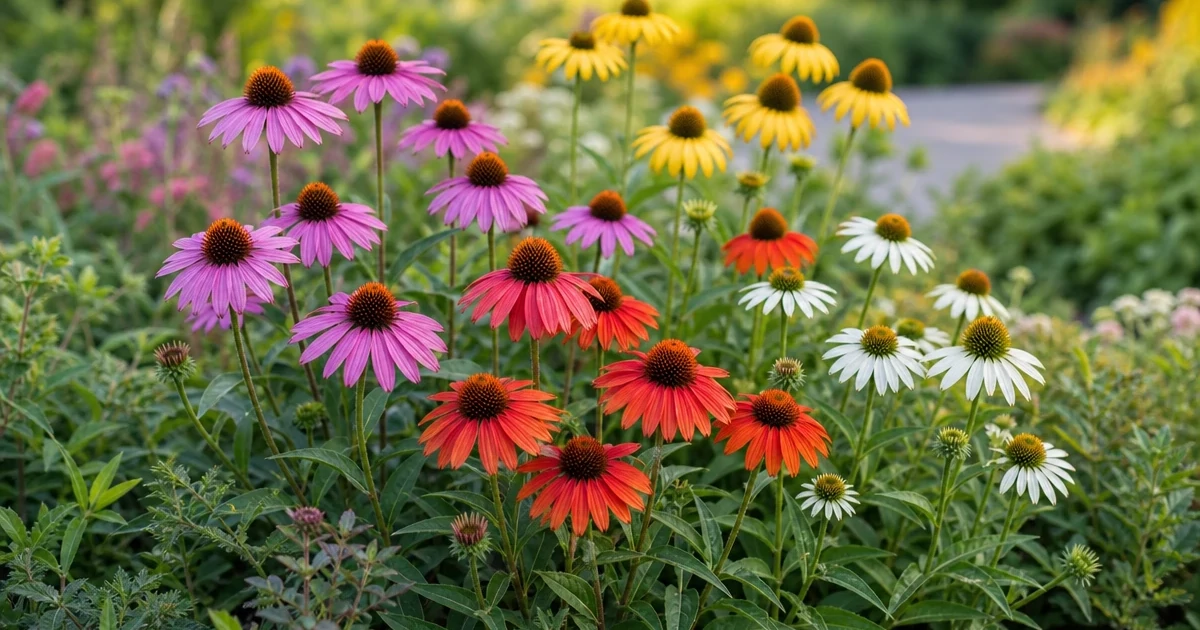
Echinacea, or purple coneflower, brightens the garden from July to autumn with large pink-purple daisies around a domed orange-brown centre. It is drought-tolerant, attracts butterflies and bees, and modern varieties come in white, yellow, orange, red and even green. Here is how to plant, care for and propagate echinacea.
Echinacea is a genus of perennials in the daisy family from the North American prairies. The most common in gardens is purple coneflower (E. purpurea), 60–120 cm tall. The name comes from the Greek for hedgehog: the centre is covered in stiff, spiny scales. It flowers from July to September, and the seed heads decorate the garden and feed birds in winter.
Water established plants only in prolonged drought. Add compost in spring; too much nitrogen makes stems floppy. Deadhead to prolong flowering or leave seed heads for birds and winter interest. Divide clumps every 4–5 years in spring. Echinacea pairs well with rudbeckia, grasses and salvia in naturalistic plantings — see flowers that bloom all summer and a bed that blooms all season.
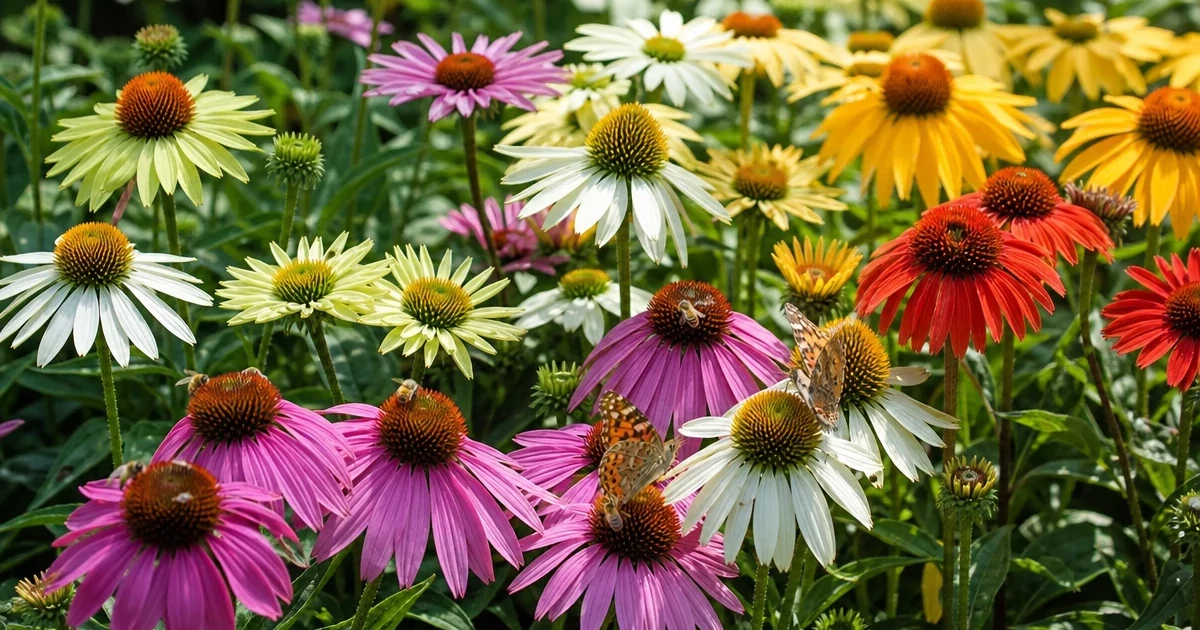
View full-size photoEchinacea varieties attract pollinators in the garden.
Cut echinacea lasts 7–10 days in a vase and brings a natural summer feel to bouquets; dried heads are used in everlasting arrangements. Echinacea has a long history in herbal medicine, but any preparations should only be taken after consulting a doctor. The full A–Z of flowers is in types of flowers.
From July to September, sometimes longer if deadheaded.
No, it is hardy; just avoid waterlogging in winter and spring.
That is normal — seedlings usually flower in their second year.

Author: Maria Svitlovir
Graduated from Taras Shevchenko National University of Kyiv, Institute of Biology and Medicine (2001). BSc in Biology, MSc in Horticulture. Writes about plants, works at a garden centre selecting and repotting plants, and contributes to plant reference guides.
© Kyiv 2026 UFL Flower Shop

Trademark UFL №191476 is used under license of the rights holder.
All rights reserved. Any use of materials without a link to the site is prohibited.

 Birthday
 Hydrangeas