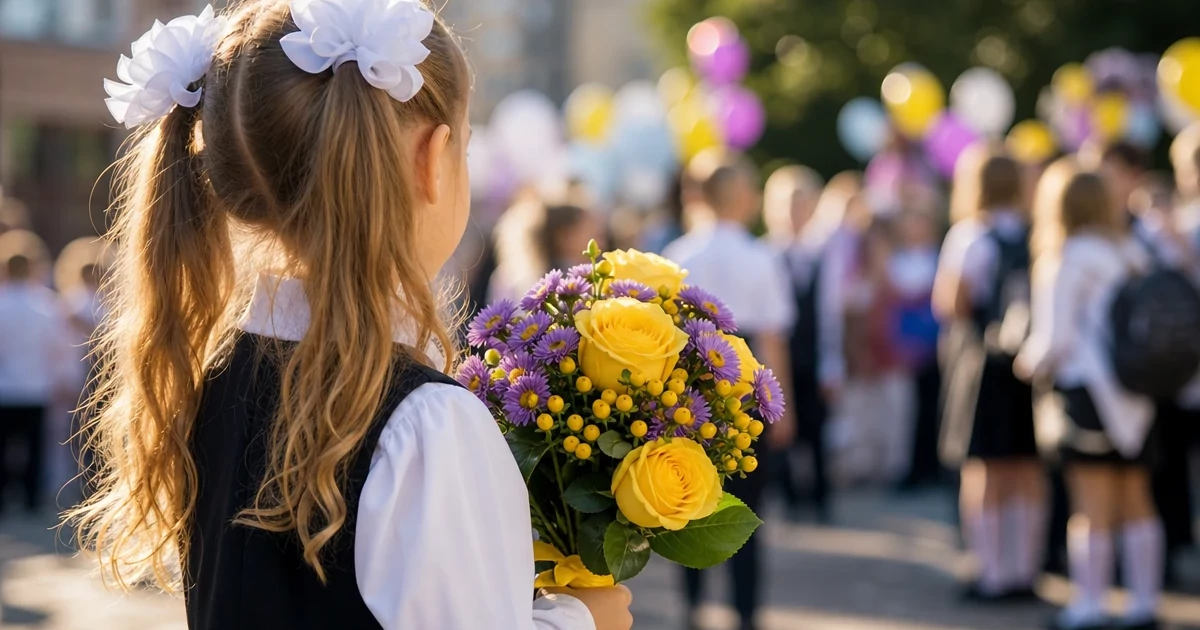
The first day of school is unthinkable without flowers: first-graders bring bouquets to their teacher, older pupils greet their form tutor, and parents wonder how to choose a bouquet that is easy for the child and pleasant for the teacher. Here is which flowers to choose for 1 September, what size suits a first-grader, how to keep the flowers fresh overnight and what to give instead.
In September garden and autumn flowers are in season, so the bouquet can be both beautiful and fresh:
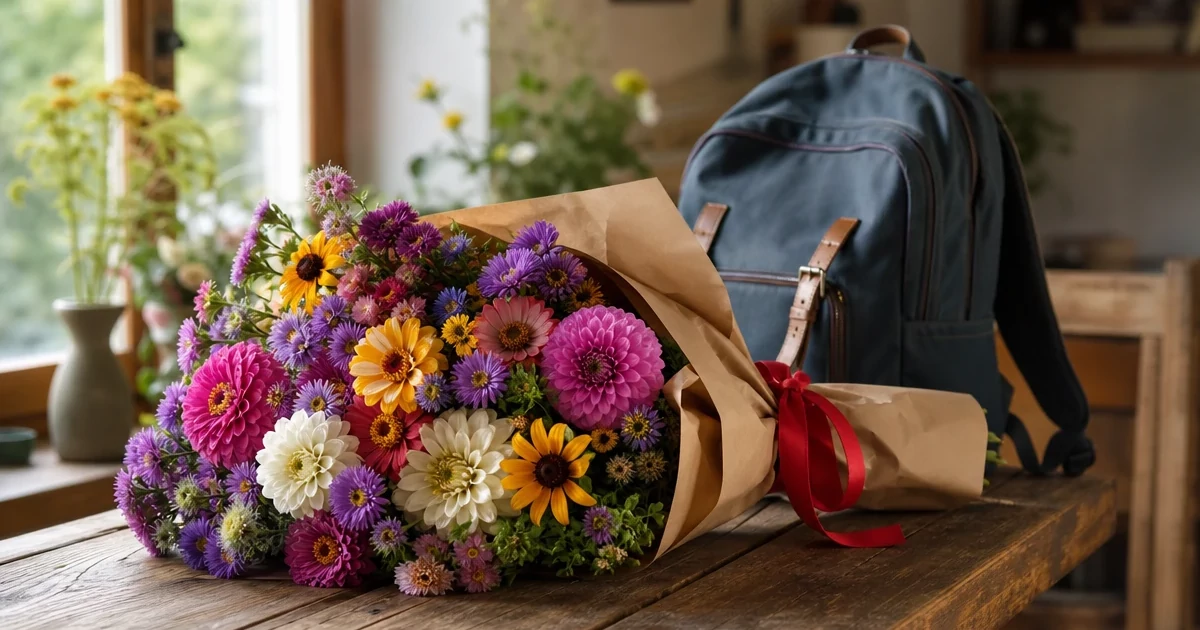
A bouquet from your own garden is a warm gesture, especially for a primary school teacher. Cut flowers in the evening or early morning and stand them in a bucket of cool water for a few hours. Combine asters, dahlias, zinnias, rudbeckias and greenery into a relaxed arrangement, wrap in kraft paper and tie with ribbon. Choose flowers without insects or damaged petals.
Older pupils often congratulate their form tutor with a joint bouquet or box arrangement from the whole class. Restrained roses, chrysanthemums or gladioli work well, and for a male teacher a single-variety bouquet in dark wrapping. More ideas in flowers for a teacher.
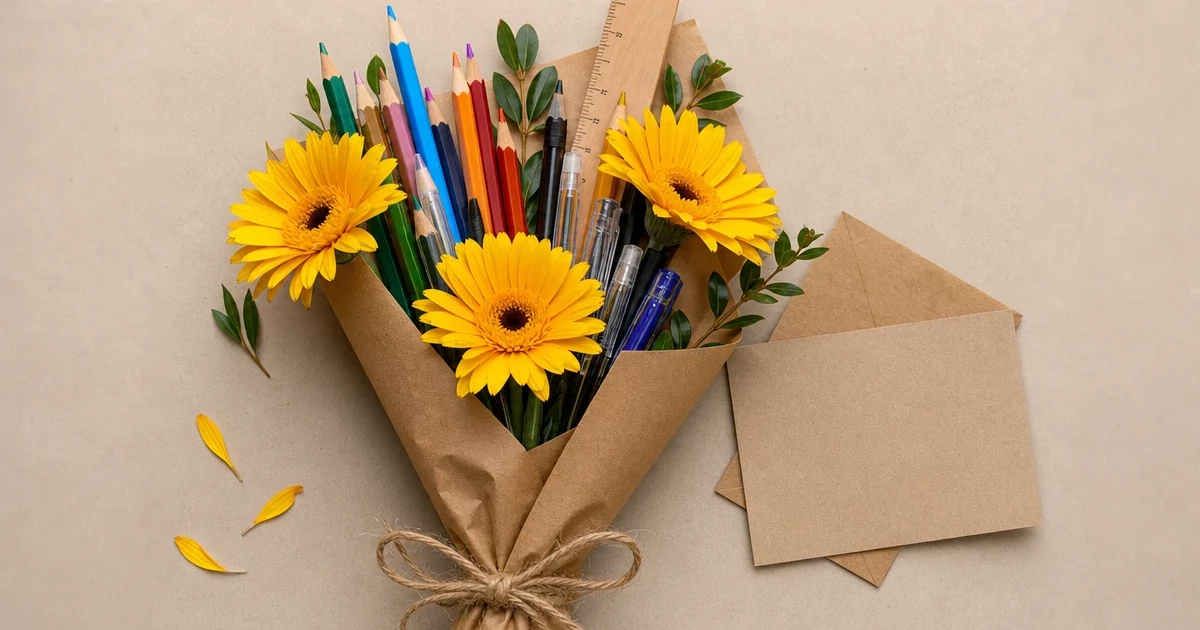
Some schools support the «Children instead of flowers» initiative: the class gives the teacher one bouquet and donates the rest of the money to charity. Bouquets of pencils and stationery, sweets or fruit are also popular, and first-graders can make small posies of autumn leaves and rowan berries with their parents.
From a first-grader, a simple «Thank you for being my first teacher!» or «Happy new school year!» is enough. From parents, a few words of thanks for their care. Ready-made thank-you texts are in thank-you messages for a teacher, and holiday greetings in Teacher’s Day wishes.
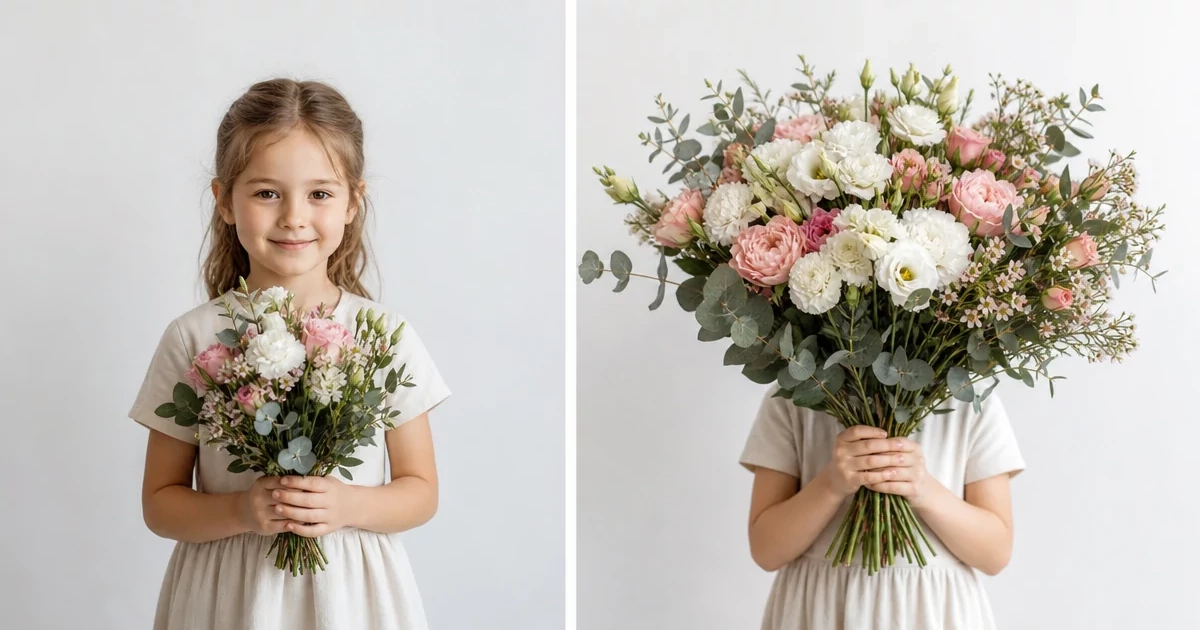
A light compact bouquet of 5–9 stems — gerberas, chrysanthemums, asters or thornless roses in bright but not busy colours.
The evening before, unwrap the flowers, trim the stems and keep them in cool water overnight; wrap the stems in a damp napkin in the morning.
Yes, garden asters, dahlias and zinnias in kraft paper make a sincere, fitting gift.

Author: Maria Svitlovir
Graduated from Taras Shevchenko National University of Kyiv, Institute of Biology and Medicine (2001). BSc in Biology, MSc in Horticulture. Writes about plants, works at a garden centre selecting and repotting plants, and contributes to plant reference guides.
© Kyiv 2026 UFL Flower Shop

Trademark UFL №191476 is used under license of the rights holder.
All rights reserved. Any use of materials without a link to the site is prohibited.


 Birthday
 Hydrangeas