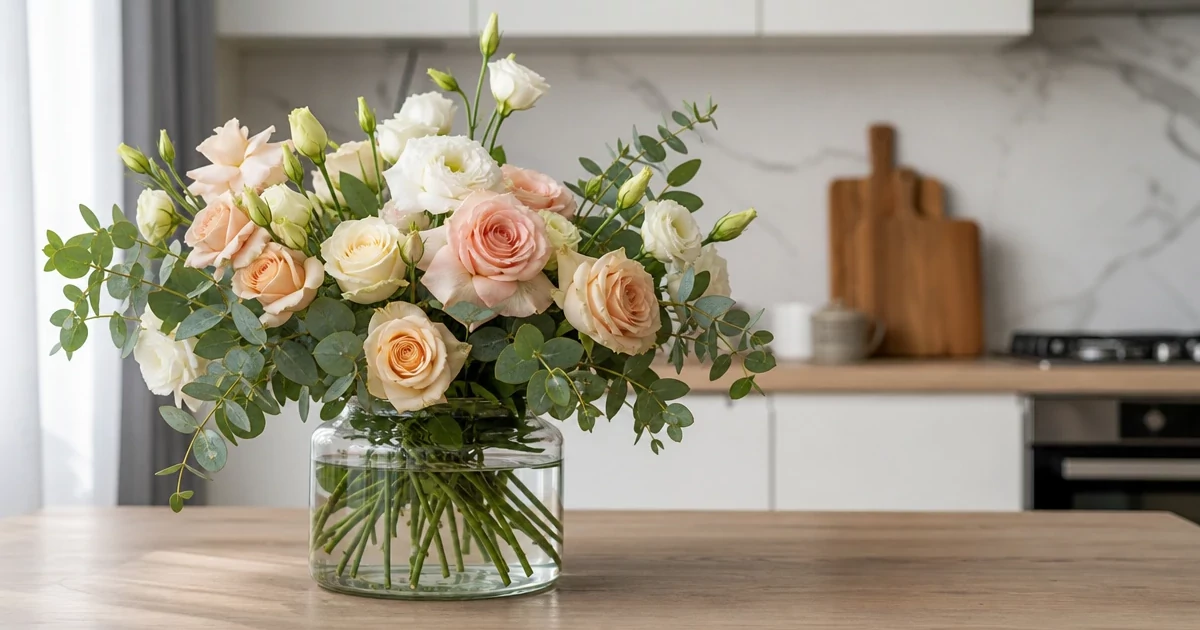
Even a supermarket bunch can become an arrangement that looks like a florist’s work. You do not need special skills — just a few principles. Here is vase arranging step by step, from choosing the vase to the finishing touch. Learn more in mixed bouquet care.
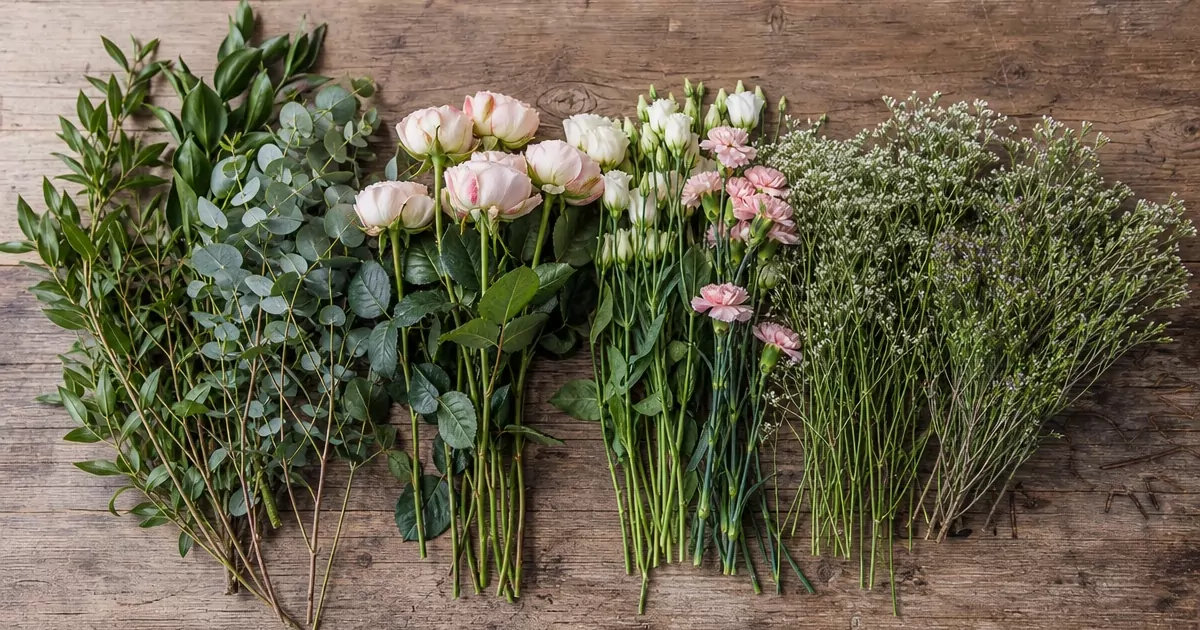
Flowers for arranging: peony-style roses and spray roses.
Remove every leaf that would sit below the water line: leaves rot and foul the water. Recut the stems at an angle with a sharp knife or secateurs and put them straight into cool water to drink. Do not hammer woody stems such as lilac, hydrangea or branches — it destroys the vessels; make a fresh angled cut and a short vertical slit instead. Wash the vase first and add cut-flower food to the water.
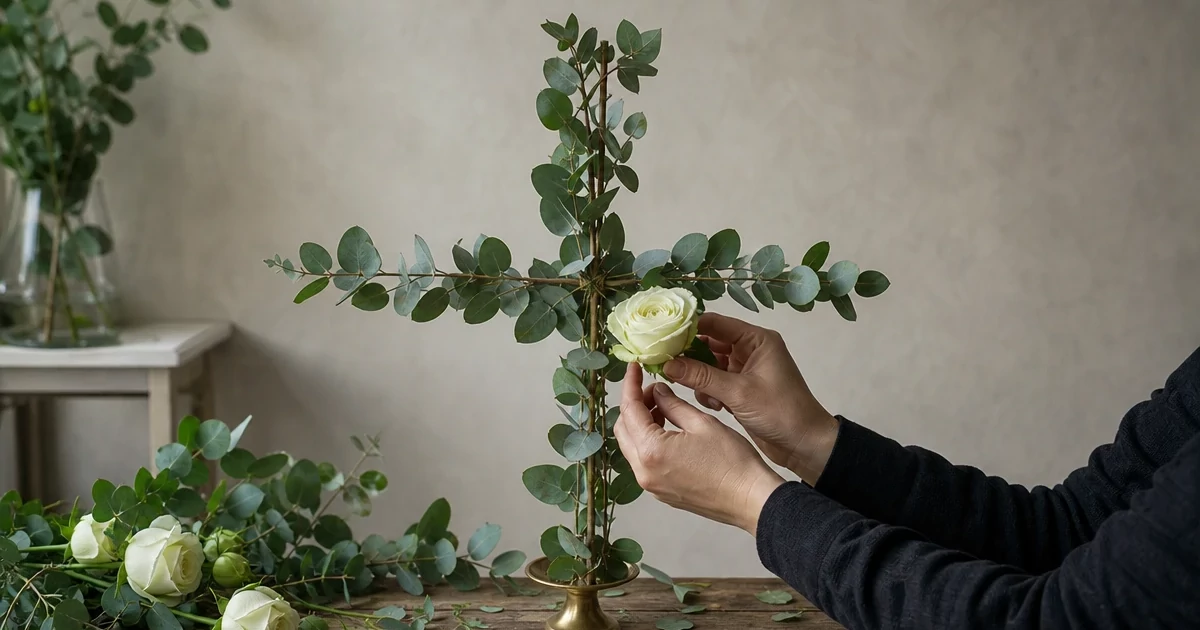
Start with greenery: it creates the shape and supports the other stems. Then add the largest focal flowers, such as roses, peonies or hydrangea. These are usually used in odd numbers and placed at different heights so the arrangement does not look flat.
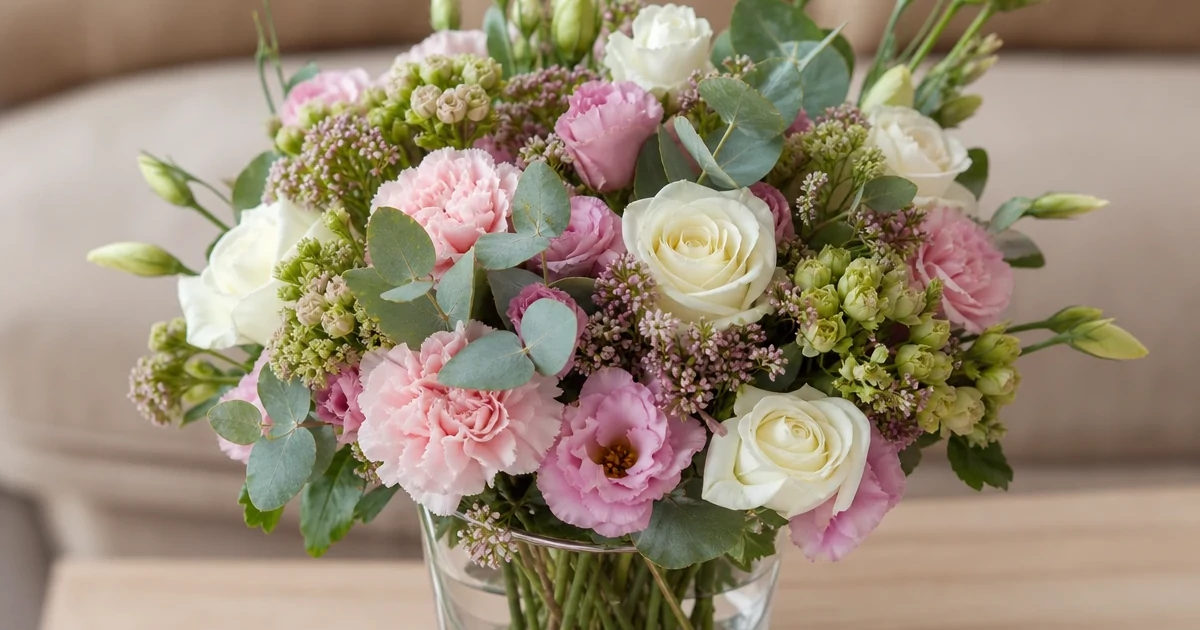
Small flowers and sprigs — gypsophila, alstroemeria, spray roses, eucalyptus — fill the gaps and tie the design together. Turn the vase and look at the arrangement from all sides, and from the spot where it will be seen most often.
Find the tools you need in floristry tools and materials, ideas for a festive table in table flower decorations, and aftercare in deadheading flowers.
Every 1–2 days, recutting the stems by 1–2 cm at the same time.
Ripe fruit releases ethylene, a gas that speeds up wilting in many flowers.

Author: Maria Svitlovir
Graduated from Taras Shevchenko National University of Kyiv, Institute of Biology and Medicine (2001). BSc in Biology, MSc in Horticulture. Writes about plants, works at a garden centre selecting and repotting plants, and contributes to plant reference guides.
© Kyiv 2026 UFL Flower Shop

Trademark UFL №191476 is used under license of the rights holder.
All rights reserved. Any use of materials without a link to the site is prohibited.


 Birthday
 Hydrangeas