
 Birthday
 Hydrangeas
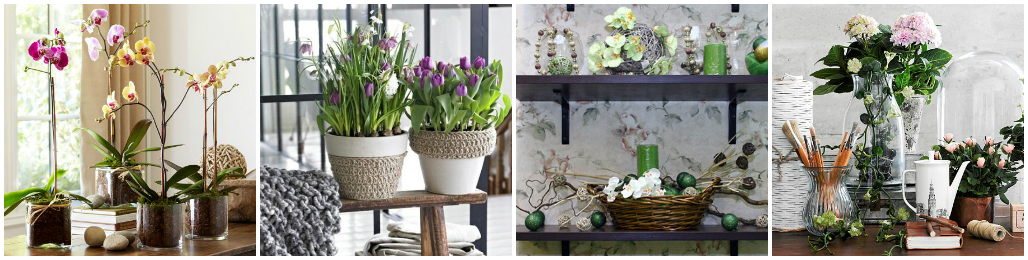
Fresh flowers are the quickest way to change the mood of a room: a bouquet on the table, branches in a tall vase or a green plant by the window make an interior feel warm and lived-in. But for flowers to truly decorate a home rather than get lost among the furniture, they need to suit the room, the style and the light. Here are practical tips: which flowers and plants to choose for each room, how to pick a vase and colours, how to decorate through the seasons and what to remember if you have children and pets.
.jpg)
Why flowers matter in an interior
Flowers bring something textiles and decor cannot: living form, seasonality and scent. A bouquet can be changed every week to suit a holiday or season, while potted plants provide a permanent green accent. You often hear that houseplants noticeably purify the air, but research shows the effect in an ordinary home is small compared with simply opening a window. Flowers are valuable above all because they delight the eye and make a home cosier.
Which flowers to choose for each room
.jpg)
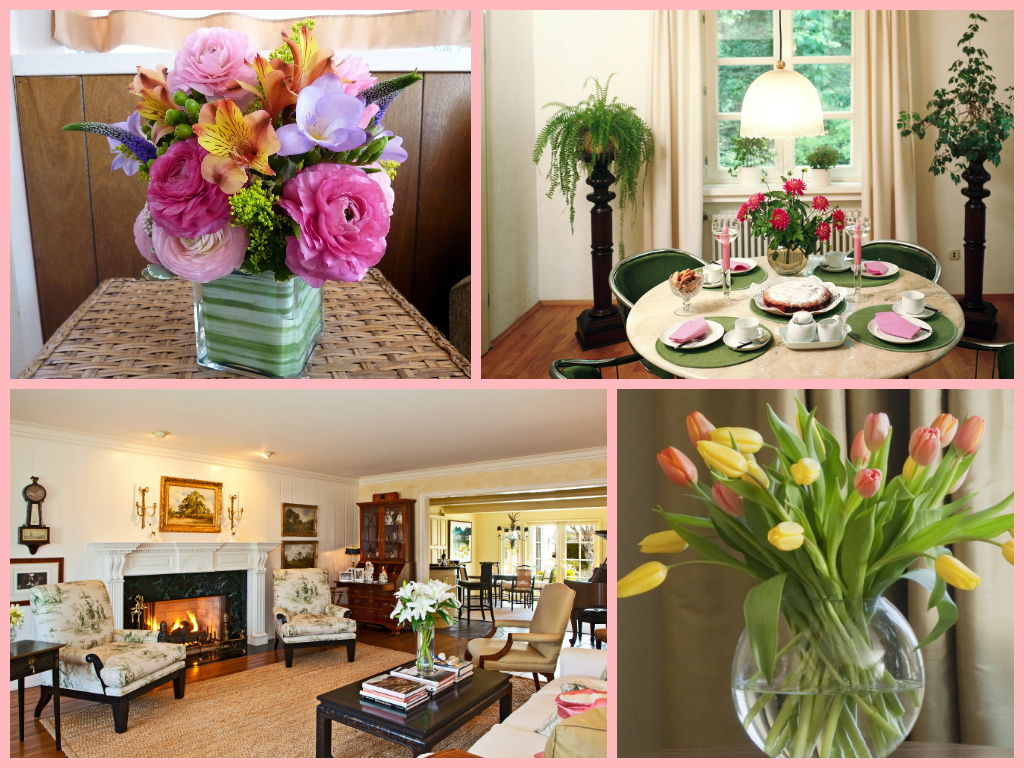
- Living room. Large bouquets on the coffee or dining table and statement plants such as monstera, fiddle-leaf fig or palms. An arrangement shouldn't get in the way of conversation — a low bouquet on the table beats a tall one.
- Kitchen. Compact bouquets and potted herbs — basil, rosemary, mint. Keep flowers away from the stove and fruit bowl: heat and ethylene shorten their life. More ideas in our article on kitchen houseplants.
- Bedroom. Choose flowers without a strong scent: lilies, hyacinths and tuberoses can cause headaches at night. Orchids, tulips and lisianthus work well, and a sachet of dried lavender adds a gentle fragrance.
- Bathroom. With a window, humidity lovers such as ferns and orchids do well here. Without daylight, living plants quickly weaken.
- Hallway and desk. A small bouquet or succulents: they are undemanding and take up little space.
How to choose a vase
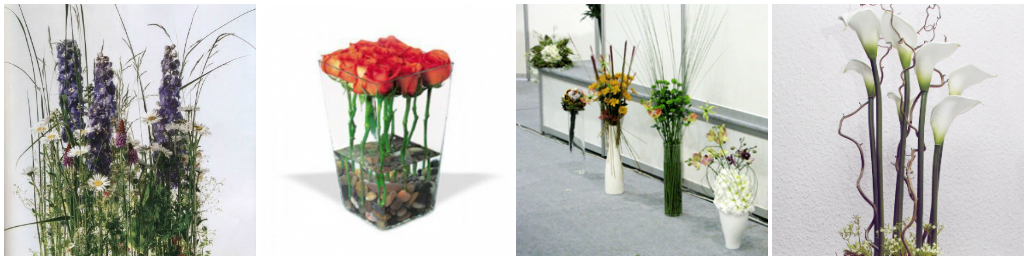
- Tall cylinder — for long straight stems: tulips, gladioli, delphiniums, branches.
- Narrow-necked barrel vase — for lush bouquets of roses and peonies: the neck gathers the stems and holds the shape.
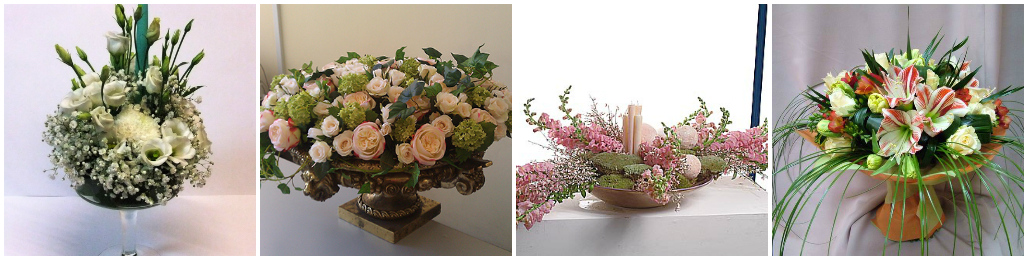
- Low, wide bowl — for garden-style arrangements on the dining table, so the bouquet doesn't hide guests' faces.
- Bud vases and mini vases — for one to three flowers on a windowsill, shelf or bedside table.
A vase is usually about a third to half the height of the bouquet. Clear glass suits light interiors; ceramic and matte vases suit natural and Scandinavian styles.
Flower colour and interior colour
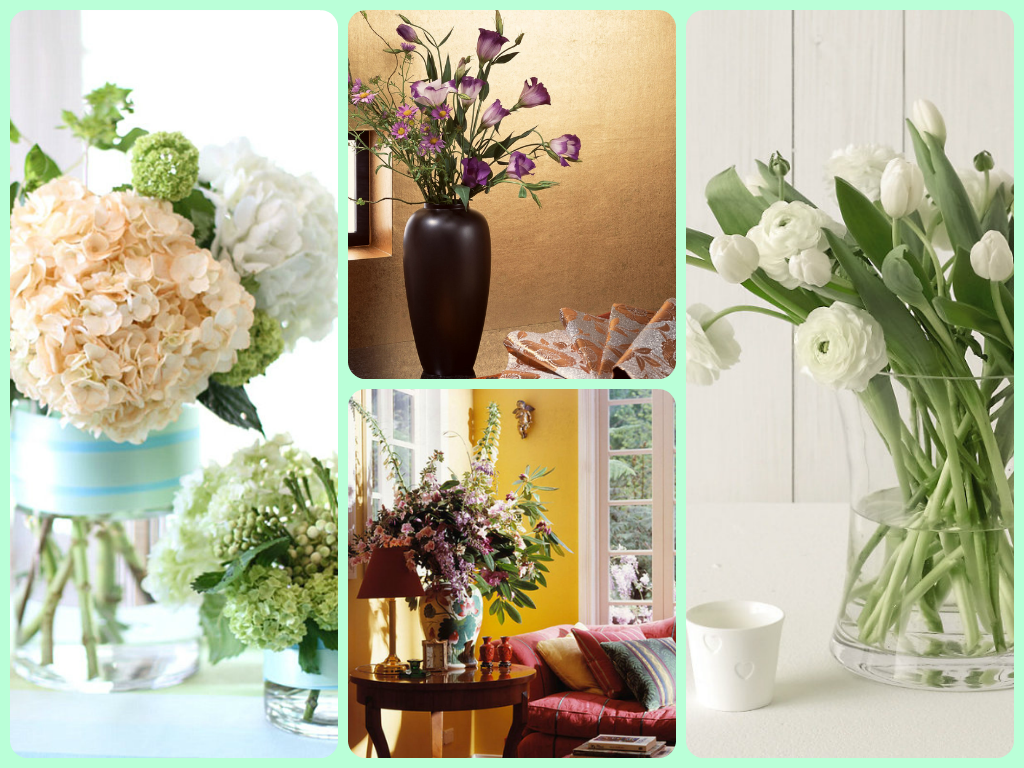
In a calm, neutral interior, bouquets in one palette — white, blush, cream — work well. In a bright interior, choose flowers that echo one of the accent colours: cushions, curtains or a painting. Contrasting bouquets, such as blue and yellow, look striking against white walls. For colour schemes in detail, see bouquet colour combinations.
Seasonal flower decor
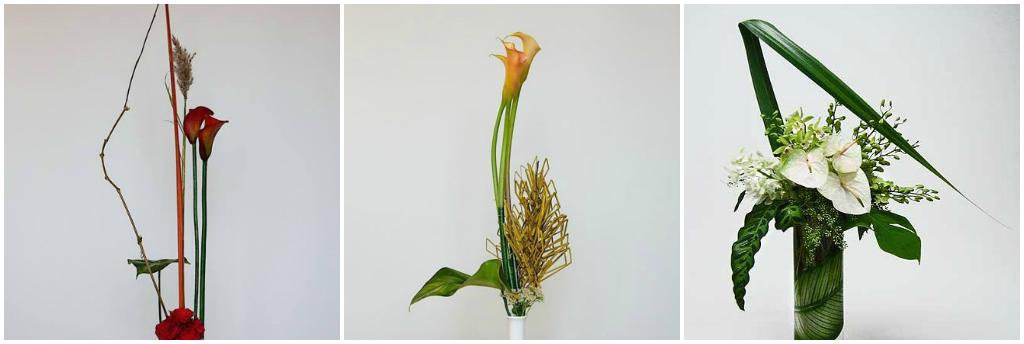
- Spring — tulips, daffodils, ranunculus and blossoming branches of pussy willow, cherry and forsythia.
- Summer — peonies, garden roses, wildflowers, hydrangeas.
- Autumn — chrysanthemums, dahlias, dried flowers, grasses, berry branches and ornamental pumpkins.
- Winter — conifers, amaryllis, potted hyacinths, arrangements with cones and dried citrus.
Dried flowers are a good choice if you don't have time to change the water: arrangements last for months. See dried flower arrangements for how to make them.
.jpg)
How to make flowers last indoors
- Don't put a bouquet on a sunny windowsill, near a radiator or under the air conditioning.
- Change the water every 1–2 days and trim the stems.
- Keep flowers away from the fruit bowl.
- Move potted plants carefully: many dislike changes in light.
If you have children and pets
Some popular flowers are dangerous for pets. Above all, remember that lilies and daylilies are highly toxic to cats: even pollen or water from the vase can cause severe poisoning. Take care also with daffodils, hyacinths, azaleas, oleander and dieffenbachia. If you have a cat, choose roses, orchids, gerberas, sunflowers or alstroemerias and keep bouquets out of reach.
Frequently asked questions
Which flowers are best for the bedroom?
Ones without a strong scent: orchids, tulips, lisianthus, roses. Keep lilies and hyacinths in the living room.
Which flowers are dangerous for cats?
Above all lilies and daylilies, as well as daffodils, hyacinths, azaleas and oleander.
How tall should the vase be?
Usually about a third to half the height of the bouquet.
Do houseplants purify the air?
In an ordinary flat their effect on air quality is small; ventilation matters far more.

View full-size photo
Author: Maria Svitlovir
Graduated from Taras Shevchenko National University of Kyiv, Institute of Biology and Medicine (2001). BSc in Biology, MSc in Horticulture. Writes about plants, works at a garden centre selecting and repotting plants, and contributes to plant reference guides.


