
 Birthday
 Hydrangeas
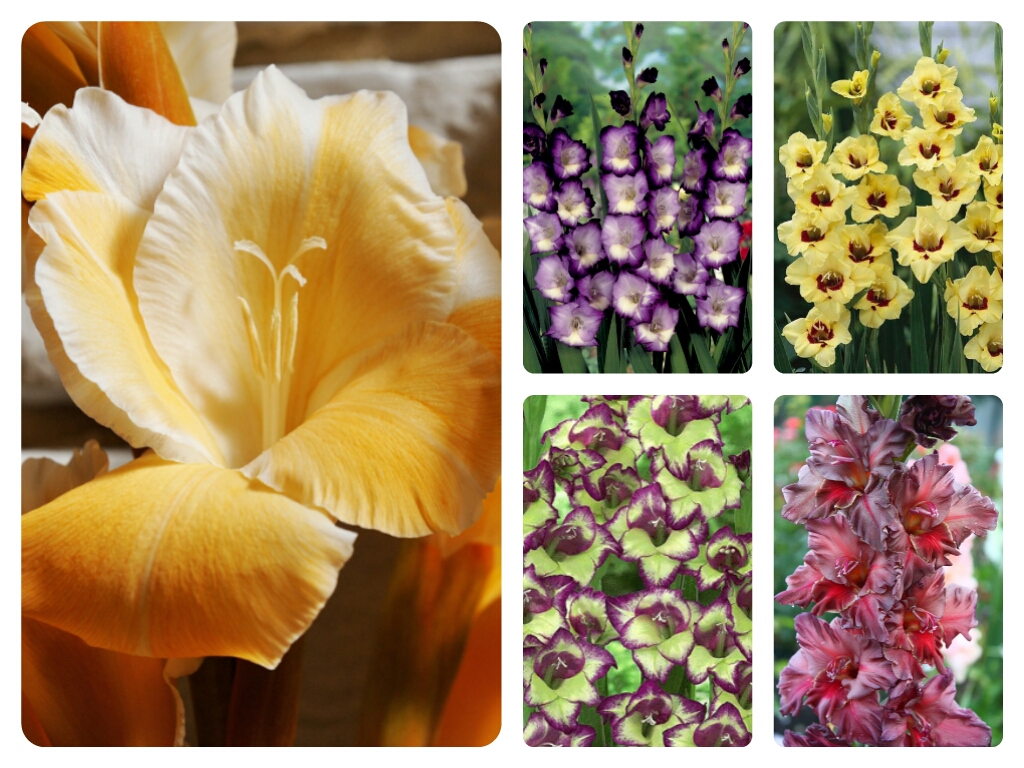
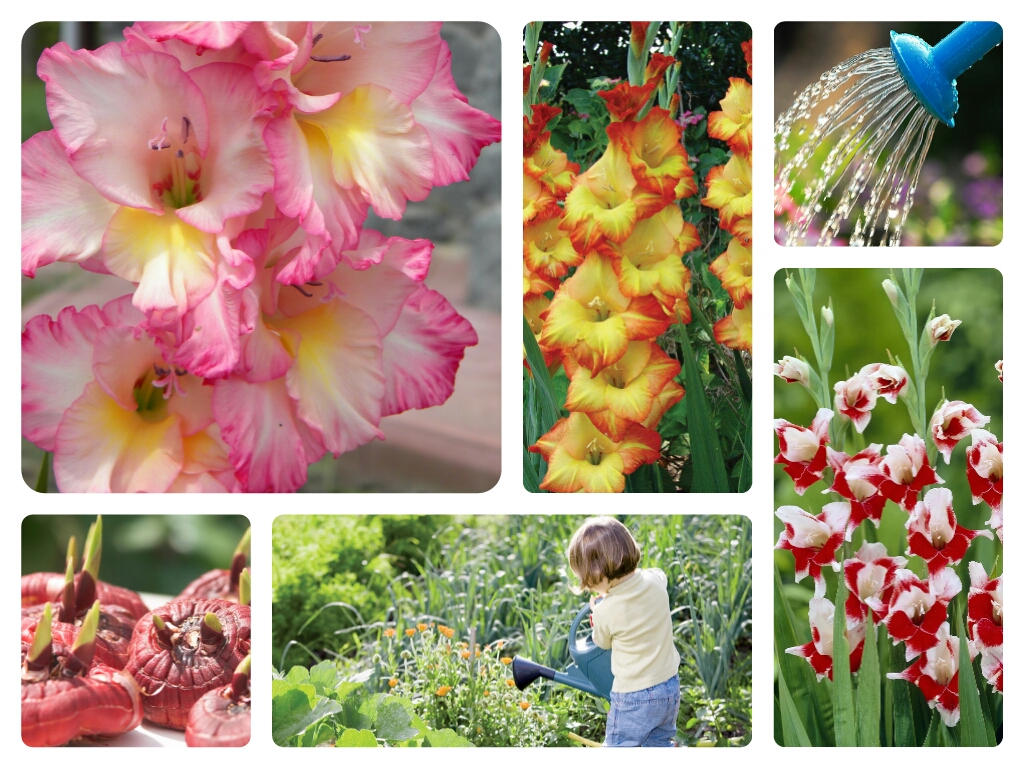
The gladiolus is a late-summer flower that almost everyone in Ukraine associates with 1 September and the first day of school. Tall spikes with a dozen ruffled florets come in nearly every colour, from white and lime green to near-black burgundy. Here is what the gladiolus symbolises, how to grow it, how to store the corms until spring, and how to care for a bouquet so every bud opens.
About the gladiolus
The name comes from the Latin gladius, "sword": the leaves are narrow and pointed like blades — hence its other English name, sword lily. The genus has around 300 species; most grow in South Africa, but a few wild species occur in Europe, including Ukraine, where some are protected.
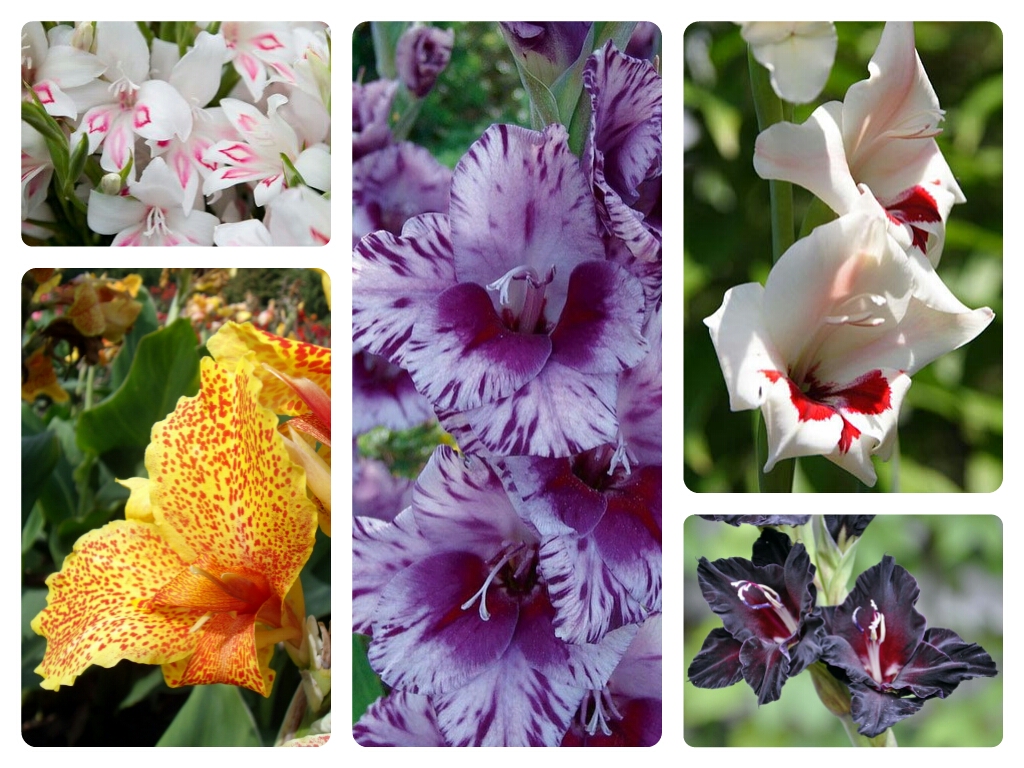
Garden gladioli are hybrids bred mainly from South African species. Breeders have created thousands of varieties: large- and small-flowered, with smooth or heavily ruffled petals, single-coloured or with a contrasting "eye".
Gladiolus meaning
In the language of flowers the gladiolus stands for strength of character, integrity and faithfulness. It is often said that ancient Romans linked it with gladiators, but there is little reliable evidence — it is more likely a pretty legend born of the name. The gladiolus is the traditional birth flower of August, so it makes a fitting gift for late-summer birthdays. Learn more in our guide to the language of flowers.
Flowers that look like gladioli
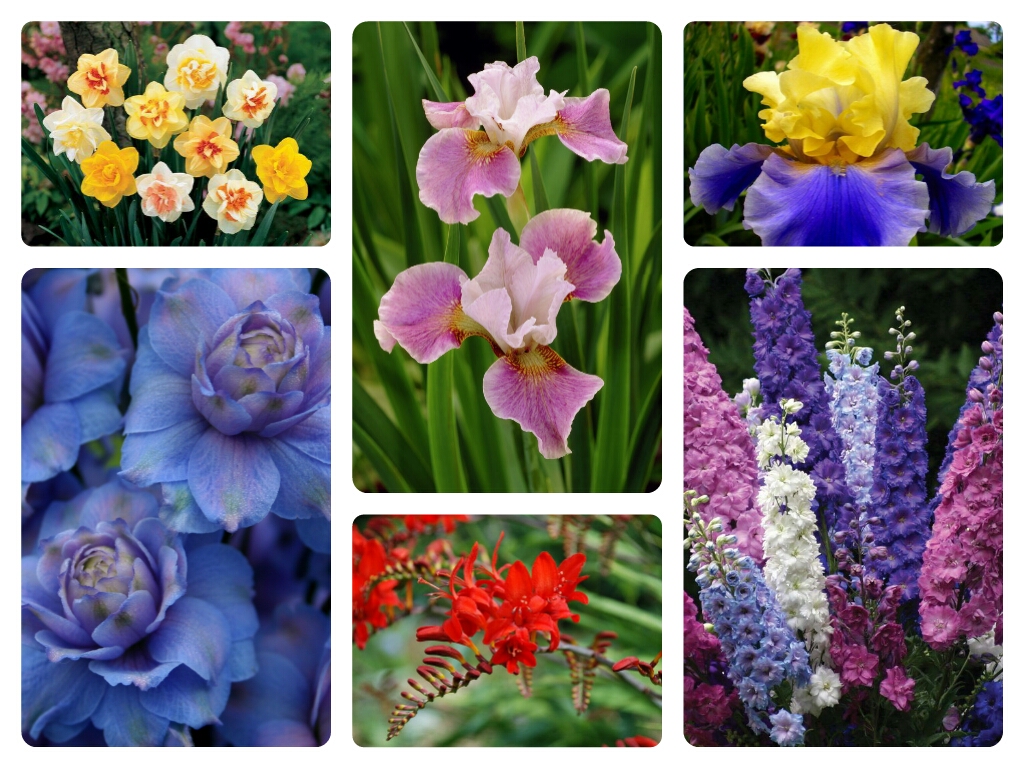
Similar spikes are found on crocosmia (montbretia), a relative from the same iris family, as well as on delphinium, snapdragon and foxtail lily. The gladiolus and the iris share a family: both belong to Iridaceae.
How to grow gladioli
- Site. Sunny and sheltered from wind. In shade they flower poorly, and tall stems snap in the wind.
- Soil. Light, fertile, well-drained and close to neutral. Prepare the bed in autumn by digging it over and adding well-rotted compost.
- Preparing corms. Two to three weeks before planting, peel off dry husks, discard soft or damaged corms and set them out in a warm, bright place to sprout. You can treat them with a fungicide according to the label before planting.
- Planting. When the soil at 10 cm depth reaches about +10 °C — in Ukraine usually late April or May. Plant about three times the corm's height deep and 15–20 cm apart. Plant in batches two weeks apart to extend flowering through the summer.
- Watering and feeding. Water deeply once a week, more often in heat, into furrows rather than over the leaves. Potassium- and phosphorus-rich fertiliser helps during budding.
- Support. Stake tall varieties or mound soil around the base so the spikes don't topple.
The main pest of gladioli is thrips: leaves develop silvery patches and flowers become deformed. Badly affected plants are best removed with their root ball.
Lifting and storing corms
Gladioli do not survive Ukrainian winters in the ground, so they are lifted in autumn.
- When. Four to six weeks after flowering, before hard frosts, in dry weather — usually late September or October.
- Trimming. Cut the stem, leaving a 1 cm stub. Remove the old, shrivelled corm beneath the new one and the roots. Small cormels can be saved separately for propagation.
- Curing. For the first 2–3 weeks keep them warm (about 25–30 °C) with good ventilation, then for several more weeks at room temperature.
- Storage. At 5–10 °C in a dry, airy place: a cellar, a paper bag on the bottom shelf of the fridge, or a box by a cold wall. Check monthly and discard any that rot.
Caring for a gladiolus bouquet
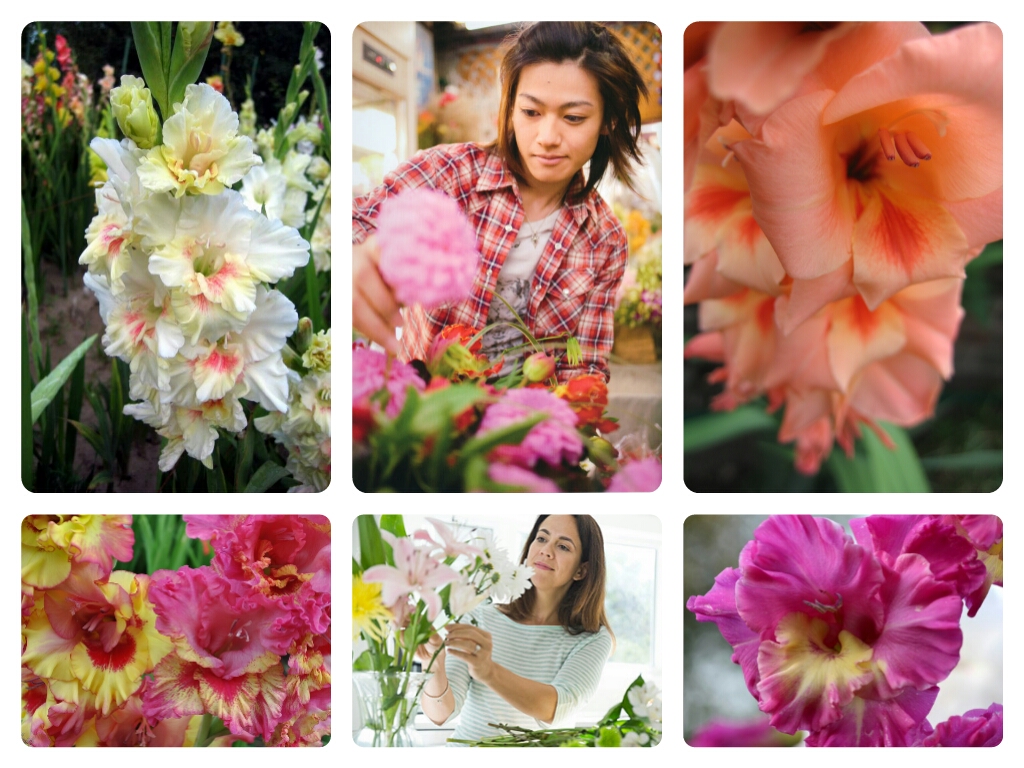
Gladioli are among the longest-lasting cut flowers: with good care they last 7–12 days, the spike opening gradually from the bottom up.
- Cutting. Cut for the vase when 1–3 lower florets have opened. If all the buds are closed, the top ones may never open.
- A tall vase. The spikes are heavy, so use a stable vase that supports at least a third of the stem.
- Water and trimming. Clean, cool water with a sachet of flower food. Every 2–3 days change the water and recut the stems at an angle by 1–2 cm with a sharp knife.
- Faded florets. Pinch off spent lower florets — the bouquet will look fresher and upper buds get more water.
- Keep them upright. Gladioli grow towards light and away from gravity: laid flat or tilted, the tips will bend.
- Location. Away from sun, radiators and fruit — ethylene from ripe fruit speeds wilting.
Gladioli for 1 September
In Ukraine, gladioli have long symbolised Knowledge Day, the first day of school: a tall spike is easy to carry, copes with the heat and lasts in the classroom. Today the choice is wider, and pupils and parents increasingly pick compact arrangements with chrysanthemums, roses or seasonal asters. If you love gladioli, combine them with greenery and small flowers in a tall, slim bouquet for a modern look. Read about different flowers for bouquets in types of flowers.
FAQ
When should I plant gladioli?
When the soil at 10 cm reaches +10 °C — usually late April or May.
When should gladioli be lifted?
Four to six weeks after flowering, before frost, in dry weather.
How do I store gladiolus corms over winter?
Cure, clean and store them at 5–10 °C in a dry, airy place, checking regularly.
How long does a gladiolus bouquet last?
With good care, 7–12 days.
What does the gladiolus symbolise?
Strength of character, integrity and faithfulness. It is the traditional birth flower of August.

View full-size photo
Author: Maria Svitlovir
Graduated from Taras Shevchenko National University of Kyiv, Institute of Biology and Medicine (2001). BSc in Biology, MSc in Horticulture. Writes about plants, works at a garden centre selecting and repotting plants, and contributes to plant reference guides.


