Once the heating comes on, many houseplants start to brown at the leaf edges, drop buds and fall ill more often. It is not just the cold outside: hot radiators dry the air, while on the windowsill the roots may be chilled by cold glass at the same time. Here is how to help your plants through the heating season.
Dry air. During the heating season indoor humidity often drops to 20–30 %, while most tropical plants prefer 50 % or more.
Temperature swings. Leaves overheat above a radiator, while cold glass and airing the room chill the plant.
Too little light. Short days slow growth, yet in a warm room the plant keeps trying to grow, producing weak, stretched stems.
Pests. Spider mites and thrips multiply quickly in warm, dry air.
Warning signs
Brown, crispy leaf tips and edges, dropping buds, curling leaves and fine webbing on the undersides of leaves all mean it is time to change the conditions.
Move plants away from radiators, ideally by half a metre; on a sill above a radiator, a board or foam sheet stops hot air hitting the pots.
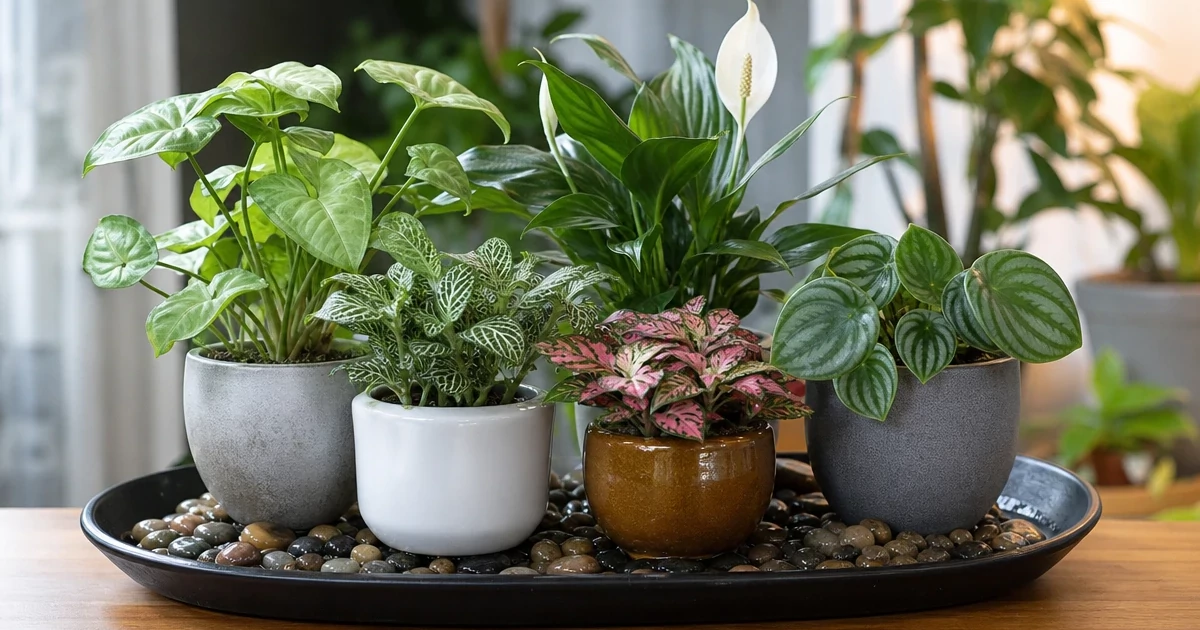
Raise humidity. A room humidifier works best. Pebble or clay-ball trays and grouping plants also help. Misting has only a brief effect, and hairy-leaved plants such as African violets should not be misted.
Protect roots from cold. On a cold windowsill stand pots on cork or foam mats.
Water according to the soil. Near a radiator compost dries faster; by a cold window, slower. Use room-temperature water.
Air the room without draughts. Move sensitive plants away from an open window while airing.
Add light. Move plants closer to the window or use a grow light, and cut back on feeding in winter.
Check the leaves. Look under the leaves weekly for mites and wipe them with a damp cloth.
How much humidity plants need and how to measure it
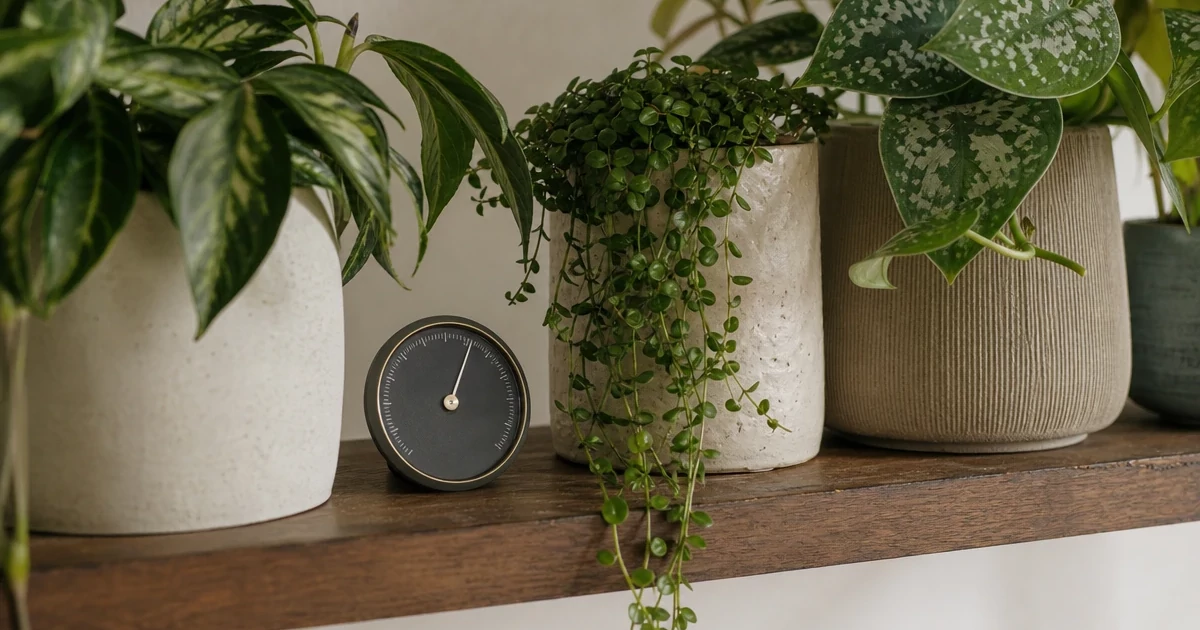
Indoor humidity is measured with a hygrometer, an inexpensive household gauge often combined with a thermometer. Place it near your plants, away from radiators and windows, and watch the readings for a few days.
30–40% is enough for cacti, succulents, snake plants and ZZ plants.
40–60% is comfortable for both people and most houseplants.
60–70% or more suits ferns, calatheas, maranta, many orchids and tropical climbers.
If the gauge shows 20–30% in winter, tropical plants need help even if they still look healthy.
Moisture-loving tropical plants find dry air hardest: prayer plants, calatheas, ferns, the bat flower and azaleas. Succulents and cacti, on the other hand, cope with winter indoors much better. More common care mistakes in “Houseplant care mistakes”.
Trim dry leaf tips with sharp scissors following the leaf shape, leaving a thin strip of dry tissue so you do not cut into living tissue.
Rinse the plant under a lukewarm shower with the soil covered by film; this washes off dust and any spider mites.
Do not repot or feed until spring unless the roots are rotting: plants recover slowly in winter.
Move the pot to a spot with a steady 18–22 °C and no stream of hot air.
Healthy new leaves will appear once the days lengthen; damaged old leaves will not turn fully green again.
Plants that cope with dry air
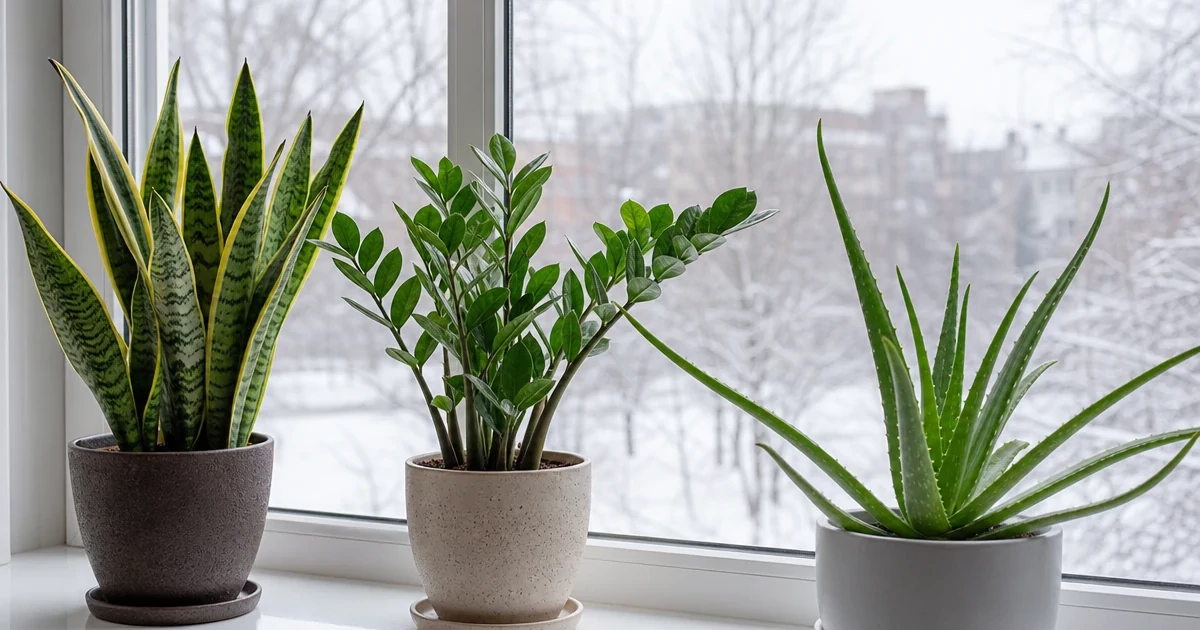
If your flat gets very dry in winter and you have little time for misting and trays, choose tough species: snake plant, ZZ plant, aloe, jade plant, cacti, spider plant and pelargonium. They store water in their leaves or roots and get through the heating season with ordinary watering.
It raises humidity a little, but less than a humidifier, and the towel needs frequent re-wetting.
Should I water more often in winter?
It depends on the spot: near a radiator perhaps yes, by a cool window less often. Always check the soil with your finger.
What indoor humidity is considered normal?
40–60% is comfortable for people and most houseplants. Tropical species prefer 60% or more, while succulents manage with 30–40%.
Author: Maria Svitlovir
Graduated from Taras Shevchenko National University of Kyiv, Institute of Biology and Medicine (2001). BSc in Biology, MSc in Horticulture. Writes about plants, works at a garden centre selecting and repotting plants, and contributes to plant reference guides.





 Birthday
 Hydrangeas