You do your best, you water it and put it in the brightest spot — and your houseplant still wilts? Most likely it is one of the classic mistakes. Here are the 10 most common ways to accidentally kill a houseplant, and how to avoid them.
Every plant is different: a succulent needs sun and infrequent watering, while a fern wants indirect light and humid air. Before or right after buying, find out the species name and its basic needs for light, water and temperature. Good florists provide a care card — keep it.
Overwatering is the most common cause of houseplant death. Roots need air as well as water, and in constantly wet soil they start to rot. Water according to the soil, not a schedule: check the top 2–3 cm with your finger — for most plants it should be dry. In winter, when there is less light, water less.
Always make sure there is drainage. If the plant sits in a decorative pot without holes, lift out the inner pot after watering, let the excess drain and only then put it back. Empty the saucer after 15–20 minutes.
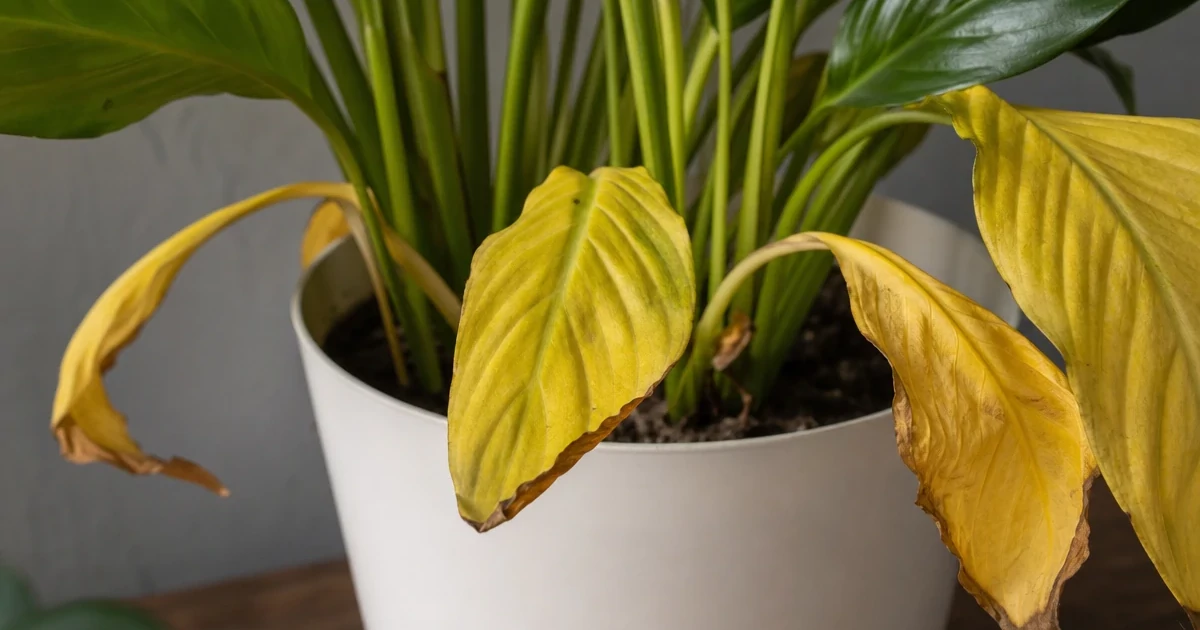
The opposite mistake is just as dangerous. If the soil has dried out and shrunk away from the sides of the pot, water can run straight through. In that case, stand the pot in a bowl of water for 20–30 minutes so the root ball can soak it up. A peace lily, for example, droops its leaves when thirsty and perks up quickly after watering.
A plant will tell you whether it has enough light. If the stems stretch towards the window and new leaves are small and pale, it needs more. Brown, dry patches and fading are signs of sunburn. Sun-loving species go on south- and west-facing windows, shade-tolerant ones on north-facing windows or further into the room.
Most houseplants are comfortable at 18–24 °C. Watch out for cold windowsills in winter, icy draughts when airing the room, a hot radiator right under the pot and the stream from an air conditioner. Heating also dries the air a lot, so tropical plants benefit from a humidifier or a tray of wet pebbles.
Spent flowers and yellowed leaves drain the plant's energy and can become a source of rot. Remove them with clean scissors or pinch them off carefully. In many flowering plants this encourages new blooms.
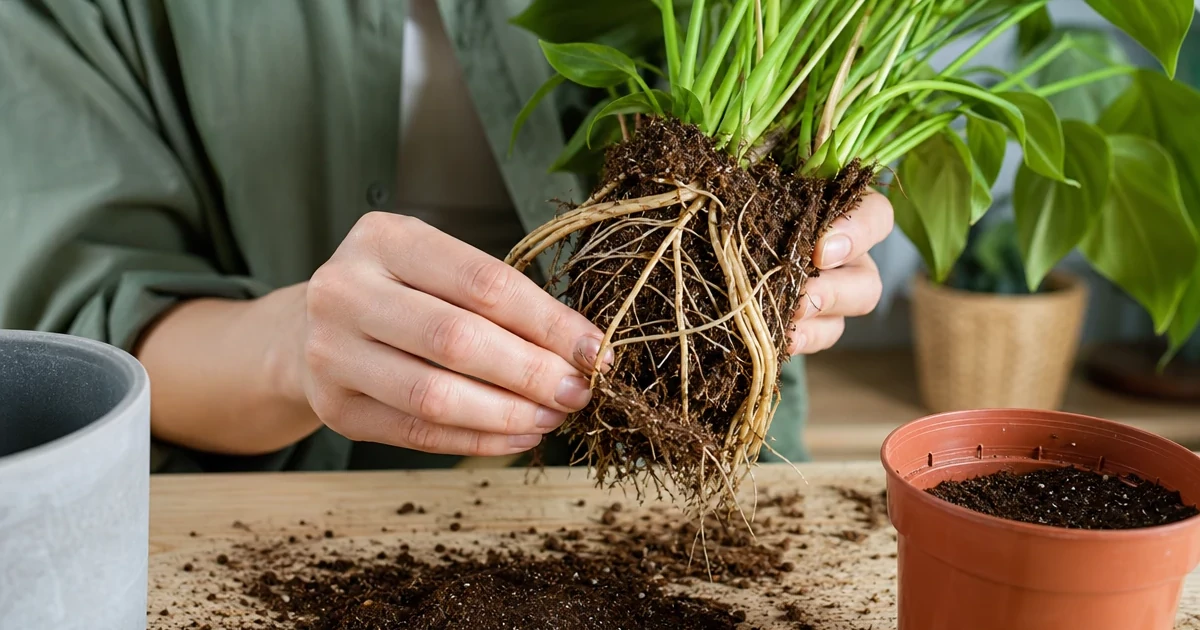
Young plants are usually repotted once a year, mature ones every 2–3 years. It is time for a new pot if roots are growing out of the drainage holes, water runs straight through and growth has stopped. Spring is the best time. Choose a pot only 2–3 cm wider than the old one: in too large a pot the soil stays wet for too long.
The most common houseplant pests are spider mites, thrips, scale insects, mealybugs, whiteflies and fungus gnats. Check both sides of the leaves regularly. If you spot pests, isolate the plant, rinse it under a warm shower and treat it with a suitable product following the instructions. Badly affected parts are best removed.
When you go on holiday, ask someone to water your plants or set up self-watering: drip spikes, self-watering pots or a wick — a strip of fabric or cord with one end in a container of water and the other pushed into the soil. Before you leave, move plants out of direct sun.
Plants adapt to their light and microclimate. Frequent moves — especially for ficus, azaleas and flowering plants in bud — can make them drop leaves and buds. Find a suitable spot and try not to change it unless necessary.
A plant cannot talk, but its leaves and stems show clearly what is wrong. Match the symptoms to the table:
| What you see | Most likely cause | What to do |
|---|---|---|
| Lower leaves yellowing, wet soil, a smell | Overwatering, root rot | Let the soil dry, check the roots, repot if needed |
| Leaves yellowing and wilting, soil bone dry | Underwatering | Soak the pot in water for 20–30 min, then water regularly |
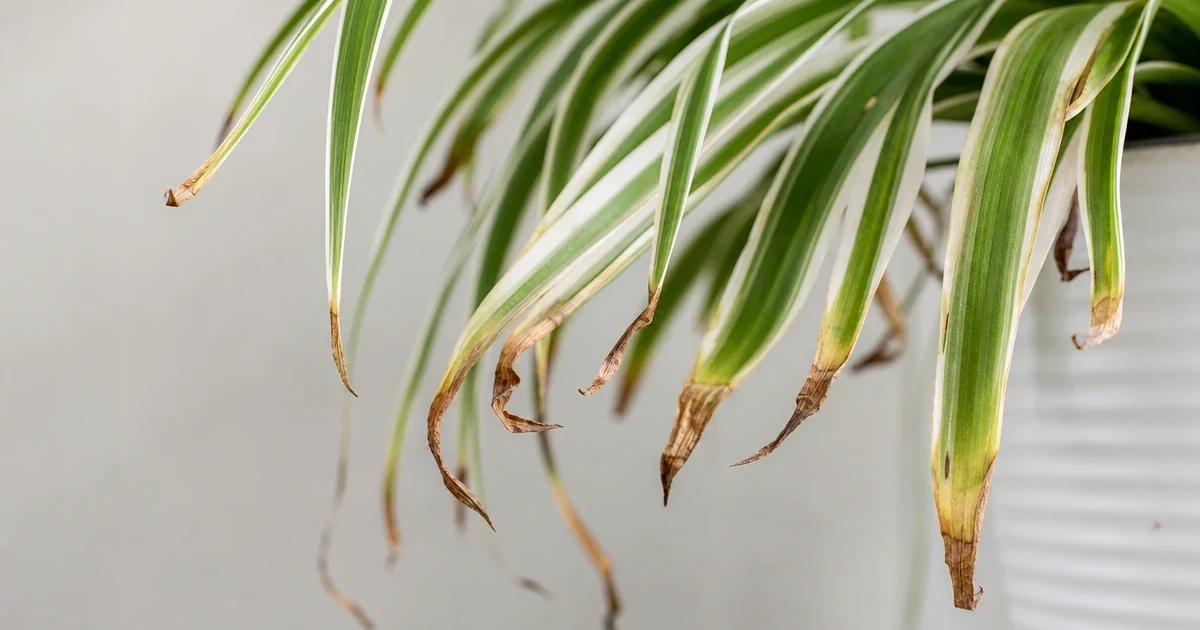
| Dry brown leaf tips | Dry air, hard water, too much fertiliser | Raise humidity, use settled water, flush the soil |
| Leggy stems, small pale leaves | Not enough light | Move it closer to a window or add a grow light |
| Sudden leaf drop | Draughts, cold, an abrupt move | Return it to a warm spot and leave it in place for 2–3 weeks |
| Sticky leaves, webbing, specks | Pests | Isolate the plant, wash the leaves, treat it |
One or two old lower leaves turning yellow is normal renewal. Worry when young leaves yellow, or several at once. ZZ plants and peace lilies, for instance, most often yellow from overwatering, while for orchids a cold windowsill is another common cause.
New leaves usually appear within 2–4 weeks. If the roots have rotted completely but the stem is still healthy, try rooting a cutting: this often saves ficus, dracaena and tradescantia.
Most often because of overwatering. Other possible causes are too little light, cold, a pot that is too small or the natural ageing of lower leaves.
There is no single schedule: go by the plant species, the season and how dry the soil is.
Want to start with an easy plant? Choose from our potted plants with UFL delivery in Kyiv.

Author: Maria Svitlovir
Graduated from Taras Shevchenko National University of Kyiv, Institute of Biology and Medicine (2001). BSc in Biology, MSc in Horticulture. Writes about plants, works at a garden centre selecting and repotting plants, and contributes to plant reference guides.
© Kyiv 2026 UFL Flower Shop

Trademark UFL №191476 is used under license of the rights holder.
All rights reserved. Any use of materials without a link to the site is prohibited.


 Birthday
 Hydrangeas