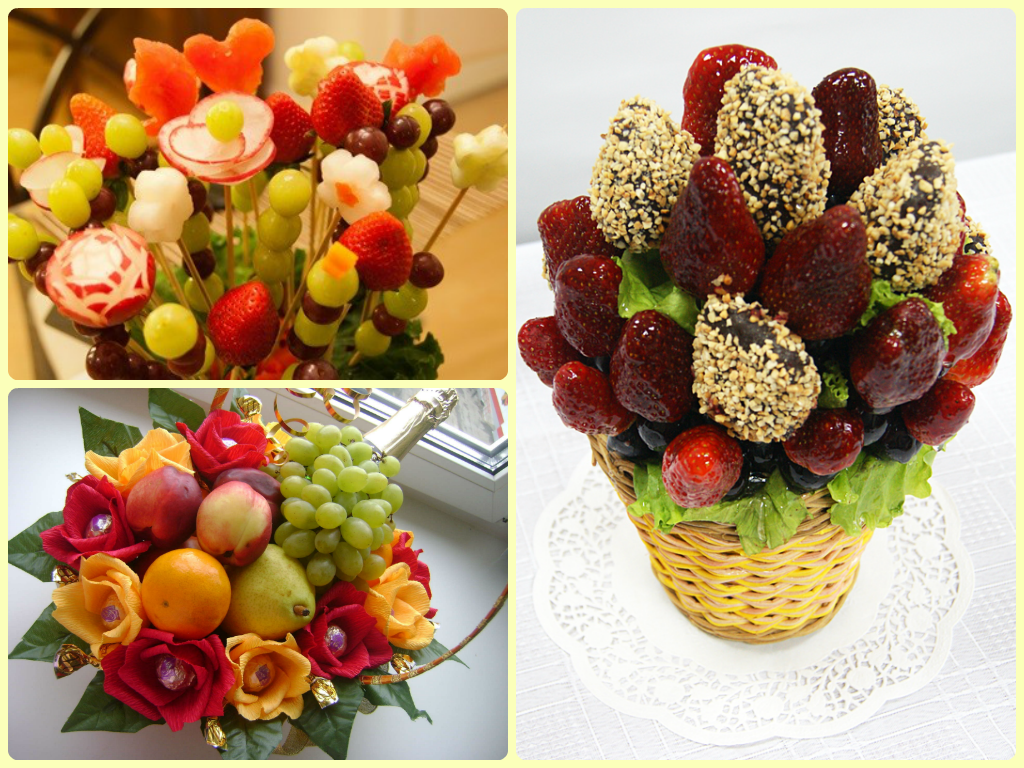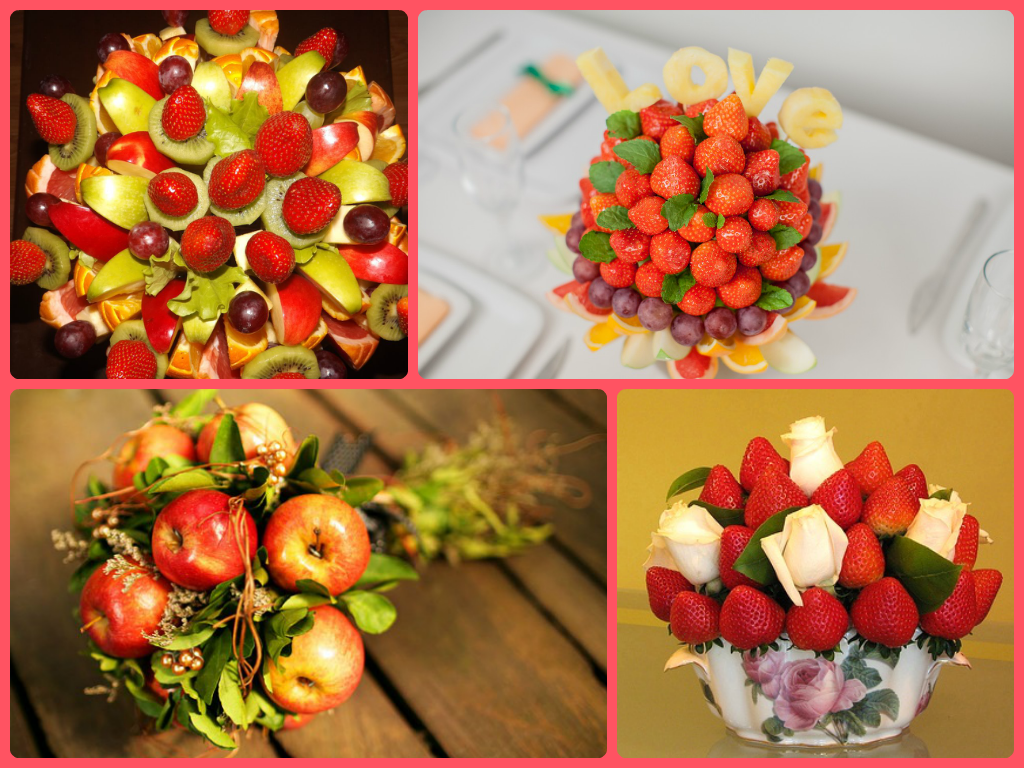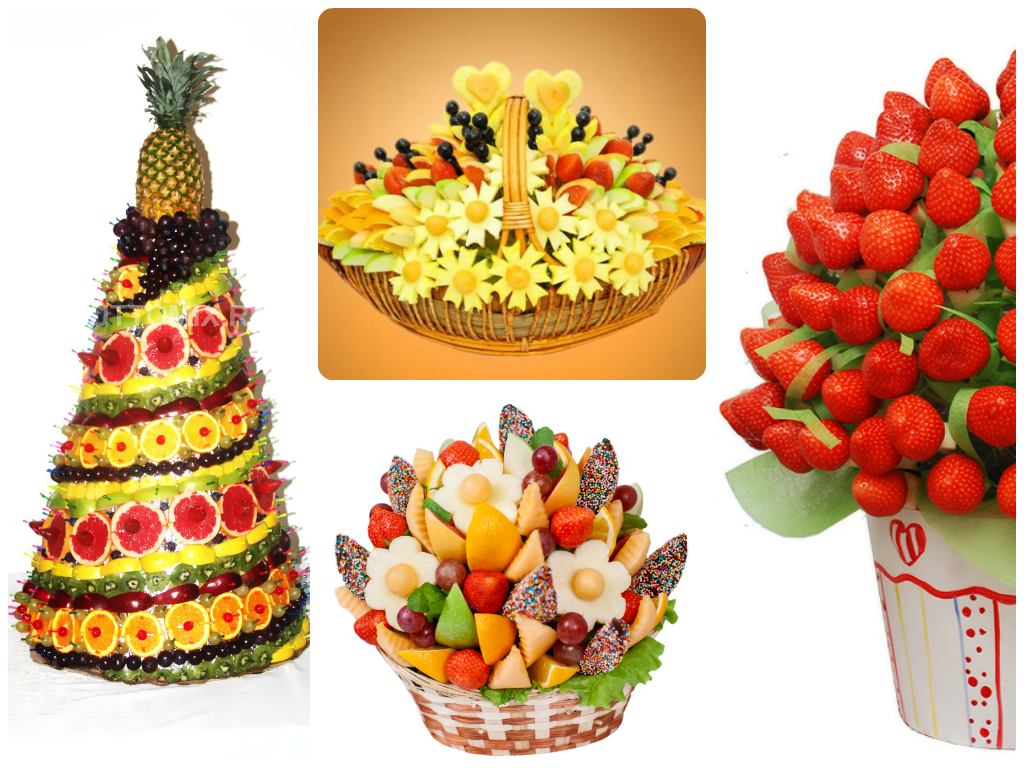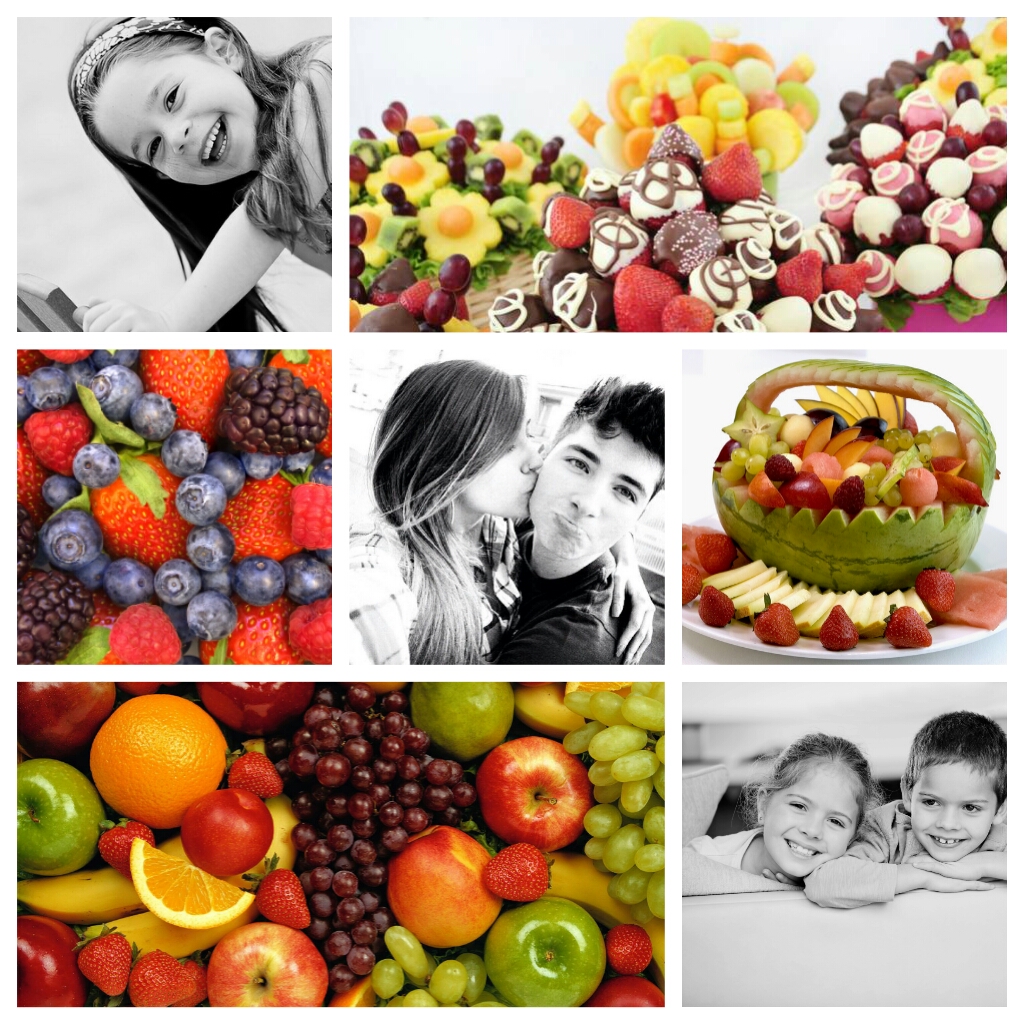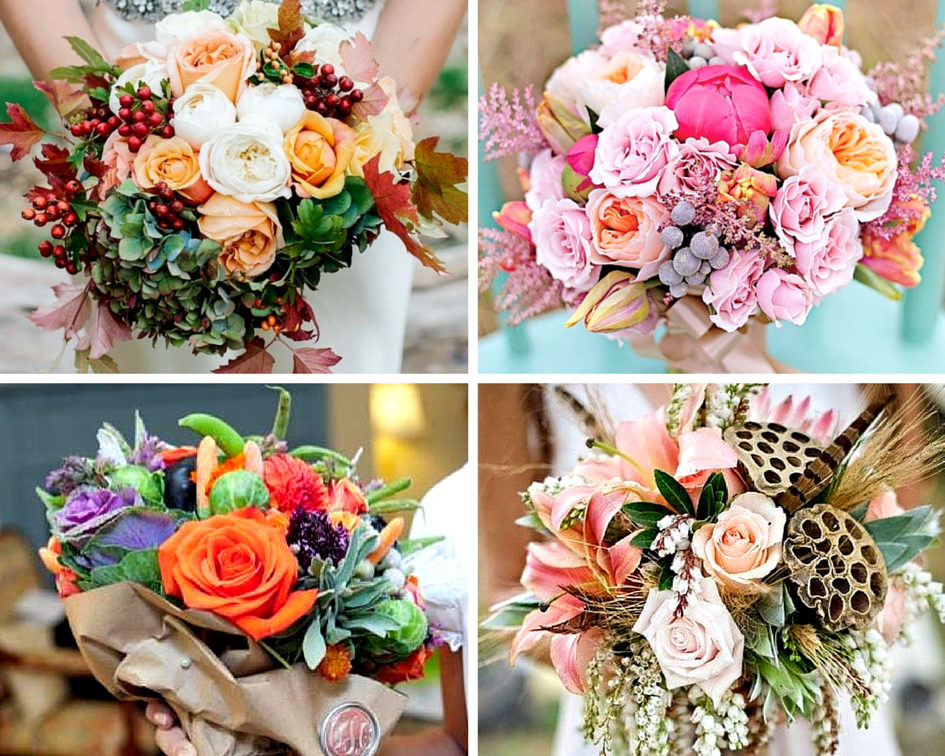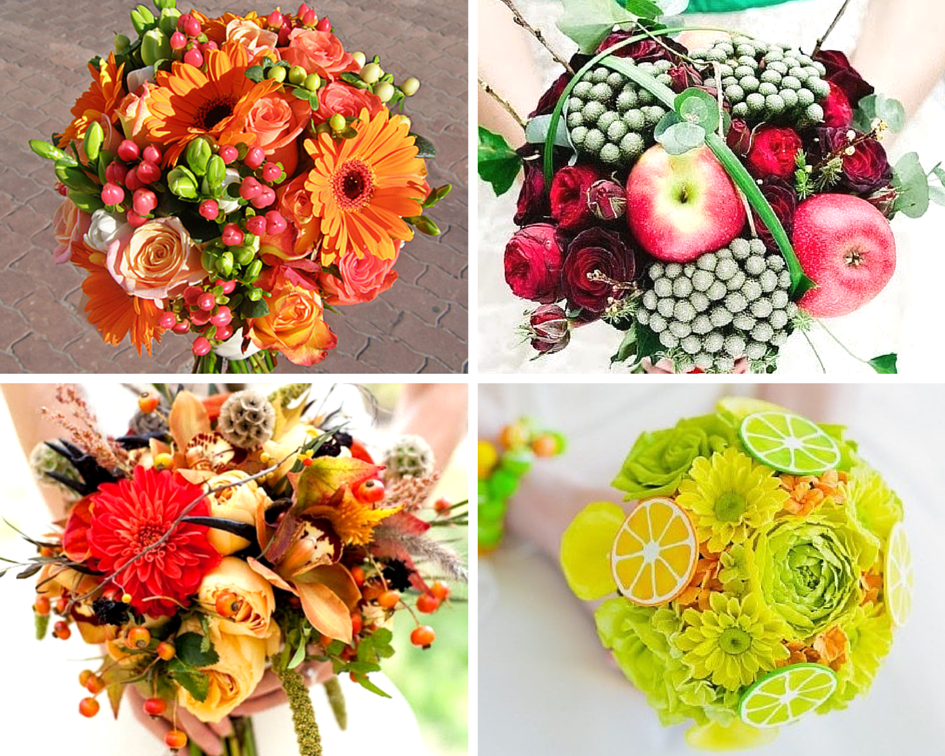
A fruit bouquet is a gift that delights twice: first it is admired, then it is eaten. Fruit and berries also feature in classic floristry: tangerines in Christmas arrangements, pomegranates in autumn baskets, sprigs of currants in summer bouquets. We have gathered everything about fruit bouquets in one place: the types, which fruit to choose, how to make an edible bouquet yourself, how to combine fruit with flowers and how not to spoil the gift.
Fresh flowers for your home or as a gift: spray roses and flowers in a box.
An edible bouquet needs firm fruit that holds its shape on a skewer and doesn't release much juice: strawberries, grapes, tangerines, apples, pears, kiwi, physalis and blueberries. Bananas brown quickly and melons drip, so they are rarely used. Brush cut apples and pears with lemon juice to stop them browning. Hypericum berries, ornamental crab apples and dried citrus slices often seen in flower bouquets are decoration only and are not eaten.
For more edible gift ideas, see unusual bouquet ideas.
In floristry fruit adds colour and texture. Green grapes freshen white roses, pomegranates and quince add depth to autumn arrangements, and tangerines with cinnamon add festive cheer in winter. Fruit is fixed on skewers into the base or placed in a basket among the flowers. Remember that cut fruit releases ethylene, which speeds up wilting, so avoid adding cut fruit to flower arrangements and replace whole fruit as soon as it starts to spoil.
Berries on the stem — currants, blueberries, blackberries — make a summer bouquet especially lively. For colour pairing ideas see fruit and vegetables by colour, and for fun facts see surprising fruit facts.
A few hours at room temperature and up to a day in the fridge. It is best eaten on the day.
Strawberries, grapes, tangerines, kiwi and blueberries. Brush cut apples and pears with lemon juice.
No, if it stood alongside shop flowers: the flowers are treated, and decorative fruit may be waxed or preserved.
A cabbage, polystyrene in cling film, or a bundle of wooden skewers.
Other good add-ons to a bouquet are in what to give with flowers.

Author: Maria Svitlovir
Graduated from Taras Shevchenko National University of Kyiv, Institute of Biology and Medicine (2001). BSc in Biology, MSc in Horticulture. Writes about plants, works at a garden centre selecting and repotting plants, and contributes to plant reference guides.
© Kyiv 2026 UFL Flower Shop

Trademark UFL №191476 is used under license of the rights holder.
All rights reserved. Any use of materials without a link to the site is prohibited.


 Birthday
 Hydrangeas