
 Birthday
 Hydrangeas
Houseplants are credited with a lot: purifying the air, "absorbing radiation" from computers, bringing good energy. Which of these claims does science support, and which are just pleasant myths? Here is how plants really affect indoor air, wellbeing and mood — and what to keep in mind if you have children or pets.
Find easy-care plants for home and office in our houseplant delivery section.
Do plants purify indoor air?
The idea goes back to a 1989 NASA study: in small sealed chambers, plants reduced levels of some volatile organic compounds such as benzene and formaldehyde. But a living room is not a sealed chamber. A 2019 review that re-analysed dozens of experiments found that matching normal air exchange through windows and ventilation would take 10 to 1,000 plants per square metre of floor.
Bottom line: plants make a room more pleasant, but they don't replace opening windows and ventilation.

Humidity and microclimate
Plants release water through their leaves, so a group of large plants can raise humidity slightly — noticeable in winter when the heating is on. Even so, the effect is smaller than a humidifier's.
Mood and wellbeing
This is where plants have more solid benefits. Studies link indoor greenery and caring for plants with feeling calmer, lower perceived stress and better concentration. The effect is modest but real: watering, repotting or simply looking at greenery is a good way to switch off.
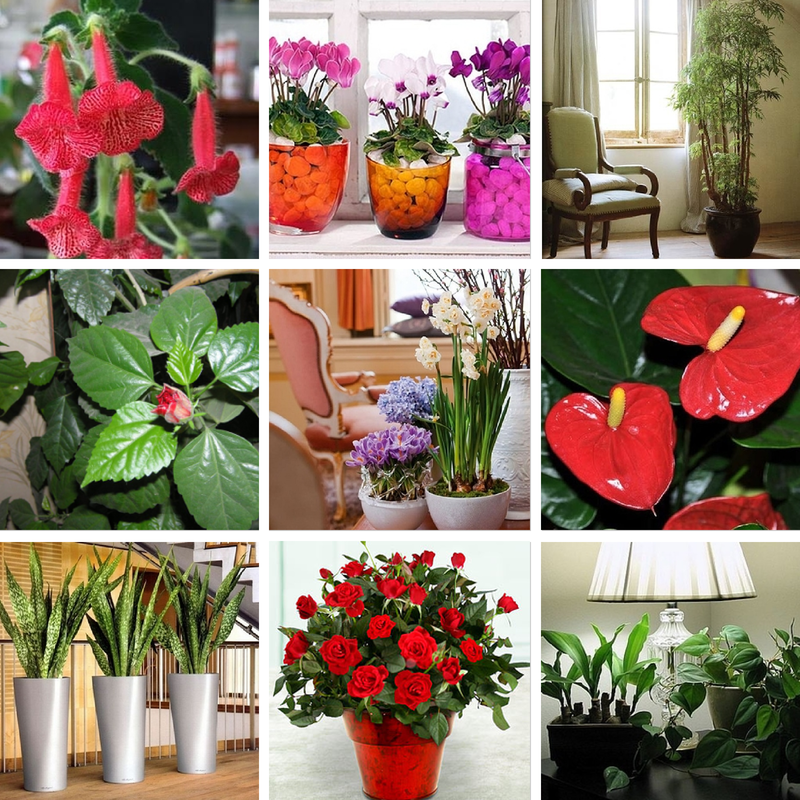
Popular myths
- "Plants in the bedroom steal oxygen at night." Plants do respire at night, but they use a negligible amount of oxygen compared with a person. There's no danger.
- "Snake plants release oxygen at night." They use a special type of photosynthesis, opening their pores at night to take in carbon dioxide. But this makes no noticeable difference to the air in a room.
- "A cactus by the monitor absorbs radiation." No — plants don't shield electromagnetic fields.
- "Flowers bring good energy or bad luck." These are superstitions, not plant properties.
Easy-going houseplants
If you want greenery without the fuss, choose forgiving plants:
- Snake plant (Sansevieria) — tolerates shade and infrequent watering.

- Pothos (Epipremnum) — a fast-growing trailer for shelves and hanging pots.

- Spider plant (Chlorophytum) — undemanding and easy to propagate from its plantlets.

- Pelargonium (geranium) — flowers almost all year on a bright windowsill.
.jpg)
- Dracaena — a striking "palm" for a bright corner.

Safety: children, pets, allergies
- Toxic plants — dieffenbachia, peace lily, monstera; lilies are especially dangerous for cats. With toddlers or pets at home, keep such plants out of reach or choose safe ones.
- Allergies. Weeping fig sap can cause allergies, and mould can grow in soggy compost and saucers.
- Tobacco smoke is not "cleaned" by plants — see which ones at least cope with it in our article on houseplants and tobacco smoke.
.jpg)
.jpg)
FAQ
How many plants does it take to clean the air?
More than anyone could fit in a flat. For clean air, rely on opening windows, ventilation and an air purifier.
Can I keep plants in a child's room?
Yes, if you choose non-toxic plants and place pots where a child can't knock them over.

View full-size photo
Author: Maria Svitlovir
Graduated from Taras Shevchenko National University of Kyiv, Institute of Biology and Medicine (2001). BSc in Biology, MSc in Horticulture. Writes about plants, works at a garden centre selecting and repotting plants, and contributes to plant reference guides.