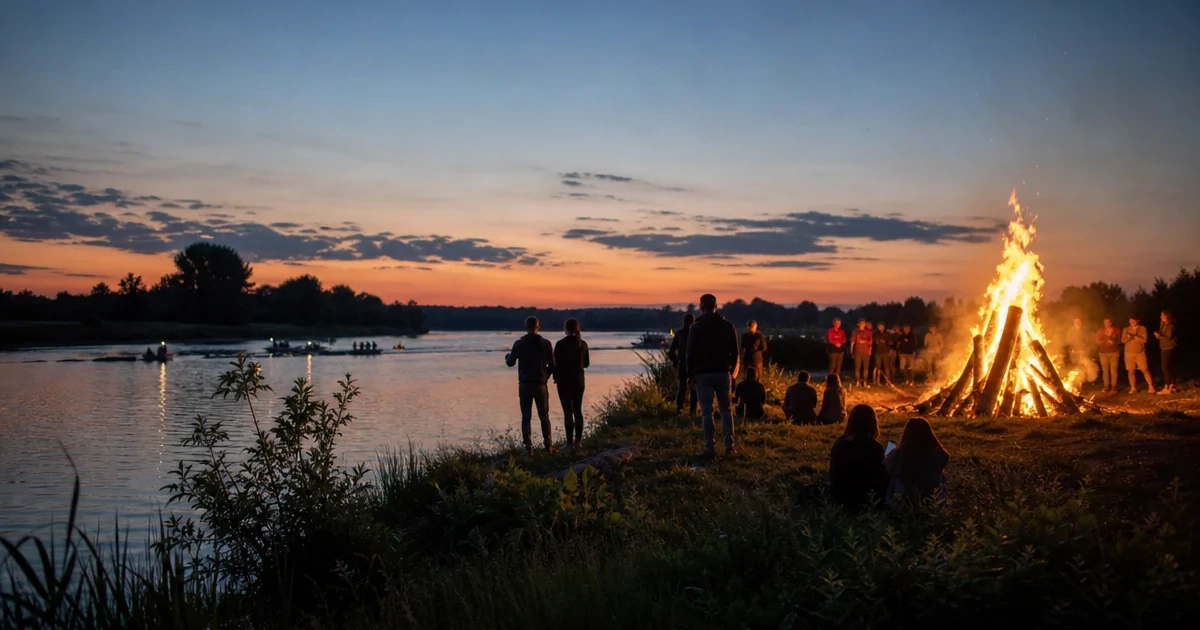
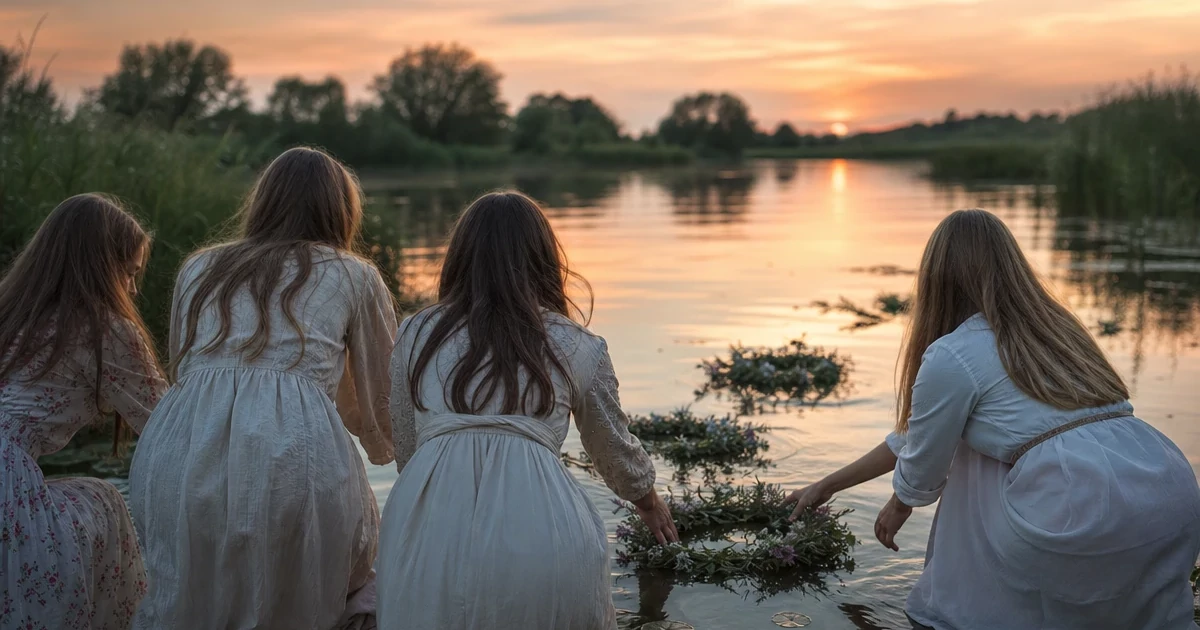
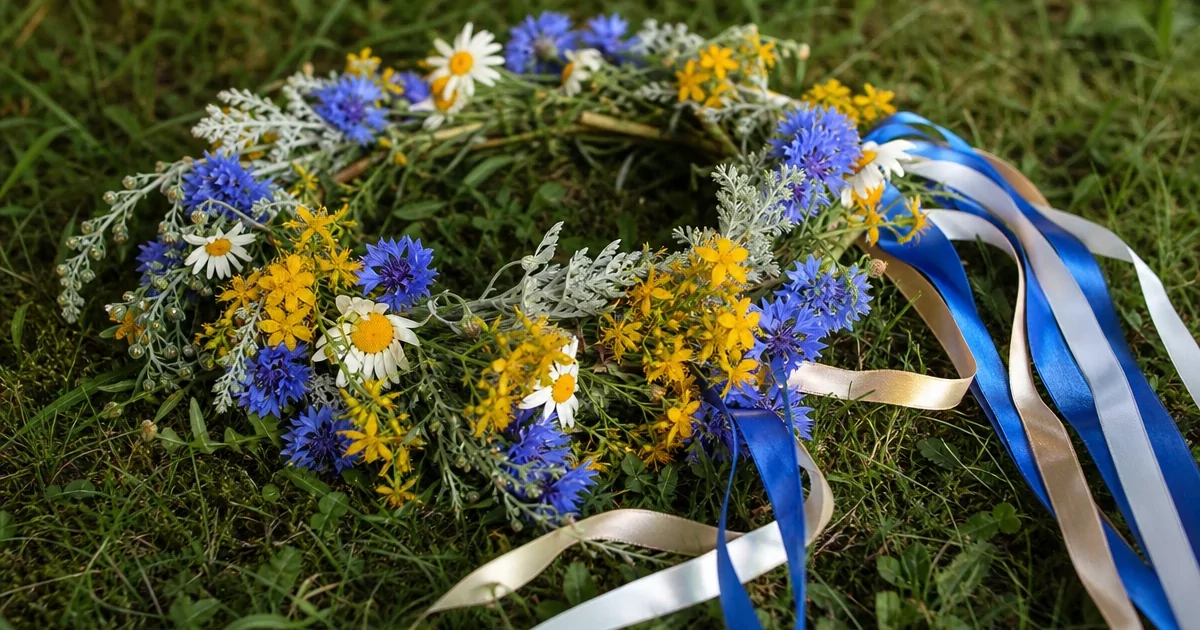
Ivana Kupala is one of the brightest summer festivals in Ukraine: wreaths floating on the water, bonfires, songs until dawn and the hunt for the fabled fern flower. It blends an ancient midsummer rite with the Christian feast of the Nativity of John the Baptist. Here is when Kupala is celebrated, which traditions survive and which flowers go into a Kupala wreath.
For a summer wreath or bouquet: spray roses and chrysanthemums.
The festival is tied to the summer solstice. For a long time it was held on the night of 6–7 July, the eve of the Nativity of John the Baptist in the Julian calendar. Since the Orthodox Church of Ukraine and the Ukrainian Greek Catholic Church moved to the Revised Julian calendar in 2023, the feast falls on 24 June, and more and more communities celebrate Kupala on the night before 24 June. Both dates are in use.
Kupala night is a legacy of ancient midsummer festivals celebrated across Europe. The shortest night of the year was linked with the sun, water, fire and herbs. Later the folk rites merged with the church feast, hence the name: Ivan for John the Baptist, while Kupala is associated with bathing and cleansing in water.
Legend says that on Kupala night a fern flower blooms for a single moment, and whoever finds it gains treasure and the gift of understanding animals and plants. It is a beautiful tale, but botanically ferns never flower at all: they reproduce by spores that ripen in sporangia on the underside of the fronds. So the search for the flower is really an excuse for a night-time walk in the woods.
To make the wreath hold, build a base of flexible stems or a wire ring and attach small bunches of flowers around it, each one covering the stems of the last. For bridal wreaths made of fresh flowers see “Bridal flower crown”.
Kupala festivals take place in open-air museums, on riverbanks and in city parks, with wreath-weaving workshops, folk songs and round dances. If you plan a night swim, choose an official beach and never go into the water alone.
Traditionally the night before 7 July; under the new church calendar many people celebrate on the night before 24 June.
No. Ferns are spore-bearing plants and have no flowers.
It was floated on the water or sometimes dried and kept at home as a charm. More folk beliefs about flowers: “Flower superstitions”.
Ready-made texts for the holiday: Ivana Kupala wishes.

Author: Maria Svitlovir
Graduated from Taras Shevchenko National University of Kyiv, Institute of Biology and Medicine (2001). BSc in Biology, MSc in Horticulture. Writes about plants, works at a garden centre selecting and repotting plants, and contributes to plant reference guides.
© Kyiv 2026 UFL Flower Shop

Trademark UFL №191476 is used under license of the rights holder.
All rights reserved. Any use of materials without a link to the site is prohibited.


 Birthday
 Hydrangeas