
 Birthday
 Hydrangeas
The passion flower is one of the most unusual climbers you can grow at home: its intricate bloom with a fringed corona looks like something from outer space or a medal. Each flower lasts only about a day, but the plant keeps opening new buds for weeks. Here is where the name "passion flower" comes from, which species exist, how to care for it indoors and on a balcony, why it may not flower and how it is related to passion fruit.
What kind of plant the passion flower is
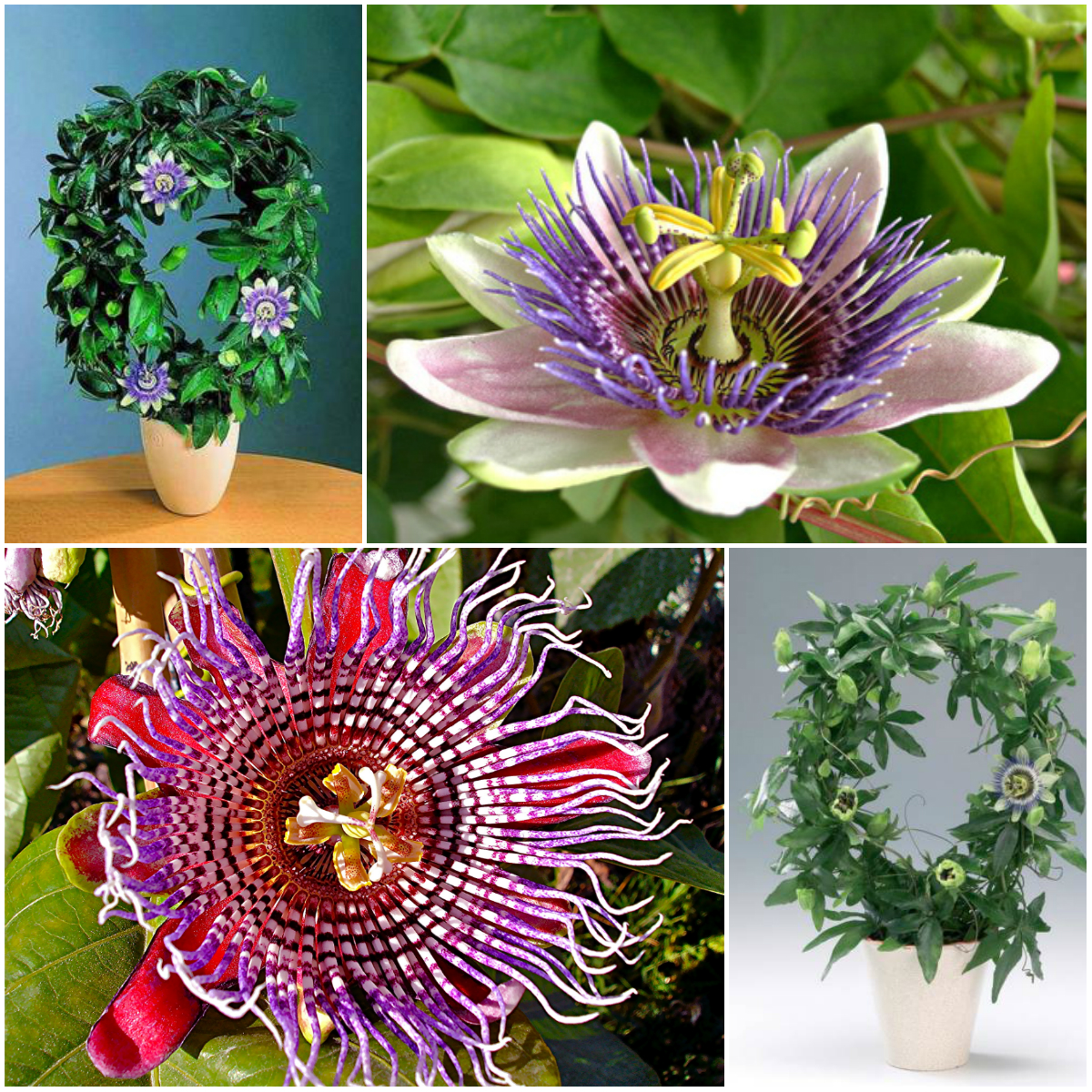
Passiflora is a genus of climbing plants in the passion flower family with around 550 species. Almost all come from the tropics and subtropics of the Americas. The vines cling to supports with tendrils and can grow several metres in a season.
The flower has a complex structure: 5 petals and 5 similar sepals, above them a corona of many thin filaments, and in the centre, on a stalk, five anthers and three stigmas. Many species are fragrant, and some produce edible fruit after flowering.
Why "passion flower"
In the 16th–17th centuries Spanish missionaries in South America saw symbols of the Passion of Christ in this flower — hence the Latin name Passiflora, "passion flower". They compared the corona to the crown of thorns, the three stigmas to the nails, the five anthers to the wounds, and the ten petals and sepals to the apostles, minus Judas and Peter. This interpretation helped the plant become famous in Europe quickly.
Popular species
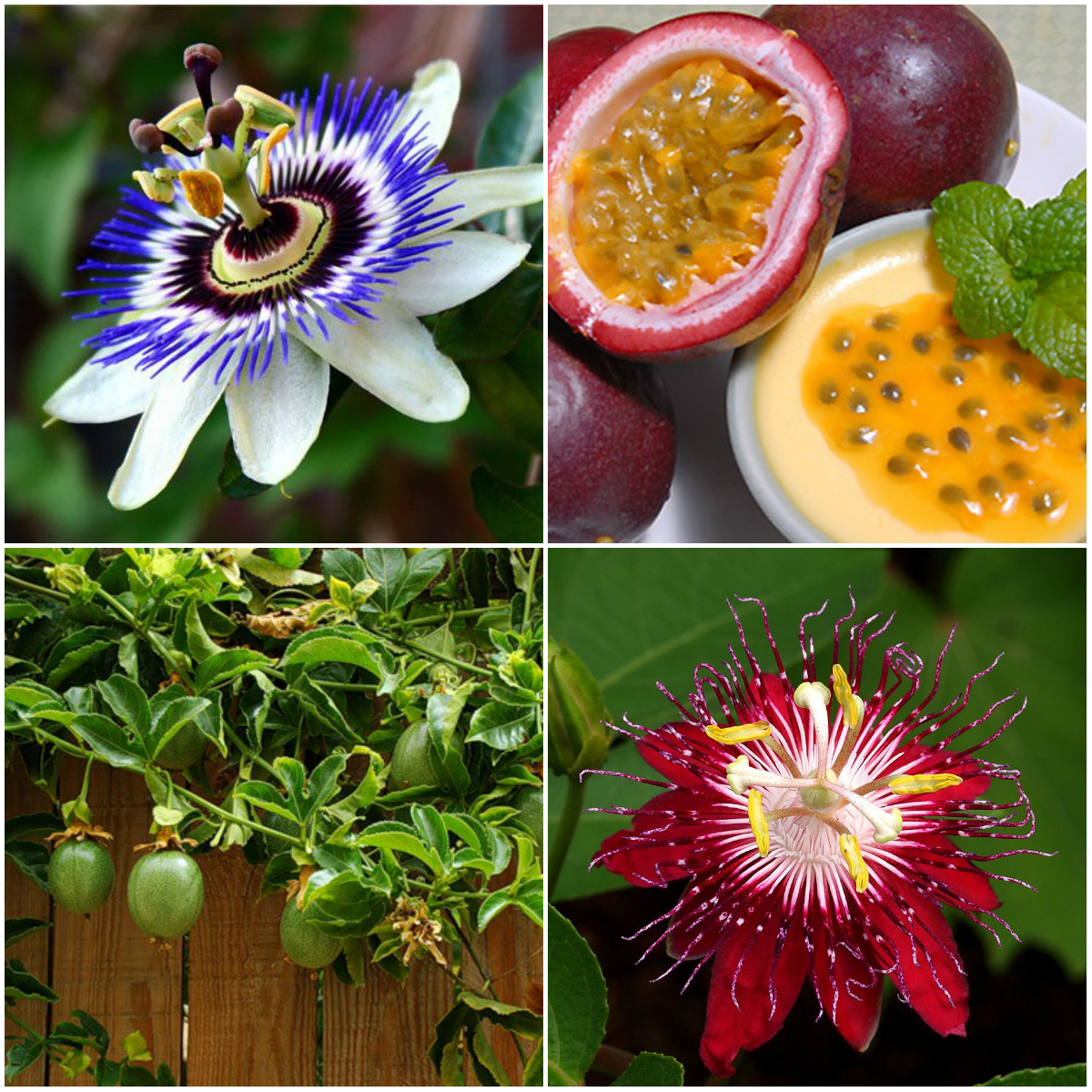
- Blue passion flower (P. caerulea) — the most common species for home and garden, with white-and-blue flowers and a purple corona. One of the hardiest: it tolerates brief frosts down to −10 °C, so in southern Ukraine it sometimes overwinters outdoors under cover.
- Passion fruit (P. edulis) — the source of maracuja. It can fruit indoors with good light and hand pollination.
- Maypop (P. incarnata) — a North American species with lilac flowers; its roots survive winter in the ground while the top growth dies back.
- Winged-stem passion flower (P. alata) and other tropical species — large, vivid flowers, but they need a conservatory.
Caring for a passion flower indoors
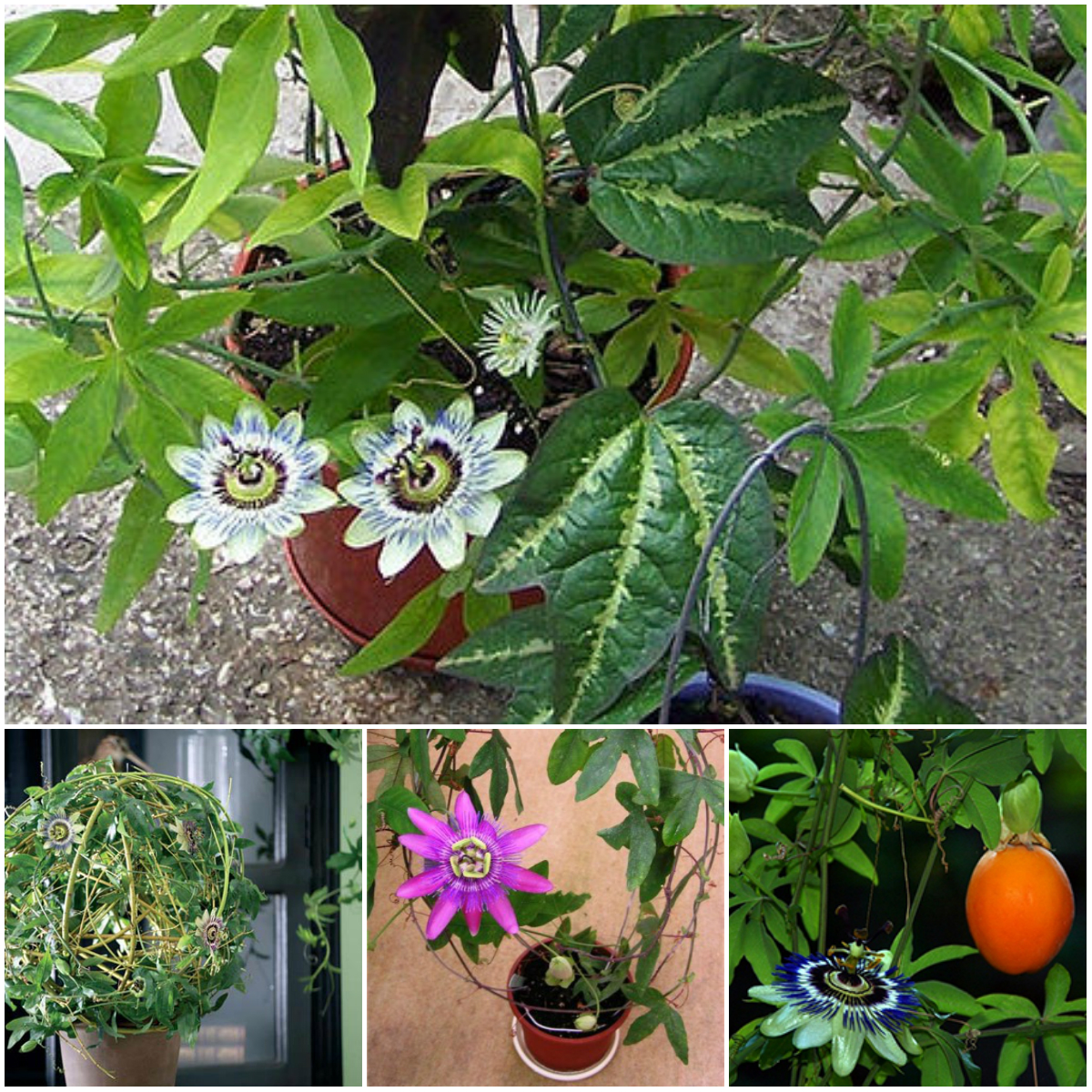
- Light. Your brightest window, ideally south- or west-facing, with a few hours of direct sun. In summer move it to a balcony or terrace, where it flowers more freely.
- Temperature. 20–28 °C in spring and summer; a winter rest at 10–15 °C in a bright spot.
- Watering. Generous in summer, as soon as the top layer of soil dries; moderate in winter. Never leave water standing in the saucer.
- Support. The vine needs a trellis, hoop or strings: the tendrils cling on their own, and you can guide the shoots.
- Feeding. From spring to late summer, every 2 weeks with a potassium-rich fertiliser for flowering plants. Too much nitrogen gives lots of leaves and few flowers.
- Pot. Not too large: a slightly snug pot encourages flowering.
Pruning and overwintering
Flowers form on the current year's growth, so pruning encourages blooming. In late winter or early spring shorten the main stems by about a third and remove weak or crowding shoots. In summer you can pinch back overly long stems.
In winter keep the plant in a cool, bright place and water less. If it stays warm while days are short, the shoots become leggy and weak — a grow light helps.
Why a passion flower won't bloom
- Too little light — the most common reason.
- Too large a pot: the plant puts energy into roots and leaves.
- Too much nitrogen fertiliser.
- No pruning or winter rest.
- A young plant: seedlings often flower only in their second or third year.
Propagation and home-grown passion fruit
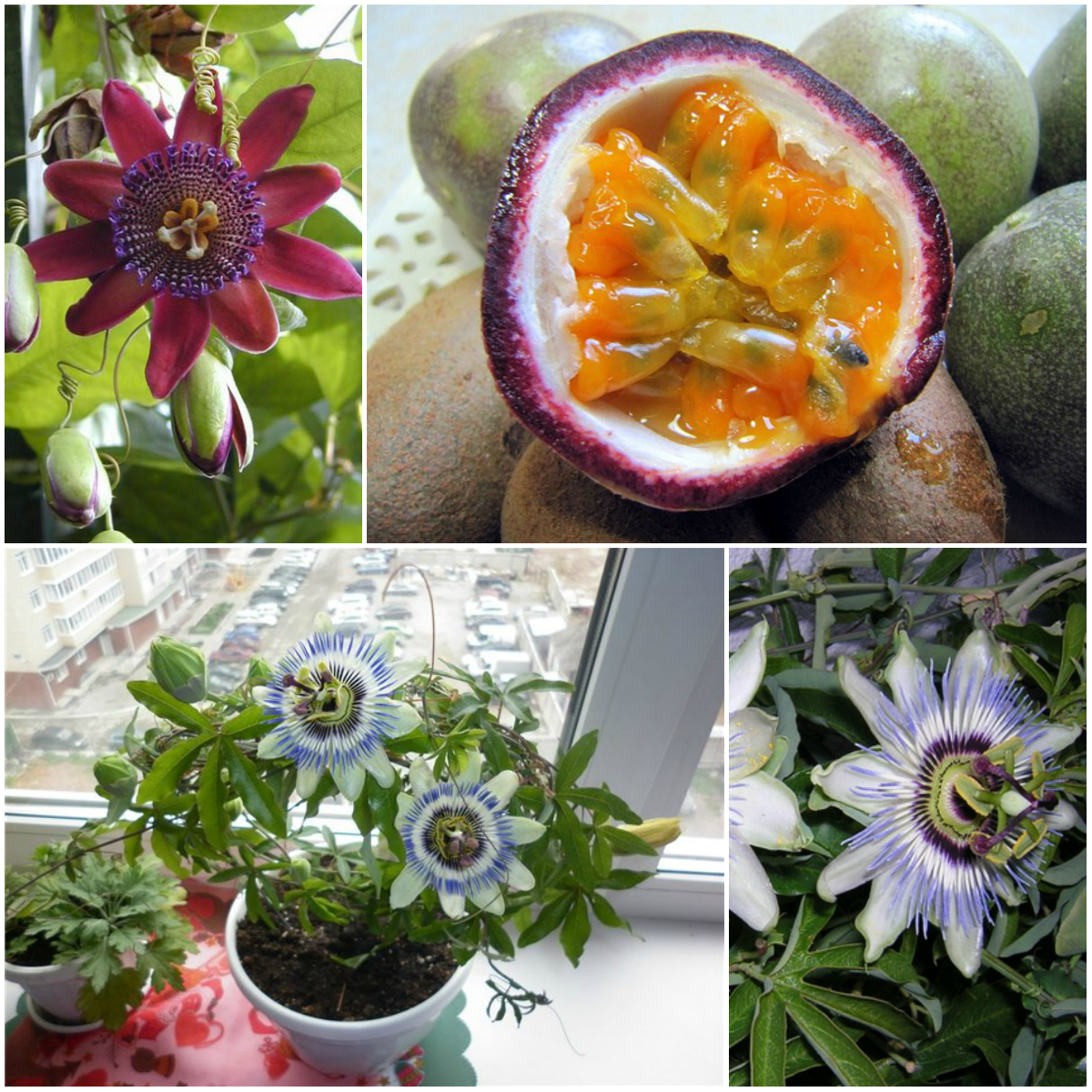
The easiest method is cuttings: in spring or summer take a shoot with 2–3 nodes and root it in water or a moist peat-perlite mix. You can also grow a plant from the seeds of a shop-bought passion fruit: wash off the pulp, sow shallowly and keep warm. Germination takes 2 to 6 weeks. To get fruit at home, pollinate the flowers by hand with a small brush. For more unusual fruit, see our surprising fruit facts.
Safety
Only the ripe fruit of certain species, above all passion fruit, is edible. The leaves and unripe fruit of the blue passion flower contain cyanogenic glycosides, so keep the plant out of reach of children and pets. Any herbal preparations from passion flower should only be used on a doctor's advice.
Frequently asked questions
How long does a passion flower bloom last?
Usually about a day. With good care, though, the plant opens new flowers all summer.
Can I grow passion fruit at home?
Yes, from seed or cuttings. Fruit needs plenty of light, a support and hand pollination.
Can a passion flower survive frost?
The blue passion flower tolerates brief frosts down to −10 °C, but in most of Ukraine it is overwintered indoors.
Why are my passion flower's leaves turning yellow?
Overwatering, lack of light in winter, or spider mites in warm, dry air.

View full-size photo
Author: Maria Svitlovir
Graduated from Taras Shevchenko National University of Kyiv, Institute of Biology and Medicine (2001). BSc in Biology, MSc in Horticulture. Writes about plants, works at a garden centre selecting and repotting plants, and contributes to plant reference guides.


