
Pilea peperomioides, with round coin-like leaves on long stalks, has become one of the most recognisable plants in modern interiors. It is called the Chinese money plant and is often passed on to friends, because it produces plenty of babies. Here is how to care for it so the leaves stay large and flat, how to propagate it and which other pileas are worth knowing.
Pilea is a genus of the nettle family with hundreds of species. The most popular indoors are:
Despite its name, Pilea peperomioides is not related to peperomia — they just have similar leaves.
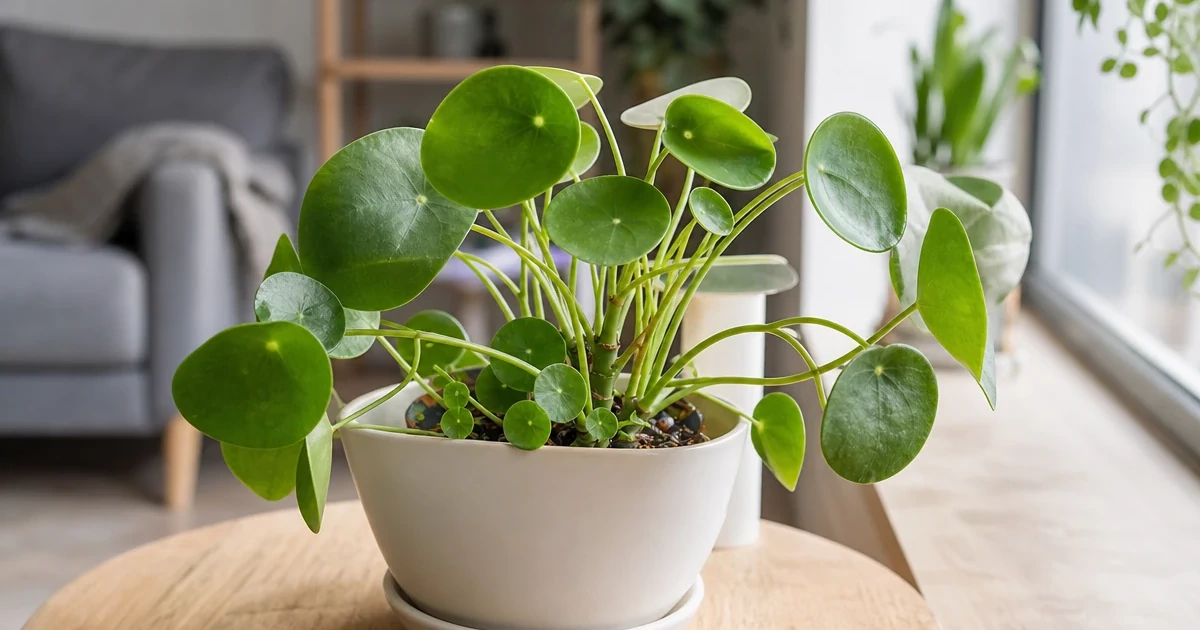
View full-size photoPilea peperomioides often produces baby plants at its base.
Pilea needs bright indirect light: 1–2 m from a south window or near an east or west one. Midday sun scorches the leaves; in shade the stalks stretch and leaves shrink and dull. It leans towards the window quickly, so give the pot a quarter turn every few days to keep it symmetrical. Keep it at 18–24 °C, not below 12–14 °C in winter.
Water when the top 2–3 cm of soil are dry — about weekly in summer, less in winter. Pilea copes with slight underwatering better than overwatering: thirsty leaves droop a little but perk up after a drink. Standing water rots the stem base. Feed every 2–3 weeks from spring to autumn at half strength.
Passing babies to friends and linking the plant with money is a folk tradition — see more beliefs in our houseplant names and care hub.
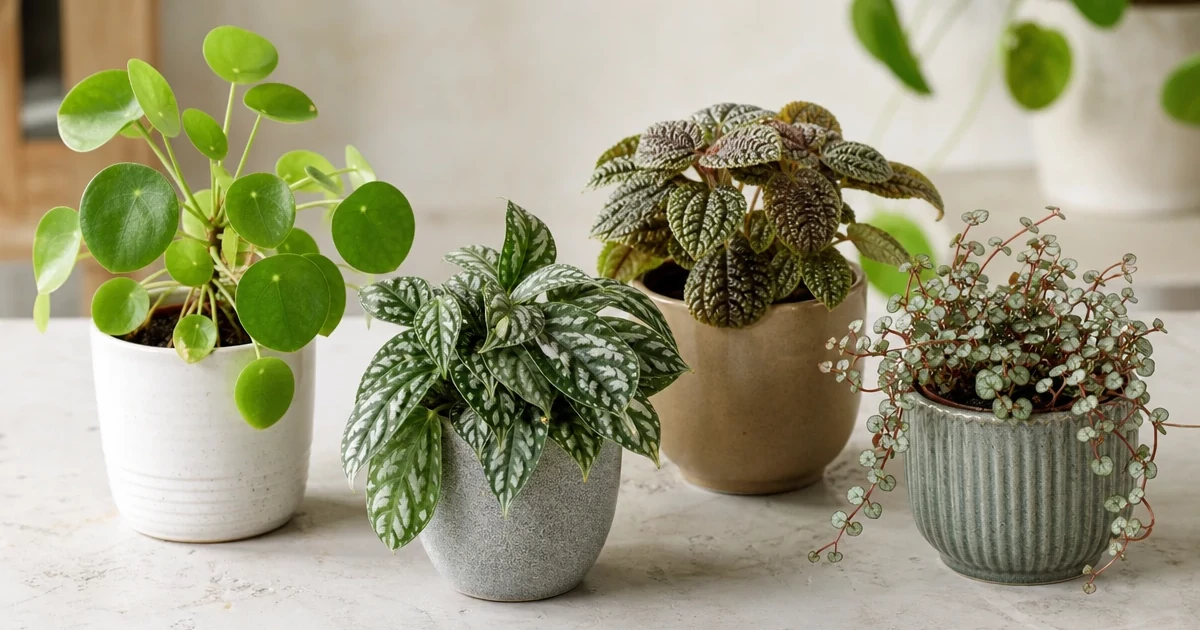
View full-size photoPopular Pilea species differ in leaf shape and color.
Use light, airy foliage-plant compost with perlite in a pot with drainage that is not too deep. Repot young plants every spring and mature ones every 2 years or when babies fill the pot. See how to repot houseplants.
Pilea is considered non-toxic to people, cats and dogs, making it a good choice for children’s rooms, desks and pet owners. More compact plants: small houseplants; browse potted plants.
Because of its coin-shaped leaves and Chinese origin. The link with money is just folklore.
When the top 2–3 cm of soil are dry — about weekly in summer, less in winter.
It grows towards the light. Turn the pot a quarter turn every few days.

Author: Maria Svitlovir
Graduated from Taras Shevchenko National University of Kyiv, Institute of Biology and Medicine (2001). BSc in Biology, MSc in Horticulture. Writes about plants, works at a garden centre selecting and repotting plants, and contributes to plant reference guides.
© Kyiv 2026 UFL Flower Shop

Trademark UFL №191476 is used under license of the rights holder.
All rights reserved. Any use of materials without a link to the site is prohibited.

 Birthday
 Hydrangeas