Pine pollen is a fine yellow powder produced in spring by the male cones of pine trees. In May there is so much of it that puddles and windowsills turn yellow. In the folk medicine of China, Korea and Eastern Europe it was used as a general tonic, and today it is sold as a food supplement.
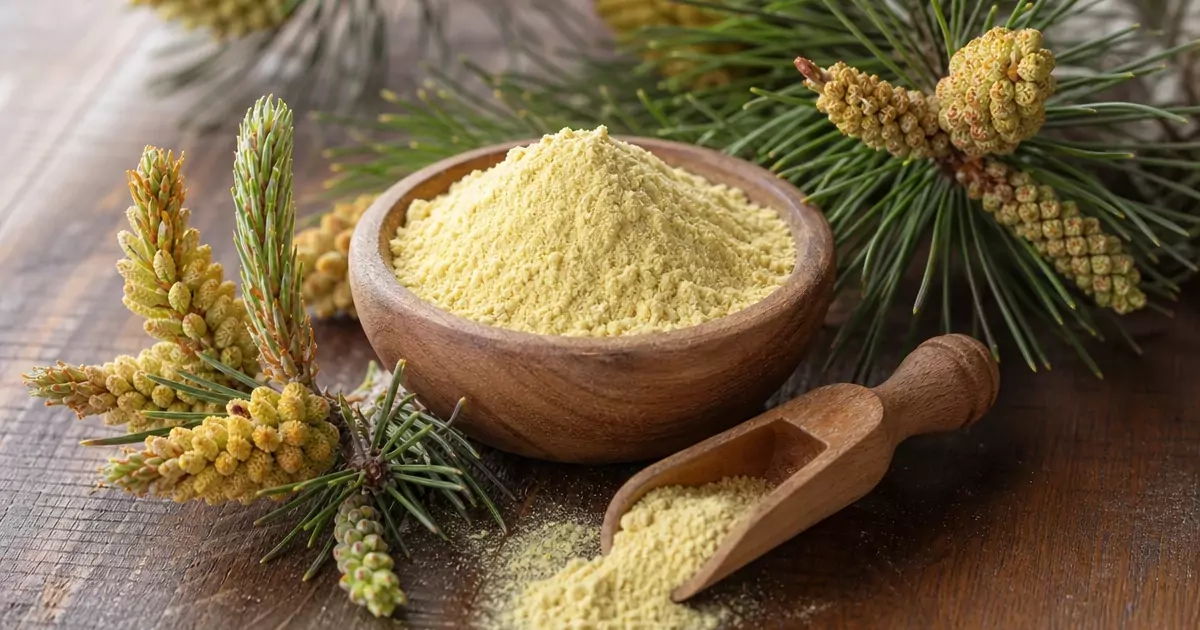
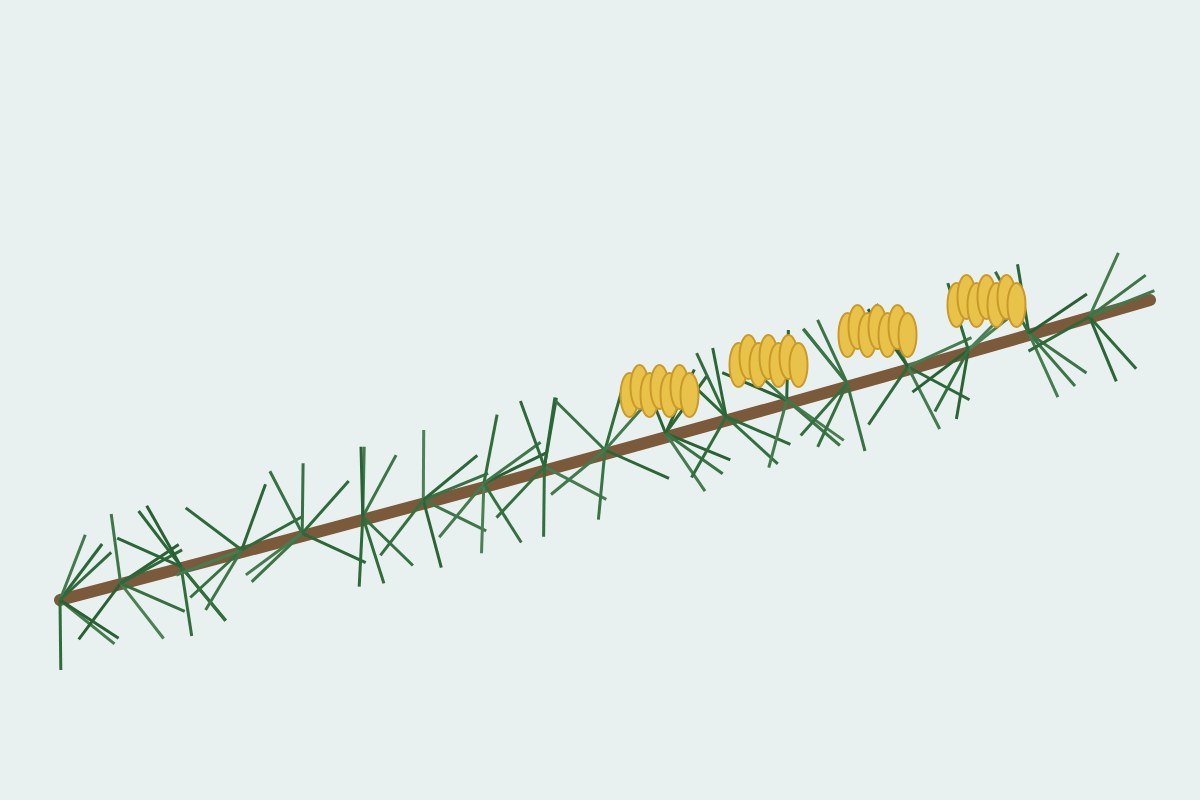
Illustration 1. Pollen forms in small yellow male cones at the base of young shoots.
It is collected during pollination, usually in late April and May, in dry sunny weather. Branches with male cones are gently bent over a paper bag and shaken, then the pollen is sifted through a fine sieve and dried in the shade. Collect it well away from roads and industrial areas.
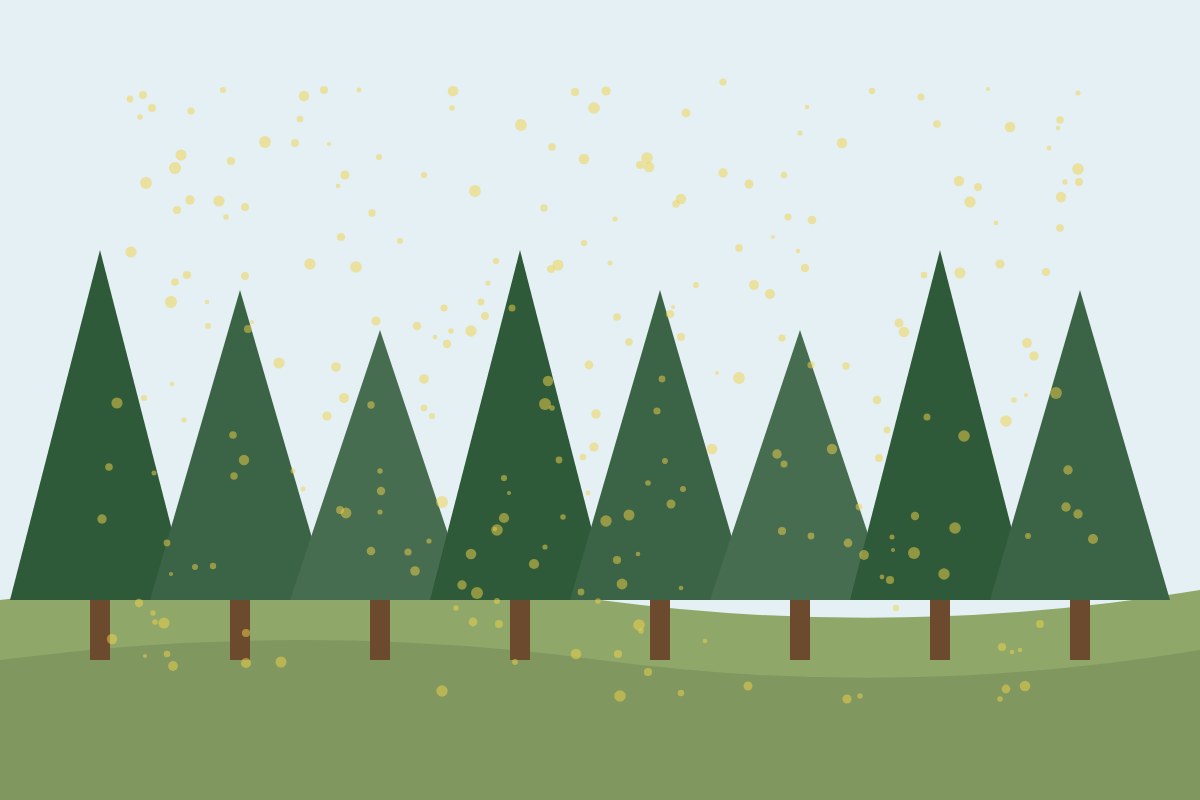
Illustration 2. In May, pine pollen literally hangs in the air.
Pollen contains proteins and amino acids, carbohydrates, fatty acids, B vitamins, vitamin E, minerals (potassium, magnesium, zinc), as well as flavonoids and phytosterols. The exact composition depends on the pine species, location and year of collection.
Supporters attribute many effects to pine pollen, from boosting immunity to raising testosterone. It is important to understand that there are very few good-quality clinical studies in humans. Laboratory and animal studies show antioxidant and anti-inflammatory activity of extracts, but this does not prove that a spoonful of pollen will have the same effect in a person.
So pine pollen is best seen as a nutritious food supplement, not as a medicine.
Start with a minimal amount, ¼ teaspoon, and watch how your body reacts. Courses are usually limited to 2–4 weeks.
Illustration 3. Store the pollen in a dry glass jar in the fridge.
Illustration 4. Honey with pollen is the simplest way to take it.
Buy pollen from reputable producers: wild pollen may contain contaminants, and unscrupulous sellers sometimes add other powders.
Illustration 5. A pine forest during pollination.
In short. Pine pollen is a nutritious supplement with a rich folk history but limited scientific evidence. Use it in moderation, starting with small amounts, and only if you have no allergy.
This article is for information only and does not replace medical advice.
© Kyiv 2026 UFL Flower Shop

Trademark UFL №191476 is used under license of the rights holder.
All rights reserved. Any use of materials without a link to the site is prohibited.

 Birthday
 Hydrangeas