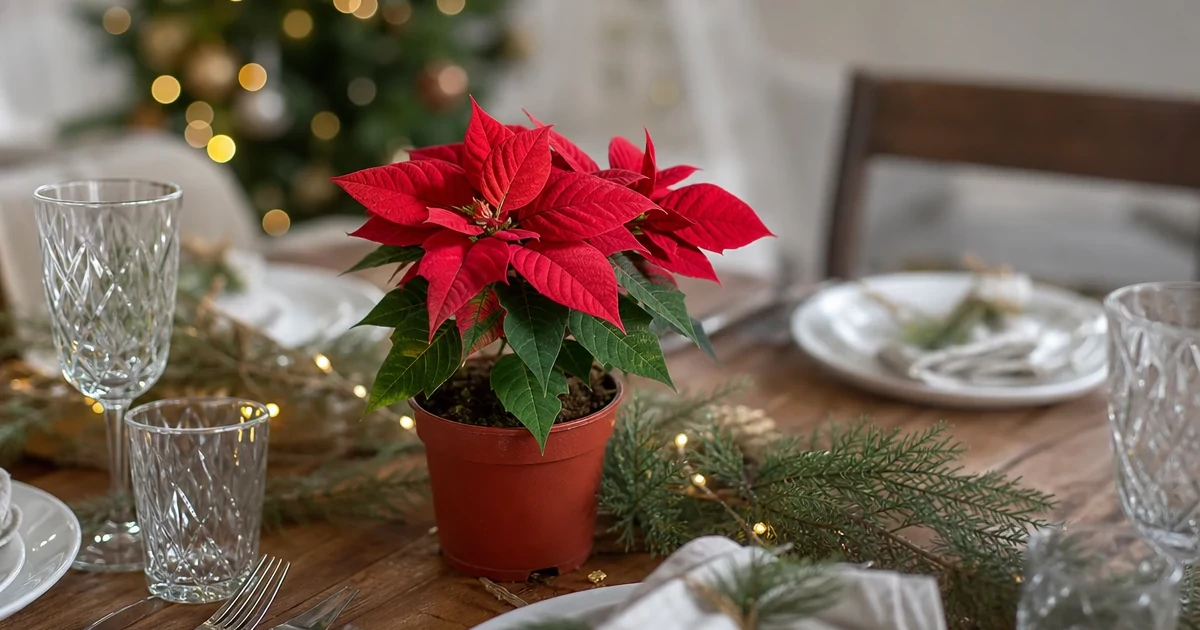
The poinsettia, or "Christmas star", is the plant of the winter holidays: its bright red "stars" appear in shops from November. Here is where the poinsettia comes from, why its leaves turn red, how to choose one, how to care for it after the holidays and how to get it to colour up again next year. This is a birth month flower; see December flowers.
Poinsettias and other festive plants are available in our potted plants section with delivery in Kyiv.
The poinsettia (Euphorbia pulcherrima) is a spurge native to Mexico, where it grows into a shrub several metres tall. It is named after Joel Poinsett, the first US minister to Mexico, who brought it to the United States in the 1820s. The bright "petals" are actually bracts — modified leaves; the true flowers are the tiny yellow beads in the centre.
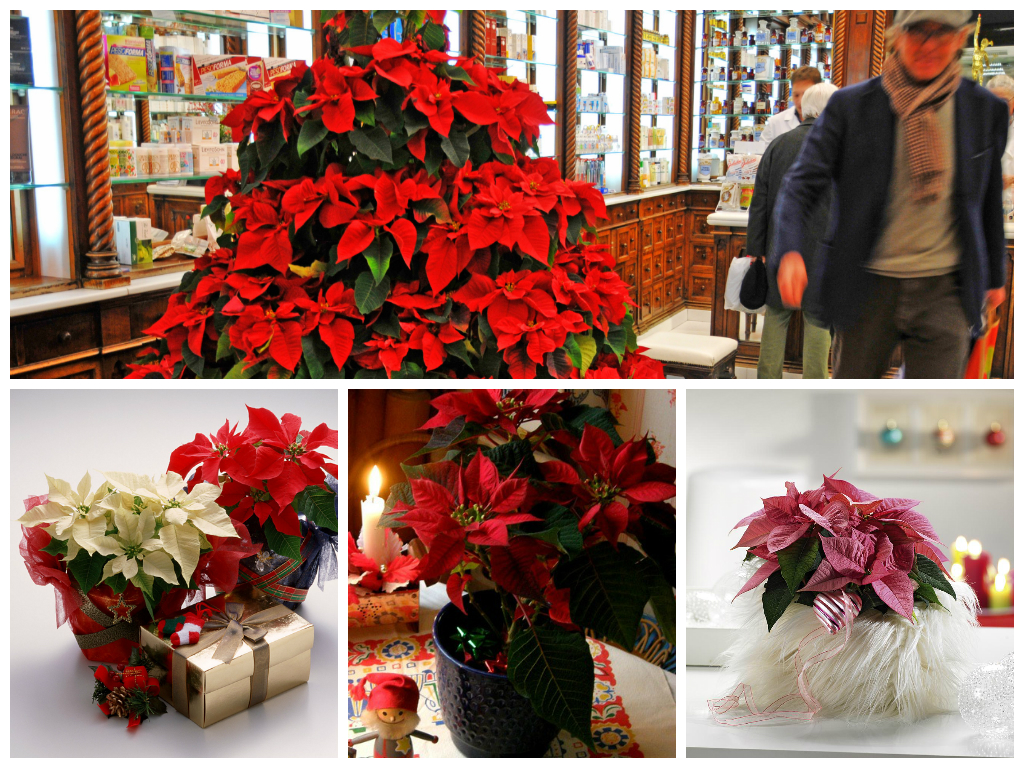
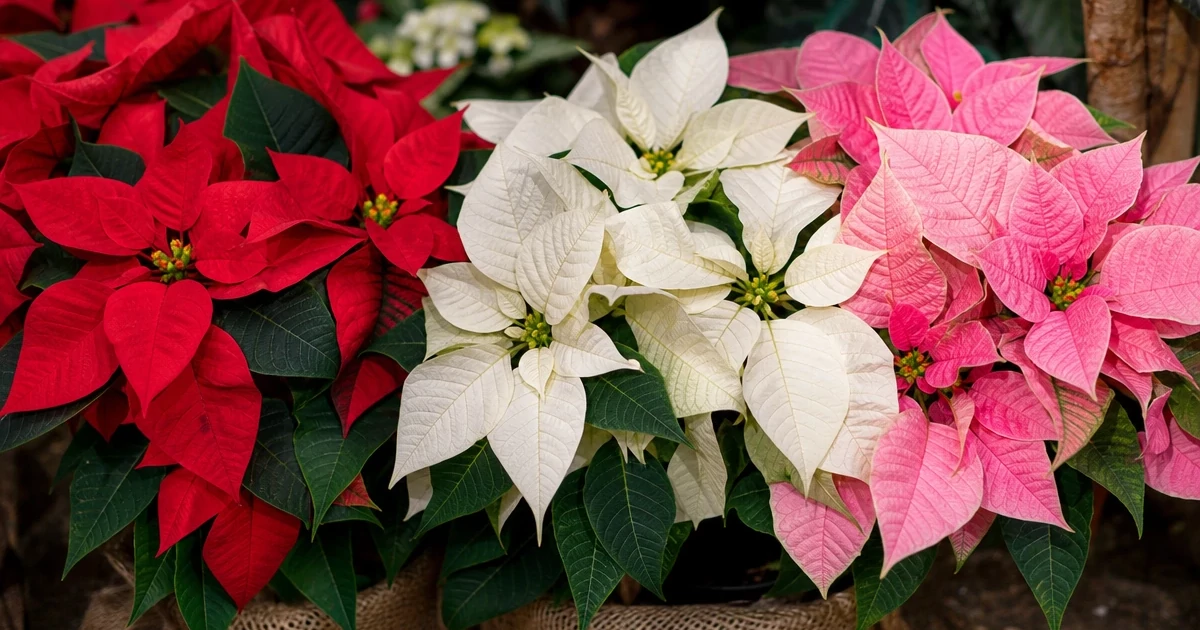
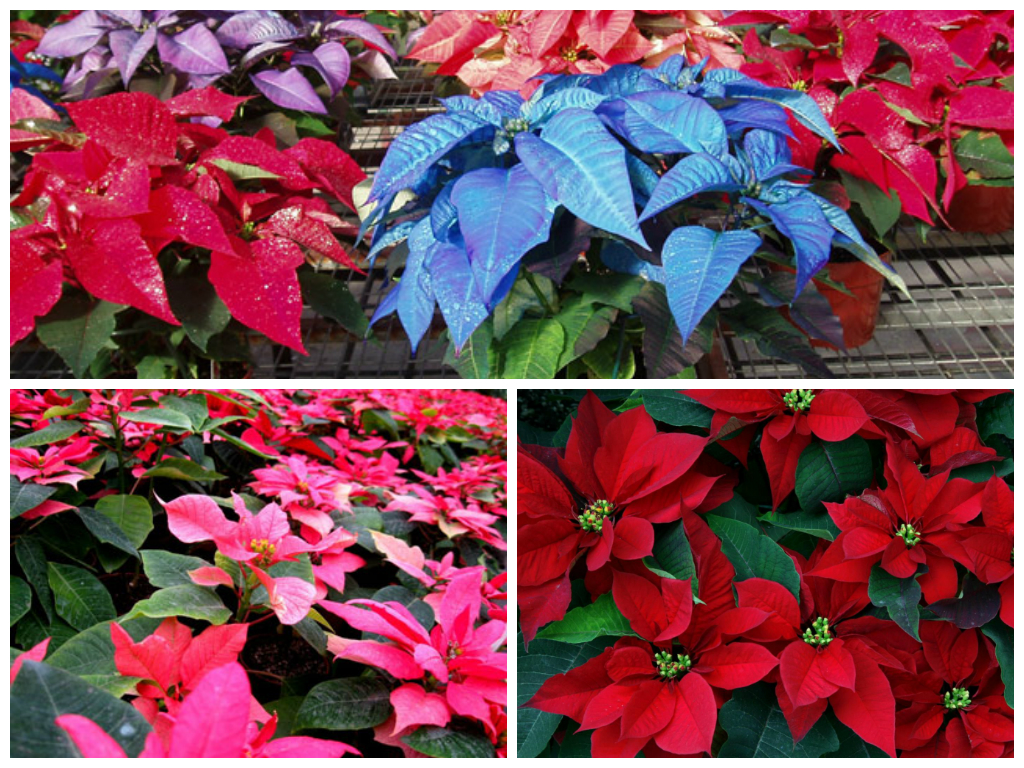
Besides classic red, there are white, cream, pink, salmon, variegated and even dyed, glittered varieties.
Dyed blue, purple or glittered poinsettias keep that colour only for the first season; later bracts come in the natural colour.
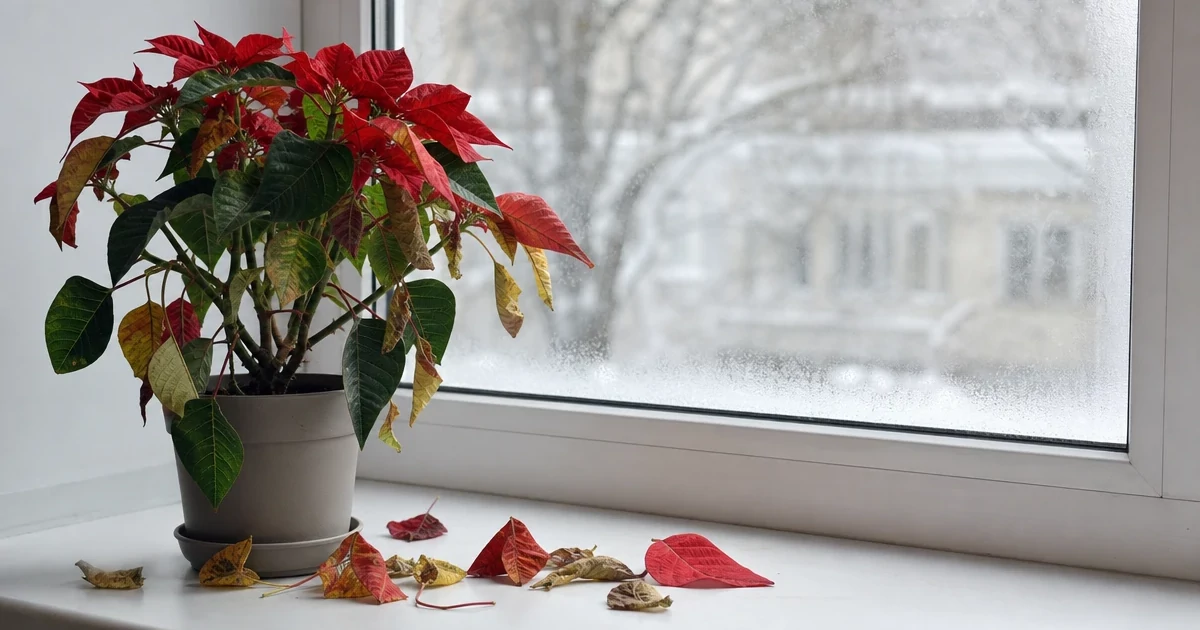
Leaf drop is usually caused by cold, draughts or overwatering.
Do not feed a poinsettia while it is in colour. From April to September, while it grows actively, give an all-purpose feed every 2–3 weeks, and from October, as the bracts form, switch to a high-potassium flowering-plant feed.
Repot in spring, after pruning, into a pot 2–3 cm wider. Use a free-draining, slightly acidic mix. A plant bought in winter does not need repotting.
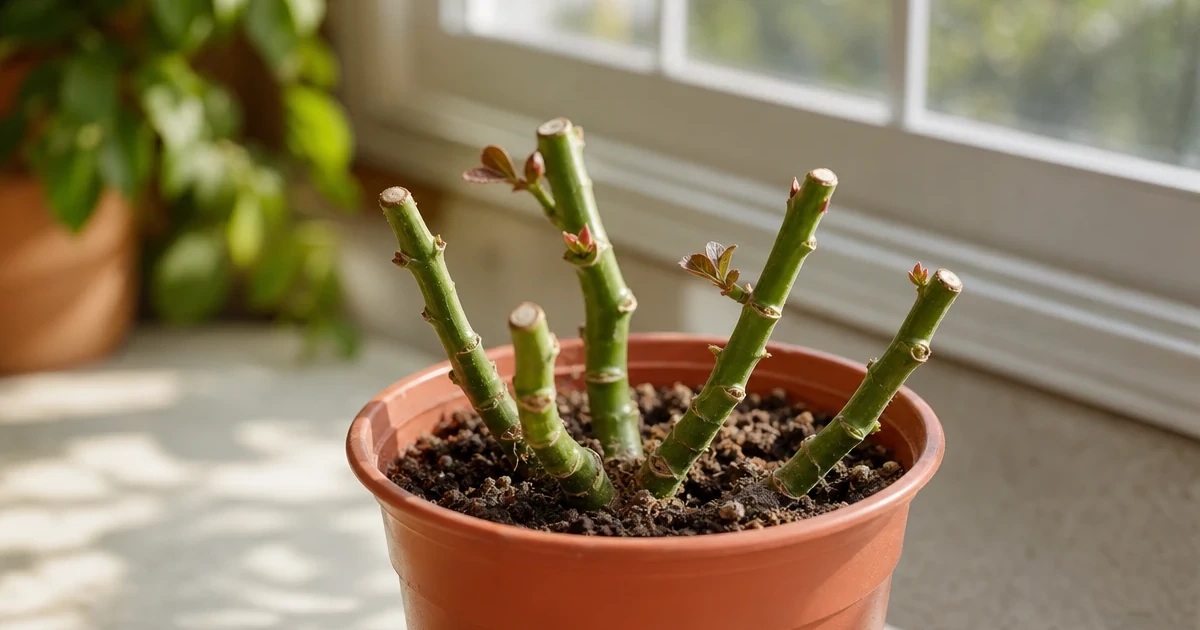
In late March or April cut the stems back to 10–15 cm above the soil, leaving 2–3 buds on each. Wear gloves: the milky sap irritates skin. Pinch out the tips in summer for a bushier plant.
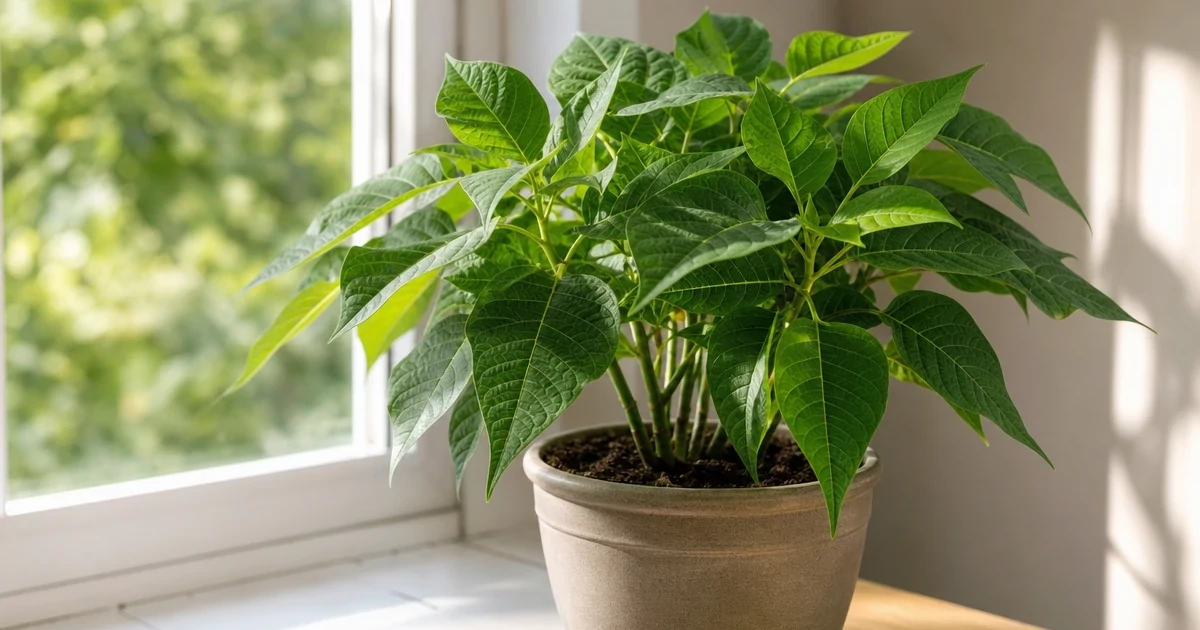
Poinsettias are short-day plants: the bracts colour only when nights are long. From early October, put the plant in complete darkness (a cupboard or thick box) for 14 hours every night and give it light by day. After 8–10 weeks the coloured tops appear — just in time for the holidays.
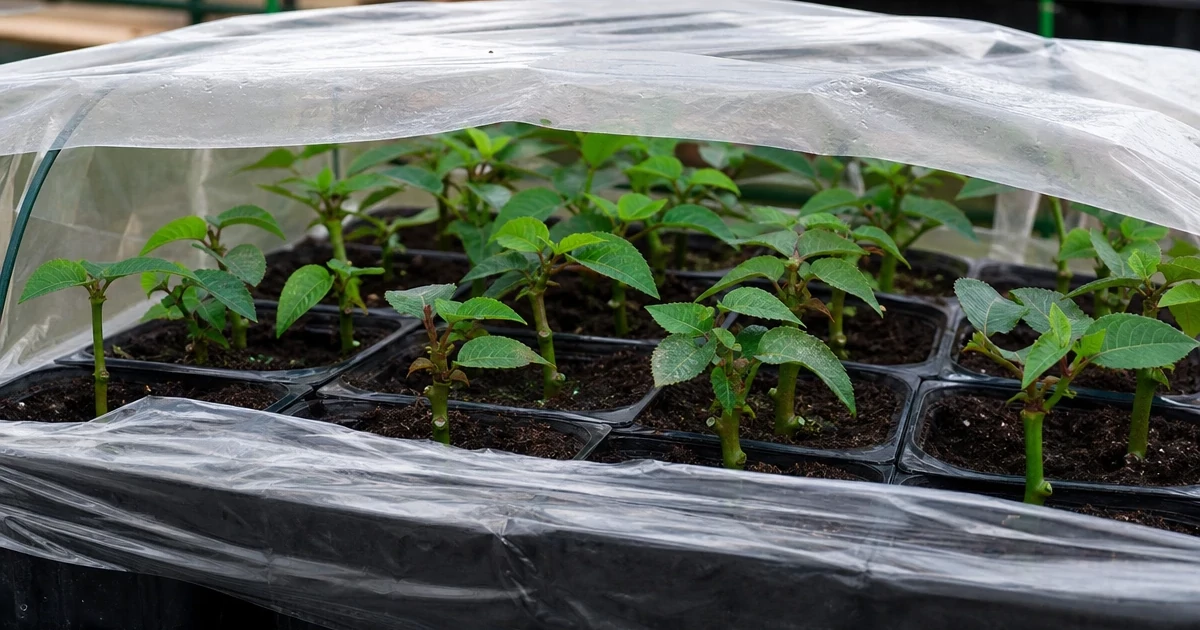
Poinsettias are propagated from tip cuttings 7–10 cm long with 3–5 leaves, taken in summer. Rinse the cut in warm water to wash off the milky sap, let it dry briefly and insert into a moist peat-perlite mix. At 22–25 °C under film, roots form in about 3–4 weeks.
| Period | What to do |
|---|---|
| December — February | In colour: bright light, 18–22 °C, moderate watering, no feeding |
| March — April | Water less, prune, repot |
| May — September | Growth: regular watering, feeding, pinching out, cuttings |
| October — November | 14 hours of darkness nightly, high-potassium feed |
The poinsettia is a spurge; its milky sap can irritate skin and mucous membranes, and eating it may upset the stomach of children and pets. The popular myth that it is deadly is not supported, but it is still best kept out of reach of cats, dogs and toddlers. More in houseplants toxic to pets and children.
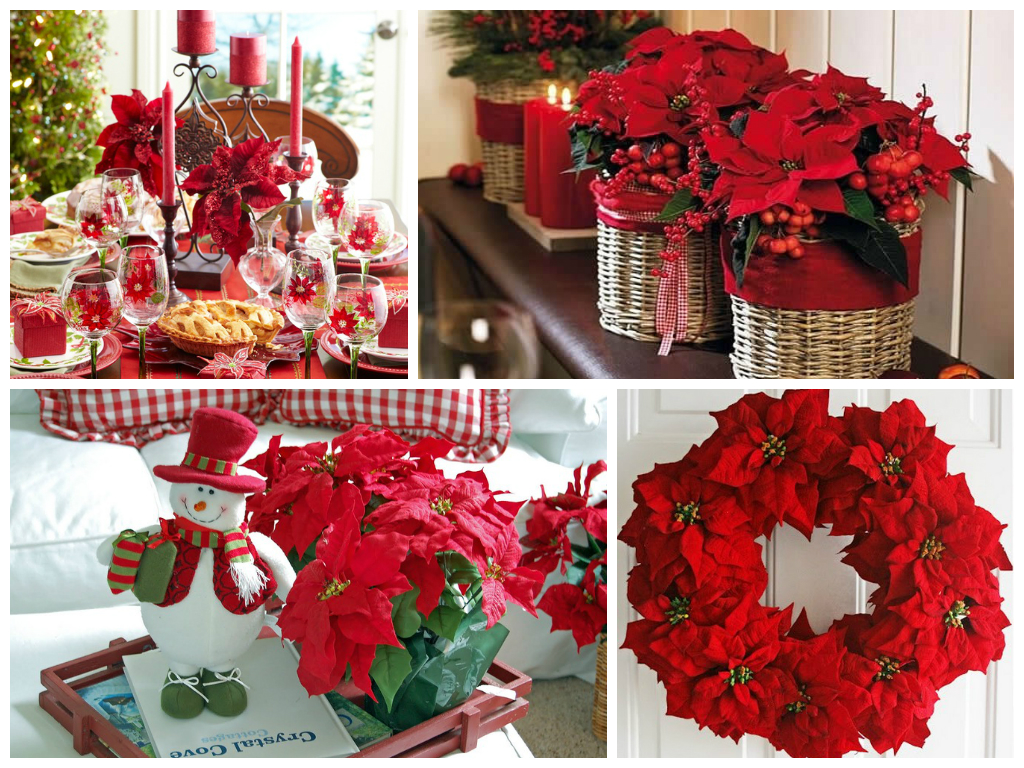
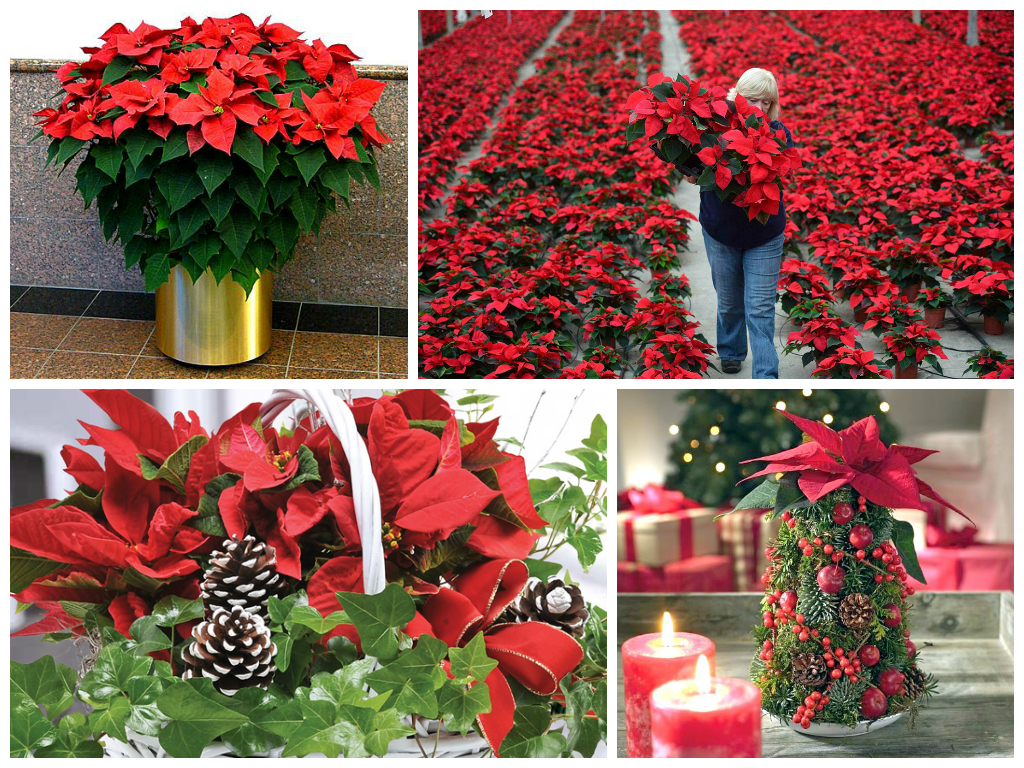
A poinsettia is a great winter gift for colleagues, neighbours and family: it lasts longer than a bouquet and brings instant festive cheer. It is rarely used as a cut flower (the stems bleed sap), but the pot fits easily into arrangements with conifer, cones, candles and red ribbons.
Usually because of cold during transport, draughts, overwatering or a sudden change in light.
From October, give it 14 hours of total darkness every night for 8–10 weeks.
Moderately: the sap irritates the mouth and stomach. It rarely causes serious poisoning, but keep it out of reach.
With good care, for many years: it is a perennial shrub. Most are thrown out after the holidays only because people do not know how to make them colour up again.
Yes, once nights are reliably above +15 °C. Place the pot in partial shade, sheltered from wind and rain, and bring it in during September before it turns cold.

Author: Maria Svitlovir
Graduated from Taras Shevchenko National University of Kyiv, Institute of Biology and Medicine (2001). BSc in Biology, MSc in Horticulture. Writes about plants, works at a garden centre selecting and repotting plants, and contributes to plant reference guides.
© Kyiv 2026 UFL Flower Shop

Trademark UFL №191476 is used under license of the rights holder.
All rights reserved. Any use of materials without a link to the site is prohibited.


 Birthday
 Hydrangeas