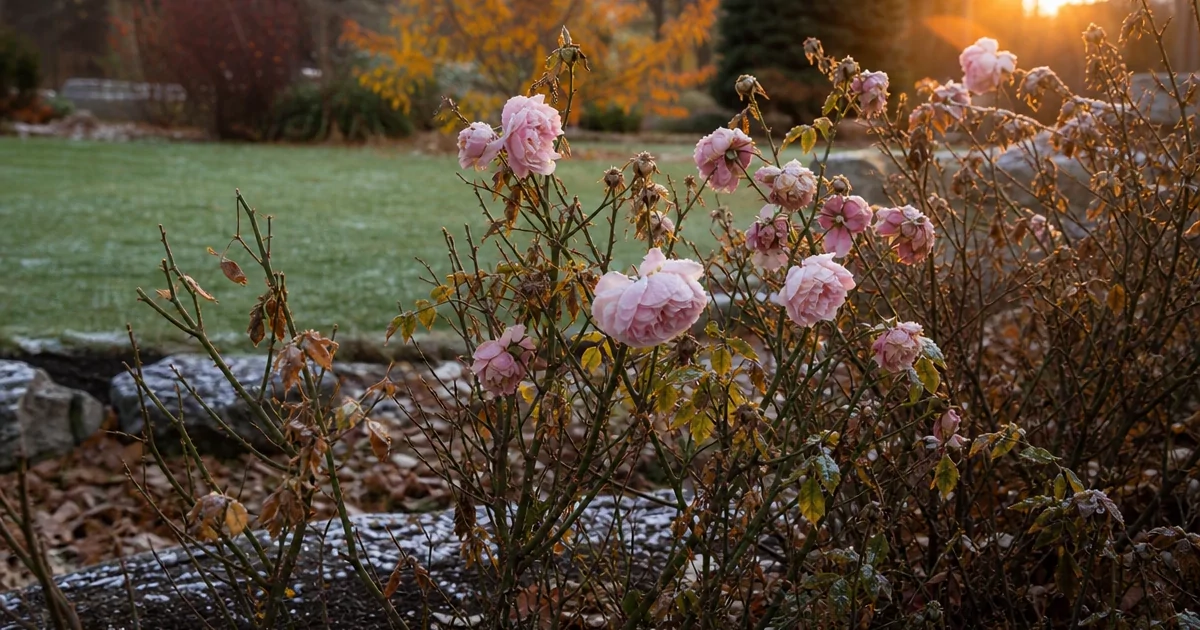
Most garden roses in Ukraine overwinter successfully if they are prepared in advance. The key is to let the shoots ripen, not to cover the bushes too early and to protect them from temperature swings and damp. Here is a step-by-step guide to preparing roses for winter, plus how to take rose cuttings in autumn. Everything else about types, colours and care is in our complete guide to roses. For when and how to cut back, see how to prune roses. Timing and technique for autumn planting are in planting roses.
Roses for your home are in our potted plants section, and cut ones in spray roses.
From late summer roses are no longer fed with nitrogen: it encourages soft new shoots that won't have time to harden and will be killed by frost. Potassium and phosphorus fertilisers are used instead. From September it is better not to cut the flowers but to let hips form — a signal for the bush to prepare for dormancy.
In spring the cover is removed gradually as the soil thaws, so the bushes don't get scorched by the sun. Other autumn garden jobs are covered in "Autumn garden care".
Autumn pruning is a good moment to take cuttings of a favourite variety. Results depend on the variety: some roses root easily, others poorly.
After steady light frosts of about −3…−5 °C, not at the first cold snap.
Only unripe, damaged and diseased shoots; the main pruning is done in spring.
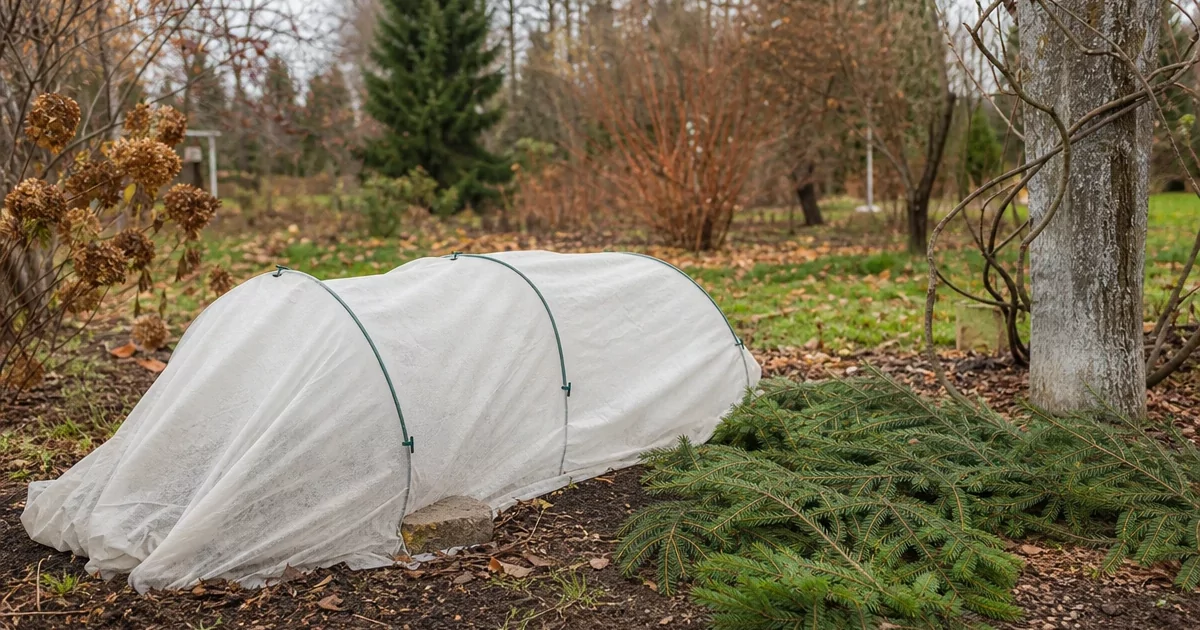
Not tightly: condensation builds up under the film. Horticultural fleece or spruce branches are better.

Author: Maria Svitlovir
Graduated from Taras Shevchenko National University of Kyiv, Institute of Biology and Medicine (2001). BSc in Biology, MSc in Horticulture. Writes about plants, works at a garden centre selecting and repotting plants, and contributes to plant reference guides.
© Kyiv 2026 UFL Flower Shop

Trademark UFL №191476 is used under license of the rights holder.
All rights reserved. Any use of materials without a link to the site is prohibited.

 Birthday
 Hydrangeas