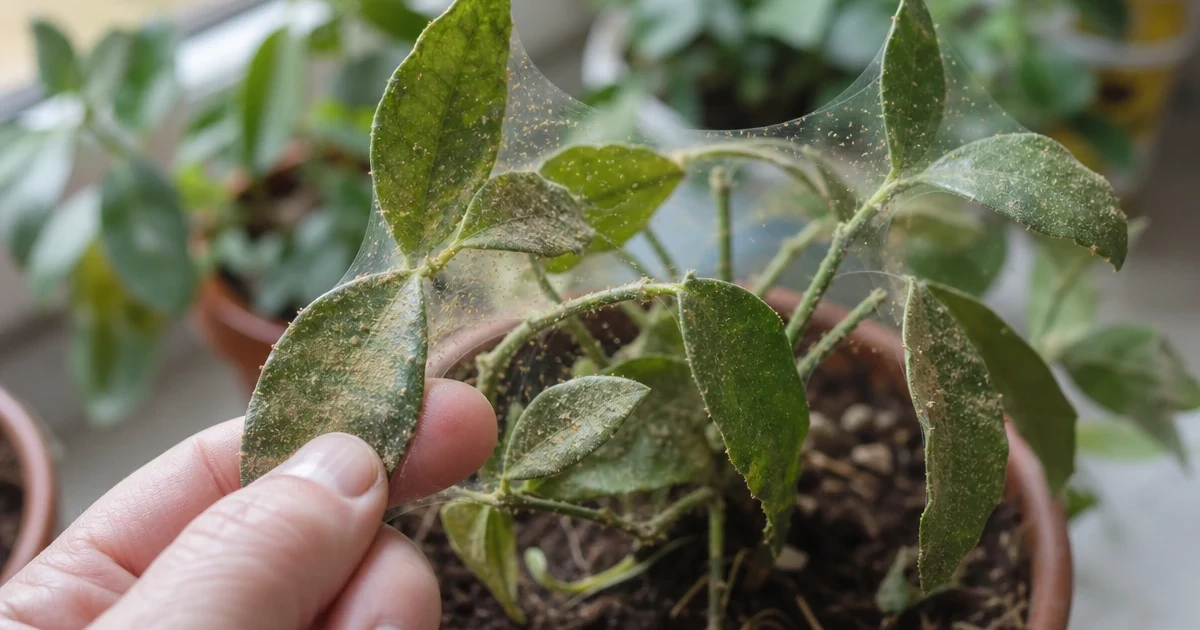
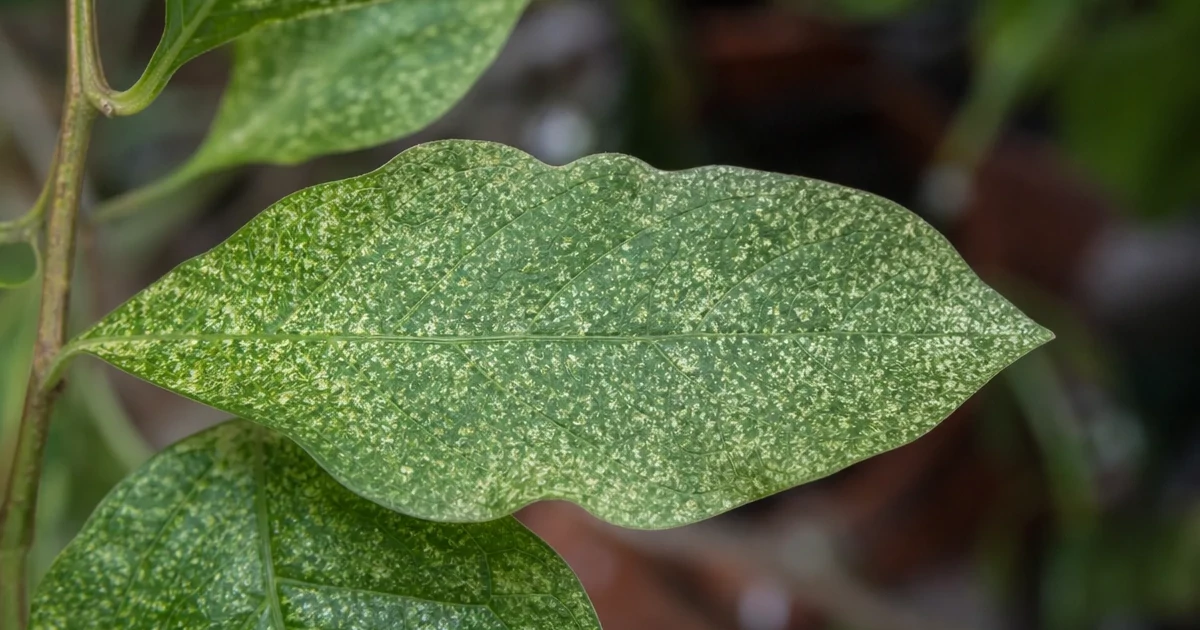
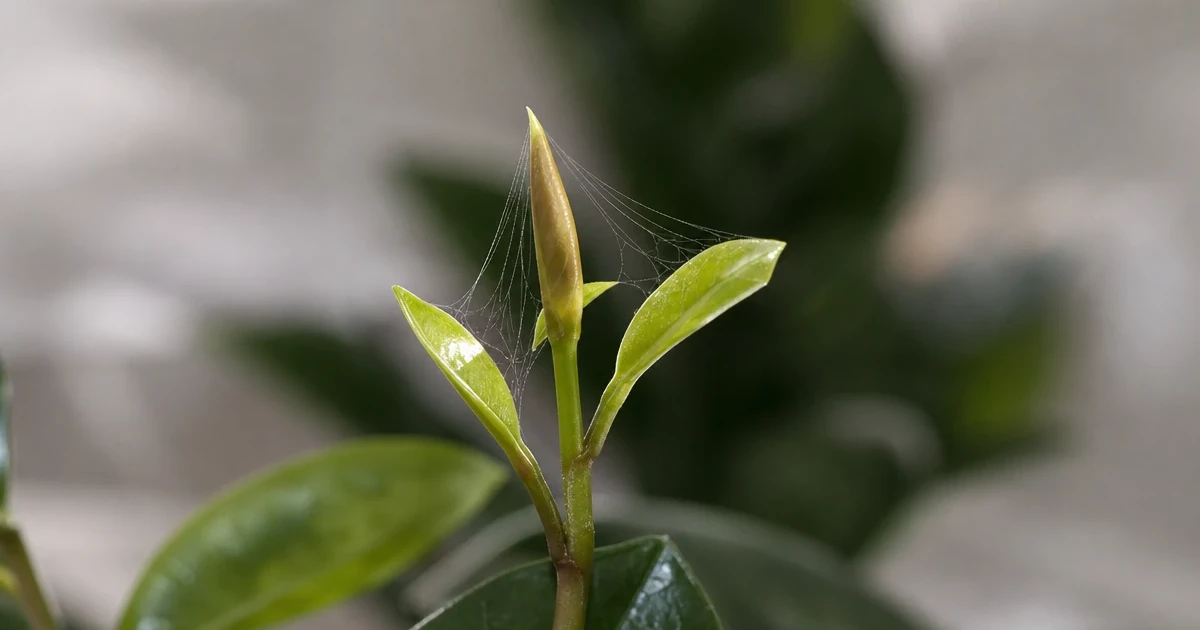
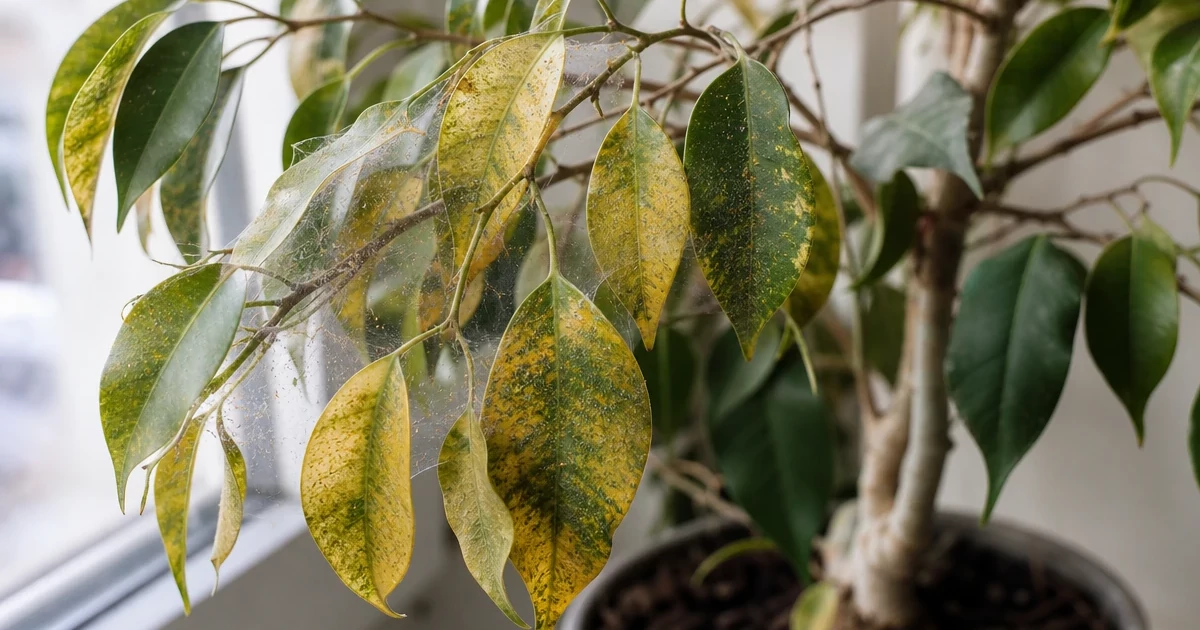
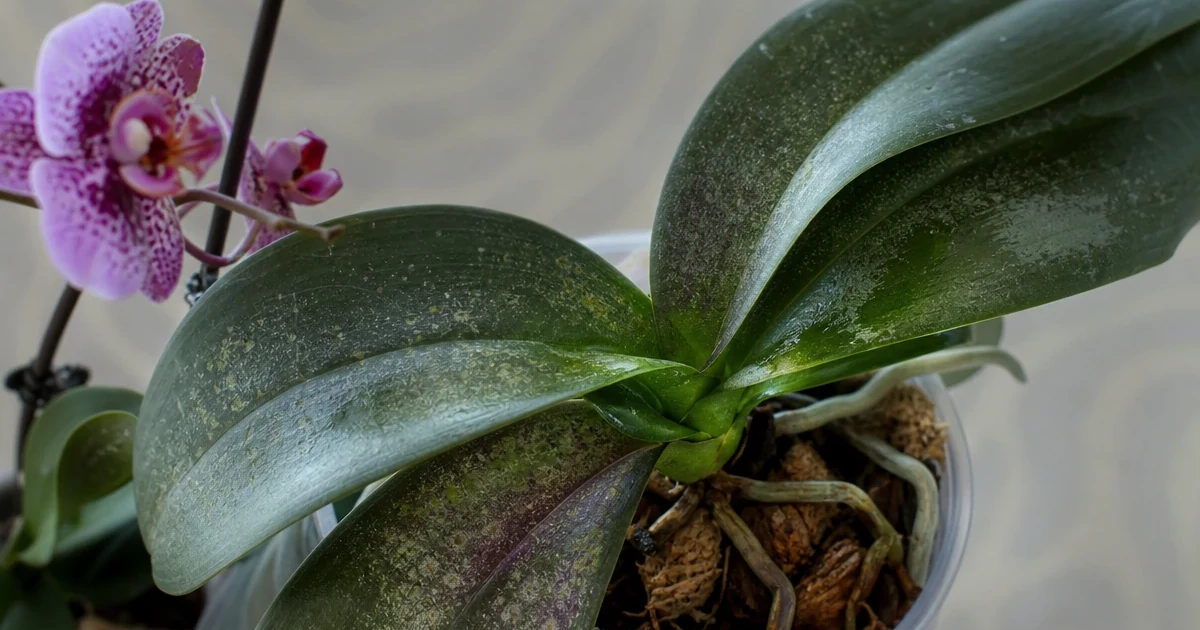
Spider mites are the most common houseplant pest during the heating season. They are almost invisible to the naked eye, so most owners only notice the damage: dull, dusty-looking leaves covered in tiny pale specks and fine webbing on the stems. Mites multiply within days, so act straight away. Here is how to identify them, how to treat your plants and how to stop them coming back, based on Google data and UFL’s own observations.
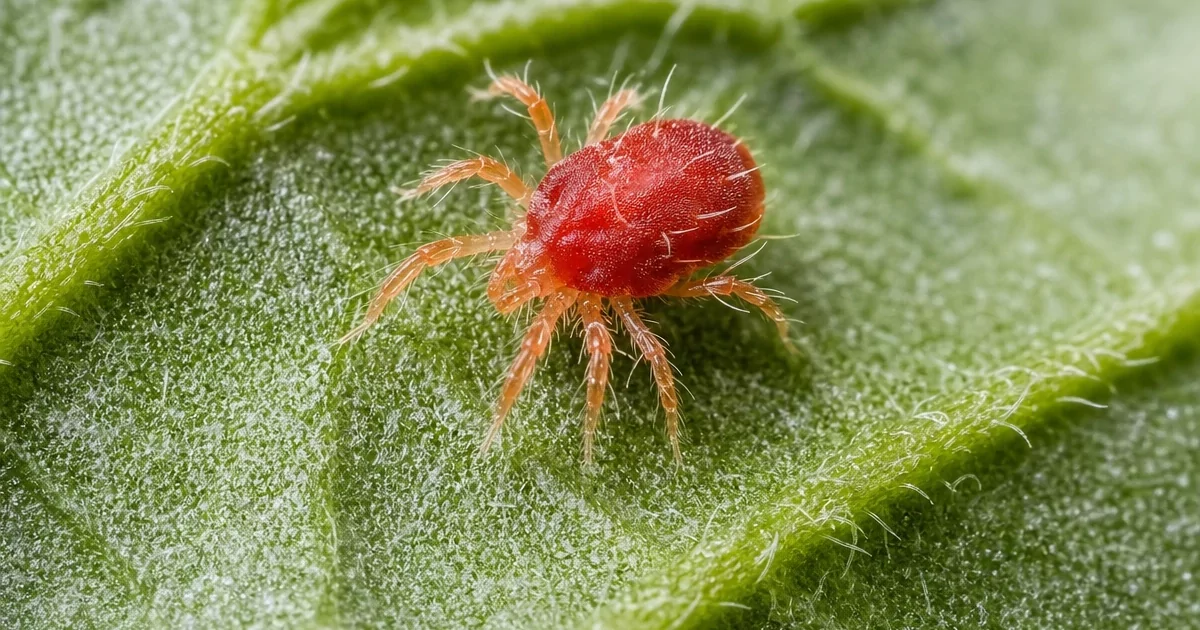
It is not an insect but a tiny arachnid (usually Tetranychus urticae), 0.3–0.5 mm long. Adults have eight legs and an oval body that is yellowish-green, orange or red; overwintering females often turn red. The round, translucent eggs sit on leaf undersides. Mites live in colonies, suck the sap out of leaf cells and spin webbing that they use to move between stems and plants.
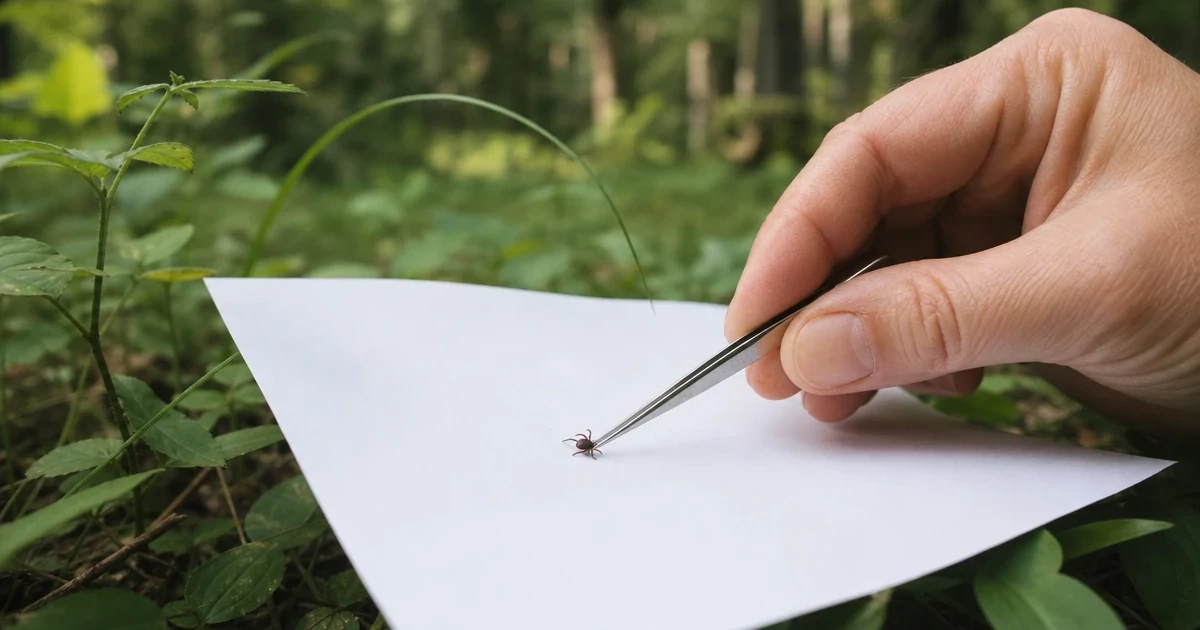
The simplest test: tap a branch over a sheet of white paper. If tiny moving “specks of dust” appear, they are mites. With a 10× hand lens they are easy to see.
Speckling can also come from thrips or sunscorch, and yellowing from watering mistakes. Compare symptoms in our guide to houseplant problems.
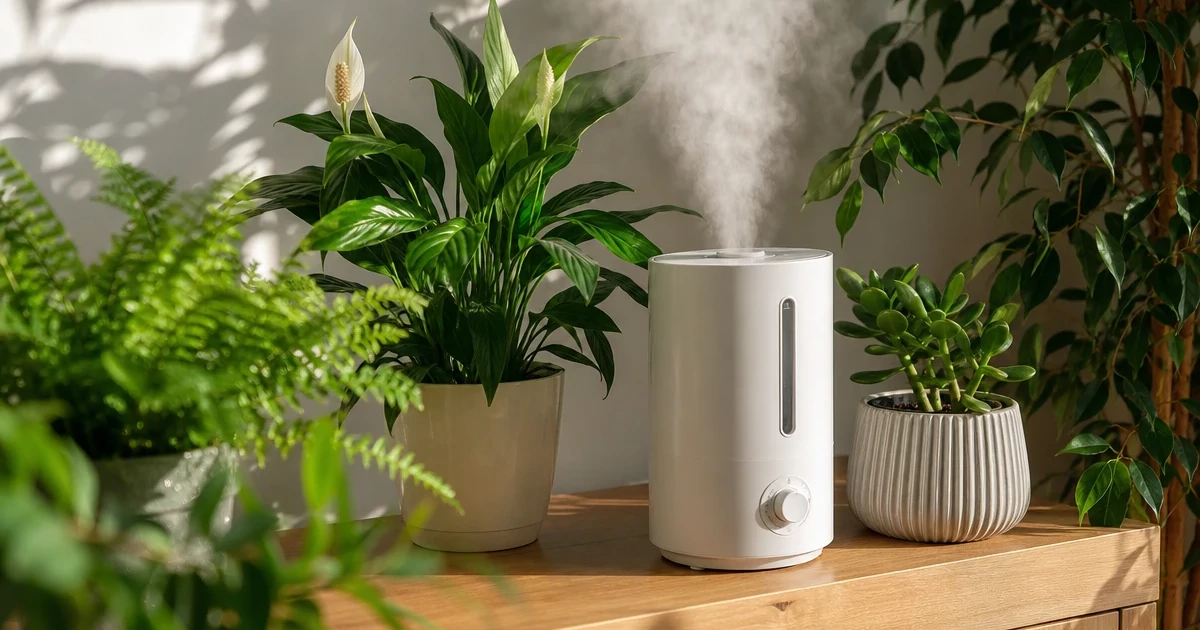
Mites love warmth and dry air: at 25–30 °C and humidity below 50 % a new generation develops in about a week, and a female lays up to a hundred eggs. That is why outbreaks peak in winter near radiators and in summer on sunny windowsills — see our tips on houseplant care in the heating season. Mites arrive on new plants, cut flowers, soil, clothing or through an open window, then spread to neighbouring plants along their webbing.
The most vulnerable are figs (including the fiddle leaf fig), potted roses, hydrangeas, croton, schefflera, dracaenas, alocasia, citrus, ivy and orchids. Tough-leaved succulents and plants with hairy leaves are attacked less often but are not immune.
Mites are not insects, so ordinary insecticides are useless against them. You need a miticide or a combined insecticide-miticide:
| Active ingredient | Product examples | Notes |
|---|---|---|
| Aversectin C, abamectin | Fitoverm, Vertimec | Biologically derived, the usual indoor choice; kills mobile stages |
| Bromopropylate | Neoron | A dedicated miticide, partly effective on eggs |
| Pirimiphos-methyl | Actellic | Insecticide-miticide with a strong smell and higher toxicity — balcony or outdoors only |
| Imidacloprid, thiamethoxam | Confidor, Actara | Do not work on mites: they target insects |
Mites quickly become resistant to a single active ingredient, so rotate products from different groups if outbreaks recur. Follow the label for dose and number of treatments, wear gloves, ventilate the room and keep children and pets away.
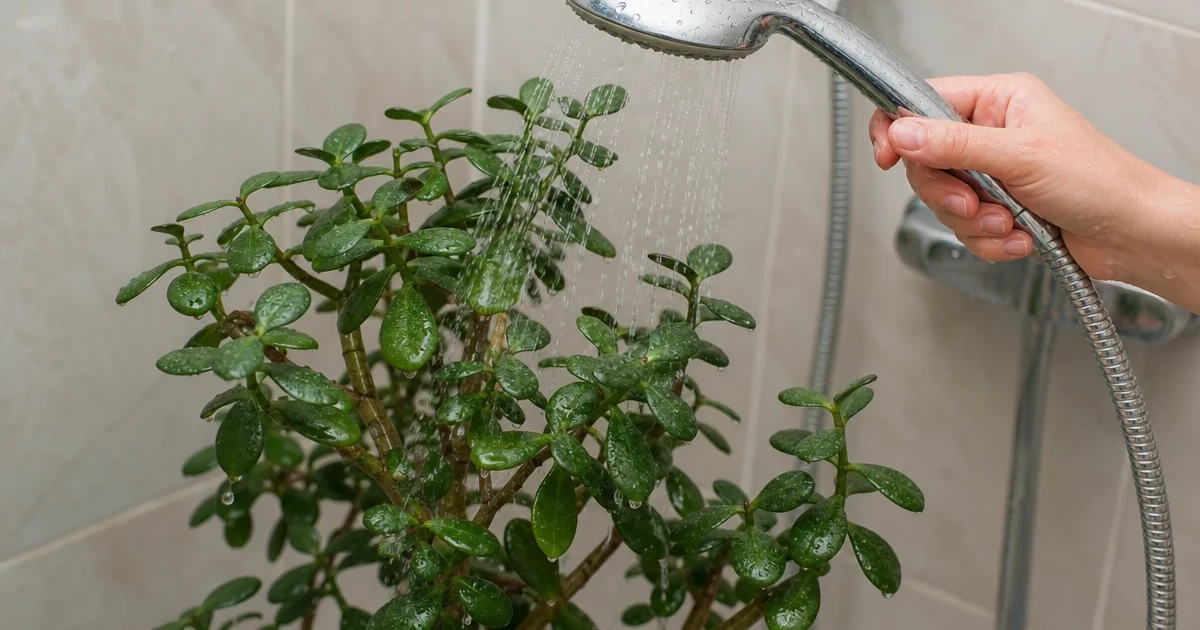
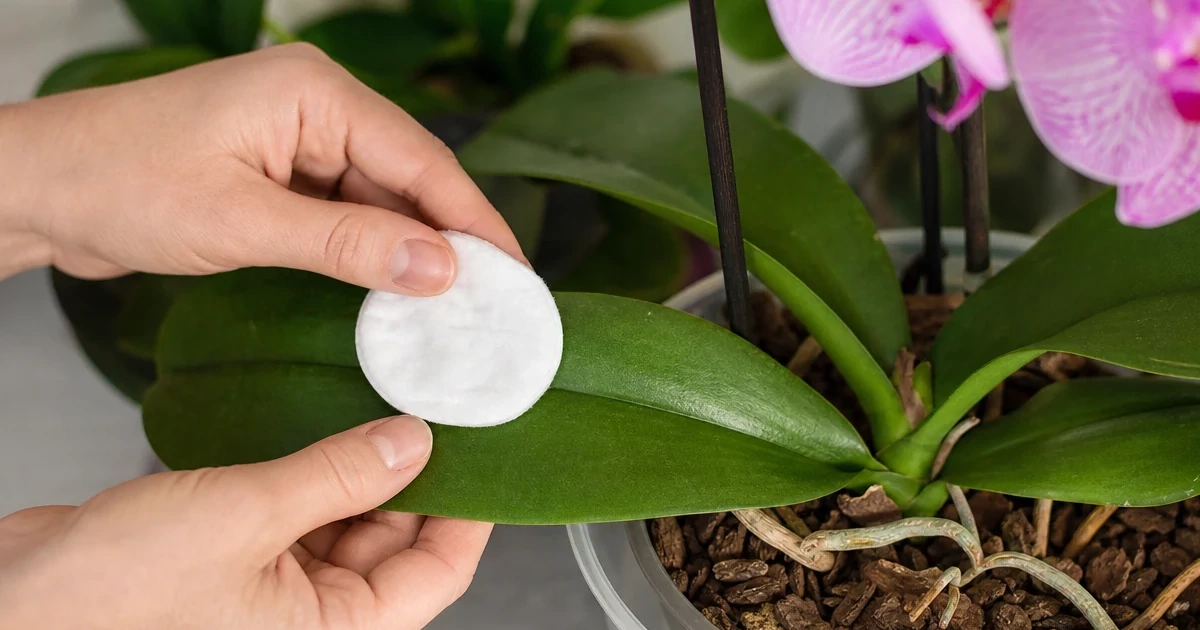
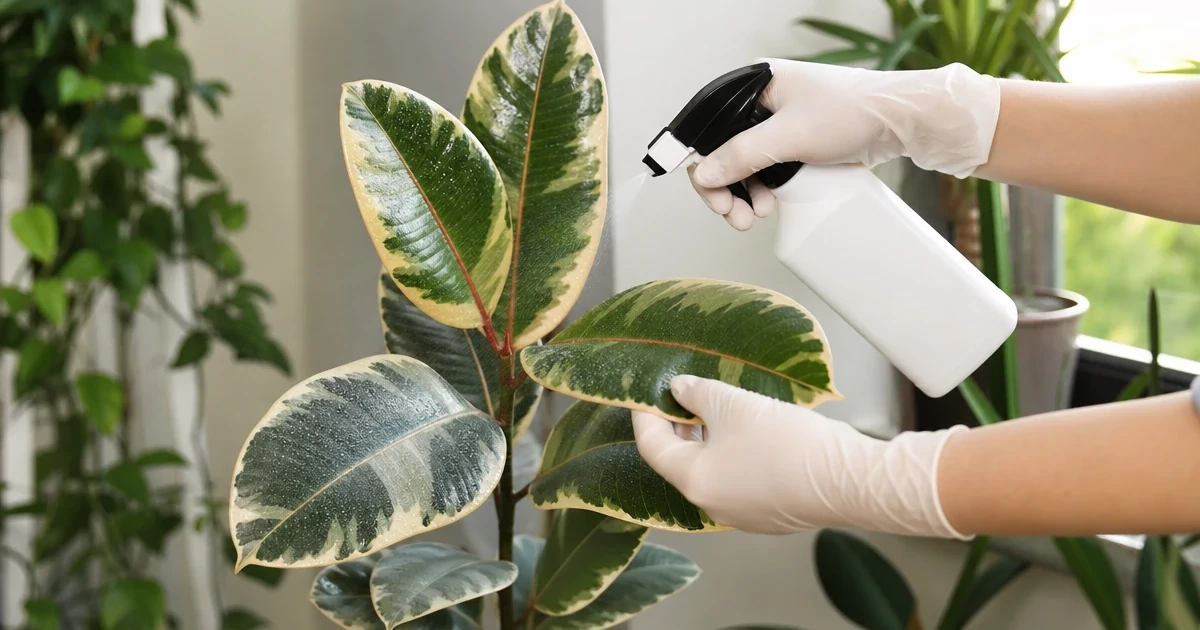
Home remedies suit early infestations or as a supplement to treatment:
If specks and webbing return after 2–3 rounds, switch to a miticide.
Healthy plants are attacked less often, so avoid common houseplant care mistakes.
No. Spider mites feed only on plant sap, do not bite people or pets and do not carry disease. They are unrelated to the ticks found in long grass. The only real risk comes from chemical treatments, so follow safety precautions.
Usually 3–4, 5–7 days apart, so you kill the mites that hatch from eggs after each round.
Sometimes, at an early stage, if you wash the plant weekly and raise humidity. A large colony needs a miticide.
No. Actara and Confidor target insects, and mites are arachnids. Use a miticide, for example one based on aversectin or abamectin.
Eggs that survived treatment, warm dry air, or untreated neighbouring plants. Treat every plant nearby and the windowsill too.
Yes, it is the same species and the principles are similar, but vegetable gardens need products with a pre-harvest interval.

Author: Maria Svitlovir
Graduated from Taras Shevchenko National University of Kyiv, Institute of Biology and Medicine (2001). BSc in Biology, MSc in Horticulture. Writes about plants, works at a garden centre selecting and repotting plants, and contributes to plant reference guides.
© Kyiv 2026 UFL Flower Shop

Trademark UFL №191476 is used under license of the rights holder.
All rights reserved. Any use of materials without a link to the site is prohibited.

 Birthday
 Hydrangeas