
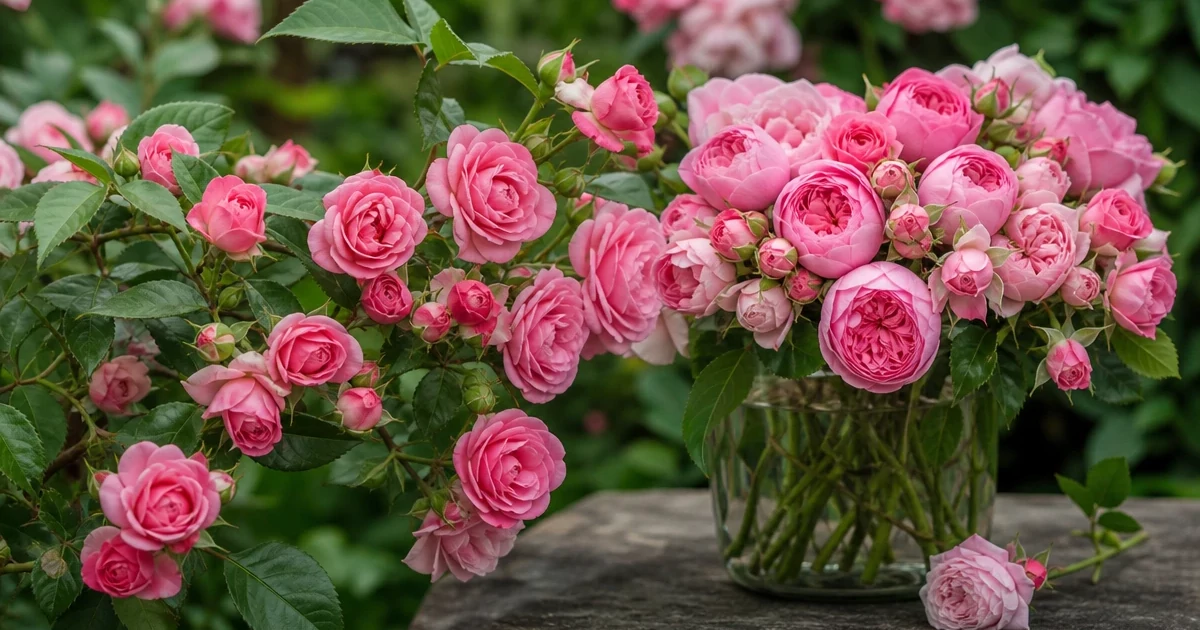
A spray rose is not a separate species but a format: several small flowers and buds open on one stem. That is why even a small bouquet of spray roses looks lush and natural, as if freshly cut from the garden. Here is how spray roses differ from classic single-stem roses, which varieties are most popular and how to keep them fresh longer.
In floristry a spray rose is a rose with 3–10 flowers, 3–6 cm across, on a single stem. These varieties are greenhouse-grown like classic single-stem roses but cut as a whole branch carrying open flowers, half-open blooms and tight buds — so the bouquet keeps changing. Do not confuse them with garden “shrub roses” (park roses and shrubs), which are plants for the garden rather than cut flowers.
See also floribunda roses and rose varieties for bouquets.
Availability depends on season and supply, so check with your florist.
With good care spray roses last 7–10 days.
Spray roses also fill boxes and baskets beautifully. Browse spray roses or peony-shaped roses. The full flower catalogue is in types of flowers.
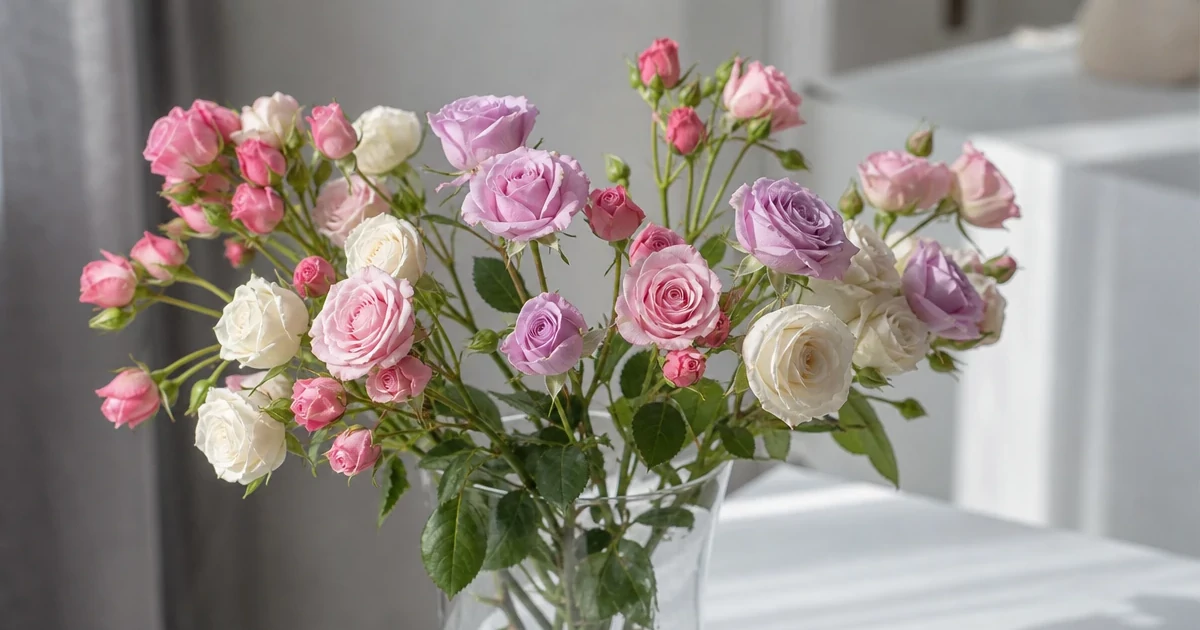
View full-size photoSpray roses in a vase: each stem has open blooms and buds of different varieties.
Usually 3–10 flowers and buds, depending on variety and stem length.
With good care, 7–10 days, with buds continuing to open.
A spray rose is a florist’s cut stem with several flowers; floribunda is a garden rose group that also flowers in clusters.

Author: Maria Svitlovir
Graduated from Taras Shevchenko National University of Kyiv, Institute of Biology and Medicine (2001). BSc in Biology, MSc in Horticulture. Writes about plants, works at a garden centre selecting and repotting plants, and contributes to plant reference guides.
© Kyiv 2026 UFL Flower Shop

Trademark UFL №191476 is used under license of the rights holder.
All rights reserved. Any use of materials without a link to the site is prohibited.

 Birthday
 Hydrangeas