
 Birthday
 Hydrangeas
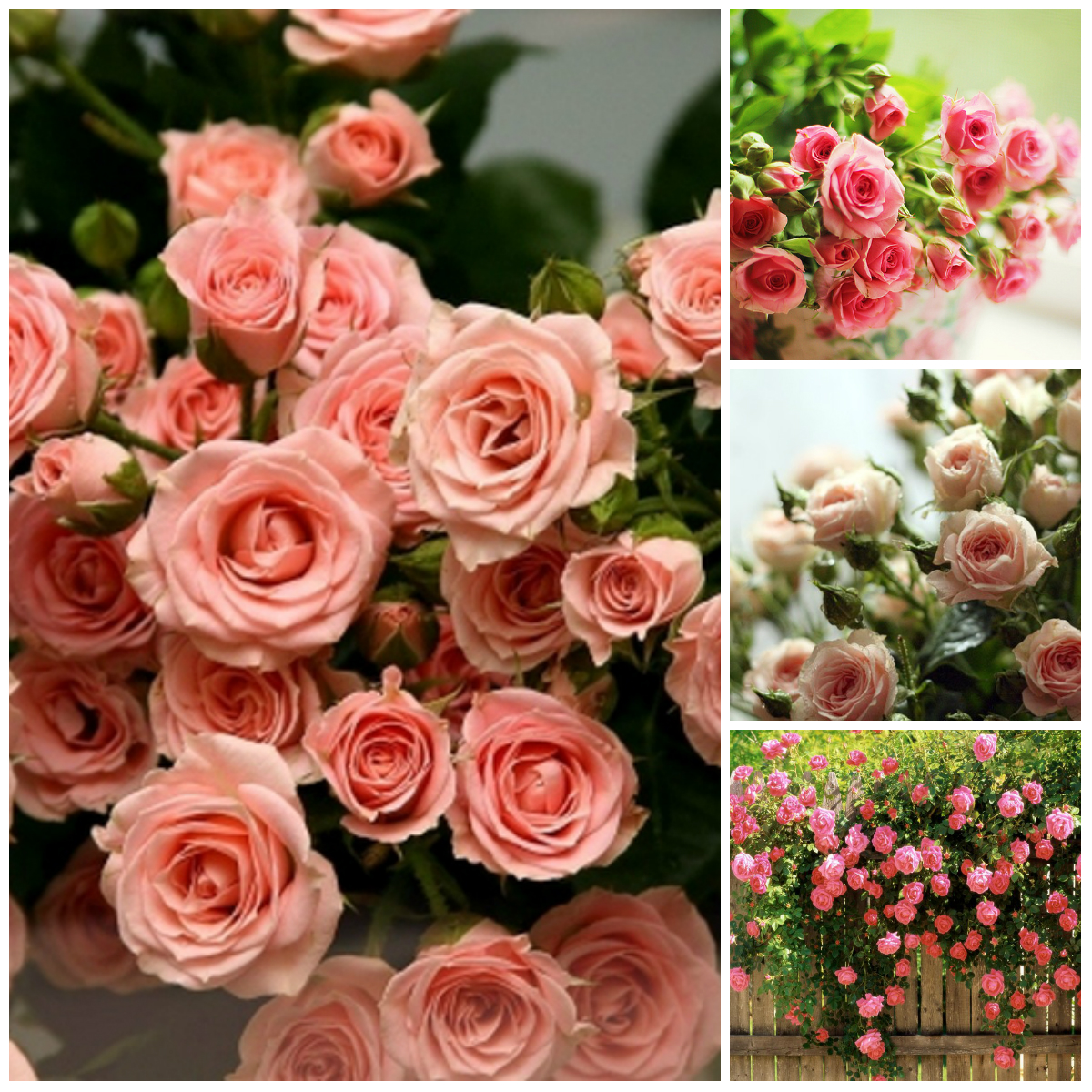
Spray roses are roses that carry not one large bloom per stem but a whole branch of small flowers. A single stem looks like a tiny bouquet, so even 7–9 stems make a full, lively arrangement. Here is how they differ from standard roses, which varieties you are likely to find, who they suit best and how to make the bouquet last.
What a spray rose is
In gardening, "shrub roses" can mean any rose that grows as a bush — see our guide to shrub roses for the garden. Florists use the term more narrowly: cut spray roses whose stem branches and carries several buds.
- A stem usually has 5–10 buds (anywhere from 3 to 15), and they open at different times, so the bouquet changes from day to day.
- Blooms are small, 3–5 cm across; peony-type varieties are denser and a little larger.
- Cut stems are typically 40–60 cm long — ideal for compact and round bouquets.
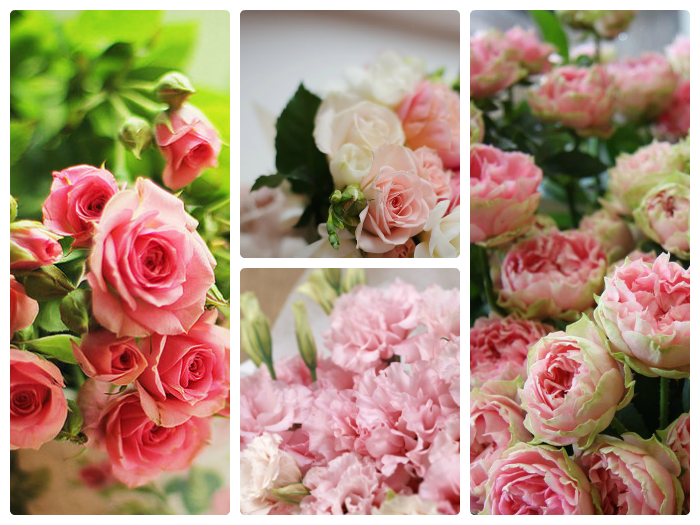
Varieties you will often see
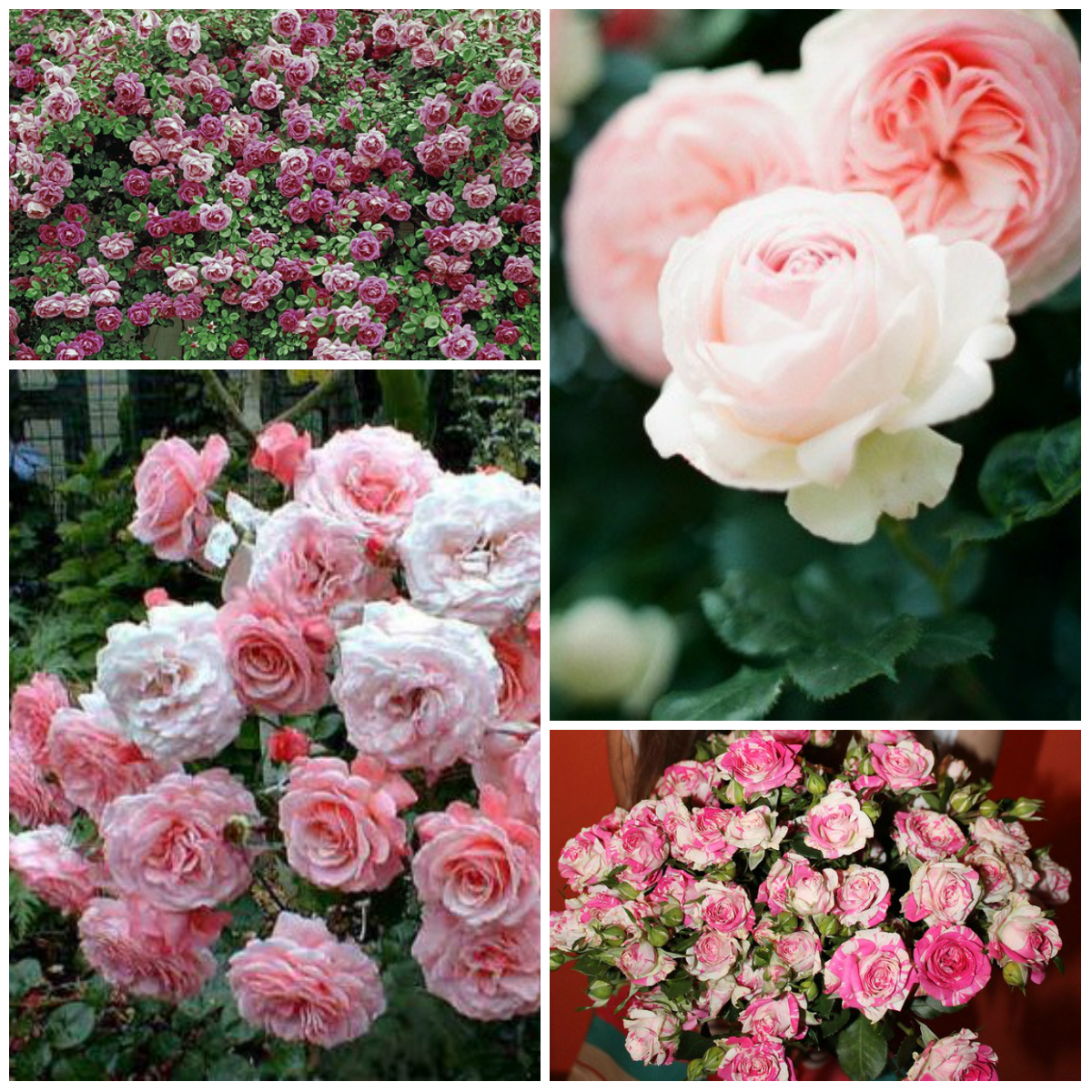
The range changes with the season and the grower, but a few varieties have become classics:
- Lydia — light pink, one of the best-known spray roses.
- Yana — soft pink with a creamy tone.
- Snowflake — white, popular in wedding floristry.
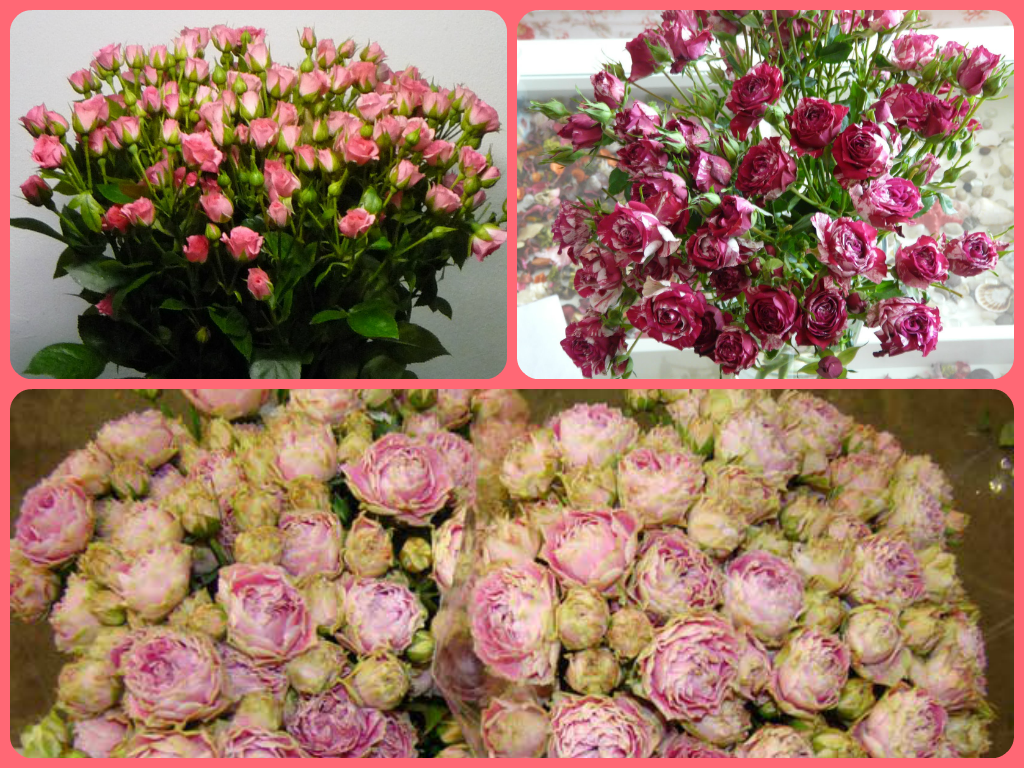
- Lady Bombastic and Misty Bubbles — peony-type with dense, rounded buds.
- Rubicon — deep red, for a classic look in a compact format.
If you want a specific shade, it is more reliable to describe the colour and mood to your florist than to name a variety: similar roses come from different breeders.
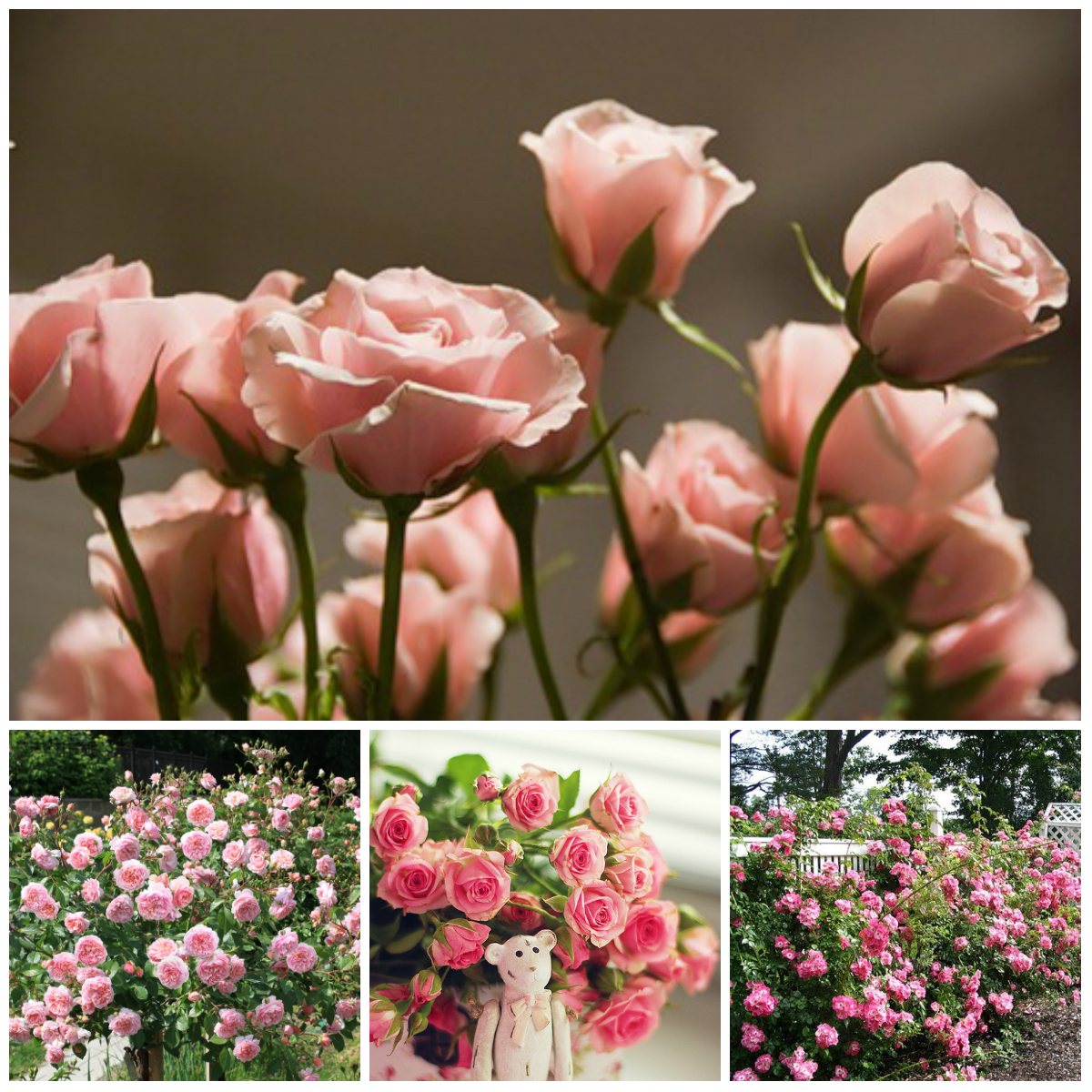
Who to give them to
Spray roses feel softer and warmer than tall, formal roses, so they are chosen when you want to say "with care" rather than "with grandeur".
- Mother or grandmother — pastel tones, a round bouquet or a basket.
- Partner — peony-type varieties in pink or cream, perhaps with eucalyptus.
- Colleague or teacher — a compact bouquet of 5–7 stems that is easy to carry and fits a small vase.
- Weddings — white and pale spray roses are common in bridal bouquets and boutonnieres; see our bridal bouquet guide.
- New baby or a child's birthday — light, gentle colours without a strong scent.
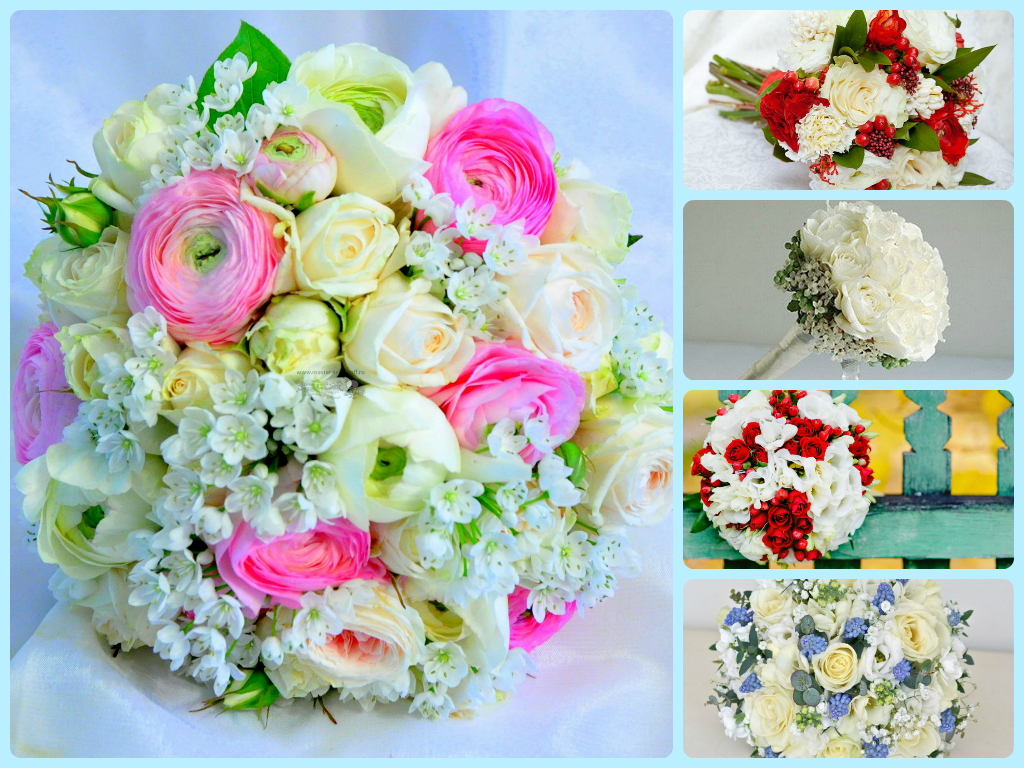
What a good bouquet looks like
- Single-variety bouquet — the simplest and most elegant option.
- Tonal mix of one colour (from cream to dusty pink) — looks more refined than a bright mix.
- With greenery — eucalyptus, pittosporum or ruscus add volume and set off the small buds.
- With larger flowers — one or two chrysanthemum or hydrangea stems in the centre, spray roses around the edge.
For combinations, see how to combine colours in a bouquet and our article on two-tone roses.
How to make the bouquet last
- Cut the stems at an angle, 2–3 cm, with a sharp knife and put them straight into water.
- Remove any leaves that would sit below the waterline — they rot quickly.
- Fill the vase a third full with cool water and change it every 1–2 days, recutting the stems each time.
- Use the flower food sachet if one came with the bouquet.
- Keep the vase away from radiators, direct sun and fruit: ripening fruit releases ethylene, which speeds up wilting.
- Pinch off spent blooms so the remaining buds last longer.
With this care, spray roses usually last 7–10 days, with buds opening gradually.
FAQ
How many stems do I need?
5–7 stems make a small gift; 9–15 make a full bouquet. Because each stem carries several flowers, it looks much bigger than the same number of single roses.
Do spray roses last less than standard roses?
About the same in a vase, but some buds open later, so the bouquet looks fresh for longer.
Are they fragrant?
Most cut varieties have a light scent. If fragrance matters, ask your florist about the specific variety.

View full-size photo
Author: Maria Svitlovir
Graduated from Taras Shevchenko National University of Kyiv, Institute of Biology and Medicine (2001). BSc in Biology, MSc in Horticulture. Writes about plants, works at a garden centre selecting and repotting plants, and contributes to plant reference guides.


