
 Birthday
 Hydrangeas
A succulent arrangement is a tiny garden that fits on a windowsill or desk and needs very little fuss. Echeveria rosettes, pebble-like lithops, silvery pachyphytums and spiny cacti create an unusual landscape you won't get with ordinary houseplants. Here is how to choose plants, soil and a container, make the arrangement yourself and care for it so it doesn't rot or stretch.
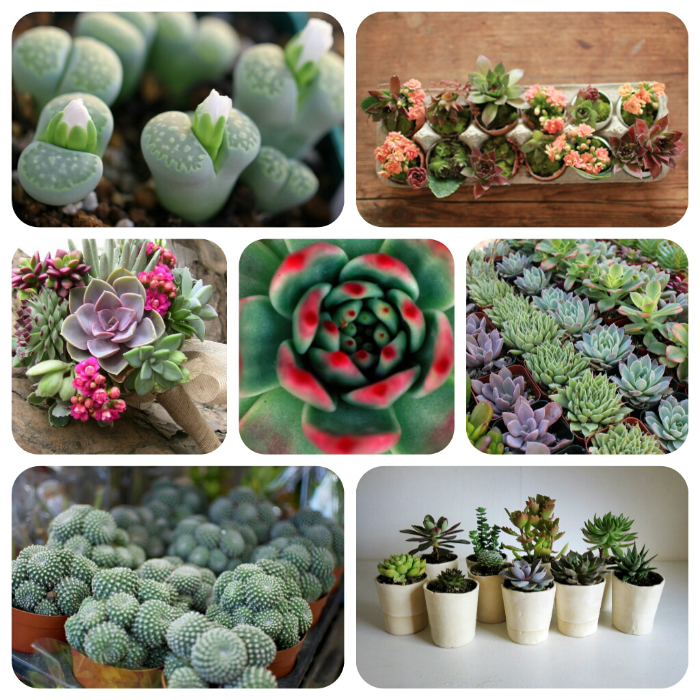
What succulents are
Succulents are not a single family but plants from many families that store water in thick leaves or stems. Most come from dry regions of Africa and the Americas. They include aloe, haworthia, gasteria, crassula (jade plant), kalanchoe, echeveria, sedum (stonecrop), houseleeks, lithops and almost all cacti — read more in interesting facts about cacti.
Succulents grow slowly, so an arrangement keeps its shape for a long time and rarely needs repotting. But they have one key requirement: lots of light and little water.
How to choose plants
The main rule: combine plants with the same light and watering needs. Put a sun-loving echeveria next to a shade-tolerant haworthia, and one of them will suffer.
- One star. Pick the largest or brightest plant — an echeveria or aloe, say — and build around it.
- Contrasting shapes. Mix rosettes, upright stems, trailing stems (burro's tail, string of pearls) and rounded forms.
- Colour. Succulents come in blue, silver, burgundy and pink-edged shades. Two or three tones look more harmonious than a random mix.
- Odd numbers. Groups of 3, 5 or 7 plants look more natural.
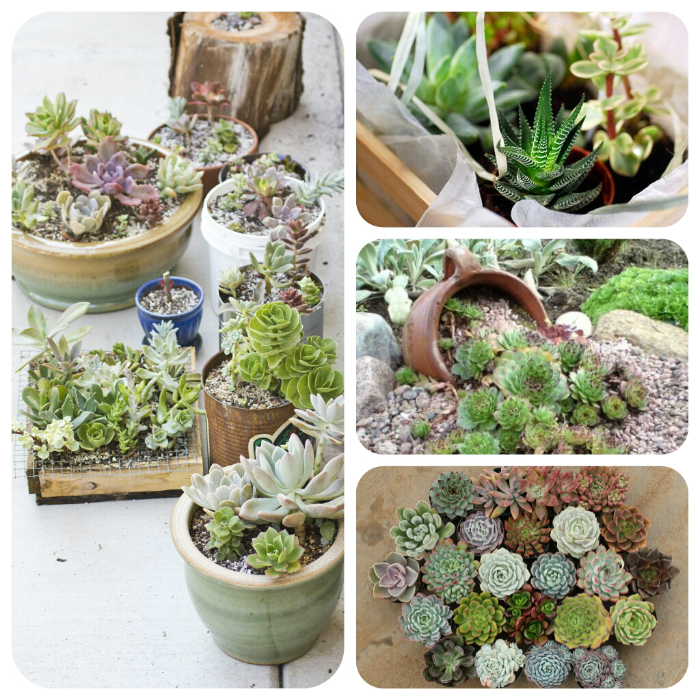
Container and soil
Almost any shallow container works: a ceramic bowl, wooden crate, old box, teacup or concrete planter. For homemade planter ideas, see DIY plant pot covers.
- Drainage is best. A container with a drainage hole and a saucer is the safest choice. Without a hole, add a thick layer of clay pebbles or gravel and water very carefully.
- Soil. Ready-made cactus and succulent mix with up to half its volume of perlite, pumice or fine grit. It should dry out within a few days.
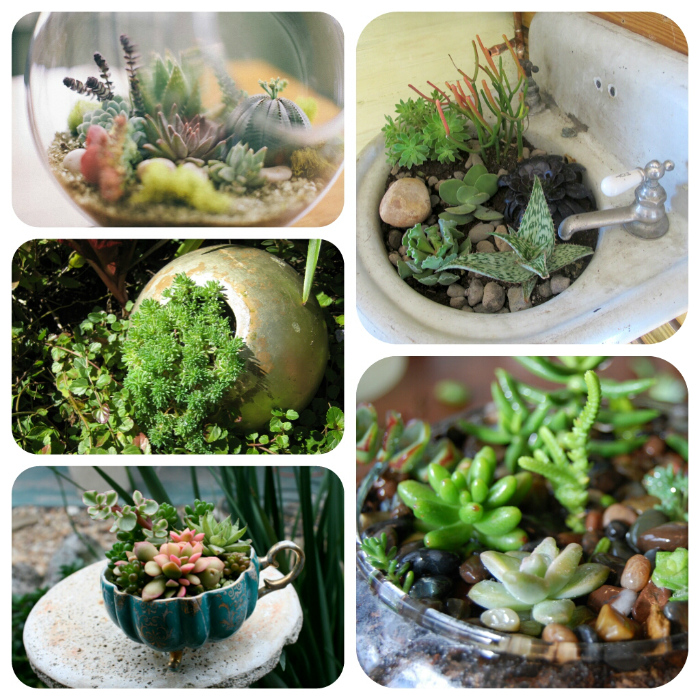
- Open glass only. Succulents suit terrariums with a wide open top. In a closed jar humidity is too high and the plants rot.
How to make the arrangement: step by step
- Drainage. Add a 1–3 cm layer of clay pebbles or gravel, depending on the container's depth.
- Soil. Fill the container about two-thirds with mix. It should be dry or barely moist.
- Layout. Arrange the plants in their pots first to see how they look together. Large ones in the centre or at the back, small and trailing ones near the edge.
- Planting. Gently remove the plants, shake off some old soil, check the roots and trim any rotten ones. Plant at the same depth as before and firm the soil.
- Top dressing. Cover the surface with small pebbles, sand or decorative grit — it looks good and keeps the base of the plants dry.
- First watering after 3–5 days. This lets roots damaged during planting callous over.
There is an easier option too: stand the plants in one container in their own pots and fill the gaps with pebbles or moss. That way you can swap one plant without dismantling everything.
Decor ideas
- Mini landscape. Large stones as "cliffs", a sand path, tiny animal figures or houses.
- Fairy forest. Gnome and mushroom figurines among cacti, plus a piece of driftwood.
- Desert. Layers of different-coloured sand in a glass bowl with cacti and stones.
- Gift arrangement. Succulents in a wooden crate with a little message sign.
To combine live plants with dried flowers, see dried flower arrangements; for grouping larger houseplants, see houseplant arrangements.
Caring for the arrangement
- Light. The brightest window — south or east facing. In low light rosettes stretch and lose colour. Turn the container weekly so plants grow evenly.
- Watering. Only once the soil is completely dry. In a container without a hole, water sparingly with a spoon or syringe at the base of the plants.
- Winter. Cooler and drier: water roughly every 3–4 weeks or less, away from radiators.
- Feeding. In spring and summer, once a month with cactus fertiliser at half strength.
- Refreshing. When plants outgrow the space, divide them or replace the largest — about every 1–2 years.
Some succulents, including kalanchoe, aloe and crassula, can be toxic to cats and dogs. If you have pets, keep the arrangement out of their reach.
You can pick plants for your arrangement from our potted plants. And for detailed care of one of the most free-flowering cacti, see our Lobivia care guide.
FAQ
Can succulents go in a closed terrarium?
No. Humidity in a closed container is too high and succulents rot. Choose open glass bowls.
How often should I water a succulent arrangement?
In summer, once the soil is completely dry — usually every 1–2 weeks; in winter every 3–4 weeks or less.
What soil do succulents need?
Cactus mix with up to half its volume of perlite, pumice or grit.
Why are my succulents stretching?
They need more light. Move the arrangement to the brightest window or use a grow light.
Can cacti and succulents be planted together?
Yes, if their light and watering needs are similar. Forest cacti and lithops are better grown separately.

View full-size photo
Author: Maria Svitlovir
Graduated from Taras Shevchenko National University of Kyiv, Institute of Biology and Medicine (2001). BSc in Biology, MSc in Horticulture. Writes about plants, works at a garden centre selecting and repotting plants, and contributes to plant reference guides.