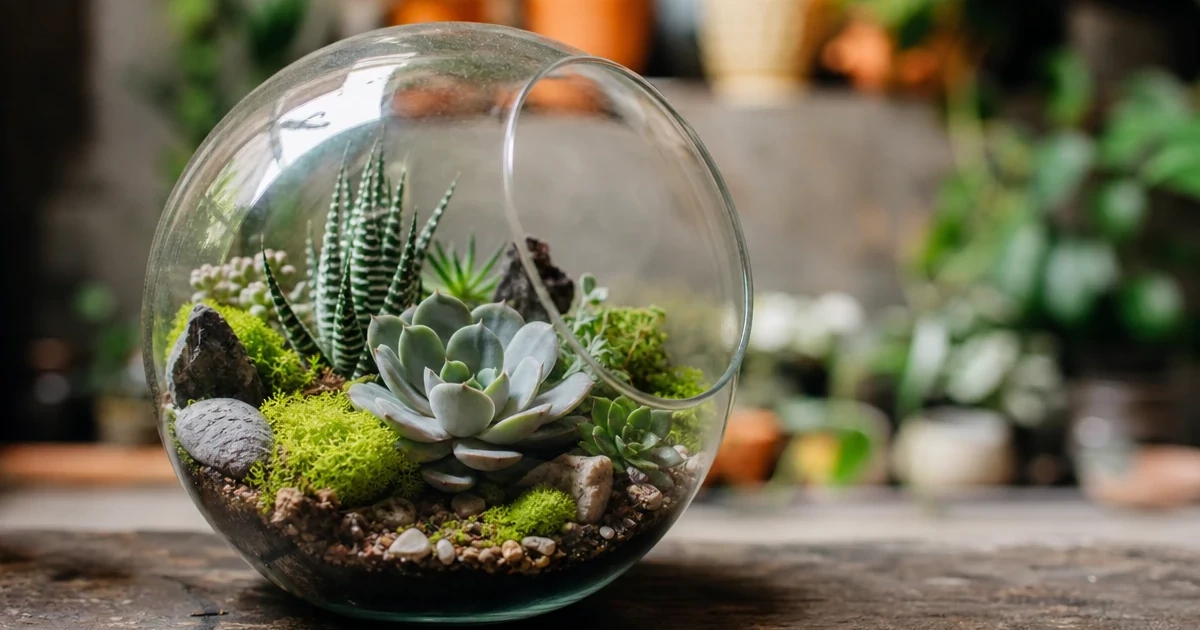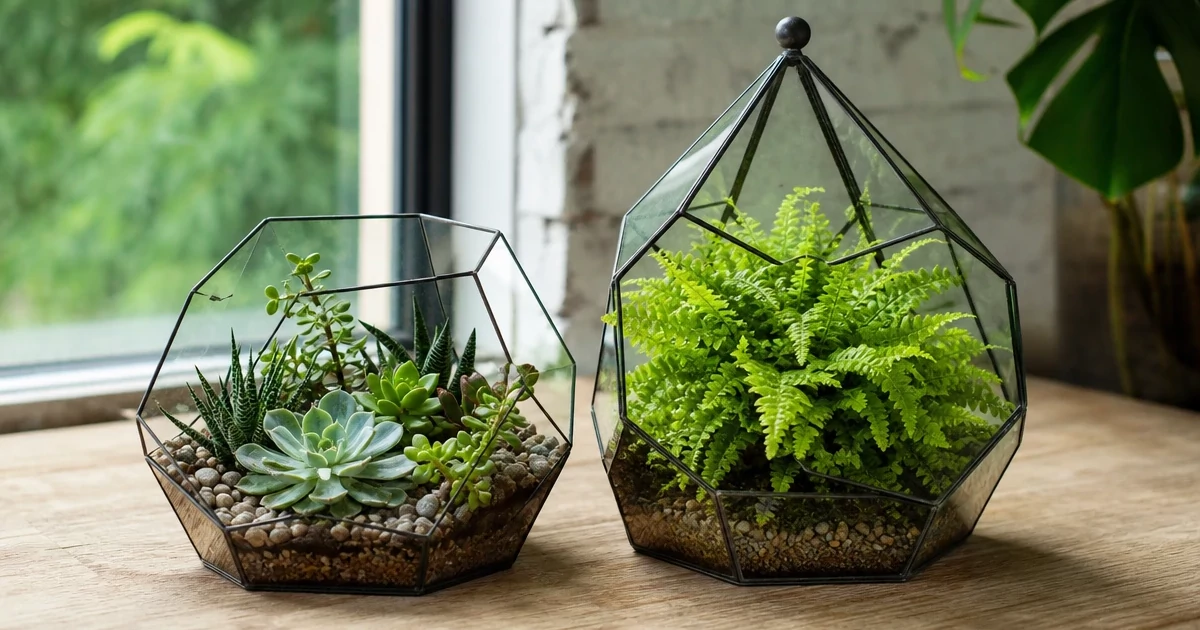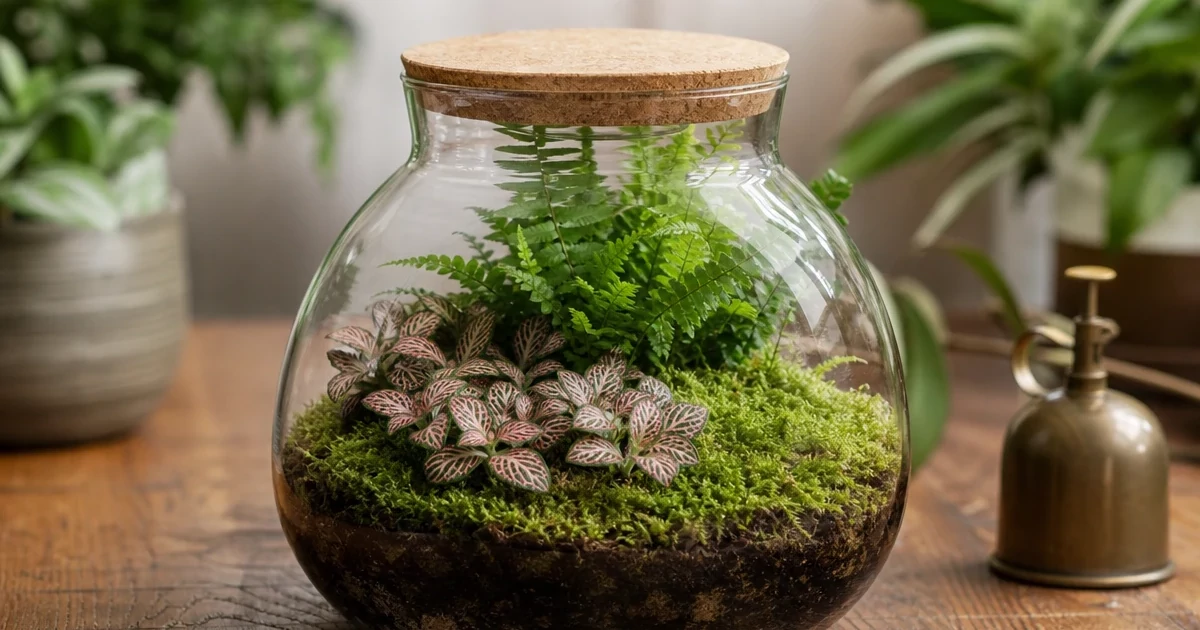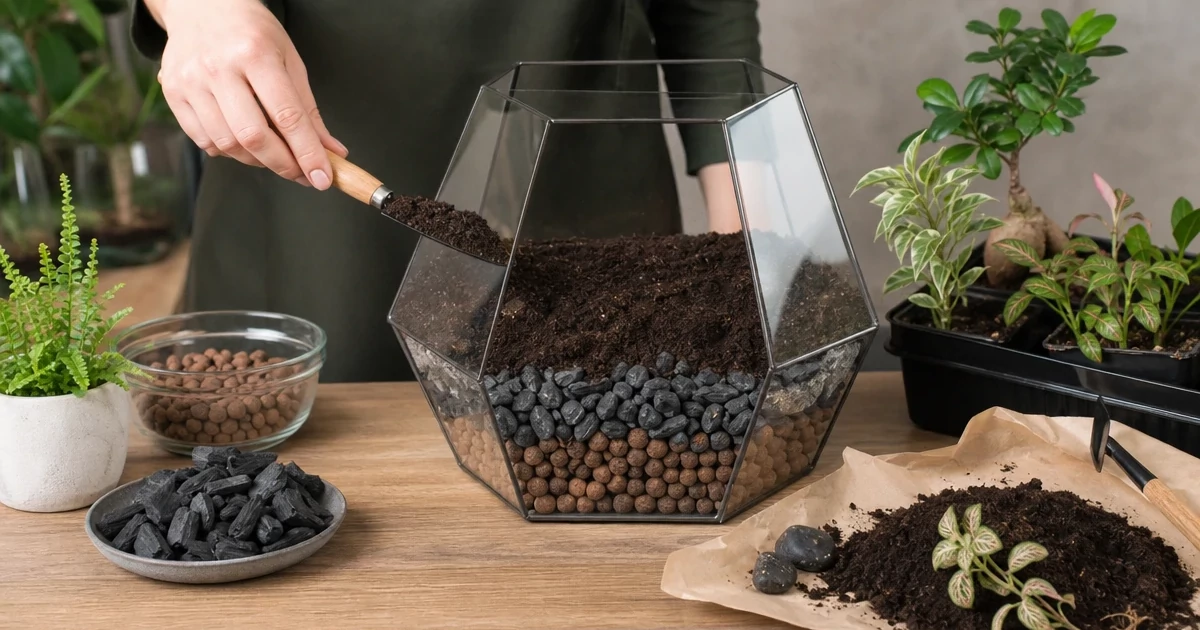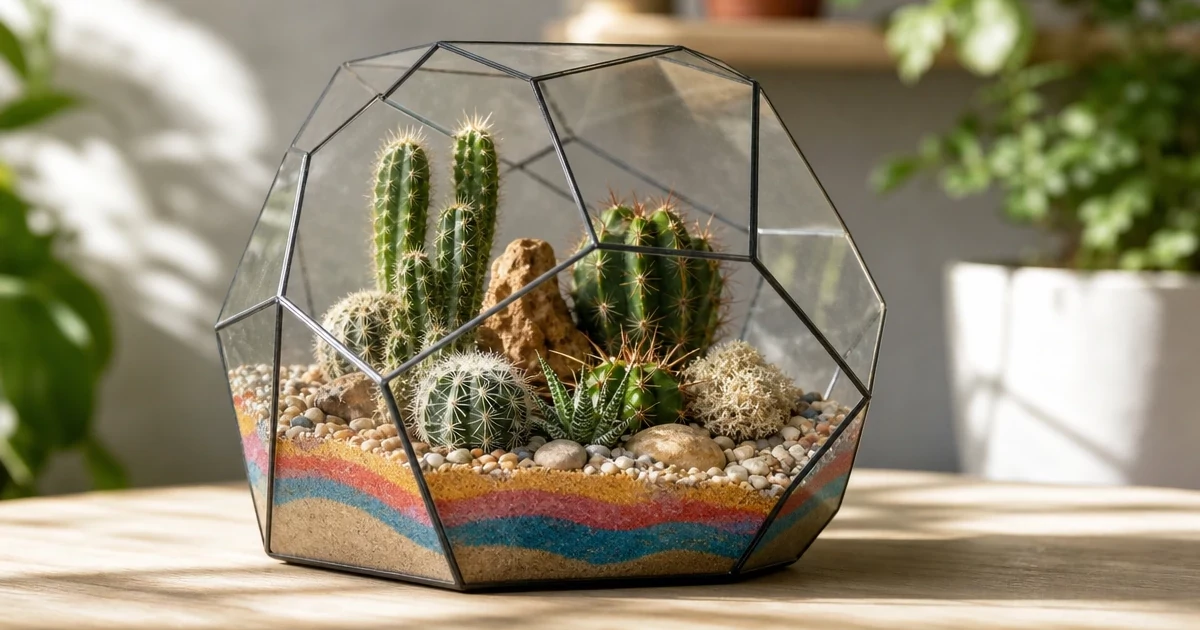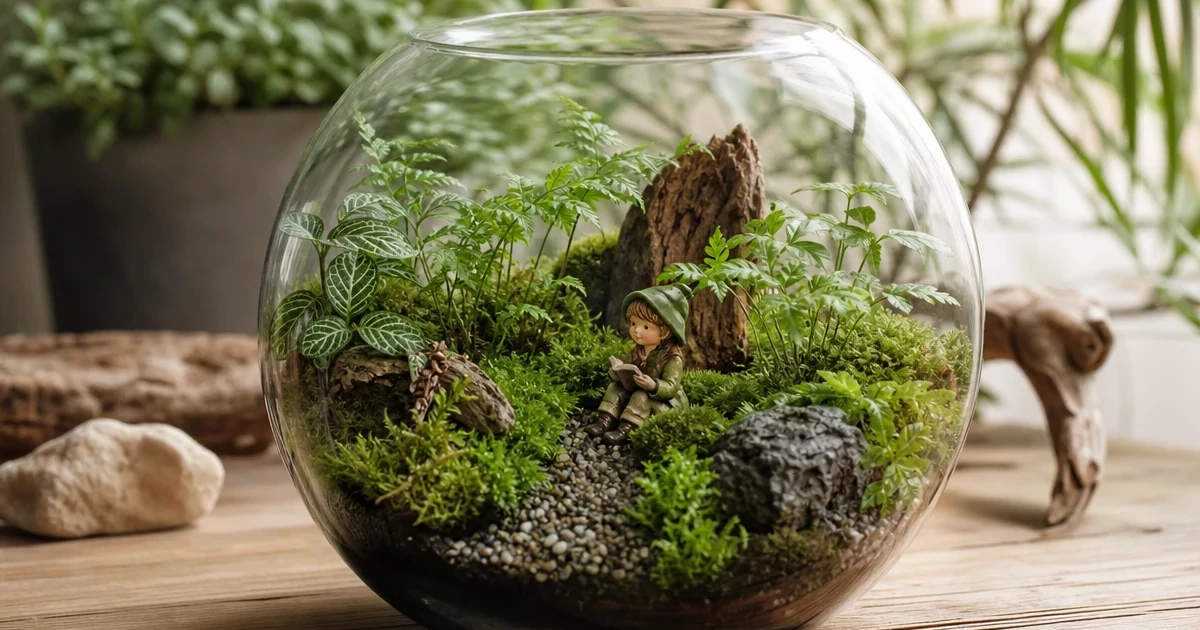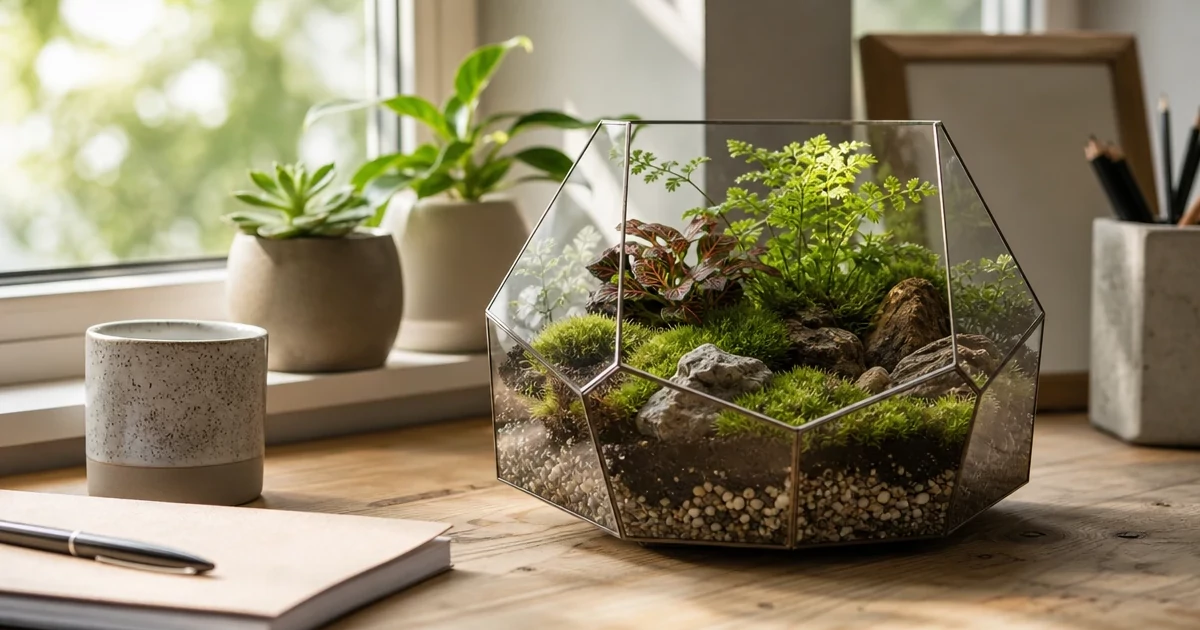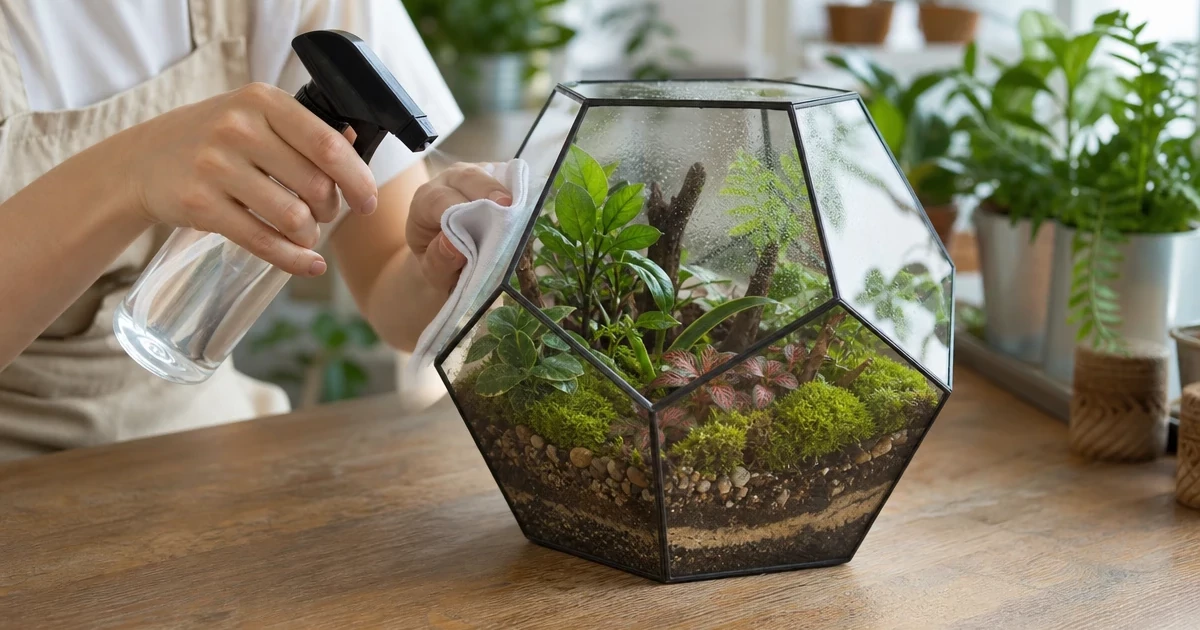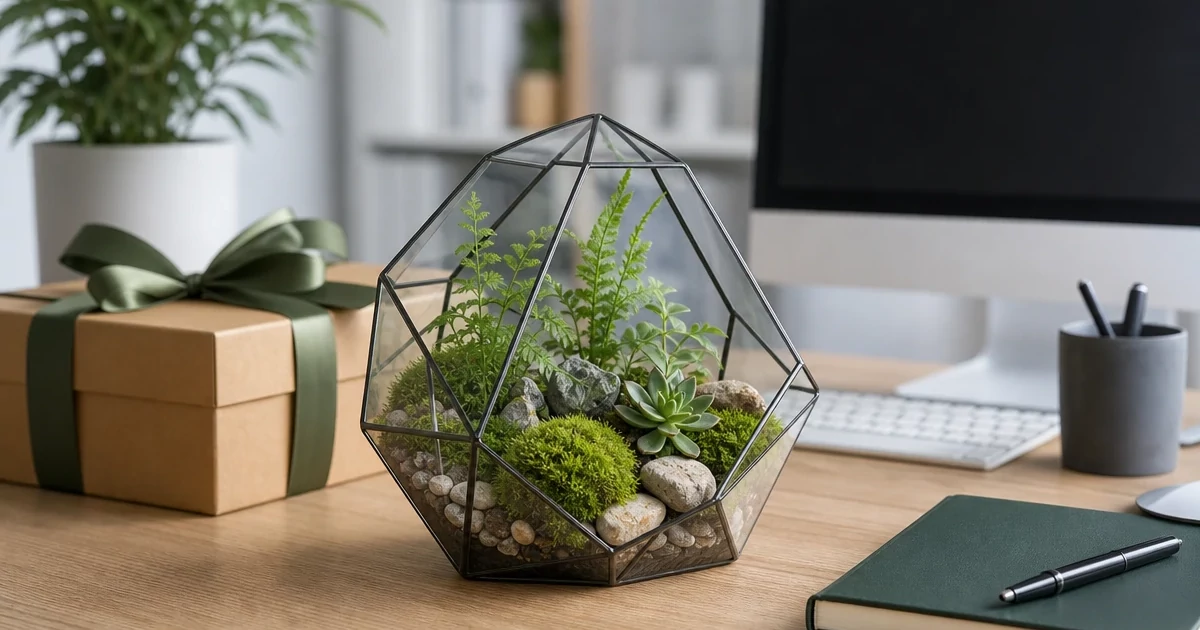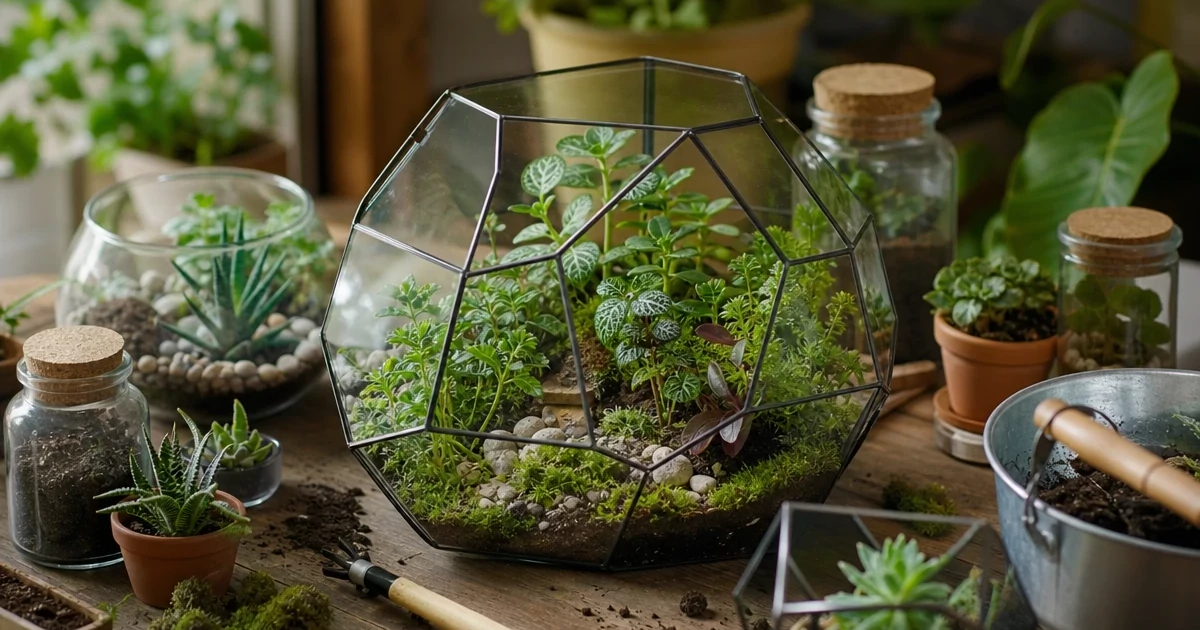
A terrarium (florarium) is a miniature garden in a glass container — a jar, vase, aquarium or geometric “glass house”. It looks like a finished décor piece, takes up almost no space and needs very little care. Here is what a terrarium is, how open and closed ones differ, which plants to choose, how to make one yourself, how to care for it and who to give it to.
The idea of growing plants under glass dates back to England in the first half of the 19th century: doctor and amateur botanist Nathaniel Ward noticed that a fern in a sealed glass jar survived for months without watering. His “Wardian cases” made it possible to ship live plants across oceans and later became a fashionable parlour ornament. A modern terrarium is the same idea made decorative: layers of drainage and soil, a few plants, moss, stones and figurines create a tiny landscape — a desert, a rainforest or a mountain slope.
The main split is whether the container has a lid.
| Open | Closed | |
|---|---|---|
| Container | wide vase, bowl or geometric frame without a lid | jar or flask with a lid or cork |
| Microclimate | dry, air circulates freely | humid: water evaporates, condenses on the glass and returns to the soil |
| Plants | succulents, cacti, air plants | ferns, mosses, fittonia, peperomia, mini ivy |
| Watering | every 2–4 weeks | rarely, sometimes once every few months |
| Difficulty | easiest for beginners | needs a careful moisture balance |
There are also orchidariums for miniature orchids and tropical terrariums — similar to closed ones but with ventilation holes.
Choose slow-growing plants with the same light and water needs — otherwise one will crowd out the rest within months.
Never mix succulents with moisture-loving plants in one container: the first need dryness, the second constant moisture.
The best spot is a bright table, chest of drawers or shelf 1–2 metres from a window, out of direct sun. Avoid windowsills above radiators: hot, dry air harms the plants. In an office, a terrarium does well on a desk under a daylight lamp. Closed terrariums can even go in a bathroom with a window, where humidity is high.
A terrarium is a great gift for plant lovers with little time for care: for a colleague’s desk, a manager, a teacher, a housewarming or a birthday. It doesn’t wilt in a week like a bouquet and reminds the recipient of you every day. Add a care card. For more green gift ideas, see gifts with cacti and succulents and housewarming gift ideas, and browse potted plants with delivery in Kyiv.
A glass container with plants, soil and decoration that looks like a tiny garden or landscape.
An open succulent terrarium lasts several years with proper care; a closed one can last for years if the moisture balance is right. Plants are trimmed or replaced from time to time.
Open ones every 2–4 weeks once the soil is completely dry; closed ones only when there is no condensation on the glass.
Avoid direct sun: the glass heats up and scorches the plants. The ideal spot is bright with indirect light.
An open one with succulents or cacti: it forgives a missed watering and needs almost no attention.

Author: Maria Svitlovir
Graduated from Taras Shevchenko National University of Kyiv, Institute of Biology and Medicine (2001). BSc in Biology, MSc in Horticulture. Writes about plants, works at a garden centre selecting and repotting plants, and contributes to plant reference guides.
© Kyiv 2026 UFL Flower Shop

Trademark UFL №191476 is used under license of the rights holder.
All rights reserved. Any use of materials without a link to the site is prohibited.

 Birthday
 Hydrangeas